REVIEW · THE HAGUE
The Hague: Old City Private Walking Tour
Book on GetYourGuide →Operated by Stadswandelkantoor · Bookable on GetYourGuide
The Hague has a way of feeling more courtly than other Dutch cities, and this private walking tour makes that obvious fast. You’ll move through shaded streets to the Binnenhof area and then to the palaces that still shape Dutch government life today.
I especially like two things: the way the tour ties architecture to real political events, and the chance to see the royals’ present-day base instead of just postcard facades. The one drawback is simple: at $265 per group (up to 10), it’s best value when you have a small group you can bundle together.
In This Review
- What you’ll get from the guide
- Key highlights to look forward to
- Why The Hague’s old center feels unusually royal
- Meeting at Central Station and skipping the time-wasters
- The Voorhout lime trees: how one order shaped an entire boulevard
- Binnenhof: the 13th-century heart of Dutch government
- Houses of Parliament and the Dutch way of power-on-display
- Noordeinde Palace and the thrill of a working royal environment
- The darker political chapters: Van Oldenbarnevelt and the De Witt brothers
- City Hall and De Resident: government buildings with real presence
- Pace, duration, and what two hours really covers
- Price and value: when $265 per group makes sense
- What to wear, when to go, and how to plan your day
- Who should book this private old city tour
- Should you book this tour?
- FAQ
- FAQ
- How long is The Hague: Old City Private Walking Tour?
- What does the tour cost?
- Where do we meet for the tour?
- Is this a private tour?
- What’s included in the price?
- Are food and drinks included?
- What languages are the guides available in?
- Is the tour wheelchair accessible?
- Can I cancel and get a refund?
What you’ll get from the guide
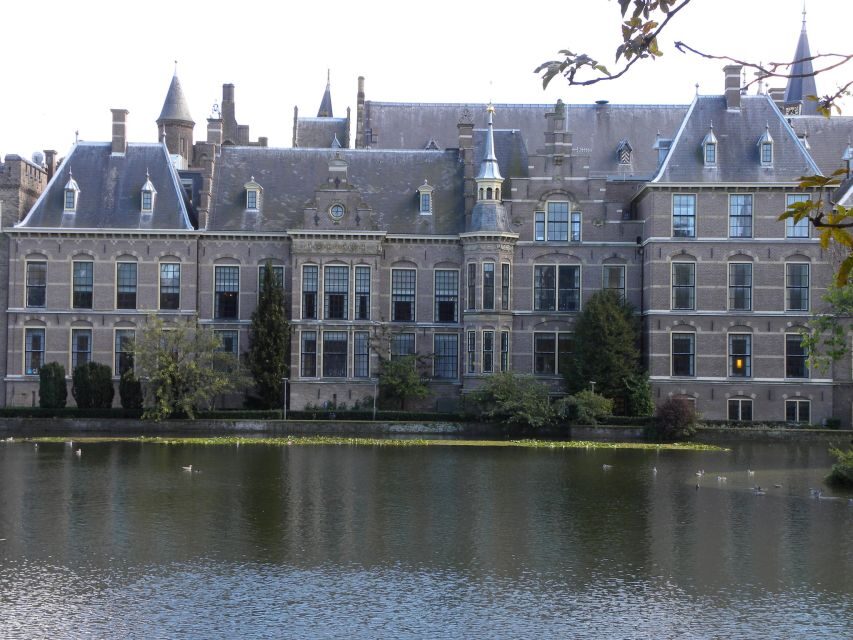
This is a relaxed 2-hour stroll with a live guide who adjusts to your questions and pace. You can expect stops that mix administration, royal power, and dramatic behind-the-scenes stories, with interpretation offered in English, German, or Dutch.
A practical heads-up: you’re walking, and most of the magic is concentrated downtown, so plan to wear comfortable shoes.
Key highlights to look forward to
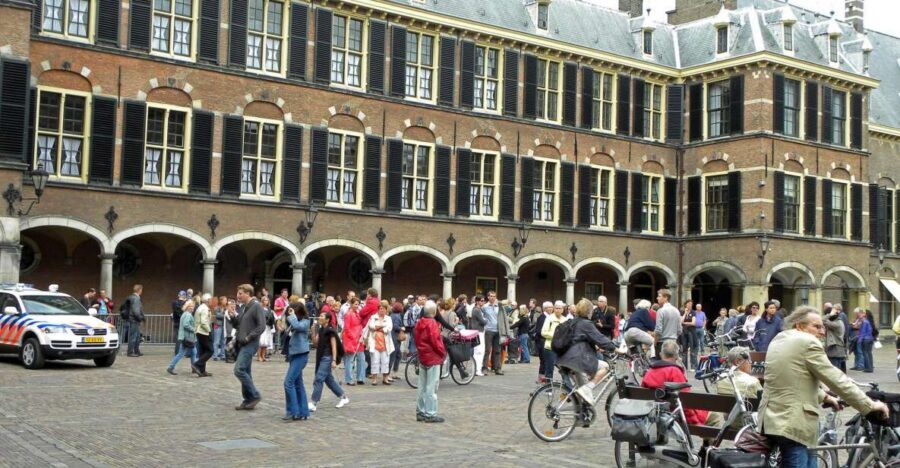
- Binnenhof complex from the 13th century, with the feel of a political fortress
- Houses of Parliament in The Hague, in the historic setting you don’t see from photos
- Noordeinde Palace and the working royal palace for King Willem-Alexander
- Voorhout lime-tree story tied to Emperor Charles V and 16th-century planning
- Dark chapters of Dutch politics, including Van Oldenbarnevelt and the De Witt brothers
- City Hall and De Resident, two administrative landmarks that give context to today’s power
You can also read our reviews of more walking tours in The Hague

Why The Hague’s old center feels unusually royal
The Hague (Den Haag) has a different vibe than Amsterdam. It’s less about canals and crowds, more about dignity, rules, and the machinery of the state. That difference shows up the moment you start walking around the royal-and-government zone.
This tour keeps you in the “decision-making” part of town. You’re not only looking at buildings. You’re learning why these places matter, how power has been staged here for centuries, and how the city’s identity grew around that role.
If you like history that’s connected to real outcomes—laws, executions, alliances, assassinations—this format works well. It also helps that the pacing is short. You don’t need a full-day commitment to get the story.
Meeting at Central Station and skipping the time-wasters
You start in a simple place that makes timing easy: the hall of The Hague Central Station, in front of Albert Heijn to go. That’s the kind of meeting point that lets you arrive without a scavenger hunt.
From there, the tour is designed so you don’t lose your best energy to delays. There’s a separate entrance to skip the line, which matters when you’re only out for two hours.
Because it’s private, you can ask questions as you go instead of saving them for the end. If you care about details—names, dates, why a building looks the way it does—this structure gives you room to slow down.
The Voorhout lime trees: how one order shaped an entire boulevard
One of the more memorable “small details that explain big things” moments happens around the Voorhout. You’ll hear how Emperor Charles V ordered four rows of lime trees to be planted there.
That’s not just a landscaping anecdote. It’s an example of how rulers shaped public space—literally shaping sightlines, ceremony, and how people moved through power centers. Even if you don’t care about botany, you’ll understand the point: planned environments were part of governance.
On this walk, you learn to read the city like a map of decisions. The guide doesn’t just point at a street; they connect it to the kind of thinking that makes a place feel official.
Binnenhof: the 13th-century heart of Dutch government
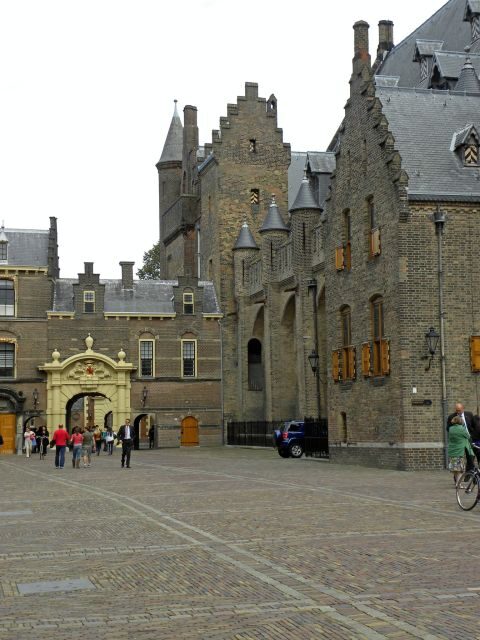
The tour’s core is the Binnenhof complex, a cluster of buildings with roots going back to the 13th century. This is where you get the feeling that politics here didn’t start yesterday. It started long enough ago that the city grew around institutions.
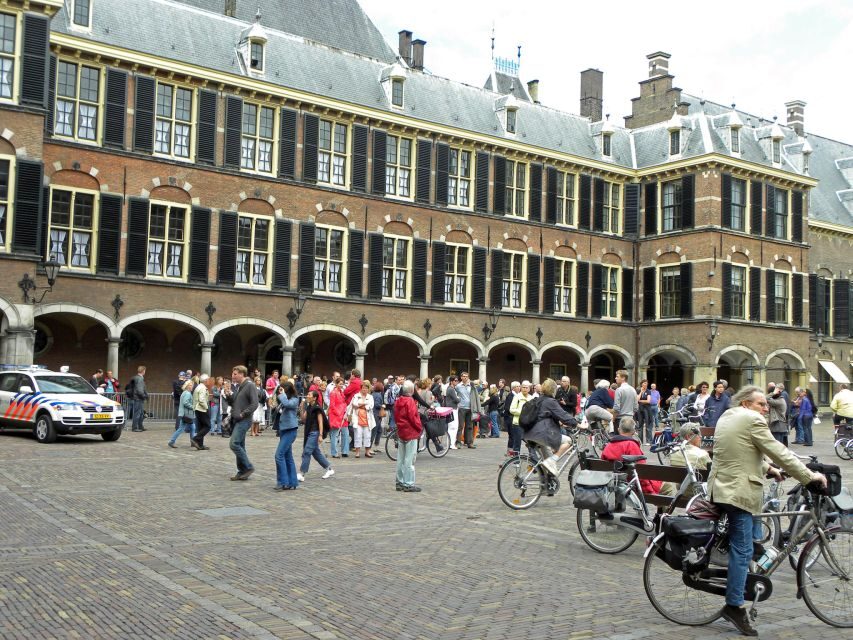
The standout for many people is the setting of the historic Houses of Parliament in The Hague. The building complex has a strong “place-of-power” atmosphere. Even if you’ve seen the structure in pictures, walking the approach and seeing how it sits within the city makes it real.
What I like about the Binnenhof stop is the way context turns sightseeing into understanding. You’re not only admiring stonework. You’re learning how the complex functions historically, what it represented, and why it became the city’s anchor.
A possible drawback: because it’s a compact area and the tour is only two hours, this part can feel a bit dense. If you want a slow, museum-style pace, you may wish you had more time in the area after the tour ends.
You can also read our reviews of more city tours in The Hague




Houses of Parliament and the Dutch way of power-on-display
The Houses of Parliament stop is more than a photo opportunity. It’s a chance to see how Dutch civic authority looks when it has centuries of continuity behind it.
Pay attention to how the buildings sit together and how the streets frame them. This is the kind of urban design that signals order. When you understand that, The Hague makes more sense as a governing capital rather than just another Dutch stop on a map.
If you’re the type who likes a quick briefing before you go deeper on your own later, this is a great use of time. You’ll leave with a clearer idea of what you want to research or revisit.
Noordeinde Palace and the thrill of a working royal environment
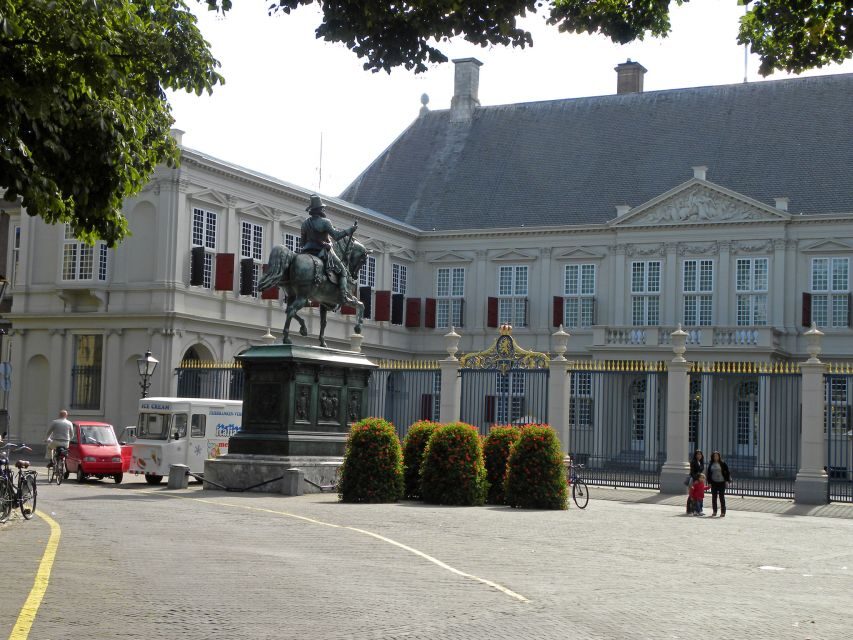
As you continue, you’ll pass a series of royal palaces, including Noordeinde Palace. This is where the tour shifts from “old seat of power” to “power in action.”
Noordeinde Palace has a different energy than grand ceremonial-only sites. It’s tied to the real workings of the monarchy in the modern state. That’s exactly why it’s worth seeing on foot instead of just from a distance.
The tour also includes the chance to go to a present working palace for the Dutch royals, connected to King Willem-Alexander. That detail changes how you see the buildings. They’re not relics. They’re part of current life.
One practical thought: since this is a working environment, you’ll likely experience more emphasis on observation than wandering. The value is in learning what you’re looking at.
The darker political chapters: Van Oldenbarnevelt and the De Witt brothers
What makes this tour feel different from a standard royal circuit is how it handles the uncomfortable parts of Dutch politics. You’ll hear about the dramatic decapitation of Van Oldenbarnevelt and the assassination of the De Witt brothers.
These stories can sound heavy, but the guide’s job is to connect them to the city’s physical layout. You’re learning not only what happened, but how a place becomes tied to trauma, propaganda, and power struggles.
If you’re worried about the tone, don’t be. This is a walking tour, so the storytelling stays tied to what’s in front of you: a door, a courtyard feel, a building that housed authority at the time.
It’s also one of the reasons I think this tour fits curious history lovers. The Hague isn’t only about elegance. It’s about consequences.
City Hall and De Resident: government buildings with real presence
The tour rounds out with major administrative landmarks such as City Hall and De Resident. These stops matter because they show that The Hague’s role never stayed in the medieval past.
You’ll feel the continuity: old political centers and modern government institutions share the same overall function, even if the architecture changes. That makes the city easier to read overall, especially if you’re also planning your own time in town after the walk.
With these buildings, you get a sense of scale too. The Hague isn’t trying to be a tiny heritage village. It’s a functioning capital, built to house decisions.
If you’re more into grand palaces than modern offices, this section might feel more practical than dramatic. Still, it’s a helpful balance to what you see earlier.
Pace, duration, and what two hours really covers
This experience runs for 2 hours, and that’s a sweet spot. You’ll cover enough ground to get a genuine overview, but not so much walking that you’re done before you start.
Because it’s private and adapted to your wishes, you can steer the pace. If you want extra time at one stop, your guide can usually adjust on the fly. If you want a clean overview first and deeper time later, you can do that too.
Group size is capped at up to 10 per group, which keeps the tour from becoming too spread out. You get the benefit of private attention without making it a one-person lecture.
Price and value: when $265 per group makes sense
The price is $265 per group (up to 10). On paper, that can feel steep—especially if it’s just two people. But look at how this is structured: it’s a guided, private, 2-hour walk designed to cover major royal and government sites efficiently, including skip-the-line entry.
Value improves fast if you can share the cost. A group of 6 to 10 turns this into a reasonable per-person outing that still feels custom. For couples who want a personalized tour rather than a standard group version, it can also be worth it if you enjoy asking questions.
If you’re traveling solo and you mainly want quick exterior views, you might decide against it. This tour’s strength is the guided storytelling and the ability to stay flexible.
What to wear, when to go, and how to plan your day
Since it’s a walking tour, wear comfortable shoes and keep a light layer handy. Urban Holland weather can change quickly, and you’ll be outside most of the time.
Timing-wise, a 2-hour walk works well as either:
- a first-orientation trip for the old core, or
- a focused hit before you move on to museums or day trips.
If you have limited time in The Hague, this kind of concentrated route is a good way to “get the map in your head” without wasting half a day on wandering.
Who should book this private old city tour
You’ll likely enjoy this most if you:
- want a guided walkthrough of The Hague’s royal and government heart
- like history that includes real power conflicts, not just pretty buildings
- prefer private pacing and direct answers
- are interested in how the Dutch monarchy and state institutions connect in space
It’s also a solid choice for visitors who want an organized plan but still need room for questions. The guide languages include English, German, and Dutch, which is helpful if your group includes mixed-language travelers.
Should you book this tour?
If you’re the kind of person who reads plaques, asks why a building matters, and enjoys political history with consequences, I think you should strongly consider booking. The combination of the Binnenhof, the Houses of Parliament, and the contrast between royal sites and government institutions gives you more than a pretty tour route.
I’d skip it only if your priority is primarily exterior architecture with minimal interpretation, or if you’re traveling alone and want the cheapest option. With the group price model, splitting the cost is where the math starts to work.
FAQ
FAQ
How long is The Hague: Old City Private Walking Tour?
It’s a 2-hour walking tour.
What does the tour cost?
The price is $265 per group, up to 10 people.
Where do we meet for the tour?
Meet in the hall of The Hague Central Station, in front of Albert Heijn to go.
Is this a private tour?
Yes. It’s a private group experience.
What’s included in the price?
The tour includes a 2-hour walk adapted to your wishes, a live guide, and VAT.
Are food and drinks included?
No. Food and drinks are not included.
What languages are the guides available in?
The guide is available in English, German, and Dutch.
Is the tour wheelchair accessible?
Yes. The tour is listed as wheelchair accessible.
Can I cancel and get a refund?
You can cancel up to 24 hours in advance for a full refund.