REVIEW · THE HAGUE
Private Tour of The Hague, Delft and Rotterdam with Lunch
Book on Viator →Operated by Discover Delft · Bookable on Viator
The Dutch cities here feel like three different TV shows in one day. You start in The Hague with power, art, and royal monuments, then shift to Delft for Vermeer-era charm, and finish in Rotterdam with modern design and post-war history. The best part for me is that it is a private loop, so you can set the pace and get answers as you walk.
I love the mix of famous names and specific street-level details: Vermeer references tied to real buildings in Delft, plus quick hits at political landmarks in The Hague. I also like that your day includes lunch in Delft and a ticket for one of Rotterdam’s headline sights, the Cubic Houses. One thing to consider: this is an 8-hour, moving-days plan, so you get great highlights, but not long sits in museums or deep study sessions.
If you want a day that combines the big sights with real context and local stories, this works well. The route is built around short stops and short transfers, so plan on plenty of walking in historic centers.
In This Review
- Key points I’d bookmark before you go
- Three cities, one day: how the Hague–Delft–Rotterdam loop works
- Starting at Mauritshuis: Vermeer art meets The Hague power
- Binnenhof, Ridderzaal, and the parliament pond: where politics becomes a walk
- Lange Voorhout to the Grote Kerk stork: the classy side of The Hague
- Delft through the Oostpoort gate: lunch at Beestenmarkt and a reset
- Vermeer sites in Delft’s old center: churches, prisons, and skewed angles
- Prinsenhof to Delfland’s tiny museum: the Oranje connection
- The East India Company armory and the Vermeer painting spot
- Rotterdam by train-and-car: from Coolsingel to Old Harbor
- Kijk-Kubus and the Witte Huis: Rotterdam’s weird ideas made real
- Ending at Oude Haven: your choice of how to finish the day
- Price and value of $552.69 per person for a private day
- Should you book this private Hague–Delft–Rotterdam tour with lunch?
- FAQ
- FAQ
- How long is the private tour?
- What cities are included in the tour?
- Is lunch included?
- What’s included besides the guide and lunch?
- Is the Cubic House admission included?
- Where does the tour start, and can you choose your direction?
- Does the pace depend on the group?
- Is there an option for hotel pick-up and drop-off?
- What fitness level do I need?
- Are gratuities included?
- Can I cancel for a full refund?
Key points I’d bookmark before you go
- Vermeer connections in Delft: you’ll see multiple spots tied to Johannes Vermeer’s life and paintings, not just his name.
- Government-and-royalty focus in The Hague: the tour hits the Binnenhof complex, plus landmarks around the parliament pond.
- One included lunch break: you arrive at Beestenmarkt for a full hour to eat and reset.
- Rotterdam’s contrast is the point: from bomb-scar survivor towers to bold modern architecture.
- Cubic House time is real: the stop includes a ticket, and you’ll learn how practical those homes are.
- Private pace with a prepared guide: if your guide is Robin (a Rotterdam local from prior tours), you get extra hometown color.
Three cities, one day: how the Hague–Delft–Rotterdam loop works
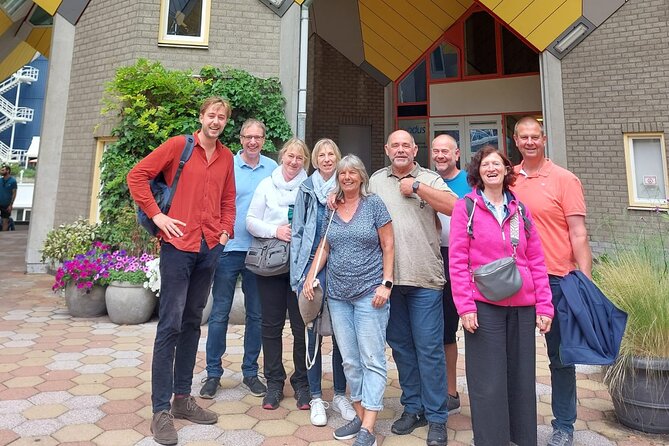
This is a private full-day tour built to connect three Dutch cities that normally take separate trips. You’re out for about 8 hours, with the day arranged as a sequence of short, focused walks plus brief car or train transfers. That structure matters: it lets you see a lot without spending the whole day stuck in transit.
You can usually choose the direction, too: the day can run with The Hague first or with Rotterdam first, depending on what you booked. And if you want pickup and drop-off at a location of your choice (even around Amsterdam, if you chose that option), this tour is designed to work with your schedule rather than forcing a fixed city-hotel routine.
Because it is private, the pace is yours. That is helpful if you like to linger at a church façade, speed through a square, or ask one extra question about a statue you didn’t expect to care about.
You can also read our reviews of more private tours in The Hague
Starting at Mauritshuis: Vermeer art meets The Hague power
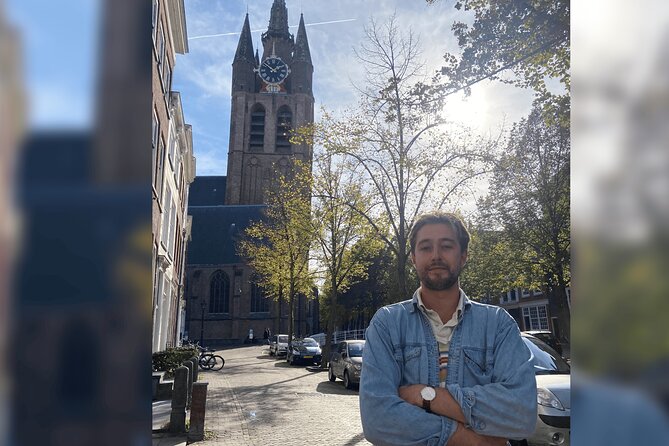
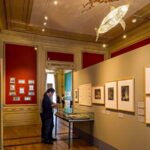
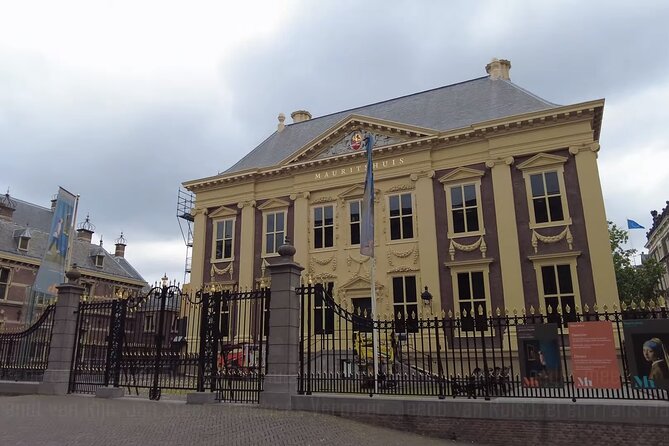
The day begins at Mauritshuis in The Hague, a great launch point because it anchors the rest of the tour’s art story. Even if your stop time is short, you’ll get the key context: this museum holds famous Johannes Vermeer paintings made in Delft. It also gives you a simple way to connect the theme of the day—art and national identity—across cities.
What I like here is the way your guide ties locations to meaning. In The Hague, Vermeer is not a random art detour; it connects to Delft, where you’ll see more of the Vermeer trail later. Starting with Mauritshuis sets up a payoff when you reach Delft’s Markt area and the canals tied to his work.
Possible downside: since your time at each point is brief, you should go in expecting orientation, not a full museum day. If you want slow, gallery-by-gallery art time, you may want a separate museum visit on another day.
Binnenhof, Ridderzaal, and the parliament pond: where politics becomes a walk
From Mauritshuis you move into the Binnenhof area, stepping near the square inside the parliament complex. This part is powerful because it’s one of those places where you’re not just seeing a building—you’re seeing the Netherlands at work, and the tour explains why that matters.
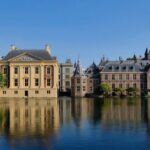
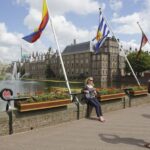
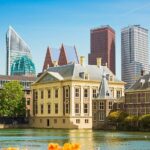
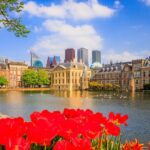
Next comes Ridderzaal, linked to the Binnenhof complex, plus a string of nearby landmarks that keep the story moving: Het Plein with the statue of Willem van Oranje, the father of the fatherland, and Hofvijver, the pond in front of the parliament building and the prime minister’s office. If you’ve ever wondered how countries show authority in plain sight, this is a solid answer.
Then you get Thorbecke Monument by the Hofvijver. The topic is constitutional, and the stop is short, but it adds a layer many sightseeing tours skip. You end up noticing political symbolism without the tour feeling like a lecture.
If you’re traveling with kids or you just like history that has human quirks, this whole sequence has a good rhythm—short steps, clear stories, and lots of outside viewing.
Lange Voorhout to the Grote Kerk stork: the classy side of The Hague
After the parliament area, you walk along Lange Voorhout, often described as the Champs-Élysées-style boulevard of The Hague. This is where embassies and major institutions line the street, and you get a sense of the city’s diplomatic energy without having to hunt for it.
You also see Grote Kerk, where the tour points out the stork on top of the church. It’s one of those details you can easily miss if you walk past without context, and that is exactly what a good guided stop does—teaches your eyes what to notice.
There’s another statue stop after that: Johan de Witt. The guide’s story here is memorable because it covers a grim moment in Dutch political history, including how he was attacked by an angry mob. Even if you do not love dark history, it helps explain the era that shaped the Netherlands’ political institutions and identity.
This stretch works best if you like variety. You get royal-adjacent and church-adjacent sights without it feeling like you’re stuck in one category all morning.
Delft through the Oostpoort gate: lunch at Beestenmarkt and a reset
Next comes a big shift: you travel toward Delft and enter the city through Oostpoort, described as the only gate still standing. That detail is useful because it gives you a clear sense of transition—The Hague’s political pulse slows down and Delft’s canal-city character takes over.
Once you reach Delft, you head to Beestenmarkt for lunch. This stop is long enough to matter—about 1 hour—and it’s intentionally placed in one of Delft’s most comfortable squares. You’re not eating in a museum corridor; you’re in a lively, walkable area where you can grab something that fits your taste and keep moving afterward.
A practical tip I’d follow: if the day is wet (and it often is in the Netherlands), use your lunch time to reset your socks and plan your next route. You still have a lot of walking ahead.
You can also read our reviews of more tours and experiences in The Hague

Vermeer sites in Delft’s old center: churches, prisons, and skewed angles
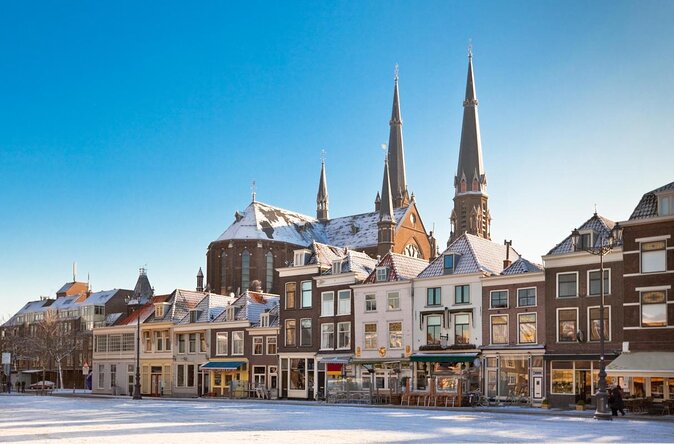
After lunch, the tour heads through Delft’s central area with stops that connect directly back to Vermeer. You pass by Maria van Jessekerk, noted as the first Catholic church built in the center of Delft, and you’ll hear about what’s unusual about the two towers. You also get a specific tie to Vermeer’s life, with the stop placed on the spot where he used to live and make his paintings.
Then you reach Nieuwe Kerk, where the royal family is buried. This is a great reminder that Delft’s importance wasn’t only about art; it also mattered for power and remembrance. Even if you know Delft Blue and canals, this stop expands the story into royal geography.
Right next to the big square sits Stadhuis Delft, the old town hall dating back to the 13th century. What makes it interesting on this tour is that it also served as a prison, including a mention of a famous prisoner. This is one of those “single building, multiple roles” places, and it makes the town feel like a living system, not a postcard.
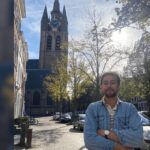
You then move into the old church area tied to Delft’s beer-brewing quarter. The guide calls out the Old Church as a recognizable silhouette and points out why it is so skewed. If you enjoy architectural quirks, this is a fun moment, and it breaks the day’s rhythm from statues and churches to the texture of how a city physically behaves.
Prinsenhof to Delfland’s tiny museum: the Oranje connection
One of the best-known Delft stories comes at Museum Prinsenhof Delft. You get a look into the inner court of the former residence of Willem van Oranje, where he was shot. There’s also a life-sized statue in the area, which is a simple but effective way to make the story feel physical rather than abstract.
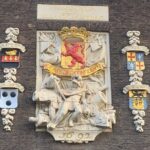
Close by is Gemeenlandshuis van Delfland, a decorated façade tied to what mattered in Delft’s governance and economy. The tour even frames it as Delft having the smallest museum, giving you a sense that history isn’t always about the biggest building—it’s about the roles people built into their daily lives.
This part of the tour is worth your attention if you like stories that connect art, politics, and trade. Delft’s importance came from more than one thing, and these stops help show that mix.
The East India Company armory and the Vermeer painting spot
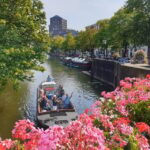
Then you walk along one of Delft’s canals and toward Armamentarium, described as a former weapons armory and a site connected to the Dutch East India Company, specifically the Delft Chamber. This is one of the tour’s value-add moments because it shifts from churches and portraits to the business machinery behind the Dutch Golden Age.
Another concrete detail here is the mention of the exact spot where Vermeer stood when he painted a famous work titled View of Delft. Even if you’ve seen that painting before, pointing to where it was made from changes how you see the city streets afterward.
Finally, you reach Station Delft. The tour’s format switches from walk-and-stop to transfer mode: a private car takes you onward to Rotterdam. That change keeps the day from feeling like nonstop foot time.
Rotterdam by train-and-car: from Coolsingel to Old Harbor
Arriving in Rotterdam, you start around the City Hall Rotterdam area on the Coolsingel in the heart of the city. You see the outside, and it’s possible the tour includes some inside viewing depending on timing. Either way, this stop sets the modern, forward-moving tone Rotterdam is known for.
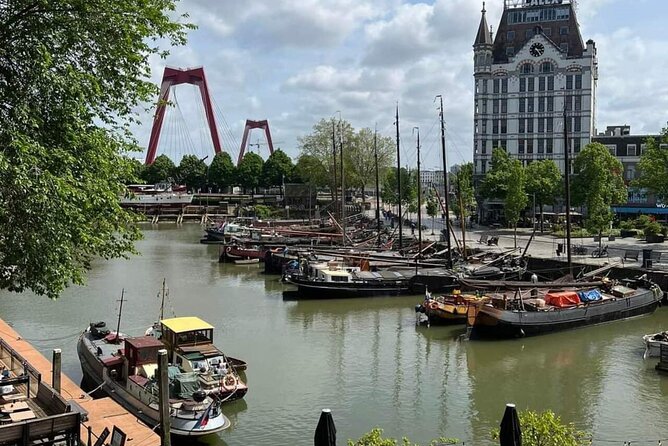
You then head toward Rotterdam Blaak and continue on to the Old Harbor area, with a key stop along the way: Grote of Sint-Laurenskerk. The guide points out that the tower survived the bombing of Rotterdam and that today the church is mainly used for events. There’s also an Erasmus connection mentioned, which adds an intellectual thread to a city known for rebuilding.
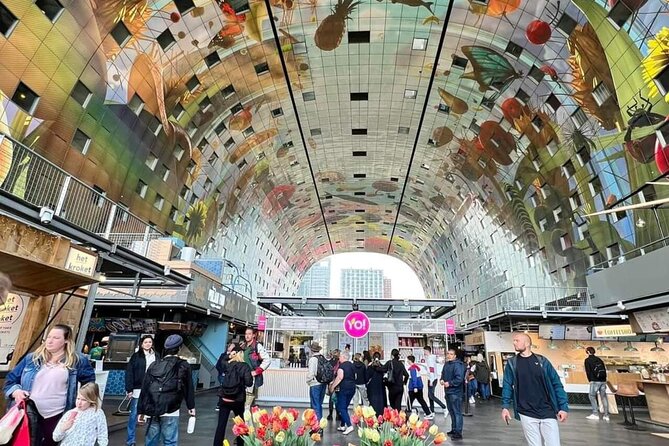
Right after that is Markthal, the famous market hall. You get to step into the space where apartments line the sides and where you can eat foods from around the world. And yes, you’re encouraged to look up at major public art inside. It’s one of the most straightforward “wow” moments of the day, especially if the weather is gray.
Kijk-Kubus and the Witte Huis: Rotterdam’s weird ideas made real
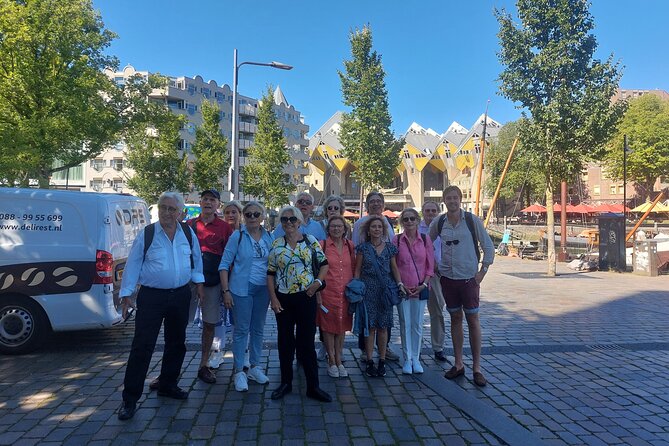
Rotterdam has a reputation for bold design, and this tour does not avoid the strange parts. The included stop is Kijk-Kubus, one of the Cubic Houses, a product of the 70s and completed in the early 80s. You’ll learn how practical it is because people actually live there, and the admission is included.
Then you see Witte Huis, described as the first skyscraper in Europe and noted as one of the few buildings to survive the bombing of Rotterdam’s center. It’s a good pairing with the Cubic Houses: one is tall and classic, the other is strange and human-scale, but both show the city’s willingness to rebuild and reinvent.
If you like architecture, this is the heart of the Rotterdam portion. If you prefer more scenic canal time, you may wish you had extra hours in Rotterdam beyond this stop sequence.
Ending at Oude Haven: your choice of how to finish the day
The tour concludes at Oude Haven, now a lively recreational area. You’ll get a chance to settle on one of the terraces or bars, or you can continue on your own toward the river Maas. The guide also suggests that the south bank is within about 10 minutes from there.
This ending matters. It’s not a hard stop at an intersection with nothing nearby. You finish in a place where you can actually decompress and decide your next move—especially helpful after a full day of walking and transfers.
Price and value of $552.69 per person for a private day
At $552.69 per person, this is not a budget tour. But it does include the kind of costs that add up fast when you plan on your own: a private guide experience across three cities, air-conditioned vehicle, transfers between areas, and lunch in Delft. You also get a ticket included for the Cubic House stop, plus it lists all fees and taxes.
Where the value shows up is in the time saved and the connections made. Seeing The Hague, Delft, and Rotterdam in one day is doable on public transit, but it’s harder to stitch together the stories and the exact viewpoints that turn a list of attractions into a coherent day. For many people, that story-thread is the real ticket price.
Who this is best for: first-timers who want the highlights without juggling transport, couples who want a shared day with a guide, and travelers who like architecture and art context. If you’re a museum power-user who wants 2 to 3 hours at major institutions, you might feel this is too light on museum time.
Should you book this private Hague–Delft–Rotterdam tour with lunch?
I think it’s a smart choice if you want a guided, efficient, and story-driven day across the Netherlands’ three-city spectrum. The combination of political landmarks in The Hague, Vermeer-linked Delft stops, and Rotterdam’s modern-and-rebuilt identity gives you variety without requiring separate planning days.
I would skip it (or add extra days elsewhere) if you expect a slow-paced museum day, or if you get cranky with frequent short stops. This tour is built for movement and context, not for long, quiet gallery time.
If you’re open to walking, you want lunch built in, and you like learning why buildings matter, this is a strong booking.
FAQ
FAQ
How long is the private tour?
The tour lasts about 8 hours.
What cities are included in the tour?
You’ll visit The Hague, Delft, and Rotterdam.
Is lunch included?
Yes. Lunch in Delft is included.
What’s included besides the guide and lunch?
The tour includes 3 private city tours, a Cubic House ticket, an air-conditioned vehicle, short transfers between cities (by train or car), and hotel pick-up and drop-off by car if you booked that option. It also includes all fees and taxes.
Is the Cubic House admission included?
Yes. Tickets to a Cubic House are included.
Where does the tour start, and can you choose your direction?
The tour can be done either way: starting in The Hague or starting in Rotterdam. You may also choose to be picked up and dropped off at a location of your choice if that option is booked.
Does the pace depend on the group?
Yes. It is you who determines the pace of the tour.
Is there an option for hotel pick-up and drop-off?
Yes, hotel pick-up and drop-off by car is available if you book that option.
What fitness level do I need?
You should have a moderate physical fitness level, since the day includes walking.
Are gratuities included?
No. Gratuities are optional and not included.
Can I cancel for a full refund?
Yes, you can cancel for free up to 24 hours in advance of the experience start time for a full refund.