REVIEW · AMSTERDAM
Amsterdam: Jordaan District Tour with a German guide
Book on GetYourGuide →Operated by Amsterdamliebe · Bookable on GetYourGuide
Jordaan slows you down fast. This 1.5-hour Amsterdam walking tour uses a German guide to guide you through the Jordaan’s famous bridges and backstreets, with stops tied to the Anne Frank story and the canal history that shaped the city.
Two things I love about it: the courtyard stops that many people never find on their own, and the way the guide explains local history in plain language, from the 17th-century tulip craze to the neighborhood’s working-class roots. The tour also follows the UNESCO-listed canal setting closely enough that you get the why, not just the where. One possible downside: it’s a walk with multiple short photo-and-explain moments, so if you want lots of long lingering, you may feel the pace a bit quick.
In This Review
- Key Highlights Worth Your Time
- Why the Jordaan District Feels Like Amsterdam’s Backstage
- Meeting at Westerkerk: Finding Your Guide and Settling Into the Pace
- Anne Frank Monument to Westerkerk: A Careful Start You Can Handle
- Canal Ring Views at Grachtengordel and Het Papeneiland
- Courtyard Tour: Sint Andrieshofje, Claes Claeszhofje, Karthuizerhofje, and Van Brienenhofje
- Secret Garden and Tulip Mania in the 17th Century
- Church-Side Landmarks: Westerkerk to Noorderkerk
- Working-Class Roots to Today’s Desirable Jordaan
- German Guide Quality: How to Maximize the Q&A
- Price and Value: What You Get for $27 (Including City Tax)
- Should You Book This Jordaan District Tour?
- FAQ
- What is the duration of the Amsterdam Jordaan District Tour?
- Where does the tour start?
- How big is the group?
- What language is the guide?
- What will I see during the walk?
- Is the tour wheelchair accessible?
- What is included in the price?
Key Highlights Worth Your Time

- Secret courtyards you can actually visit, like Sint Andrieshofje, Claes Claeszhofje, and Karthuizerhofje
- Anne Frank context along the route, with a brief look at her famous hiding place
- Canal system storytelling, including the 400-year-old canals and their UNESCO World Heritage status (2010)
- Tulip mania explained in a small, garden-style setting tucked inside the neighborhood
- Two church-area contrasts, from Westerkerk to Noorderkerk, framing old Amsterdam viewpoints
Why the Jordaan District Feels Like Amsterdam’s Backstage
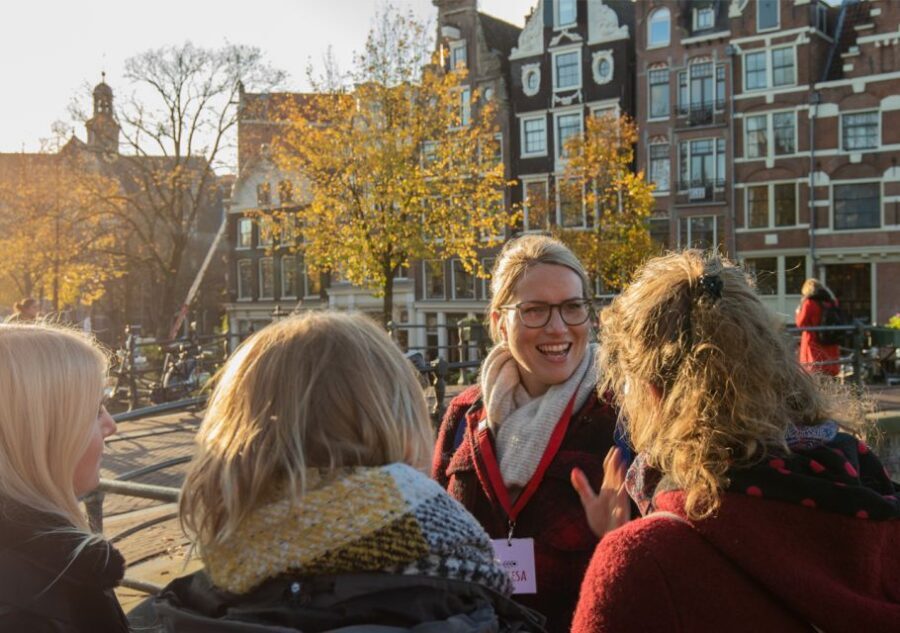
The Jordaan is the kind of place where you keep turning your head. You’ll see narrow streets that look like they’re meant for wandering, plus canal bends and bridges that make the photos effortless. And while it’s become one of Amsterdam’s most desired areas, it still keeps the feel of older, everyday neighborhoods.
What makes this tour work is that it doesn’t just point at pretty streets. It threads together the Jordaan’s past—from its earlier working-class identity to the modern real estate shine—with the physical layout you’ll walk through. That connection is what turns a pretty neighborhood into a place with meaning.
You can also read our reviews of more guided tours in Amsterdam



Meeting at Westerkerk: Finding Your Guide and Settling Into the Pace
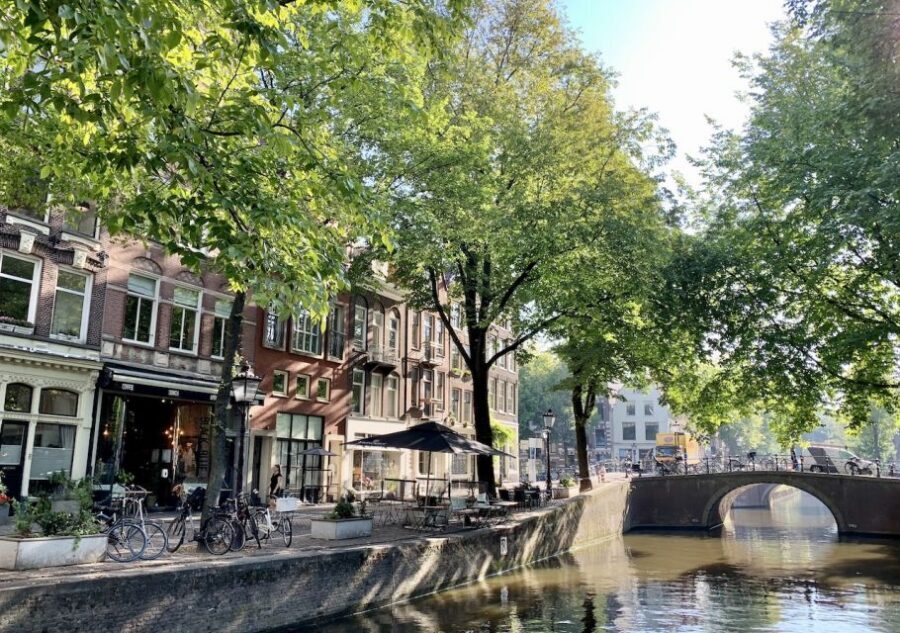
You start at the Anne Frank Monument, on the southern side of the Westerkerk. Look for your guide wearing a red name tag, which makes it easier to match the person to the group when you arrive.
This is a 1.5-hour walking format, and the flow is designed around quick “stop and look” moments. You’ll have short guided segments and photo breaks, so the pace stays lively without feeling like you’re being rushed. Also, the tour is listed as wheelchair accessible, which matters because courtyards and older streets can be hit-or-miss on other routes.
The best approach is to treat it like guided street reading. Listen for the details, then pause when your guide says you’ll want a picture. You’ll get more out of it when you don’t try to multitask the whole time.
Anne Frank Monument to Westerkerk: A Careful Start You Can Handle
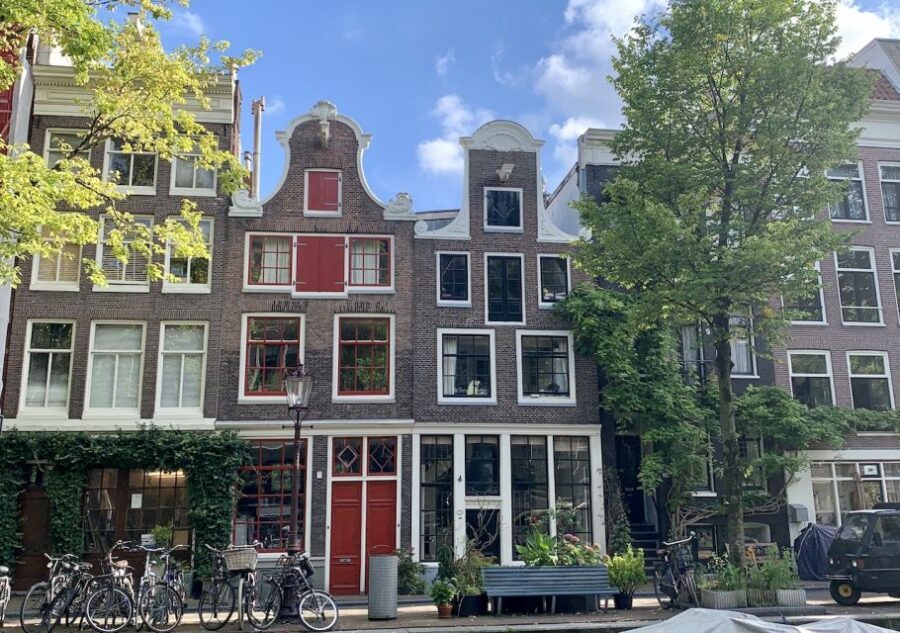
The first stop is the Anne Frank Monument, where you begin with a photo stop and then a guided introduction (about 15 minutes). This is a smart opener because it places the neighborhood in context right away, before you move deeper into the side streets.
From there, you head toward Westerkerk for a short guided segment (around 10 minutes). You’re not just sightseeing buildings here. The route sets up how this part of Amsterdam shaped daily life, and how later history leaves its mark in ways that tourists often miss when they only focus on the big headline sites.
If you’re sensitive to the subject matter, you’ll appreciate that the tour gives a brief, focused story instead of turning it into a long, emotional lecture.
Canal Ring Views at Grachtengordel and Het Papeneiland
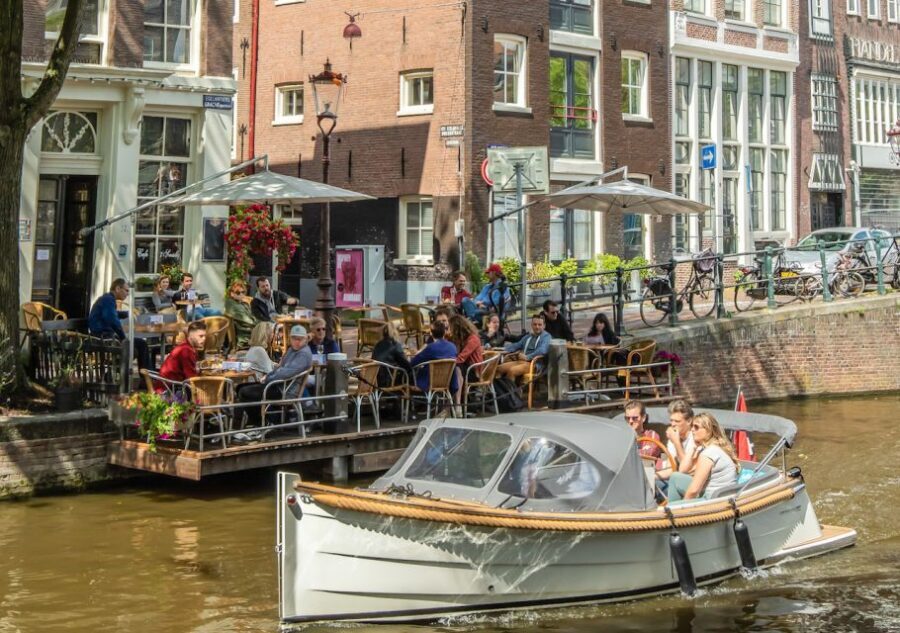
A big part of the tour is the canal scenery, and not just the pretty water. Your guide talks about the 400-year-old canal system, including the fact that it’s a UNESCO World Heritage Site (2010). That matters because canals aren’t an optional decoration in Amsterdam. They’re the city’s older infrastructure, shaping traffic, trade, and neighborhood form.
One of the key “camera windows” is along Grachtengordel, where you’ll have a photo stop plus a short guided moment (about 10 minutes). This is where you start noticing the choreography of the neighborhood: canals, bridges, and the way the streets fold in on themselves.
Then you’ll make your way toward Het Papeneiland for another short photo-and-story break (about 5 minutes). Het Papeneiland is small, but it fits the tour’s overall theme: the Jordaan is made of little spaces that feel private, even though you’re in a major city.
Don’t overthink the timing here. If your guide points out why a view matters, take the picture—but also take in the street pattern. That’s the part that stays with you after the phone battery dies.
Courtyard Tour: Sint Andrieshofje, Claes Claeszhofje, Karthuizerhofje, and Van Brienenhofje
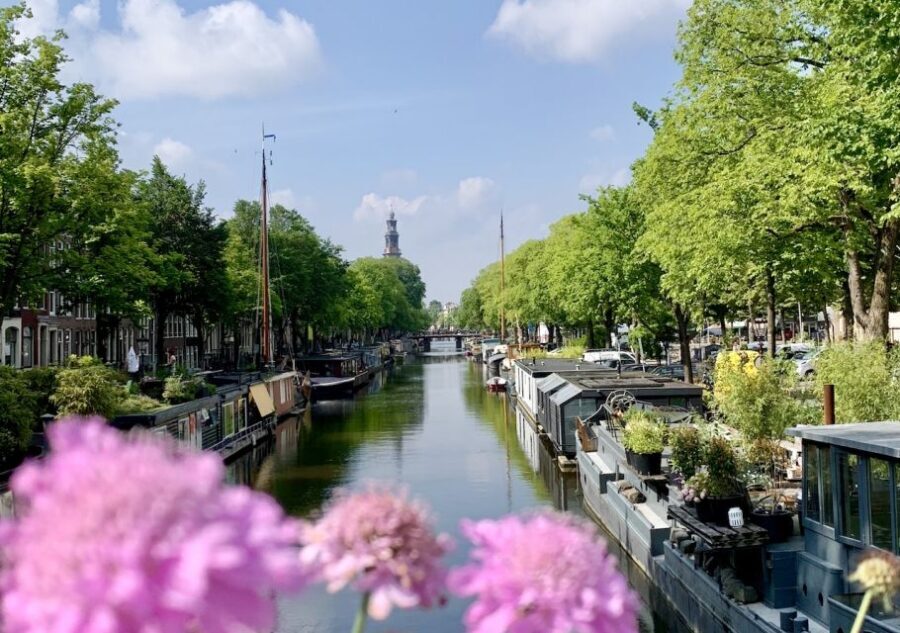
If you like Amsterdam at human scale, you’ll probably get the strongest payoff here. The Jordaan is full of interior courtyards, and this tour is built around visiting several of them so you don’t have to guess your way around.
You’ll stop at Sint Andrieshofje courtyard for a photo stop and short guided segment (about 10 minutes). Then you move to Claes Claeszhofje, with another photo stop plus guide time (also about 10 minutes). These courtyards are important because they show how residents lived and built space when the main street view wasn’t where daily life happened. You start understanding Amsterdam not only as canals and facades, but as shared passageways and enclosed community spaces.
Next comes Karthuizerhofje (again photo stop plus guided time, about 10 minutes). This is one of those spots where you can feel the shift from open streets to quieter pockets. You’ll likely notice the garden-y calm that makes these courtyards feel separate from the city outside.
Later, you’ll also reach Van Brienenhofje for a final photo stop and guided segment (about 10 minutes). By the end, you’re not just seeing several courtyards. You’re building a mental map of how the Jordaan manages density without feeling crowded.
Practical note: courtyards can feel tighter and quieter than the street. Keep an eye on your footing, and don’t block pathways while you’re taking photos.




Secret Garden and Tulip Mania in the 17th Century
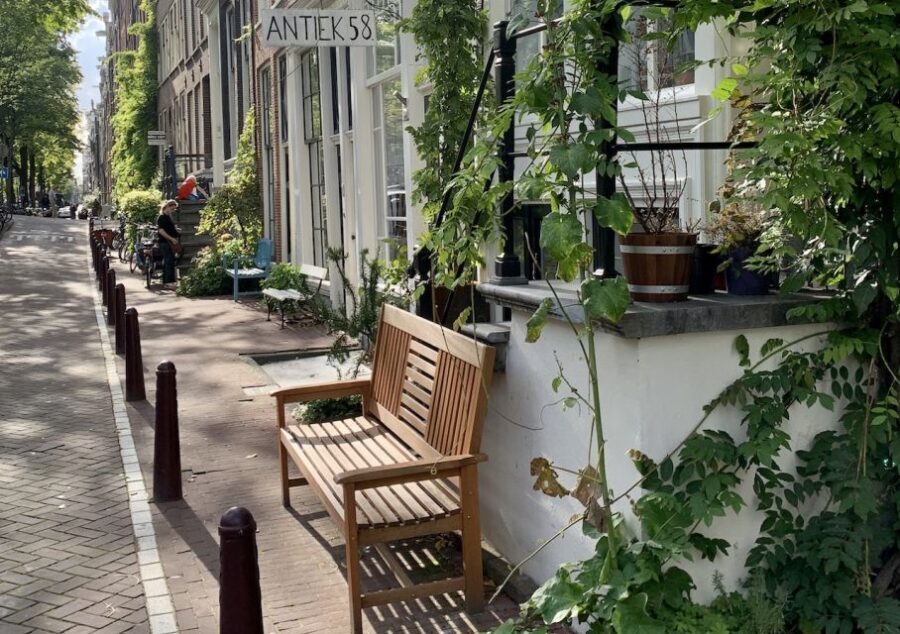
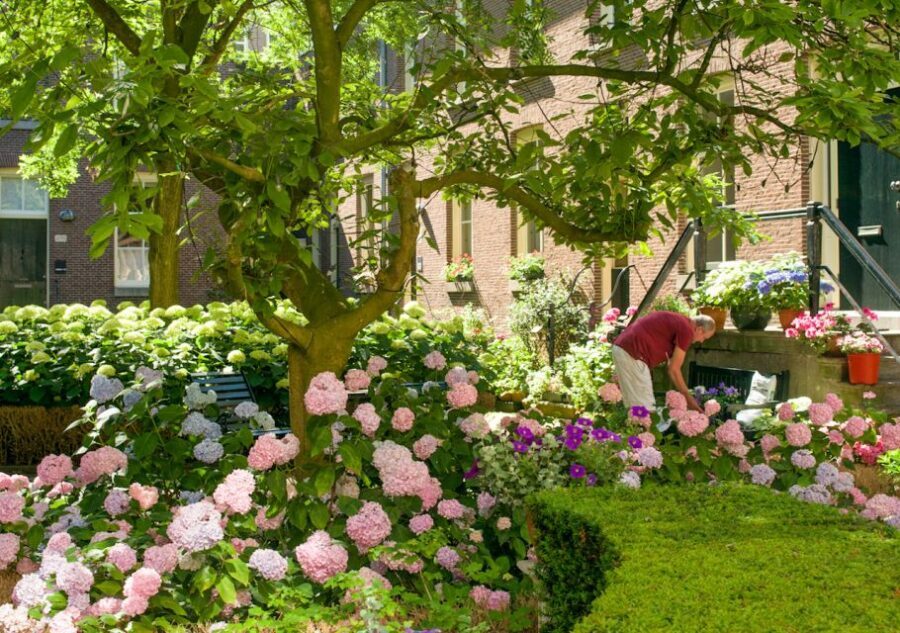
The tour includes a visit to a secret garden, one of the Jordaan’s hidden courtyards (the experience description calls it a green oasis). This is where the story shifts from street life to a specific historical obsession: tulip mania.
Your guide explains tulip mania from the 17th century as part of what you’re seeing right there in the courtyard space. That’s the value of connecting story to setting. Instead of learning tulip mania as a random trivia topic, you connect it to a time when Amsterdam’s trade and wealth could drive astonishing cultural fads.
You’ll also get a green break in the middle of the walking route. It’s not a museum moment. It’s more like a small pause where history becomes tangible through place.
Church-Side Landmarks: Westerkerk to Noorderkerk

Along the way, you pass Noorderkerk for a photo stop and short guided moment (about 10 minutes). The church stop does more than add another landmark. It gives you another angle on how different parts of Amsterdam organized community life, belief, and neighborhood identity.
That matters because the Jordaan isn’t one uniform “pretty district.” It’s stitched together from older spaces that developed over time. Seeing two church-adjacent areas helps you understand how the neighborhood fits into the broader city grid.
Working-Class Roots to Today’s Desirable Jordaan
Here’s the storyline that makes this tour feel more than a photo walk. The Jordaan used to be a working-class neighborhood. Then, over decades, it transformed into one of Amsterdam’s most desirable addresses.
The tour explains that the transformation didn’t erase the older structure. You still walk through 17th-century backstreets and bridges, and that physical framework makes the past visible. Even the canal edges and the narrow street geometry reinforce that continuity.
You’ll likely leave with a clearer sense of how neighborhoods change. You don’t just hear that “Amsterdam gentrified.” You see the shape of the place and understand how people could keep living there while the status shifted around them.
German Guide Quality: How to Maximize the Q&A
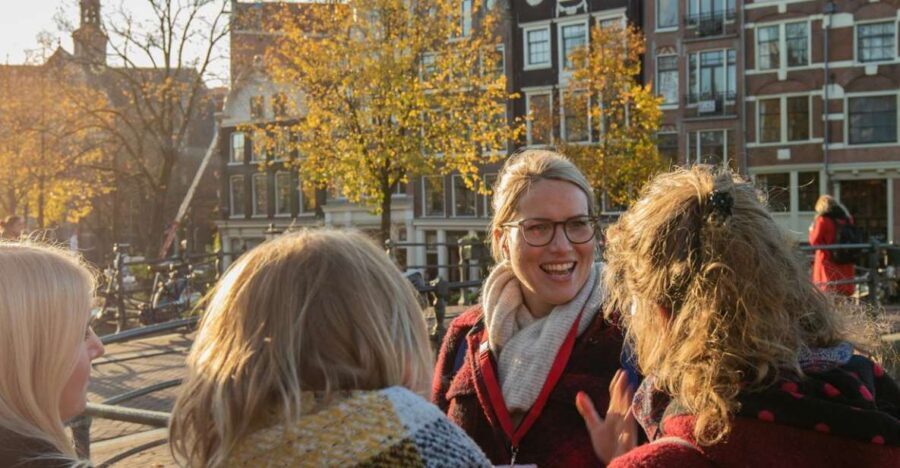
This tour is led by a German guide, and the best versions seem to be the guides who know the neighborhood intimately. In the feedback, one guide named Lili stands out for being local and for answering questions with ease. Another guide name that appears in the feedback is Justin, praised for thoughtful, individualized answers.
That matters for you if you like asking follow-ups. This kind of tour works best when you treat the guide like a local translator for the city’s history. If you’re curious about how the courtyards were used, why the canals matter, or what to do after the walk, ask. This tour is built around those moments.
Also, the group can be private or small-group. If you’re traveling with friends or you want quieter conversation, the private option can help you slow down the pace a little.
Price and Value: What You Get for $27 (Including City Tax)
At $27 per person for a 1.5-hour walking tour, this is priced like an experience that’s trying to deliver more than a generic highlights loop. One key value point is that the city tax (€1.50 per passenger) is listed as included, so you’re not scrambling later to figure out what you’re actually paying.
You’re also paying for several specific, experience-driven elements:
- A guided route focused on the Jordaan’s layout, not just the canal photo spots
- Multiple courtyard visits, including courtyards you’d likely never stumble into casually
- Short but meaningful context on Anne Frank as you pass the area tied to her hiding place
- A secret garden stop where tulip mania is explained in the setting where you’re standing
If you’re the type who enjoys understanding why a neighborhood looks the way it does, this tour is a good match. If you already know Amsterdam’s canal history deeply and you prefer long, unstructured wandering, you might find the time limits a bit tight.
Should You Book This Jordaan District Tour?
Book it if you want a focused way to explore Amsterdam’s Jordaan with real neighborhood context, especially the courtyard side of the district. It’s also a smart choice if you’re interested in how the canal system shaped the city and you like history tied to physical places—monuments, churches, and those interior courtyards that change the whole mood.
Skip it or consider a different style if you strongly dislike walking routes with short stop-and-go segments. At 1.5 hours, it’s designed to cover a lot, so you’ll get breadth over deep, long pauses.
FAQ
What is the duration of the Amsterdam Jordaan District Tour?
The tour lasts about 1.5 hours (about a 90-minute guided walk).
Where does the tour start?
The meeting point is in front of the Anne Frank statue on the southern side of the Westerkerk.
How big is the group?
You can choose between a private group or a small group tour.
What language is the guide?
The live guide speaks German.
What will I see during the walk?
You’ll walk through the Jordaan with stops including the Anne Frank Monument area, Westerkerk, canal viewpoints, multiple courtyards (including Sint Andrieshofje, Claes Claeszhofje, Karthuizerhofje), Noorderkerk, Het Papeneiland, and Van Brienenhofje, plus a secret garden and tulip mania explanation.
Is the tour wheelchair accessible?
Yes, the tour is listed as wheelchair accessible.
What is included in the price?
The included items are the native-German guide and the city tax (€1.50 per passenger). The tour price is listed as $27 per person.