REVIEW · AMSTERDAM
Amsterdam: Life of Anne Frank and World War II Walking Tour
Book on GetYourGuide →Operated by 360 Amsterdam · Bookable on GetYourGuide
Street corners tell Anne Frank’s story.
This small-group (or private) walk connects Anne Frank’s life and writing with the streets of Amsterdam’s Jewish Quarter and the WWII events that swallowed ordinary days. It starts at the Portuguese Synagogue, a real, 17th-century Sephardic site that still functions as a synagogue today—so you’re not just hearing history, you’re standing in it.
I especially like how the guide threads personal details—family dynamics, the move from Germany, and time in hiding—into the larger wartime story. I also love that the tour doesn’t stop at one famous name; it brings in the Dutch Resistance and points to how secrecy worked in the city, including a stop at the Auschwitz Monument for reflection. One consideration: the tour covers the Anne Frank House only from the outside, and you’ll need a separate ticket if you want to go in.
In This Review
- Key Things That Make This Tour Worth Your Time
- What You Learn in a 2-Hour Anne Frank and WWII Walk
- Beginning at the Portuguese Synagogue: A Living 17th-Century Starting Line
- The Jewish Quarter Route: Streets, Community, and Why It Matters
- Anne Frank’s Life Story, Explained Through Real Amsterdam Context
- Time in Hiding and the Dutch Resistance Thread You’ll Remember
- Auschwitz Monument Stop: A Moment for Reflection, Not a Quick Photo
- Seeing the Anne Frank House from the Outside (and Why That’s Still Valuable)
- Price and Value: Why $37 Works for a Smart “Story Map” Tour
- Small-Group vs Private: Picking the Right Comfort Level
- Who This Tour Fits Best (and Who Might Want Something Else)
- Practical Tips to Make the Walk Easier
- Should You Book This Anne Frank and WWII Walking Tour?
- FAQ
- Is Anne Frank House entrance included?
- How long is the tour?
- What’s the meeting point?
- Is a private tour available?
- What languages are available?
- What should I bring, and what’s not allowed?
Key Things That Make This Tour Worth Your Time
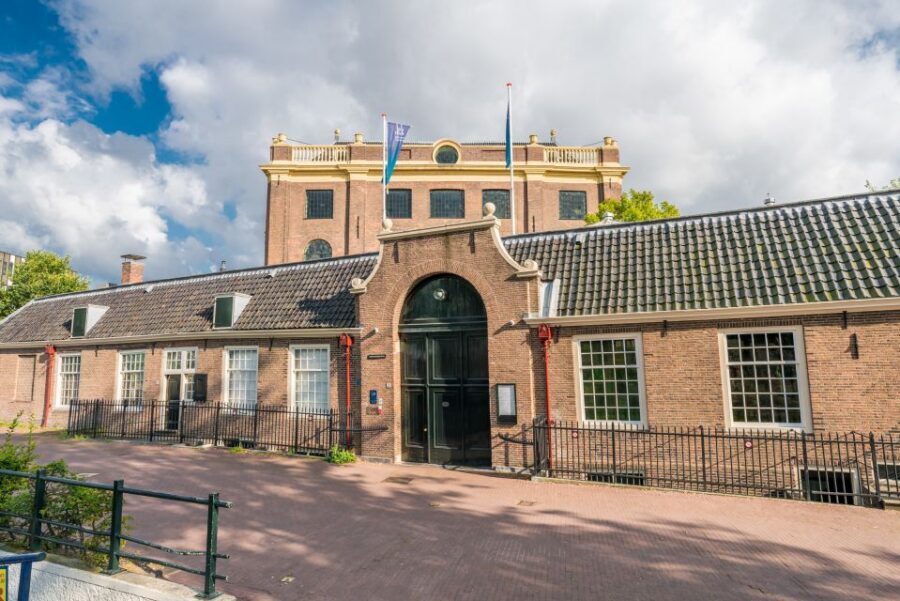
- Portuguese Synagogue start at a site that’s still active today
- Anne Frank’s diary explained in context, not as a standalone story
- Jewish Quarter history on the route, including how the neighborhood developed
- Dutch Resistance focus, with references to secret hiding places
- Auschwitz Monument stop for a respectful moment of remembrance
- Small-group or private format, so you can match your comfort level
What You Learn in a 2-Hour Anne Frank and WWII Walk
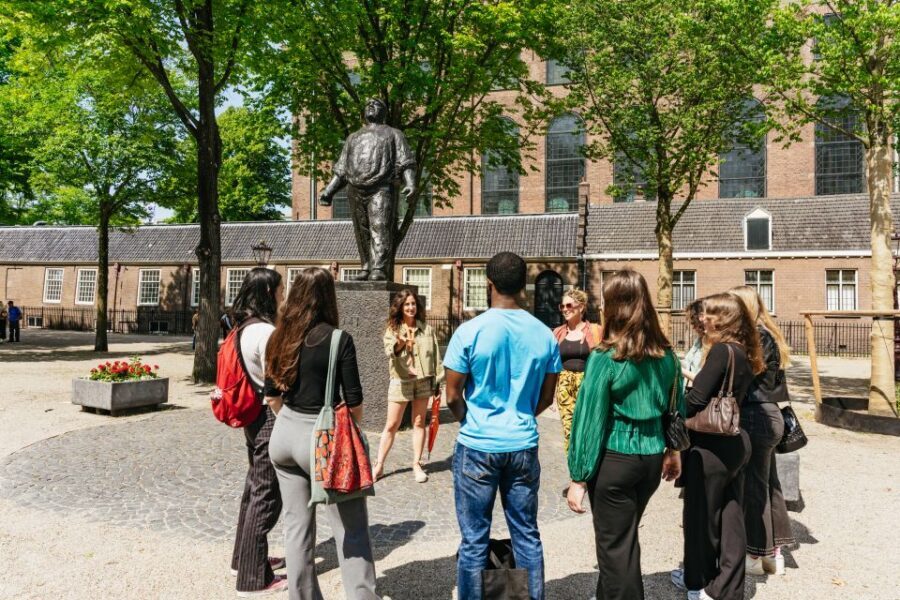
If you want Anne Frank to make emotional sense fast, this is a smart way to do it. In about two hours, you connect the diary to the geography of Amsterdam—where people lived, where pressure built, and where hope turned into hiding and survival. The guide is there to connect dots with clear storytelling, so you’re not walking around feeling like you just walked past a list of famous places.
The tour is also a good reality check. It includes both the personal scale of Anne Frank’s life and the wider wartime machinery of occupation and persecution. That balance helps you avoid the common mistake of treating the story like a distant, museum-only tragedy. Here, it’s tied to neighborhoods and real streets.
And yes, it’s a walking tour. Bring comfortable shoes and water. Amsterdam will happily keep you moving while your brain does the heavy lifting.
You can also read our reviews of more walking tours in Amsterdam



Beginning at the Portuguese Synagogue: A Living 17th-Century Starting Line

The tour begins outside the Portuguese Synagogue—a 17th-century Sephardic building that still operates as a synagogue. That detail matters more than it sounds. When your first stop is an active religious site, the story immediately feels grounded in continuity, not just broken history.
From there, your guide explains how the original Jewish neighborhood formed and developed over centuries. This isn’t about memorizing dates for trivia night. It’s about understanding that Jewish life in Amsterdam wasn’t a single moment—it was a community with its own rhythms, institutions, and spaces.
Practical bonus: this is a clear first landmark. Even if you’re new to Amsterdam, you get a reference point right away.
The Jewish Quarter Route: Streets, Community, and Why It Matters

As you move through the Jewish Cultural Quarter area, the guide weaves in what the neighborhood was like before the war tightened everything. You’ll hear about the history of the Jewish Quarter and how it became a meaningful target during WWII. The route is designed so the city itself becomes the explanation—buildings and street-level context turn into clues.
You’ll also pass the Jewish Historical Museum area. You’re not buying museum tickets on this walk, but it’s a useful sight. It signals that the story you’re hearing isn’t only “Anne Frank’s story.” It’s also community history—documents, artifacts, and records that help explain how persecution and displacement worked in practice.
The best part of this section is tone. A good guide keeps the conversation respectful and focused. In this tour, guides are often praised for making difficult material feel human rather than sensational, including with emotionally heavy moments.
Anne Frank’s Life Story, Explained Through Real Amsterdam Context
Once the route gets rolling, the tour shifts into Anne Frank’s personal story—with details that help the diary land properly. You’ll hear about her family moving from Germany to Amsterdam, and you’ll get context for the family dynamics that shaped daily life under pressure.
Expect your guide to talk about Anne’s love of writing and how that creativity grew inside a shrinking world. You also learn about conditions in Amsterdam in the 1930s and 1940s—what daily life looked like before hiding, and what it meant when hiding became the reality.
A key value here is pacing. Instead of dumping a long biography on you, the tour builds Anne’s story into the route. You see why certain places mattered, and you understand how the diary became famous after the war—especially through her father’s life and what followed.
If you like history that connects people to places, you’ll probably enjoy this section a lot. It’s not only about what happened. It’s about how it felt, day after day, in a specific city.
Time in Hiding and the Dutch Resistance Thread You’ll Remember
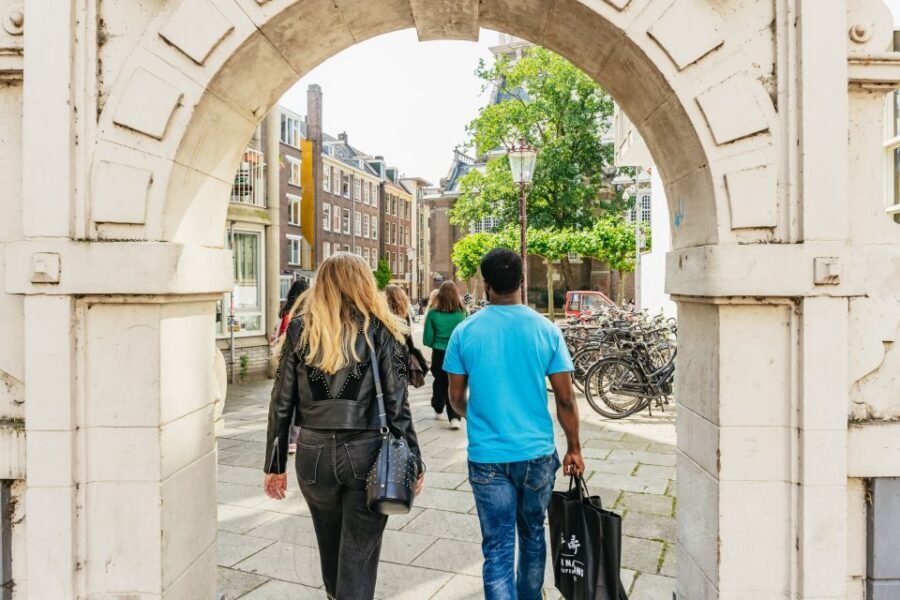
One of the most useful parts of the walk is the focus on the Dutch Resistance and the way secrecy worked in Amsterdam. You’ll hear about Dutch resistance efforts during WWII and see where secret hiding places were located—at least at the level this kind of walking tour can cover.
This matters because it corrects a common misconception. People often think history happened in giant, dramatic bursts. In reality, survival frequently depended on networks—neighbors, helpers, and carefully managed information. Resistance stories show the infrastructure behind the diary’s world.
You’ll also get a clearer sense of how persecution played out locally. The tour connects the diary’s setting to occupation realities and to the risks ordinary people faced if they were caught helping.
And because WWII material can overwhelm fast, it’s smart that the tour builds toward its memorial moment instead of throwing everything at you at once.






Auschwitz Monument Stop: A Moment for Reflection, Not a Quick Photo
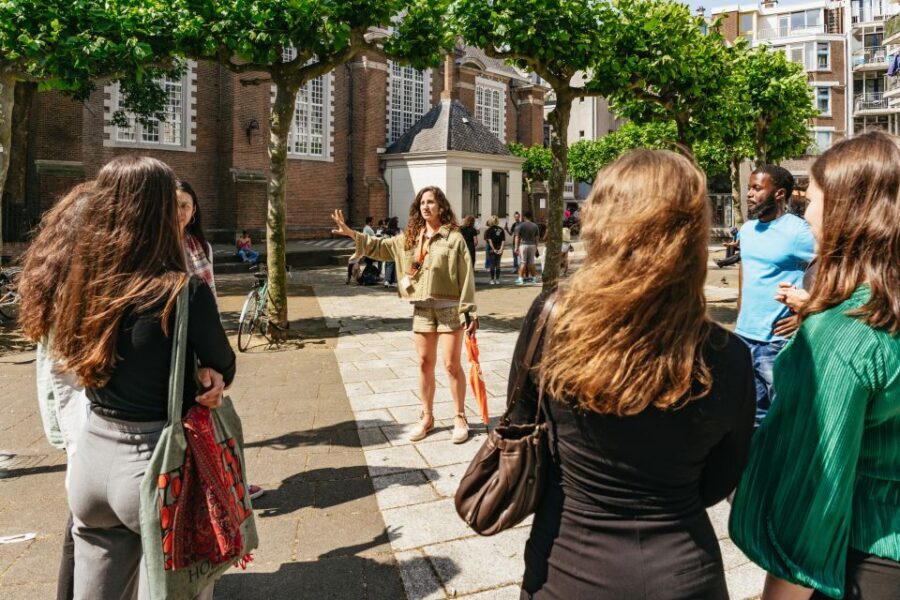
Mid-walk, you stop at the Auschwitz Monument. This is the part of the tour that shifts from storytelling to remembrance. The setting encourages a slower pace, and you’ll likely be given time to pause and reflect in a respectful way.
What I like about including this stop is that it widens your focus. Anne Frank’s story is central, but the monument places her experience inside the broader tragedy of the Holocaust and the scale of what Europe endured.
It’s also a good reality check for pacing. If your head is full of names and dates, the monument helps you step back and absorb the weight of what you’ve been hearing.
Seeing the Anne Frank House from the Outside (and Why That’s Still Valuable)

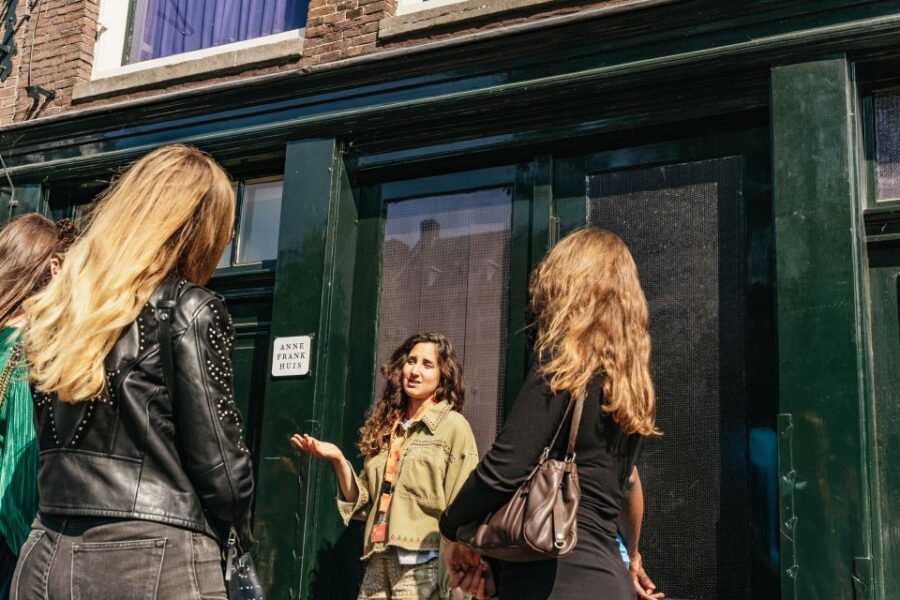
The tour ends with seeing the outside of the Anne Frank House façade. You don’t go in—this tour explicitly does not include entrance to the Anne Frank House. But seeing the exterior after hearing the story makes the place feel less like a postcard and more like a lived-in container for fear, routine, and writing.
If you want to visit inside, plan ahead. Tickets are known to sell out in advance, and it’s advised to book a few months ahead if you want that experience. If you can’t get in, this walk still helps you understand what you’re looking at when you stand in front of it.
Think of it like this: the walking tour gives you a story map. The Anne Frank House gives you the building details. Ideally, you do both, but you can also do this walk alone and come away with a much clearer understanding.
Price and Value: Why $37 Works for a Smart “Story Map” Tour

At $37 per person for 2 hours, this tour sits in the “high-impact, mid-cost” category. What makes it good value isn’t the price number—it’s what you’re paying for:
- A professional guide who links personal narrative to Amsterdam geography
- Stops that cover both Jewish community context and WWII memorial reflection
- A route structure that helps you learn faster than reading alone on your own
For roughly the length of a long museum audio session (without the fatigue of sitting still), you get a guided framework. And because the Anne Frank House entrance is not included, you’re not paying for a ticket you might not be able to use.
If your priority is understanding the story before you visit major sites, this price makes sense. If your priority is only to get inside the Anne Frank House, you’ll need to add a separate booking.
Small-Group vs Private: Picking the Right Comfort Level

You can choose between a small-group or private guided experience. That matters because WWII tours need the right pace. In a group setting, you’ll follow the guide’s rhythm. In a private setting, you might have more chances to ask questions and adjust the tempo to your own emotional comfort.
One caution: shared group and private options don’t always offer the same languages. The tour lists multiple languages—Dutch, German, Portuguese, Italian, English, Spanish, French—but you should check that the specific option you book matches the language you want.
Also: no one wants this to turn into a hassle. You’re walking, and luggage or large bags aren’t allowed, so travel light.
Who This Tour Fits Best (and Who Might Want Something Else)
This tour is a strong match if:
- You want Anne Frank’s diary explained with Amsterdam context, not just dates
- You like WWII history that includes local resistance and everyday survival
- You want a first-day orientation to the Jewish Quarter layout and nearby memorial sites
It may feel less ideal if:
- You’re mainly after the Anne Frank House interior experience and don’t want the exterior-only approach
- You’re traveling with lots of luggage (this tour restricts large bags)
- You want a very silent, self-guided experience—this one is guided and story-led
For families with small kids: children up to 3 years old participate for free, which can make it easier to plan.
Practical Tips to Make the Walk Easier
Do these small things and you’ll enjoy it more:
- Wear comfortable shoes. You’re on your feet for a full stretch.
- Bring water. Two hours goes faster than you think when emotions run high.
- Have your smartphone charged in case you want to look up details after stops.
- If you’re going for Anne Frank House later, start planning tickets early since they can sell out.
- Choose your language option carefully, especially if you’re booking private.
Should You Book This Anne Frank and WWII Walking Tour?
If you want a guided, story-connected walk that helps the diary and WWII events make sense in the streets of Amsterdam, I think this is an easy yes. It’s especially valuable if you’re doing the Anne Frank House separately or you might not be able to get tickets—because you still leave with the context that makes the famous sites meaningful.
Book it if you want a thoughtful, time-efficient story map plus a respectful memorial stop. Skip it only if your sole goal is going inside the Anne Frank House and you don’t care about the surrounding neighborhood and resistance context.
FAQ
Is Anne Frank House entrance included?
No. The tour does not include entrance or tickets to the Anne Frank House. If you want to visit inside, it’s advised to book tickets a few months ahead since they often sell out.
How long is the tour?
The tour duration is 2 hours.
What’s the meeting point?
The meeting point may vary depending on the option booked. The tour ends back at the meeting point.
Is a private tour available?
Yes. There is a private group option, in addition to a small-group experience.
What languages are available?
The tour guide can be available in Dutch, German, Portuguese, Italian, English, Spanish, and French. Language availability can differ between small-group and private options, so check the languages you want.
What should I bring, and what’s not allowed?
Bring comfortable shoes, water, and a charged smartphone. Luggage or large bags are not allowed.