REVIEW · AMSTERDAM
Amsterdam: Anne Frank Walking Tour – Guided in EN/DE/IT/ES
Book on GetYourGuide →Operated by Amsterdamliebe · Bookable on GetYourGuide
Anne Frank’s footsteps have a sound. This walking tour threads Amsterdam’s Jewish Quarter with WWII history and passages from her diary, read by a live guide in English, German, Italian, or Spanish. You’ll move through the streets where Jewish life once thrived, then confront the discrimination and deportations that followed Nazi occupation.
What I like most is the way the tour keeps facts tied to the ground under your shoes. I especially love the human tone—you hear about daily life, then the break of brutality—plus the diary excerpts that make the story feel personal without turning it into theater. The best guides I’ve heard on this route, like Sarah, Emilia, Valentina, and Deborah, hold a steady pace and explain the connections clearly.
One thing to consider: this is a sober topic with real memorial stops, so if you want a light, casual stroll, this won’t be that. Plan on taking it seriously, with comfortable shoes and a ready heart.
In This Review
- Key takeaways before you go
- Walking Through the Jodenbuurt and WWII Footsteps
- Meet at De Waag: the easiest start in Amsterdam (if you avoid one trap)
- What 2 hours really means: walking distance, pace, and group feel
- Nieuwmarkt Square and Zuiderkerk: where city life meets Jewish history
- Huis de Pinto and Rembrandt House: Jewish presence and non-Jewish neighbors
- Jewish memorials and street-level remembrance: Stolpersteine and the Portuguese Synagogue
- Auschwitz Monument, The Dokwerker, and the National Holocaust Names Monument
- Anne Frank’s diary as the tour’s moving thread
- Languages, group comfort, and who this tour fits best
- Value for money: $28 for a guided, emotionally serious route
- Quick practical checklist before you go
- Should you book this Anne Frank walking tour?
- FAQ
- Do we visit the Anne Frank House?
- How long is the walking tour?
- How much walking is involved?
- What languages are available?
- Where do we meet the guide?
- Is it wheelchair accessible?
- Do I need to pay admission fees for stops?
- What should I bring?
Key takeaways before you go

- Diary excerpts, not just facts: you’ll hear passages from Anne Frank’s diary along the way.
- Jewish Quarter landmarks with context: synagogue history, Jewish homes, and memorial sites all connect to the timeline.
- A guided pace that works: guides like Josh and Charlotte are known for making the walk feel organized and doable.
- Important memorials and Stolpersteine: you’ll see street-level remembrance tied to specific people and places.
- Choose your language carefully: the tour is not bilingual, so pick the right option upfront.
- No Anne Frank House visit: you’ll focus on the Jewish Quarter and WWII memories instead.
Walking Through the Jodenbuurt and WWII Footsteps

Amsterdam’s Jewish Quarter, or Jodenbuurt, isn’t just a neighborhood you pass through. It’s a place where the city’s history keeps showing up in everyday streetscapes—homes, churches, synagogues, memorials, and the small, deliberate marks that say, remember this.
This tour starts by grounding you in how the area formed and why it mattered. You’ll hear that the Jewish population in Amsterdam grew after Jews were expelled from Spain during the Spanish Inquisition. That shift helped turn Amsterdam into a major commercial center, and the neighborhood’s layout still reflects that influence today—so the story isn’t only tragedy. It begins with community life, work, trade, and the kind of urban growth that leaves physical traces.
Then the tour turns hard. You’ll connect Nazi-era discrimination to what happened in Amsterdam during the Holocaust. The guide explains how deportations unfolded and why almost no one returned. At the same time, you’ll hear about resistance—by Jews and non-Jews—because the story includes people trying to save lives even when it was dangerous.
You can also read our reviews of more walking tours in Amsterdam



Meet at De Waag: the easiest start in Amsterdam (if you avoid one trap)

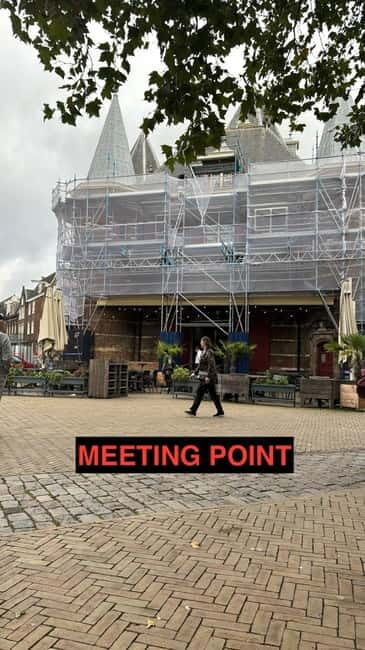
You’ll meet your guide at the entrance of De Waag, a historic building that looks like a small castle in the middle of Nieuwmarkt. Your guide wears a red name tag around their neck, so you shouldn’t have to hunt for long.
Here’s the practical tip that saves time: sometimes Google Maps leads you to the back side of the building. If you see the coffeeshop Jolly Joker, you’re on the wrong side. Walk around the castle and head to the entrance. It’s a small thing, but it stops that first-5-minutes panic.
The tour ends back at the meeting point, so you don’t need to worry about changing transportation or figuring out a late pickup.
What 2 hours really means: walking distance, pace, and group feel
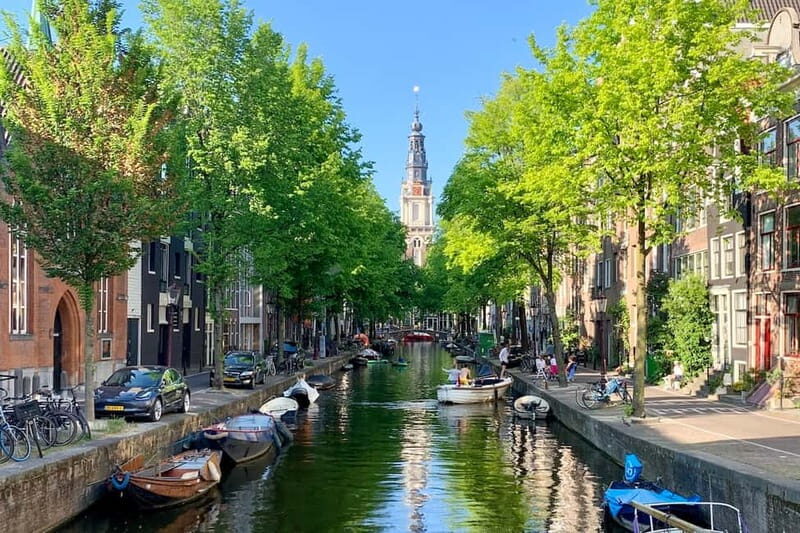
The walk is about 2–3 kilometers, so it’s manageable, but not a sit-and-watch tour. You’ll want comfortable shoes and some water. In rain, bring an umbrella—this tour runs in all weather.
What helps is the way the route is broken into short stop-and-listen sections. Many guides keep a steady rhythm and leave room for questions. If you like tours where you can ask follow-ups (instead of rushing on), you’ll likely appreciate the format.
Also, it’s offered for private groups, which can make a huge difference if you’re traveling with kids, have mobility needs, or simply want less crowding around each stop.
Nieuwmarkt Square and Zuiderkerk: where city life meets Jewish history
Your first major stop is Nieuwmarkt Square. The guide gives you a short orientation so the neighborhood’s streets make sense. This is one of those moments where the tour acts like a map in human form—what you’re about to see is not random. It’s tied to where Jewish life concentrated and how Amsterdam’s power and trade shaped the area.
Next comes Zuiderkerk. Even from the outside, the building anchors a bigger point: this was never a segregated world. The Jewish Quarter existed alongside other institutions and residents. You’ll get context that helps you understand how the neighborhood’s identity formed—and how that same closeness later made persecution hit everyone in the city.
A good guide will keep your attention here by linking architecture to people. If you’re someone who likes hearing how a place worked day-to-day, this part delivers.
Huis de Pinto and Rembrandt House: Jewish presence and non-Jewish neighbors

Stop 4 is Huis de Pinto. This is where the tour reminds you that Jewish history in Amsterdam includes wealth, influence, and prominent homes—not only suffering. You’ll hear how this area became one of the wealthy commercial hubs in Europe and how that status shaped who lived where.
Then you head to Rembrandt House. This is a key twist for many people: it’s not only about Jewish residents. The neighborhood also included famous non-Jewish people such as painter Rembrandt van Rijn. Hearing that in context changes how you picture the district. It becomes a lived-in community with mixed streets, not a museum set.
One word of advice: if you’re feeling overwhelmed, this is a good place to pause mentally. The tour moves from success and neighborhood identity toward the darker wartime shift, and your brain will appreciate the breathing room.
You can also read our reviews of more guided tours in Amsterdam




Jewish memorials and street-level remembrance: Stolpersteine and the Portuguese Synagogue
Stop 7 is the Portuguese Synagogue. You’ll get a focused visit and a photo stop, but the more important value is the explanation. The synagogue connects the broader story of Jewish immigration into Amsterdam with the specific identity of the community that shaped the city.
Then you’ll see the Stolpersteine—small memorial plaques placed in streets. They’re designed to pull remembrance into daily life, in the spots where people once lived. This is one of those experiences that doesn’t feel abstract. You’re standing where names connect to history, not reading it from a page.
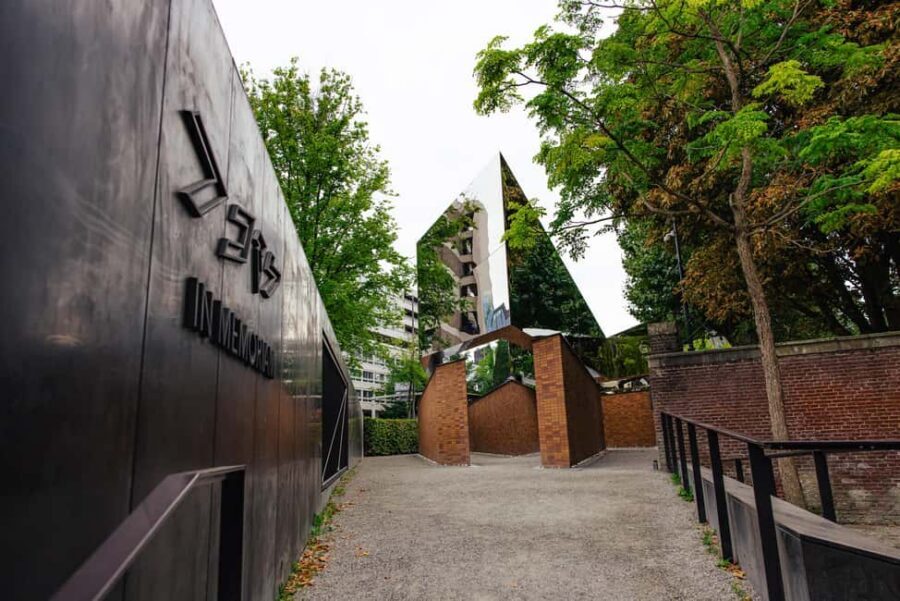
The tour also brings you past other testimony points in the area, including the gate of the old plague cemetery and monuments related to resistance and WWII memories. These stops vary in emotional weight, but they all work toward one goal: showing that memory is built into the neighborhood, not kept in a box.
Auschwitz Monument, The Dokwerker, and the National Holocaust Names Monument
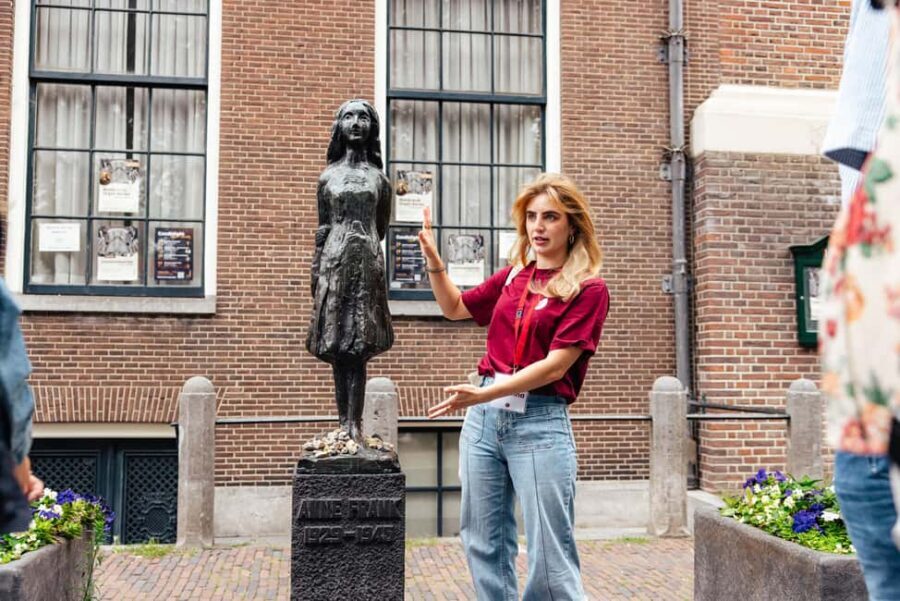
The itinerary brings you into major WWII and Holocaust commemoration zones.
Stop 9: Auschwitz Monument, Amsterdam is where the tone becomes fully explicit. The guide explains the significance of the monument and how it relates to the deportation story—what happened to Amsterdam’s Jews, and how the Holocaust unfolded.
After that, Stop 10: The Dokwerker offers another kind of reminder—again, not just about the camps, but about how occupation and persecution transformed everyday life. Even if you don’t know the background before the tour, a good guide will make the place feel intentional, like a chapter title in stone.
Then you’ll finish with Stop 11: National Holocaust Names Monument, including a photo stop and guided time, and then Stop 12: finish at the same monument. This is the closing moment that sticks. Why? It turns the Holocaust back into people—names, not numbers—and it pushes you to hold onto the scale without losing the individual story.
If you’re someone who appreciates visual memory anchors, this part is worth staying present for. Don’t rush your photos here. Give the monument a moment, then let the rest of the walk settle into your head.
Anne Frank’s diary as the tour’s moving thread
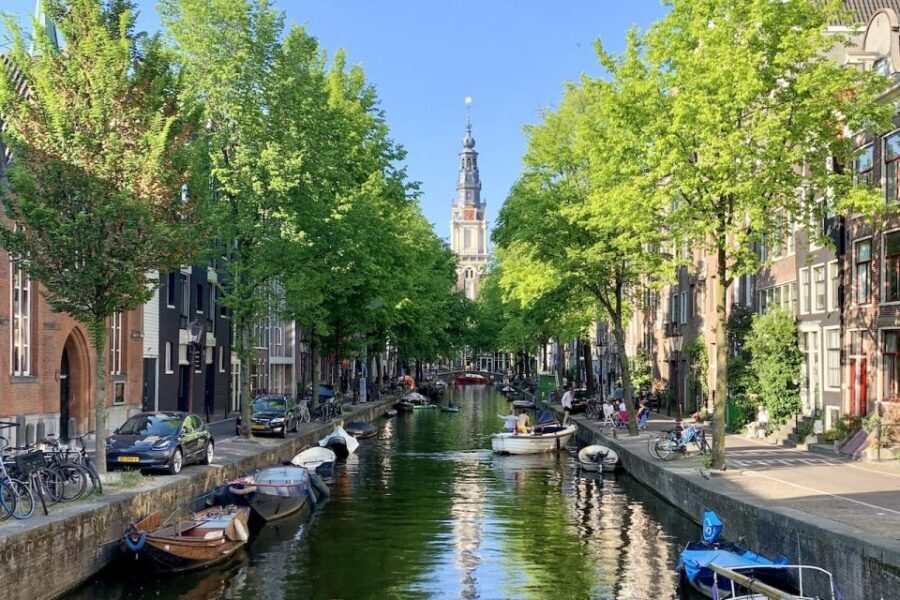
A lot of Anne Frank content is either overly familiar or too distant. This tour uses something stronger: her diary excerpts as you pass through places tied to the wider story.
That matters because the diary is more than a historical artifact. It’s a voice—young, observant, sometimes furious, sometimes funny in the way kids try to survive fear. When a guide reads short passages in your language, it gives you a human timeline while you walk.
Guides like Emilia, Valentina, and David are particularly known for doing this respectfully—keeping the pace, reading clearly, and making the connection between the diary and what the street represented at that point in history.
One practical note: you won’t visit or even see the Anne Frank House on this tour. If that’s a must-do for you, you’ll want to plan it separately. This tour’s value is the Jewish Quarter route and the WWII context around it.
Languages, group comfort, and who this tour fits best
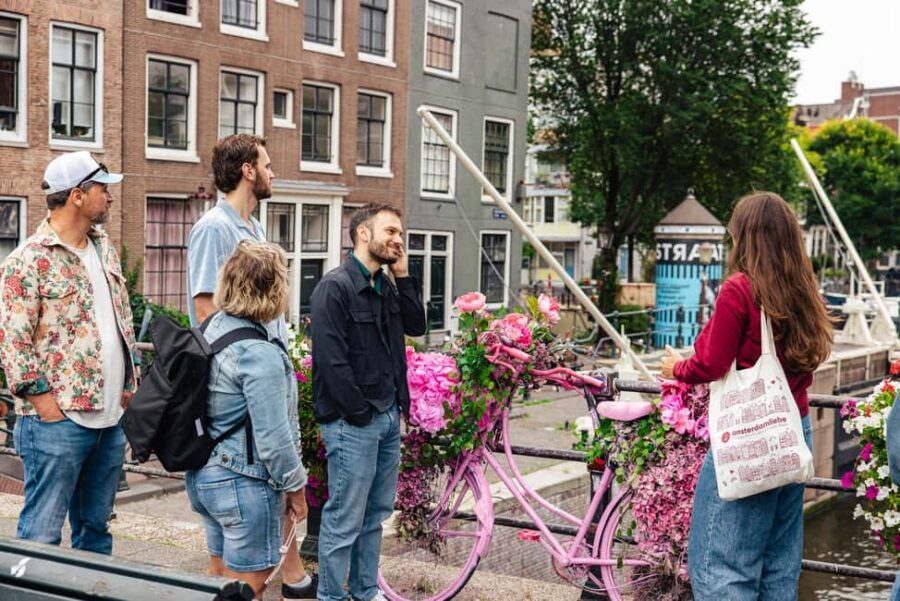
The tour is offered in German, English, Spanish, and Italian, but it’s not bilingual. So pick the option that matches the language you’ll enjoy most. If you’re choosing between English and Spanish, for example, don’t assume the guide will repeat everything.
The walk is wheelchair accessible, and there’s also a private group option if you want a calmer setting or better conversation flow.
Who it suits best:
- You’re visiting Amsterdam for history that connects to real places
- You want Anne Frank’s story but also the wider Jewish Quarter context
- You prefer guided explanations over self-guided museum reading
- You like tours that leave time for questions and discussion
If you’re short on time, this 2-hour format gives you a structured way to understand the neighborhood without turning your day into a long logistics puzzle.
Value for money: $28 for a guided, emotionally serious route
At about $28 per person for a 2-hour guided walk, this tour can feel like a small price for a big experience—mainly because you’re paying for a live guide and a focused route through multiple meaningful stops.
You also won’t face admission fees during the walk because the sights on this route are visitable for free. That matters in Amsterdam, where ticketed attractions can add up fast. The cost here is mostly about interpretation and pacing: you’re buying clarity, context, and the ability to ask questions where it counts.
What you’re not buying is comfort through the emotional heavy stuff. This is a memory-forward, WWII-focused route. But that’s also why it feels worthwhile: the guide connects the city’s past to the present in a way that a quick photo stop never will.
Quick practical checklist before you go
- Bring comfortable shoes (you’ll walk 2–3 kilometers)
- Bring water
- Dress for weather; bring an umbrella if rain is likely
- Choose your tour language carefully (not bilingual)
- Know that you’ll not visit the Anne Frank House
Should you book this Anne Frank walking tour?
Book it if you want a guided path through Amsterdam’s Jewish Quarter that treats Anne Frank and WWII history with seriousness and structure. I’d especially recommend it if you like guided reading of diary excerpts, clear connections between neighborhood places and historical events, and a pace that doesn’t feel like a sprint.
Skip it only if you’re looking for a purely light sightseeing day or if you’d be upset by memorial-heavy stops. If you’re prepared for that tone, this tour offers strong value, real context, and the kind of place-based understanding that makes Amsterdam feel deeper than its canals.
FAQ
Do we visit the Anne Frank House?
No. This walking tour does not visit or include the Anne Frank House.
How long is the walking tour?
The tour lasts about 2 hours.
How much walking is involved?
It covers roughly 2–3 kilometers on foot.
What languages are available?
The guide speaks German, English, Spanish, or Italian. The tour is not bilingual.
Where do we meet the guide?
Meet at the entrance of De Waag in the middle of Nieuwmarkt. The guide wears a red name tag.
Is it wheelchair accessible?
Yes, it is wheelchair accessible.
Do I need to pay admission fees for stops?
No. All sights on the route can be visited for free, so you won’t need to pay admission fees during the tour.
What should I bring?
Wear comfortable shoes, bring water, and bring weather-appropriate clothing (an umbrella if rain is expected).