REVIEW · AMSTERDAM
Stedelijk Museum Amsterdam: Modern and Contemporary Art
Book on Viator →Operated by Stedelijk Museum Amsterdam · Bookable on Viator
Modern art can feel loud.
This Stedelijk Museum experience is a smart way to tackle it in a focused visit, with mobile admission and an included audio tour that helps you connect the dots between big names and big ideas. You’ll move through permanent collection galleries and whatever special exhibition is on that day, all within the museum’s daily open hours.
What I like most is how easy the entry is—scan your phone at the door—and how the museum’s collection is organized to make sense of modern art and design as society changes. You also get access to the temporary show and the permanent collection without juggling extra add-ons, which makes it good value for a one-stop museum plan.
One thing to think about: modern and contemporary art is not always relaxing. If you only want tidy, traditional masterpieces, the themes here can feel intense and sometimes challenging, especially when you’re seeing art through social and political lenses.
In This Review
- Key highlights to clock before you go
- Why the Stedelijk’s modern-art mix feels practical, not exhausting
- Mobile ticket entry: scan your phone and move
- What you’ll see in the permanent collection (and why it’s organized this way)
- The included audio tour: your best tool for a 60–90 minute visit
- Erwin Olaf – Freedom: the special exhibition to build your route around
- Famous names you’ll recognize, plus the movements behind them
- The café break: where to recharge inside the museum
- Price and value: what $27.01 gets you
- Timing and logistics: open daily and close at 6
- Who should book this, and who might skip it
- Should you book this Stedelijk Museum admission?
- FAQ
- Is this admission ticket mobile?
- How long does the Stedelijk Museum visit usually take?
- What’s included with the ticket?
- Is the audio tour available in English?
- What are the museum opening hours?
- Do I need to arrange food or drinks separately?
- Where is the museum compared to transport?
- Can I cancel if my plans change?
Key highlights to clock before you go
- Scan-and-go entry with a mobile ticket, so you can skip the usual museum-stall vibe
- Permanent plus temporary exhibitions are included in your admission
- Audio tour in NL/EN helps you pace yourself in about 1 to 1.5 hours
- A strong mix of artists and movements, from classic modernists to major contemporary voices
- A major temporary retrospective on Erwin Olaf (until March 1, 2026), with photos, video, and sculpture
- Near public transportation, which matters in Amsterdam when your legs start negotiating
Why the Stedelijk’s modern-art mix feels practical, not exhausting
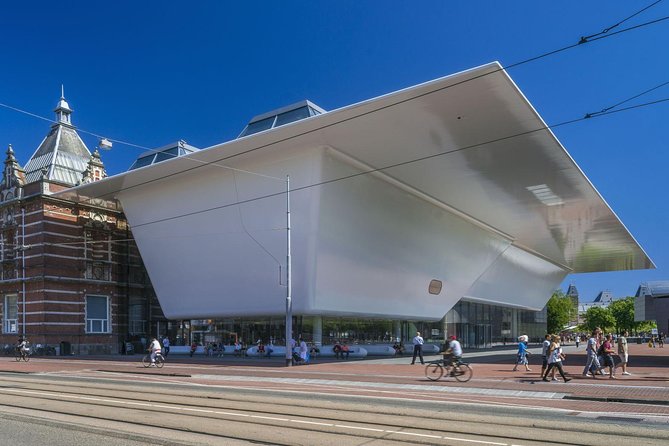
The Stedelijk Museum is one of those places where modern and contemporary art can click fast—if you enter with the right expectations. The collection is set up thematically and in a loose chronology, so you’re not just walking from one style to another. You’re tracing how art and design develop alongside social movements, shifts in culture, and changing ideas about what art is for.
That theme-based approach is a big deal. When you see works by the expected heavyweight names, it can feel like a greatest-hits parade. But because the galleries are arranged to connect art with broader cultural change, you start noticing patterns: how artists respond to their era, how design follows the mood of society, and how new movements grow out of older ones.
You’ll run into major artists such as Vincent van Gogh, Marc Chagall, Piet Mondrian, Henri Matisse, Andy Warhol, Jackson Pollock, Yayoi Kusama, Marlene Dumas, Gerrit Rietveld, and Charley Toorop. Seeing that range in one museum is the point. It also means your experience can be what you make it: quick and impression-based, or slower and idea-based.
The only caution: this is a museum where meaning matters, and sometimes the meaning is uncomfortable. If you want art that stays purely pretty, you might not love every stop. If you’re curious about how art thinks, you’ll probably leave with more than a few favorite works.
You can also read our reviews of more tours and experiences in Amsterdam.



Mobile ticket entry: scan your phone and move
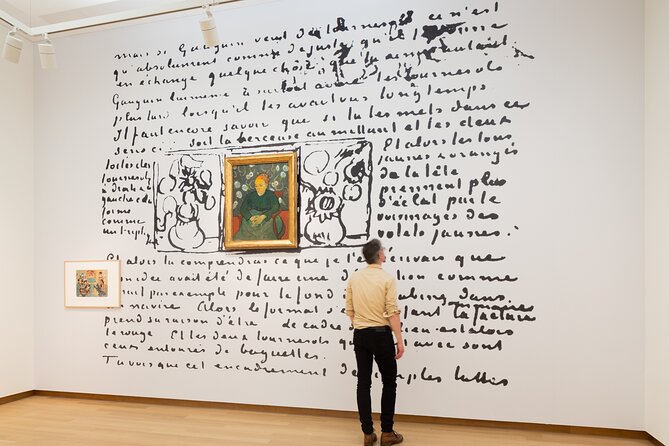
The simplest part here is also the most useful on a busy Amsterdam day: your admission is handled as a mobile ticket. That means less time spent locating paper, less risk of misplacing something, and fewer steps at the door. You just scan your phone for entry and go inside.
For planning, this matters because Amsterdam’s museum traffic can vary a lot day to day. With mobile entry, you’re not stuck refreshing screens or chasing confirmation emails at the last second. You also get a clean, low-friction start to your visit, which is exactly what you want when your schedule is tight.
Another practical win is pacing. Your total visit time is typically 1 to 1.5 hours, which is long enough to get value from the permanent collection and the special exhibition without turning your afternoon into a full-day art marathon. If your goal is to see the Stedelijk and still have energy for a canal walk afterward, this format fits well.
And because the museum is near public transportation, you can slot it into almost any route through the city. You don’t need to build your day around complicated logistics—you just need to show up during museum open hours (daily 10:00 AM–6:00 PM).
What you’ll see in the permanent collection (and why it’s organized this way)
The permanent collection is where the Stedelijk earns its reputation as more than just a famous-name gallery. The museum organizes works thematically and in a loose chronology, which helps you see modern and contemporary art as a changing conversation rather than isolated masterpieces.
The key idea is that art and design develop alongside social movements. That framing turns the usual museum question—What is this piece?—into a more helpful one: What is this piece reacting to? Or promoting? Or questioning?
Here’s what this feels like as you walk through:
- You’ll spot how movements connect, sometimes across decades, not just across rooms.
- You’ll likely notice design-minded thinking, not only paintings and sculptures.
- You’ll see how famous modern artists share themes with later contemporary voices, so the transition feels less sudden.
You also get a mix that can keep the visit from getting monotonous. The collection includes early modern anchors like Mondrian and Matisse, and then later jumps into works by artists known for pushing scale, material, and concept—think Warhol and Pollock, and then forward into more contemporary approaches such as Kusama and Marlene Dumas.
One thing I appreciate about this kind of setup: it rewards your attention. Even if you’re not an expert, you’re not lost in a pure timeline where you only get something if you already know the lecture facts. The audio tour can do a lot of the interpretive heavy lifting for you (more on that next).
Possible drawback: because themes can touch on identity, society, and power, some rooms might feel heavier than you expected. If you’re visiting with someone who wants lighter art, I’d treat it like a choose-your-own-adventure. Spend extra time where it feels alive to you, and skip ahead if a gallery isn’t clicking.
The included audio tour: your best tool for a 60–90 minute visit
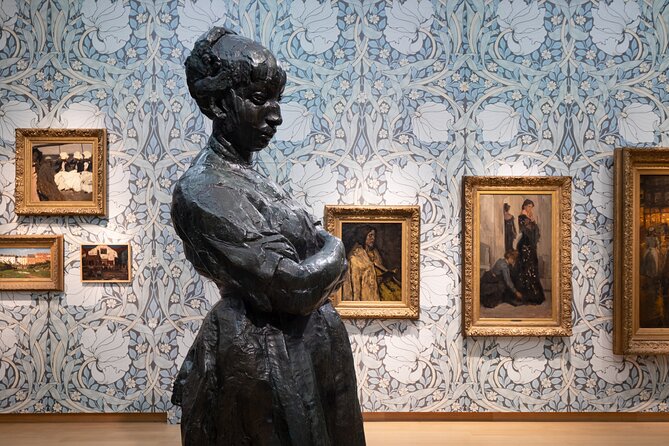
This experience includes an audio tour, and it’s available in two languages: NL/EN. The language piece matters because it gives you options, especially if you’re traveling with someone who prefers Dutch or English.
What makes the audio tour practical is the time window. With a visit duration of about 1 to 1.5 hours, you don’t want to wander room to room like you’re hunting for something that might not be there. The audio tour helps you structure your attention so you spend your limited time on the most meaningful connections.
How to use it well:
- Start your visit with the audio on, so you get a quick mental map.
- Let the tour guide your first pass, then use the last part of your hour to linger on what you liked.
- If you notice you’re not connecting with a theme, don’t force it. Art rewards curiosity, not stubbornness.
Also, because the collection is organized thematically, the audio helps translate why the museum placed works together. That means you’re not just seeing art—you’re learning how the museum wants you to read it.
If you’re the type who hates feeling rushed, the audio tour is also a gentle workaround. You can move at your pace and still feel confident you’re making sense of what you’re seeing. It’s a nice middle ground between guided tours and doing everything entirely on your own.
Erwin Olaf – Freedom: the special exhibition to build your route around
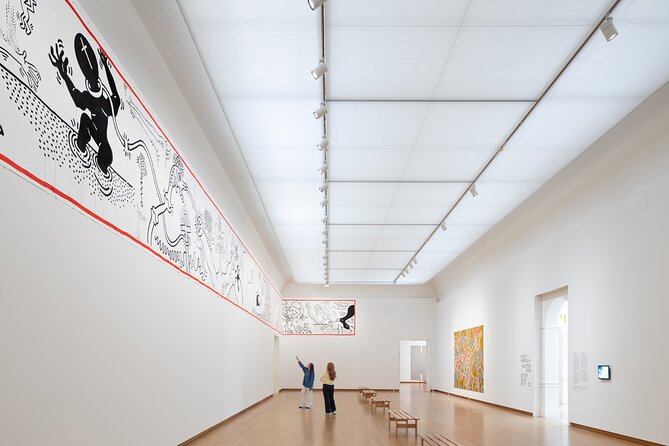
Right now, there’s a major temporary show: Erwin Olaf – Freedom, running until March 1, 2026. This is described as the first museum retrospective since his unexpected death two years earlier, and the exhibition aims to show the full range of his creative process.
If you want one reason to prioritize the temporary exhibition, this is it: it’s not a small side show. It’s built like a story of a working artist—iconic works, plus lesser-known pieces that round out how he created and experimented over time.
What’s especially interesting is the variety of formats you can expect in the exhibition: besides well-known artworks and photo series, the presentation includes videos and sculptures, along with commercial photography and personal archive material. The exhibition also culminates with his last work, an unfinished video.
That ending detail can shift how you read the entire retrospective. Instead of treating the art as separate successes, you’re reminded of the human thread—unfinished work, ongoing ideas, and a life in process. Even if you usually find photo art a bit too conceptual or too fashion-forward, this range can help you see it differently.
Practical tip: if you’re short on time, don’t try to read everything. Pick a few sections of the exhibition that connect with what you’re already thinking about, and let the audio tour (where applicable) help you connect the highlights.



Famous names you’ll recognize, plus the movements behind them
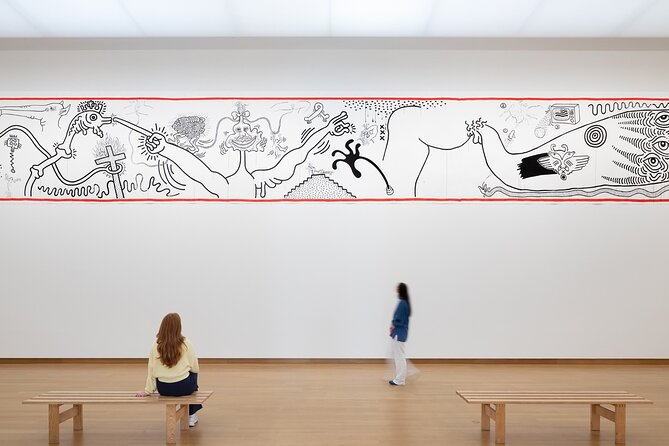
One of the best reasons to visit the Stedelijk is the way it connects big names to broader movements. The museum’s focus includes the Amsterdam School and the Bauhaus movement, among other currents. That matters because modern art can feel like a pile of individual styles until you see the underlying ideas.
When movements are explained through design and social context, you start seeing what artists were trying to solve. Why architecture looks a certain way. Why posters and objects carry specific energy. Why visual language changes when society changes.
The museum’s collection also spans the kinds of artists who operate on different wavelengths: some are about form and composition, others about disruption and rethinking identity, and still others about turning everyday culture into art material. That mix is why the museum can work even if modern art isn’t your usual taste.
If you want a quick sanity check before you go: ask yourself whether you’re more interested in artists as people or artists as ideas. This museum handles both.
And if you’re traveling with someone who says they are not a modern art person, I’d still consider this stop. The Stedelijk’s variety can surprise people. You can end up with one or two works that truly stick with you—even if you don’t love the whole building.
The café break: where to recharge inside the museum
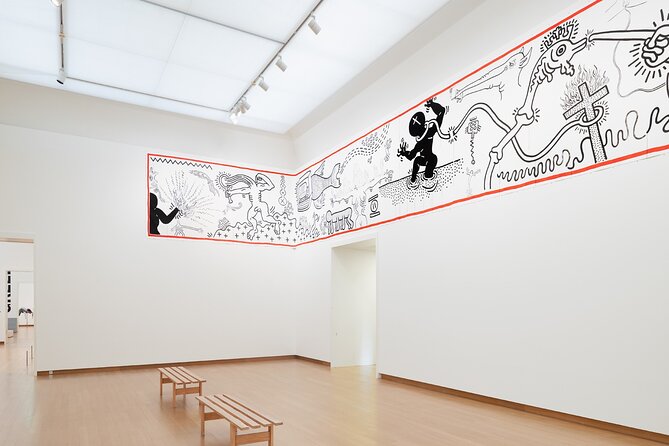
Food and drinks aren’t included with admission, but the museum has an on-site café, and it can be a helpful reset button when your brain is full of concepts. If you want something that actually feels Amsterdam-ish but still easy, it’s worth budgeting time for a quick lunch.
One review-highlight item list included lentil soup, gazpacho, and apple tart. Even if your menu day changes, that gives you a good idea of the style: simple, hearty, and not trying too hard.
This is also a timing tool. If you feel overwhelmed, eat first, then return to the galleries with fresh eyes. Modern art can benefit from a break, because your focus comes back in a better mood.
Price and value: what $27.01 gets you
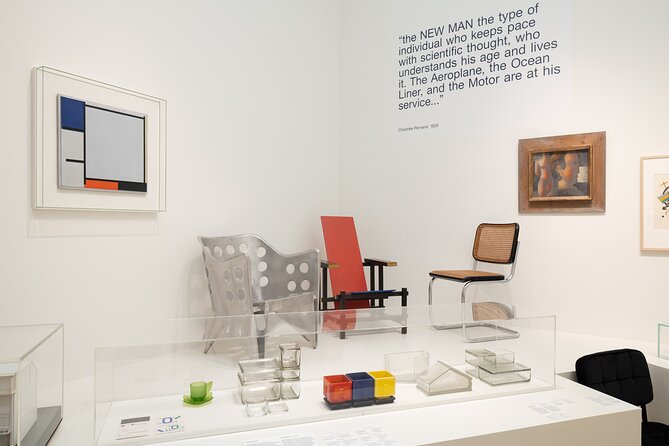
At $27.01 per person, the value here is mainly about what’s included with your entry. You’re not just paying for a door ticket. Your package includes museum admission, an audio tour, and access to all temporary exhibitions.
For a museum like the Stedelijk, that’s the practical part: temporary shows often cost extra at other attractions, and audio tours can add up if they are not bundled. Here, you pay once and you get the full museum experience in the time you’re budgeting.
Also, the format is efficient. A visit length of 1 to 1.5 hours fits typical city schedules. You’re not forced into a half-day commitment just to get the basics. You can see a lot, learn a lot, and still keep the rest of your Amsterdam plan intact.
My rule of thumb: if you want one museum stop and you care about both permanent collection and temporary exhibitions, this is the kind of ticket that saves you time and decision fatigue.
Timing and logistics: open daily and close at 6
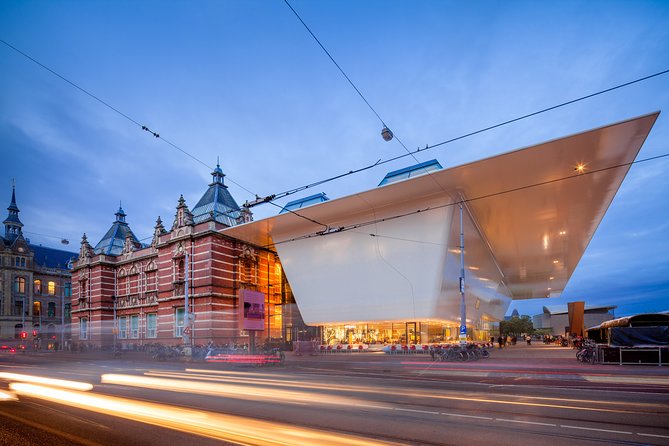
The Stedelijk is open daily from 10:00 AM to 6:00 PM. That helps you plan without stress. If your day has a later start, you still have enough time to do the museum before closing, especially with the typical 1 to 1.5 hour visit window.
Because parts of the museum can occasionally be closed on certain days, I’d treat it like any major museum in a big city: check the day-of status when you can. If a gallery is unavailable, the audio tour still gives you structure, and you can shift your focus to what is open.
Getting there is also easy in the Amsterdam sense: it’s near public transportation, so you can plug it into a route without planning a dedicated taxi trip.
Who should book this, and who might skip it
Book this Stedelijk Museum admission if you:
- want modern and contemporary art with an included audio guide
- like art that connects to society, design, and movements
- are in Amsterdam for a short stay and want one strong museum stop
You might pass if you:
- only want classical art and find modern concept-heavy work exhausting
- dislike exhibitions that tackle identity and social themes
- need a very quiet, low-stimulation experience
If you’re on the fence, I’d still lean toward going. The museum’s range—from recognizable modernists to major contemporary artists—gives you multiple ways to connect. Even when a room doesn’t hit, another one might.
Should you book this Stedelijk Museum admission?
Yes, if you want a smooth, self-paced way to experience the Stedelijk without extra ticket juggling. The mobile entry is a real time-saver, the visit length is realistic, and the package includes both the permanent collection and the temporary exhibition with the audio tour.
The only reason not to book is if modern and contemporary art feels like work to you rather than curiosity. If that’s your situation, you’ll likely spend more time trying to convince yourself than enjoying what you see.
If you do love art that thinks, this is a solid value way to spend an hour or two in Amsterdam, with a temporary show like Erwin Olaf – Freedom acting as a strong anchor for your visit.
FAQ
Is this admission ticket mobile?
Yes. You get a mobile admission ticket that you can scan your phone for entry.
How long does the Stedelijk Museum visit usually take?
Most visits fit in about 1 to 1.5 hours.
What’s included with the ticket?
The ticket includes museum admission, an audio tour, and access to all temporary exhibitions.
Is the audio tour available in English?
Yes. The experience is offered in English, and the audio tours are available in NL/EN.
What are the museum opening hours?
The Stedelijk Museum is open daily from 10:00 AM until 6:00 PM.
Do I need to arrange food or drinks separately?
Food and drinks are not included, so you’d need to buy them separately if you want a café stop.
Where is the museum compared to transport?
The museum is near public transportation, so it’s easy to reach as part of a city route.
Can I cancel if my plans change?
Yes. There is free cancellation if you cancel up to 24 hours in advance for a full refund.