REVIEW · AMSTERDAM
Absolutely Amsterdam – the Essential Introductory Walking Tour
Book on Viator →Operated by FreeDam Tours · Bookable on Viator
Start your Amsterdam day the smart way.
This 2.5-hour intro walk covers the heart of the city with a clear story thread, not random sightseeing. I like that it keeps you in the UNESCO core while you’re moving on easy city streets where the atmosphere actually sinks in.
Two big wins for me: you learn why Amsterdam looks the way it does (water, money, canals, bikes), and you get sharp context at each stop instead of a quick photo moment. One possible drawback: several stops are outside only, and you’ll cover a lot of ground, so plan for crowds and fast-moving bike lanes.
In This Review
- Quick hits
- Why this Amsterdam walk feels like a perfect first day
- The route starts at Beurs van Berlage: where water and finance fused
- Damrak: the old harbor, the church, and the Red Light District origins
- Ons’ Lieve Heer op Solder: tolerance in practice, with an exterior-only visit
- Chinatown and drug policy: how 1970s politics shaped the coffeeshop era
- The Waag: Rembrandt’s early breakthrough, shown with a copy of the work
- Oostindisch Huis: a courtyard you can only access on weekdays
- Waterlooplein Market: the former Jewish Quarter and the wartime reality
- The Amstel and canal houses: skinny, leaning, hooks, and curtains
- Oudemanhuispoort: from monastery to hospital to the University of Amsterdam
- Royal Palace Amsterdam and the end at Dam Square
- Price and logistics: what $5.93 actually buys you
- Who should book this walking tour (and who might not)
- Book it or skip it? My take
- FAQ
- How long is the Absolutely Amsterdam – the Essential Introductory Walking Tour?
- Is the tour offered in English?
- What is the group size?
- Is admission included at every stop?
- Do you enter the hidden church at Ons’ Lieve Heer op Solder?
- Where does the tour start?
- Where does the tour end?
- Can I get a full refund if I cancel?
- Are service animals allowed?
Quick hits

- A budget-friendly rate with a tip-as-you-like approach
- Max 15 people, so the guide can keep the group together
- Short, focused stops that connect big themes: water, trade, tolerance, law
- Exterior-first sightseeing at places like the hidden church concept and the Waag
- Canal-house design facts (skinny, leaning, hooks, and curtains)
- Golden Age trade stories, including the darker parts
Why this Amsterdam walk feels like a perfect first day
If Amsterdam is new to you, you need two things early: bearings and context. This tour gives you both fast, walking you past major sights while the guide turns each location into a mini lesson.
I also appreciate how the pacing tends to work for real life. The tour is built around manageable chunks (often 10–20 minutes at a time), so you’re not trapped in one long lecture. Plus, the group stays small—up to 15—which helps when you’re negotiating bikes, pedestrians, and the occasional tourist bottleneck.
And you’ll likely notice a consistent style from past guides: humour mixed with facts, plus tools like maps and visual aids. Names that have shown up in people’s experiences include Gianni, Jaap, Raymond, and David, with feedback often praising the guide’s energy and how clearly the stories land.
You can also read our reviews of more walking tours in Amsterdam



The route starts at Beurs van Berlage: where water and finance fused
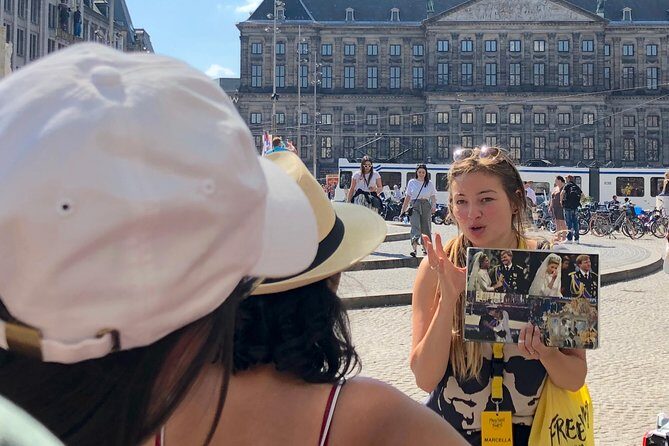
Stop 1 is Beurs van Berlage, the spot where you start talking about Amsterdam’s origin story. The guide sets the stage by pointing out that this area was shaped by the old course of the river—before it became a major financial center.
What I like here is the cause-and-effect angle. Amsterdam isn’t just pretty buildings; it’s systems. You’ll connect water management with trade and finance, and suddenly the city’s growth makes more sense as you move through town.
Potential downside: this start is short (about 20 minutes), so if you want to read every plaque slowly, you’ll need to come back later on your own.
Damrak: the old harbor, the church, and the Red Light District origins
Next up is Damrak, built around the story of the old harbor area and how Amsterdam’s famed nightlife district came to be. You’ll hear about the role of the Church, and how the city’s “holy” and “profane” sides found ways to coexist and profit over time.
This stop is also about prostitution as it shifted through the 20th and 21st centuries—how it became legal work, how the neighborhood changed, and what challenges it faces now. It’s not sugarcoated, but it’s framed historically and politically, which helps the topic feel grounded rather than gossip-heavy.
One consideration: Damrak can get crowded. If you’re sensitive to foot-traffic pressure, keep your patience hat on here.
Ons’ Lieve Heer op Solder: tolerance in practice, with an exterior-only visit
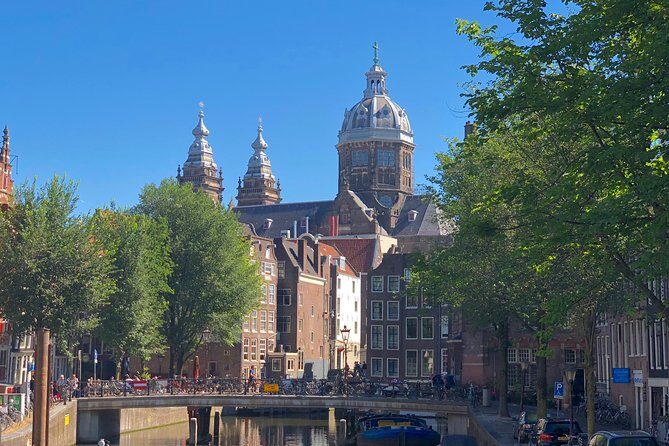
Stop 3 brings you to Our Lord in the Attic Museum area (Ons’ Lieve Heer op Solder). The big idea is religious tolerance with strict rules.
You’ll learn how Catholicism became illegal in the 17th century, yet people still found ways to practice under peculiar conditions. The guide also makes a comparison to how tolerance plays out today, in the 21st century—without pretending the past and present are the same.
Important detail: you don’t enter the hidden church. You’ll see it from the outside, and you’ll get pictures of the interior instead. That means you won’t lose time waiting in line or hunting ticket counters during the walk, but it also means you miss the full, hands-on museum experience.
Chinatown and drug policy: how 1970s politics shaped the coffeeshop era
Stop 4 is Chinatown, but the focus isn’t food or shopping. It’s policy. You’ll get an explanation of Dutch drug rules and how this area went from being treated like a hard no-go zone in the 1970s to becoming the start of the coffeeshop model for selling marijuana.
This is one of those “you’ll understand the map better afterward” stops. Once you grasp the legal and political shift, it’s easier to make sense of why certain Amsterdam neighborhoods feel the way they do today.
Time on this stop is about 15 minutes, so you’ll get the story arc, not a legal textbook. If you want to go deeper, you’ll have the right questions to search for after the tour.





The Waag: Rembrandt’s early breakthrough, shown with a copy of the work
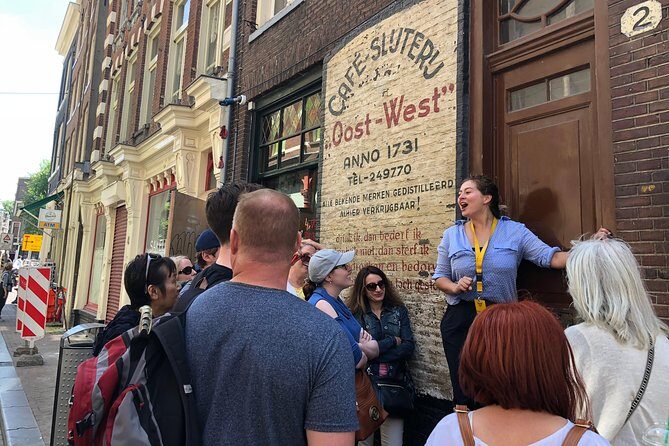
Stop 5 is the Waag area, where you’ll hear about where Rembrandt painted his first major work and how it influenced portrait making. The guide shows a copy of the painting so you can see details—an approach that works well for a walking tour because it gives you something to look at without needing an indoor visit.
This stop runs about 10 minutes, so it’s more “spark” than “final answer.” If you’re a serious art person, you’ll probably want to follow up later in a museum or exhibition where you can spend more time with original pieces.
Oostindisch Huis: a courtyard you can only access on weekdays
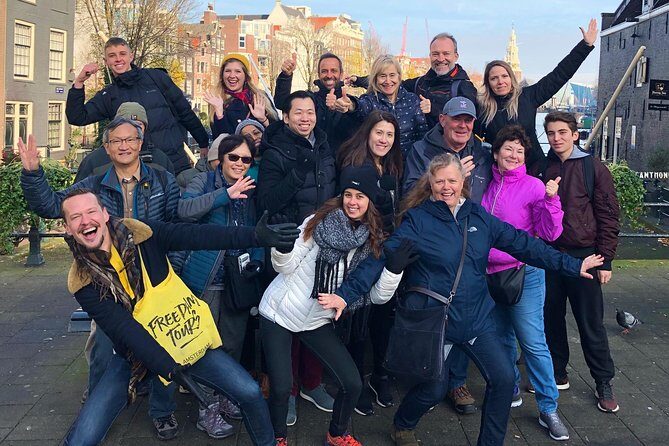
Stop 6 is Oostindisch Huis, known for its stunning 17th-century courtyard hidden inside the building. The timing matters here: the courtyard access is only during week-days.
You’ll learn how Amsterdam became the center of a global trading empire during the Golden Age and how this place ties into major corporate beginnings—often described as kickstarting modern-day capitalism. And the guide doesn’t flatten it into a success story. You’ll also hear about the darker legacy of that era.
This is one of the best stops for understanding Amsterdam’s wealth. The city’s prosperity didn’t just come from merchants and luck—it came from ships, contracts, and power. That’s why this courtyard moment hits so hard: it’s physically beautiful, while the story behind it can be uncomfortable.
Waterlooplein Market: the former Jewish Quarter and the wartime reality
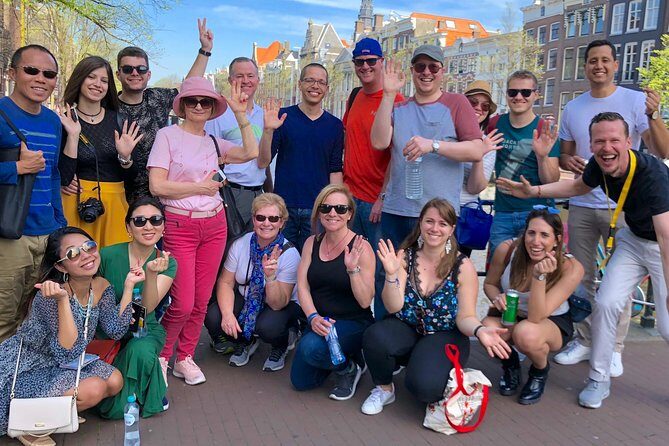
Stop 7 is Waterlooplein Market, tied to the former Jewish Quarter. You’ll hear that the area was almost completely destroyed at the end of World War II, but the explanation goes in a direction you might not expect.
The guide focuses on the consequences of Nazi occupation: the Jewish communities being decimated after Amsterdam had served as a safer haven for persecuted Jews across Europe. You’ll also hear about survival during the last hunger winter of the war.
This stop runs about 15 minutes. It’s enough to leave you thinking, but not long enough for a full memorial visit. If this topic hits you personally, plan to return to the area (or find a museum) on another day when you can slow down.
The Amstel and canal houses: skinny, leaning, hooks, and curtains
Stop 8 is the Amstel area (or another canal, depending on weather and the guide). Here the focus shifts from big events to everyday design.
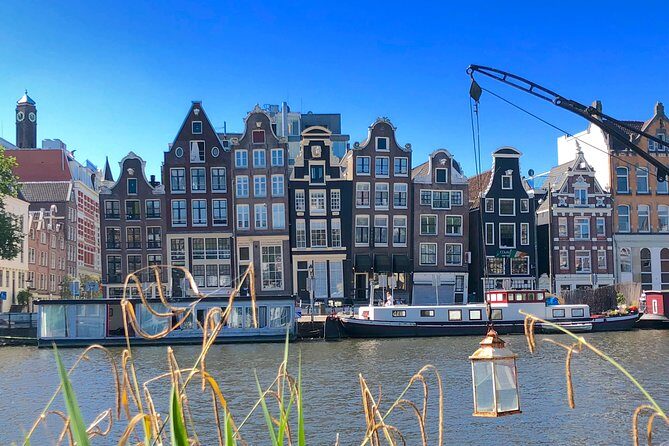
You’ll learn why Amsterdam has canals and how canal houses were shaped—why they’re so skinny, why some lean in different directions (some intentionally), and why so many have a hook. You’ll also hear why Dutch people historically keep curtains open.
I love this stop because it turns passive looking into active noticing. Suddenly, every canal-house detail becomes a clue, not just a postcard feature.
Practical note: this part is still outside, so wind and rain can change your comfort level. Bring layers.
Oudemanhuispoort: from monastery to hospital to the University of Amsterdam
Stop 9 is Oudemanhuispoort, a beautiful place that’s hard to find on your own. It used to be a monastery, then became a hospital, and now it’s part of the University of Amsterdam.
But you don’t just get architectural facts. You get the story of Dutch bike culture, including why there are more bikes than people and why, in a city that’s so proud of cycling, the bikes can look… well, not like fashion magazines.
This is about 10 minutes. The payoff is that you start spotting the logic of everyday Amsterdam life: cycling isn’t a hobby here—it’s transportation and identity.
Royal Palace Amsterdam and the end at Dam Square
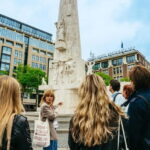
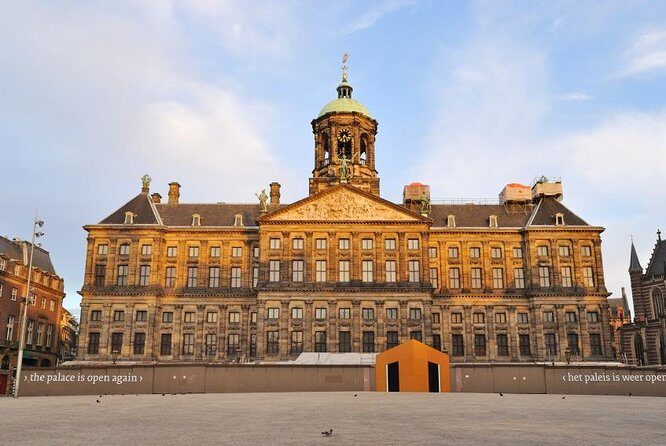
Stop 10 is the Royal Palace Amsterdam area, tied to Dam Square. You’ll hear the “peculiar history” of the palace, including how the country made the transition from republic to monarchy.
The guide also brings you up to date on the current Royal Family with pictures and shares more recent, lighter “royal gossip” style context. The stop is short (about 15 minutes), and admission is not included at this point.
Two things to remember: you’re not getting a full palace interior visit on this walk, and you’ll be finishing in the Dam Square area, which can be busy. Still, it’s a strong close—Amsterdam’s past political shifts in one final landmark sweep.
Price and logistics: what $5.93 actually buys you
The price is listed at about $5.93 per person, for roughly 2 hours 30 minutes of guided walking in English. That’s low enough that you should think of it less as a “museum ticket” and more as paying for a guide’s time and storytelling.
Most of the experience is outside, and many stops have admission tickets marked as free. Some stops are “not included,” which matches the style: you don’t pay for every site; you get explanations and exterior viewing where appropriate.
Also, the tour is small (maximum 15 travelers), which matters more than people think. In a bike-heavy city, fewer bodies makes it easier to keep moving without constantly stopping.
Who should book this walking tour (and who might not)
This works best if you’re:
- visiting Amsterdam for the first time and want the big picture fast
- the type who likes walking plus context, not just photos
- curious about how law, trade, and religion shaped the city’s layout and neighborhoods
- someone who benefits from a guide using maps and visual aids
It may not be ideal if you:
- need full interior visits at museums and major attractions during the same day
- hate topics like prostitution and drug policy, even when presented as history and policy
- want a slow stroll with lots of time to linger at each building
Book it or skip it? My take
I’d book this tour if you want a smart starter plan. It hits core sights, connects them with real themes, and does it at a manageable pace—often the exact kind of “get your bearings fast” experience you want on Day 1.
I’d consider skipping or pairing it with other plans if your priority is deep museum time or if you’d rather self-guide slowly. But as an intro walk that turns Amsterdam’s layout into understandable stories, it’s strong value—especially given how often guides (like Raymond, Gianni, Jaap, and David) get praised for clarity, humour, and keeping things engaging.
FAQ
How long is the Absolutely Amsterdam – the Essential Introductory Walking Tour?
It’s approximately 2 hours 30 minutes.
Is the tour offered in English?
Yes, the tour is offered in English.
What is the group size?
The tour has a maximum of 15 travelers.
Is admission included at every stop?
Not at every stop. Some stops are free, and some are marked as admission ticket not included.
Do you enter the hidden church at Ons’ Lieve Heer op Solder?
No. You see it from the outside, and you’ll be shown pictures of the interior.
Where does the tour start?
The meeting point is Freedam Tours, Beursplein 5, 1012 GZ Amsterdam.
Where does the tour end?
The activity ends back at the meeting point area.
Can I get a full refund if I cancel?
Free cancellation is available up to 24 hours in advance for a full refund.
Are service animals allowed?
Yes, service animals are allowed, and most travelers can participate.
If you want, tell me your travel dates and whether you’re more into art, canal life, or political history. I can suggest a tight follow-up plan for the rest of your Amsterdam day.