REVIEW · AMSTERDAM
Anne Frank’s Story – Guided Walking Tour through Amsterdam
Book on Viator →Operated by 360 Amsterdam Tours · Bookable on Viator
This walk connects Amsterdam to World War II. In 2 hours, you cover the Jewish Quarter on foot, with stops that put Nazi-occupied life and Jewish Amsterdam side by side with street-level landmarks. The emotional punch comes from learning what happened in these places, not just seeing them.
I love the small group size, capped at 15, because you can actually ask questions and hear the guide. I also like the focus on major sites from the outside, including memorial moments tied to events like the Winter of Hunger and the February Strike. The one drawback to plan for: Anne Frank House entry is not included, so you’ll end outside rather than go inside.
In This Review
- Key things to know before you go
- Why This Two-Hour Walk Feels Personal, Not Just Historical
- Meeting at Westermarkt: A Quick Start That Sets the Tone
- Stop by Stop: Jewish Quarter Landmarks Without Needing Extra Tickets
- Joods Museum (Jewish Historical Museum): Start with the setting
- Portuguese Synagogue: A community story at street level
- Dokwerker Statue: Working life and public memory
- Auschwitz Monument: Where emotion becomes understanding
- Dam Square: Broader context in a central public space
- Statue of Anne Frank: A personal figure in public memory
- Anne Frank House exterior: The tour ends where the story becomes iconic
- What I Think Makes This Tour Worth the Price
- Guides, Photos, and the Right Kind of Seriousness
- Who Should Book This Walk (and Who Might Be Happier Elsewhere)
- A Simple Decision Checklist: Book It or Skip It?
- FAQ
- Is the Anne Frank House ticket included?
- Do you enter the Jewish Historical Museum or Portuguese Synagogue?
- How long is the walking tour?
- What’s the group size limit?
- Is the tour offered in English?
- What happens if the weather is bad, or I need to cancel?
Key things to know before you go
- 15-person max keeps it human and question-friendly, even when the topic is heavy
- Outside-only stops at the Jewish Historical Museum and Portuguese Synagogue, with stories told right at the doors
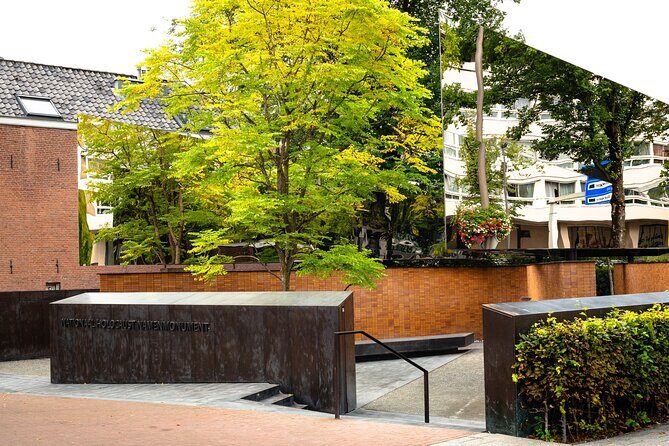
- Memorial-focused route includes the Auschwitz Monument and other remembrance markers
- Ends at the Anne Frank House (no entrance ticket), so you can decide on a separate visit
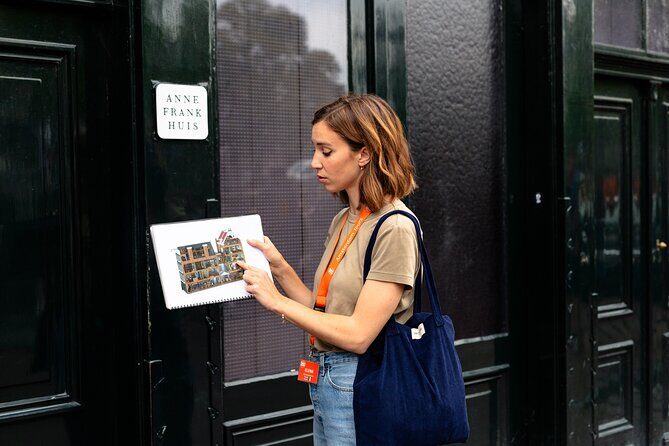
- Guides use real tools, like period photos and clear explanations, and they often set a respectful tone
- You may pick up practical city tips too, like Dutch bike-lane etiquette for the rest of your trip
Why This Two-Hour Walk Feels Personal, Not Just Historical
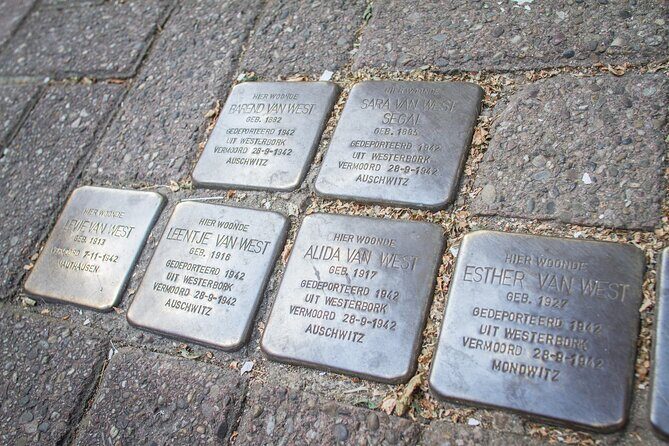
If you want Amsterdam to make emotional sense, this is one of the best ways to get there. You’re walking through a part of the city where history isn’t trapped behind glass. It’s in the angles of buildings, the placement of monuments, and the way the guide connects those details to real people.
The best part is how the story is paced. You’re not stuck on one single landmark. Instead, you move through multiple stops in the Jewish Quarter, learning how the Nazi occupation changed everyday life for Jews and for the rest of Amsterdam, too.
And yes, it’s a tough theme. But the guides tend to keep it grounded, with explanations that help you follow without getting lost. In some groups, guides like Manuel use period photos to connect the street to the 1940s, and guides like Patrick can go beyond the main script when someone asks a question.
One more plus: the group size. With no more than 15 people, you’re less likely to feel like you’re shouting over strangers while the guide tries to explain why a monument matters.
You can also read our reviews of more walking tours in Amsterdam



Meeting at Westermarkt: A Quick Start That Sets the Tone
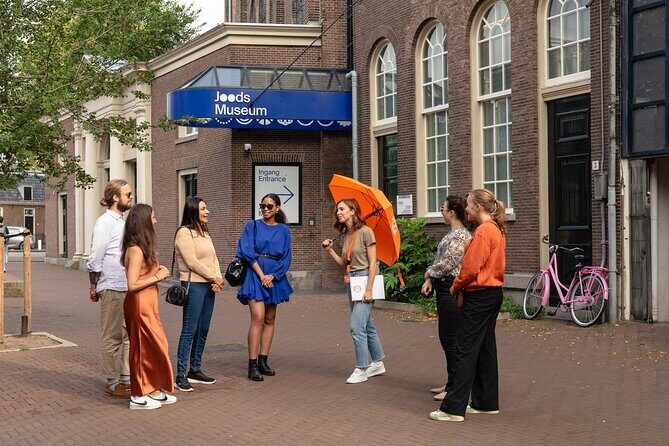
You meet your guide in central Amsterdam, and the experience runs on foot with a total duration of about 2 hours. Your tour ends at the same neighborhood edge—by the Anne Frank House area at Westermarkt 20.
Plan for the start time with a little buffer. The tour format includes short “stop-and-talk” segments, so arriving on time matters more than you might expect. Comfortable shoes are a must, because this is a walking tour and you’ll want your feet to stay happy for the full route.
You should also have moderate physical fitness. The pace is not described as a sprint, but it is a city walk with multiple stops and a handful of brief waiting moments as everyone regroups.
Good to know: service animals are welcome. And since this experience depends on weather, it’s wise to dress for rain or cold if the forecast looks unsettled.
Stop by Stop: Jewish Quarter Landmarks Without Needing Extra Tickets

This tour is designed around a simple idea: you don’t have to enter buildings to understand what they represent. You’ll spend a short stretch at each point, with the guide explaining what you’re seeing and why it connects to the story.
That approach is great for people who want context fast. It also makes the walk feel like a guided “map” of the neighborhood. You’re getting the big picture, plus the smaller clues that help you later when you see other sites on your own.
Here’s how the stops flow.
Joods Museum (Jewish Historical Museum): Start with the setting
The first stop is at the Jewish Museum area (Joods Museum). You spend about 15 minutes, and you’ll learn from the outside—no entry ticket included.
This is a strong way to open the tour because it puts the Jewish Quarter into perspective early. Even if you don’t go into the museum, the guide’s framing helps you notice details you might otherwise ignore when you’re just sightseeing.
If you’re a WWII history buff, this opening also helps you understand that the story wasn’t only about the hiding—there was also a long, complex cultural life before it was brutally cut down.
Portuguese Synagogue: A community story at street level
Next up is the Portuguese Synagogue area, with about 20 minutes here. Again: outside viewing and explanation only, with tickets not included.
Why it matters: the guide connects the architectural and community significance to the people who lived their lives around these places. You don’t need to read every sign to get the point once the guide connects the site to the larger occupation-era story.
You’ll also get a sense that Amsterdam’s Jewish history wasn’t one uniform story. It includes different communities and different experiences of the same growing danger.
You can also read our reviews of more guided tours in Amsterdam





Dokwerker Statue: Working life and public memory
At the Dokwerker Statue, you get about 20 minutes. This stop is listed as free, and the conversation here is about remembrance in public space.
This is one of those moments where the guide’s narration does the heavy lifting. The statue itself is only part of the story; what you learn is how everyday labor, community presence, and the occupation era connect to what gets memorialized.
If you like when a tour explains the “why” behind a monument, this stop is a good one.
Auschwitz Monument: Where emotion becomes understanding
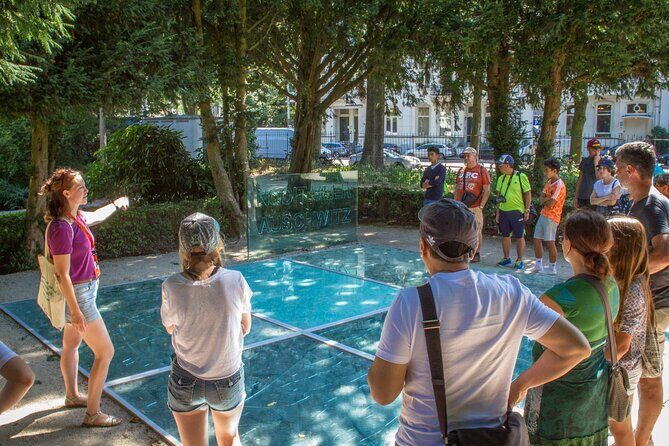
Then you move to the Auschwitz Monument for about 20 minutes. This stop is also free.
This is typically where the mood shifts. The guide’s job here is not just to inform you, but to help you process what the monument represents. In some groups, guides such as Edwin have explained the tradition of placing small rocks at Jewish memorial sites, and they may give a moment for the group to place one near a name out of respect.
You should take this part slowly. Let the guide speak, then let your own thoughts catch up.
Dam Square: Broader context in a central public space
Next is Dam Square, for about 10 minutes. It’s listed as free.
Dam Square can feel like a classic sightseeing stop, but on this tour it’s used for anchoring broader national context. The guide connects the occupation-era story to the wider reality of Amsterdam and the Netherlands during those years.
Even in a short time window, you’ll come away with the feeling that the Frank story is part of a larger system—and that system affected more people than the headlines usually cover.
Statue of Anne Frank: A personal figure in public memory
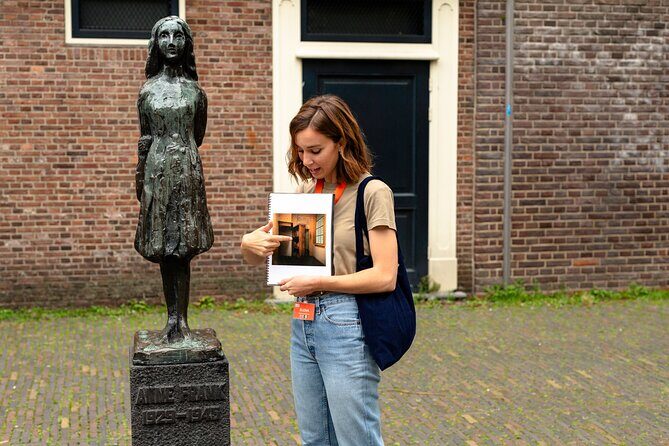
Then you visit the Statue of Anne Frank for about 15 minutes.
This stop can work a bit like a “breathing moment.” You’re moving through memorials and complicated history, and the guide helps you hold onto a human reference point before you reach the final location.
It’s also a reminder that Anne Frank became a symbol far beyond her own time. That shift—from person to story to global memory—is part of what you’ll hear more about later at the Anne Frank House exterior.
Anne Frank House exterior: The tour ends where the story becomes iconic
Finally, the tour ends right by the Anne Frank House. You get about 15 minutes here.
Important: this experience does not include entry. You’ll stand outside, hear more about Anne Frank’s diaries, and learn how her father Otto Frank helped publish them—so you understand why the diary became so central to her legacy.
If you were hoping to step inside that famous building, you’ll want to plan that separately. The tour is about the world around Anne, and about why those streets mattered during the years leading up to the hiding story.
What I Think Makes This Tour Worth the Price
At $39.30 per person, you’re paying for a guided walk that includes multiple stops, a local guide, and a format built for storytelling right where it happened—without extra entry fees.
Yes, there are exclusions. You don’t get entry to the Anne Frank House, and you don’t get admission to the Jewish Historical Museum or the Portuguese Synagogue. If your main goal is to be inside those spaces, this tour won’t replace the actual ticketed visits.
But if your goal is to leave Amsterdam with a stronger understanding of the neighborhood and the timeline, the value makes sense. You get a chain of meaningful sites in one smooth outing, and the guide helps you connect them so you don’t forget what you saw five minutes later.
Also, a practical note: this tour is often booked ahead—on average about 35 days in advance. That’s usually a sign that people know it’s popular. If you’re traveling in peak season, don’t wait until the last minute.
Guides, Photos, and the Right Kind of Seriousness

One reason this tour earns strong marks is how the guides carry the subject. You’re not just getting facts. You’re getting tone and pacing.
Across groups, you’ll see patterns:
- Many guides bring the story to life with period photos and clear visual explanations (for example, guides like Manuel have used photos from the time to connect the city to Anne’s era).
- Some guides are especially good at keeping it respectful while still answering lots of questions (guides like Patrick and Giovanni have been praised for being engaging and thoughtful).
- You may also notice extra care for group comprehension. In at least one case, a guide named Peter took time so everyone could hear and see the photos properly.
And yes, humor sometimes shows up in a careful way. One guide—Yoshi, in one reported case—paired passion with humor in a way that kept the mood humane instead of heavy for the whole ride. That matters, because the story is tragic. You don’t need the whole tour to feel like a lecture.
The “small group” part helps here too. With fewer people, the guide can actually respond to the group instead of just talking at you the whole time.
Who Should Book This Walk (and Who Might Be Happier Elsewhere)
This tour is especially ideal for:
- WWII history buffs who want a street-by-street connection to what they’ve read
- People who want a balanced sense of Jewish life and Nazi occupation effects on daily Amsterdam
- Anyone who appreciates memorials and the stories behind them, not just museum headlines
It also can be a good family choice. One review explicitly called it a meaningful, well-organized option for families with kids, and the tour framing can work when the guide keeps explanations clear.
That said, if you strongly need museum entry as part of your main plan, you may feel frustrated here. The Anne Frank House stop is outside-only. So it’s best to treat this as the context-building prequel, not as a replacement for the house visit.
A Simple Decision Checklist: Book It or Skip It?
Book this tour if you want:
- A 2-hour guided route through key Jewish Quarter sites
- The story told in a way that helps you understand the why, not just the what
- Memorial and context stops that you can later pair with ticketed visits
Skip or rethink if you want:
- Included entry to the Anne Frank House (it’s not included)
- Included admission to the Jewish Historical Museum or the Portuguese Synagogue (those are outside-only stops)
My practical take: treat this tour as your orientation to Amsterdam’s Jewish WWII story. Then, if the Anne Frank House is a must, add the ticketed visit separately so you get both context and the full experience.
FAQ
Is the Anne Frank House ticket included?
No. This tour does not include entry to the Anne Frank House. You’ll end outside the house and learn more about the diaries and how Otto Frank published them, but you will not go inside.
Do you enter the Jewish Historical Museum or Portuguese Synagogue?
No. Both are stop locations where the guide talks from the outside. Admission tickets are not included for either place.
How long is the walking tour?
The tour is about 2 hours.
What’s the group size limit?
The group size is capped at a maximum of 15 travelers.
Is the tour offered in English?
Yes. This experience is offered in English.
What happens if the weather is bad, or I need to cancel?
This experience requires good weather. If it’s canceled due to poor weather, you’ll be offered a different date or a full refund. You can cancel for a full refund up to 24 hours before the experience starts; within 24 hours, the amount paid is not refunded.