REVIEW · THE HAGUE
Surfing at The Shore in The Hague
Book on Viator →Operated by The Shore surfschool and organic cafe · Bookable on Viator
North Sea surf sounds simple. It is not complicated, though, and that is the point.
This beginner-friendly lesson at Scheveningen shows you how to catch waves safely on the North Sea, with a certified surf instructor and a small group capped at six. I like that the coaching ratio stays tight, so you get real feedback, not just a general pep talk. I also like that the essentials are handled for you: surfboard and wetsuit are included. The one thing to watch is wave conditions. If the sea does not cooperate, the session can be changed or refunded.
You start on the sand at Scheveningen, then you move to the water on a soft board when the basics start to click. The lesson also comes with a personal skillsheet, which is handy for remembering what to practice after you dry off.
In This Review
- Key highlights worth planning for
- Scheveningen beach: where you start in The Hague
- A 2-hour beginner lesson with small-group coaching (up to 6)
- Learning to catch waves on a soft board: what the session feels like
- Gear you do not have to bring: board, wetsuit, skillsheet
- Timing in The Hague: when to go and why waves drive the plan
- After the lesson: extend the ocean time with equipment rental
- Price and value: what $45.77 buys you in real learning time
- Who should book this surfing lesson—and who should think twice
- Should you book Surfing at The Shore in The Hague?
- FAQ
- How long is the surfing lesson?
- How many people are in each group?
- What is included in the price?
- Do I need to bring a surfboard or wetsuit?
- Where is the meeting point?
- What happens if there are poor wave conditions?
- When does this activity operate?
- Can I get a refund if I cancel?
Key highlights worth planning for
- Max 6 students per instructor means more turns and more coaching time
- Scheveningen beach start keeps your learning steady and controlled
- Soft-board beginner setup helps you stand and feel safer while learning
- Board + wetsuit included so you do not waste time shopping for gear
- Skillsheet provided to help you remember the key steps
- Seasonal operation (Apr 1–Oct 24) so plan your dates around surf availability
Scheveningen beach: where you start in The Hague

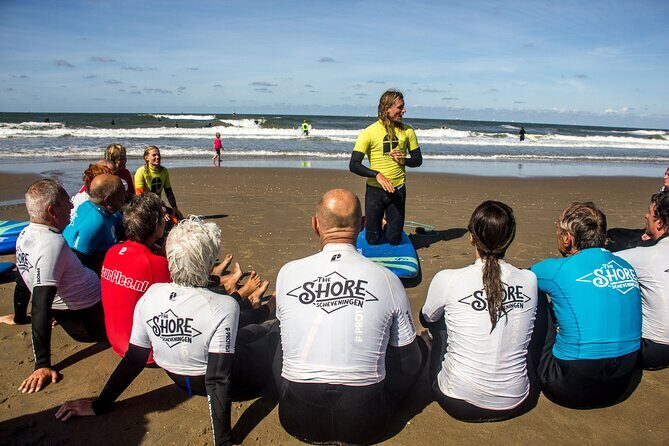
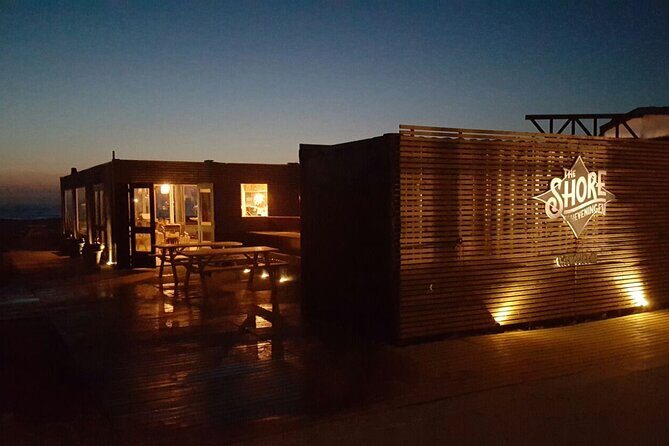
Scheveningen is the seaside district of The Hague, and it is a smart place to learn surfing because it is built for ocean time. You meet at Strandweg 2, 2586 Den Haag, and the lesson begins right on the beach. That matters more than it sounds.
Starting on the sand first lets you get oriented without juggling everything at once. You learn how your board should sit, what your body should do, and how to think about waves in a calm, step-by-step way. If you are new, your brain is basically asking for order. A beach start gives you that order before you ever have to paddle.
From there, the plan is straightforward: you go from sand to water. You use a soft board (better for beginners than a hard board), then practice catching waves on the North Sea. The beach-to-water flow is designed to keep your confidence growing at a pace that makes sense.
Also note this is not a hotel pickup kind of activity. You are expected to get yourself to the meeting point, which is usually easiest because it is near public transportation.
You can also read our reviews of more tours and experiences in The Hague.



A 2-hour beginner lesson with small-group coaching (up to 6)
The session runs about 2 hours, and the group size cap is a big part of why this works for first-timers. With six people per instructor, you can actually learn by doing. You are not waiting around while the instructor teaches someone else’s problems.
Expect a certified surf school instructor to explain technique, then guide you through repetitions. The teaching style you want for a first surf lesson is clear, calm, and safety-focused, and this school’s format is built around that. You get to try things multiple times, and that repetition is what turns surfing from theory into muscle memory.
This is also a good length. A two-hour block is enough time to cover basics and get real wave practice, without turning the day into a half-sunk cost. If you are someone who gets nervous in extended activities, this timeframe is easier to handle.
One extra detail I’d call out: the school provides a personal skillsheet. That is not a throwaway souvenir. It helps you remember the key cues after you leave, when the ocean is no longer training your senses.
Learning to catch waves on a soft board: what the session feels like
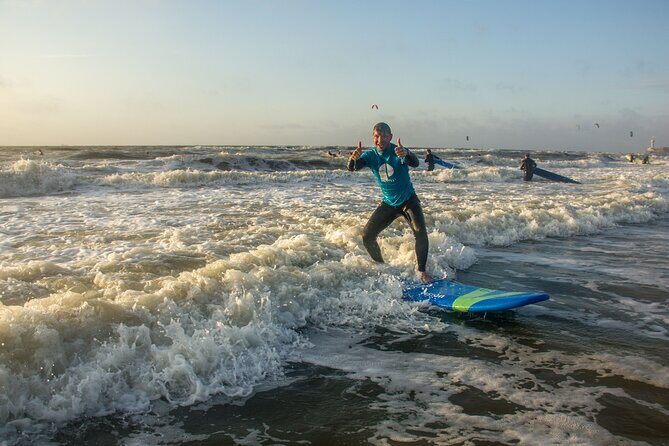
If you are picturing surfing as one dramatic moment—stand up, then fly—slow down a bit. This kind of intro lesson is mostly about smaller wins: getting into position, timing the wave, and managing balance.
You begin with instruction on how to handle your board safely. Then you transition to the water, using a soft board. A soft board changes the whole early learning curve. It tends to be more forgiving when you mess up, which lets you focus on technique rather than fear.
What you practice is catching a wave in the real conditions of the North Sea. That includes dealing with the fact that water and wind can change how waves behave. Your instructor’s job is to keep you from overthinking and to help you read what is coming at you.
In at least one session, an instructor named Nils is described as cool and very explanatory, with lots of encouragement even when attempts are not perfect. That kind of coaching matters. Surfing is physical, but confidence is a skill too. If you get feedback that helps you adjust quickly, you learn faster—and you stop treating every wipeout like a failure.
Tip for your first time: listen for one or two cues at a time. When you try to do everything at once, your timing suffers.
Gear you do not have to bring: board, wetsuit, skillsheet
You get the basics included:
- Surfboard
- Wetsuit
- Personal skillsheet
That is solid value for beginners. If you’ve ever tried to gear up for a sport the first time, you know the hidden friction: finding the right size, hoping it fits right, and arriving anxious that something is missing. Here, the lesson setup is handled.
Even the quality details matter. The wetsuits and boards are described as being in very good condition, which reduces a common first-surfer worry: will my gear work well enough for learning?
A wetsuit is also not optional comfort on a North Sea coast. You will likely feel cold faster than you expect, so having the right gear from the start makes the lesson more enjoyable and safer.
The skillsheet is the part people often skip reading, but you should use it. After a short lesson, you will remember highlights and then forget the fine points. A written cue list helps you practice the right things next time, instead of guessing.
Timing in The Hague: when to go and why waves drive the plan
The school operates from April 1 to October 24. That already answers a big question: you cannot treat this like a year-round activity.
They also run multiple session windows during the week. In high season (May to August), the schedule includes:
- Mon–Fri: 11:00–13:00, 14:00–16:00, 19:00–21:00
- Sat–Sun: 10:00–12:00, 13:00–15:00, 15:00–17:00, 17:00–19:00
In low season (April and September–October), the times shift a bit but remain similarly frequent:
- Mon–Fri: 11:00–13:00, 14:00–16:00, 17:00–19:00
- Sat–Sun: same as high season
What I like about this setup is flexibility. You can choose a time that matches your energy and your day in The Hague.
The main reality check: surfing is subject to favorable wave conditions. If poor waves cancel the session, you are offered an alternative date or a refund, or an alternative activity such as stand up paddleboarding or skate. That contingency matters because it protects your vacation time.
So when you pick a day, avoid booking your last free hours on a schedule-blocking date. If you can, give yourself a little buffer.


After the lesson: extend the ocean time with equipment rental
The lesson is about learning, but the fun often starts right after. Once the 2-hour coaching ends, you are free to rent surfing equipment so you can enjoy the ocean longer.
This is a smart model for beginners. You get guided instruction first, then you can repeat what you learned without a coach standing over you. That repetition is where you build comfort.
It also means you are not locked into a single moment. If you felt you clicked with wave timing but want another attempt, renting gear lets you pursue that momentum.
And since there is no mention of a required guided follow-on, you control the pace. You can stay just long enough to keep practicing, or you can stop once you feel done—especially if the wind or water feels harsher than expected.
Just remember coffee and food are not included. You are free to purchase drinks and snacks afterward.
Price and value: what $45.77 buys you in real learning time
At about $45.77 per person for roughly 2 hours, this can be good value—mainly because you are paying for coaching plus equipment.
Many beginner activities hide costs. Here, the ticket covers:
- Instructor-led learning
- Surfboard and wetsuit
- Taxes and fees
- A personal skillsheet
For a first-timer, that bundled structure is worth real money. You avoid the extra spend and hassle of sourcing gear for one short session. Also, the small group size (max 6 per instructor) is part of what you are actually paying for. A cheaper activity that squeezes in more students usually means less coaching feedback.
One more value angle: the calendar length helps. They run through most of the warm-weather travel season (April 1–Oct 24). If you plan your trip in that window, you are more likely to land a session at a time that works for your itinerary.
So the “value” question is simple: can you use the equipment and coaching? If yes, you are in the right zone. If you are an advanced surfer looking for big wave action, this is not built for that.
Who should book this surfing lesson—and who should think twice
This is a great fit if:
- You are new to surfing and want a safe, structured start
- You prefer small-group instruction with more individual attention
- You want equipment included so you can focus on learning, not logistics
- You like the idea of learning in a real ocean setting near The Hague, at Scheveningen
It’s also a solid option if you want a short activity that won’t eat your whole day. Two hours is enough to get your basics, and then you can extend with rentals if you still feel like riding.
You should think twice if:
- You are traveling in the off months. The operation runs April 1–Oct 24, so winter planning won’t line up.
- You hate uncertainty from weather and wave conditions. Surfing depends on conditions, and poor waves can change the plan.
Practical note: most people can participate, and the school allows service animals. There is also no hotel pickup, so plan your arrival around the meeting point.
Should you book Surfing at The Shore in The Hague?
If you want a friendly first surf lesson with real instruction time, this is an easy yes. The big advantages are the small group cap, the beginner setup with a soft board, and the fact that you get the wetsuit and surfboard you need right away.
Book it if your trip dates fall between April and October, and you can accept that the North Sea may occasionally decide to rain on the surf plans. If you schedule with a little flexibility, this becomes the kind of activity that gives you a skill and a story without turning your vacation into a logistics project.
FAQ
How long is the surfing lesson?
The lesson lasts about 2 hours.
How many people are in each group?
There is a maximum of 6 travelers per instructor.
What is included in the price?
The price includes all taxes, fees and charges, plus the surfboard, wetsuit, and a personal skillsheet.
Do I need to bring a surfboard or wetsuit?
No. Surfboard and wetsuit are included.
Where is the meeting point?
You meet at Strandweg 2, 2586 Den Haag, Netherlands, and the activity ends back at the meeting point.
What happens if there are poor wave conditions?
If canceled due to poor wave conditions, you’ll be offered an alternative date, a refund, or an alternative activity such as stand up paddleboarding or skate.
When does this activity operate?
It is open from April 1 to October 24.
Can I get a refund if I cancel?
Yes, cancellation is free. You can cancel up to 24 hours in advance for a full refund.