REVIEW · THE HAGUE
The Hague Self-Guided Audio Tour
Book on Viator →Operated by Uvamai Niche Tourism · Bookable on Viator
Audio sightseeing, minus the tour bus. This self-guided setup in The Hague gives you a mobile ticket and a 72-hour audio guide so you can walk your own route between key sights. I love that each stop is timed and audio is broken into separate attraction chapters, which makes it easy to pause for photos or a coffee—no waiting on a group. One thing to watch: the tour description mentions Chola temples in Tamil Nadu, while the listed stops are all in The Hague, so you’ll want to check the interactive map before you start.
I also like that the audio guide is available in several languages, so you’re not stuck with one pace or one style of narration. Add an itinerary map that links each point directly to its track, and you get a low-stress way to see both politics and seaside life in one loop.
In This Review
- Key things that make this audio tour worth your time
- What you’re buying: a low-cost, self-paced “choose-your-stop” day
- Before you start: check what your playlist actually covers
- How the audio guide works (and why it’s easy in practice)
- Stop 1: Binnenhof & Ridderzaal and the mood of Dutch power
- Stop 2: Scheveningen Beach and how a fishing village turned tourist-famous
- Stop 3: Our Lady of Lourdes (RC) Silent Center, a calm pause in the middle of town
- Stop 4: De Pier Scheveningen, the history of a changing entertainment hub
- Stop 5: Fisherman’s Wife of Scheveningen, a statue that tells a human story
- Price and logistics: good value, but read the fine print
- Who this tour is best for (and who should skip it)
- My booking advice: should you get it?
- FAQ
- How much does the The Hague Self-Guided Audio Tour cost?
- How long does the tour take?
- Do I need to download an app to use the audio guide?
- How long can I use the audio after I book?
- What do the 5 stops cover?
- Is admission included for the attractions?
- Is this a private tour?
Key things that make this audio tour worth your time
- 72-hour audio access so you’re not rushed
- SoundCloud link + point-by-point map to reduce guesswork on the street
- Several language options for a smoother experience
- A mix of serious and scenic stops: Binnenhof, Scheveningen pier, and a quiet spiritual retreat
- Low ticket price with most stops marked free (main exception: the pier)
What you’re buying: a low-cost, self-paced “choose-your-stop” day
For $9 per person, you’re not paying for a guide walking beside you. You’re paying for a simple system: a mobile ticket plus audio chapters delivered by link, tied to an interactive map with five attractions. The plan is short—about one hour total—and each stop is roughly 10 minutes, which is perfect if you want highlights without turning your day into a marathon.
The practical win is control. You can walk at a steady pace, linger when something grabs you, or skip a stop if you’re tired or short on time. Since it’s a private activity for your group only, you don’t have the awkward “make everyone move” problem that comes with larger group tours.
Two quick notes that matter for value:
- Most attractions on the route are free (Binnenhof & Ridderzaal, Scheveningen Beach, Our Lady of Lourdes Silent Center, Fisherman’s Wife).
- De Pier Scheveningen is the catch: it says admission isn’t included, so you should plan for potential entry cost there (or be ready to just take in the pier area without paying).
You can also read our reviews of more guided tours in The Hague


Before you start: check what your playlist actually covers
Here’s the odd part—and it’s worth handling early. The description of the experience talks about Hindu temples tied to the Chola Dynasty in Tamil Nadu (including references to Gangakonda Cholapuram and famous Shiva temples in the Thanjavur area). But the itinerary stops listed for this same tour are all in The Hague: Binnenhof & Ridderzaal, Scheveningen Beach, Our Lady of Lourdes (RC) Silent Center, De Pier Scheveningen, and Fisherman’s Wife of Scheveningen.
So what should you do? Don’t rely on just one page of information.
- Use the access links you receive before your start time.
- Open the Google My Maps link and look at the pinned points. Each point corresponds to a stop and to its audio.
- If you see only The Hague landmarks, then your temple content may be from a different version or playlist. If you see Tamil Nadu temple pins, then you’ll know you’re not doing a Hague-only walk.
This 2-minute check will save you from the classic travel frustration: showing up expecting one story, hearing another.
How the audio guide works (and why it’s easy in practice)
The experience is set up around two links you get by email on your selected travel date:
- A secure SoundCloud web link for the audio. You can listen to individual attraction guides or the whole tour to plan your route.
- A secure Google My Maps link showing an interactive map. Each attraction point links directly to its audio.
Timing and access:
- You’re supposed to get access before your starting time.
- The audio guide is described as available for 72 hours.
- The included links are also described as valid up to 6 days.
The easiest way to use this:
- Open your map link, save it as a favorite if possible, and confirm you can tap points.
- Bring headphones (or earphones) and keep your phone brightness up. Street light in the city is fine, but navigation apps like strong contrast.
- At each stop, click the matching map pin to play the correct audio chapter.
If you’re someone who hates “turn left, then remember what your guide said,” you’ll probably like this format. It gives you a story at the exact moment you’re standing in front of the thing.
Stop 1: Binnenhof & Ridderzaal and the mood of Dutch power
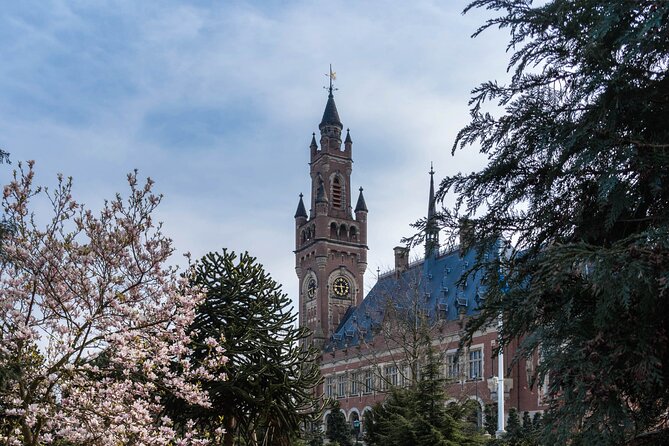
The tour starts in the Binnenhof & Ridderzaal area—home to the Dutch parliament now, but built and shaped around centuries of governance and ceremony. This is where the city’s political identity becomes physical. Even if you’re not a policy nerd, the architecture and layout communicate authority: corridors, halls, and symbolism that were meant to be seen.
What the audio should help you catch:
- Symbols in the architecture: you’re not just looking at stone; you’re learning what the building tried to communicate.
- Legends of the Knights’ Hall: The story layer matters here. These legends often explain why a space feels grand even when you’re walking through it casually.
- How it connects to modern Dutch politics: the building isn’t only a museum object. It’s still part of the public story.
Practical tip: since this chapter is about 10 minutes, don’t try to “read everything.” Look for the one or two symbolic details the audio points out, then step out and reset for photos.
Admission for this stop is marked free and a ticket is listed as free, so you can spend your time on the architecture rather than ticket logistics.
Stop 2: Scheveningen Beach and how a fishing village turned tourist-famous
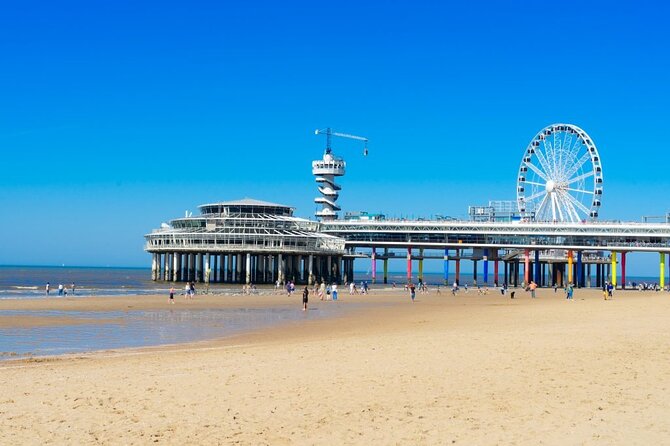
Next comes Scheveningen Beach, The Hague’s most famous seaside resort. This stop is a nice change of pace after politics. The seaside always works better with audio because you can listen while watching the horizon, the boats, and the rhythm of the shore.
The audio focus here:
- The beach’s transformation from a humble fishing village to a tourist destination.
- Historic stories, including wartime dramas and later peacetime celebrations—set against the North Sea backdrop.
This chapter is short (about 10 minutes), so I’d treat it like a walking preview rather than an essay. Let it give you context, then use your eyes to see what fits: places where fishing life likely once happened, and areas that became leisure space later.
If you’re visiting in windy weather, you’ll be glad the audio lets you keep moving. Just take care with your phone—salt air and gusts are not your phone’s best friends.
Admission is free for this stop.
You can also read our reviews of more tours and experiences in The Hague





Stop 3: Our Lady of Lourdes (RC) Silent Center, a calm pause in the middle of town
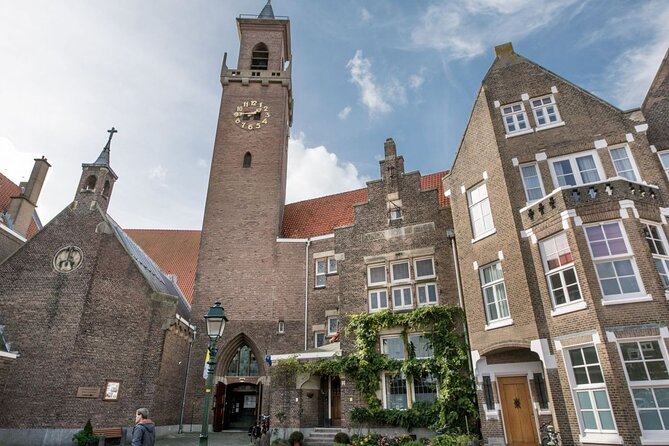
Then the tour shifts into a quieter, more reflective stop: Our Lady of Lourdes (RC) Silent Center. This is the kind of place where even a short visit feels different because the design and the purpose lean toward stillness.
What this chapter emphasizes:
- The story behind the retreat and why it exists.
- Architectural significance—not just decoration, but what the building supports in terms of experience.
- Its role in The Hague’s diverse religious landscape.
- The connection to the famous Lourdes shrine in France.
A Silent Center is a great “reset stop.” After beach wind and city noise, this is where you can slow down. Keep the visit respectful and brief if there’s any sign that suggests quiet behavior.
This stop also is marked free.
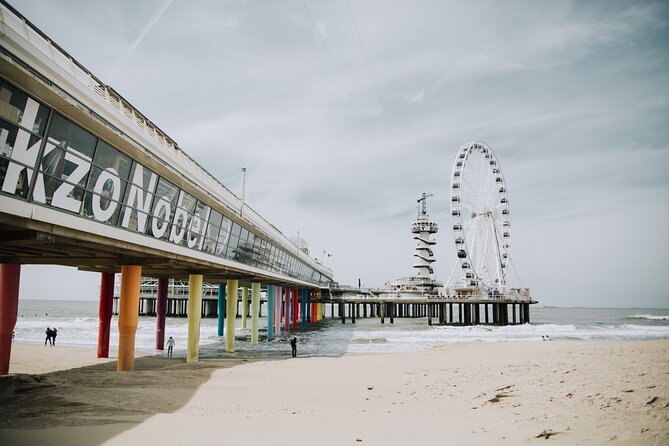
Stop 4: De Pier Scheveningen, the history of a changing entertainment hub
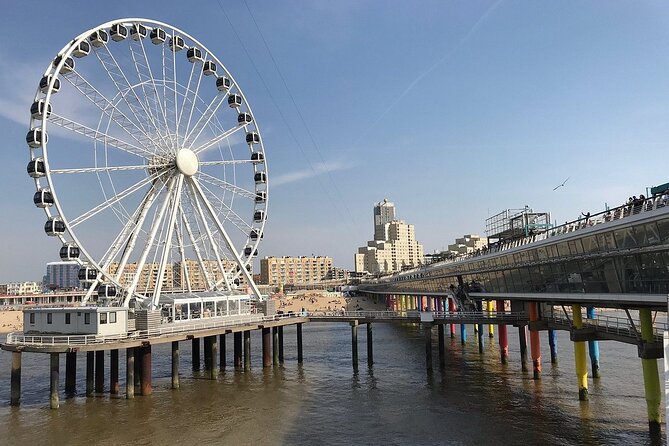
Now you’re back into a more energetic coastal landmark: De Pier Scheveningen. Piers have a way of mixing work history with leisure. This one has a clear evolution story, and the audio is designed to highlight that.
What you should pay attention to:
- It started as an original 19th-century wooden structure.
- Then it became the modern pier you can visit today.
- The pier’s growth as an entertainment hub and a key part of Scheveningen’s identity.
Because the chapter is about 10 minutes, you’ll get the storyline fast. Use that time to notice how pier design supports activity—shops, views, crowds, and how the layout shapes movement.
Important value note: admission to the pier is listed as not included. So you’ll want to decide whether you’re paying for pier access, or just taking in the outside portions if that’s possible from where you are.
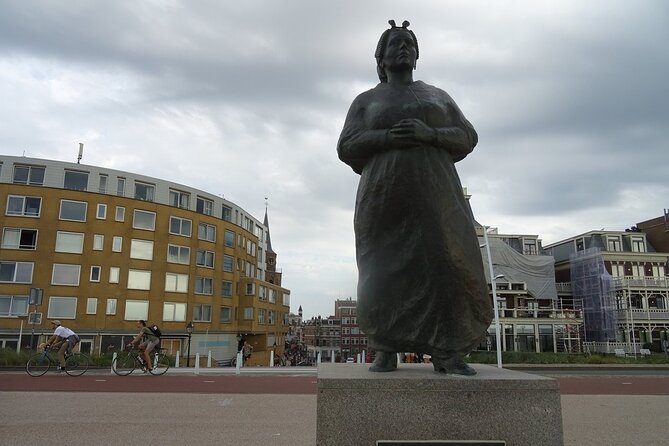
Stop 5: Fisherman’s Wife of Scheveningen, a statue that tells a human story
The final stop is one of those city moments that feels small until you realize it carries years of lived experience. The audio for Fisherman’s Wife of Scheveningen focuses on the emotional side of maritime life.
Here’s what this chapter highlights:
- The lives of Scheveningen’s fishing families.
- The dangers faced by fishermen at sea.
- The strength of the women who waited and carried on.
- How the sculpture has become a symbol of community resilience and maritime heritage.
I like this ending because it doesn’t wrap the tour in another building or another view. It gives you a person-centered story. Even if you don’t know anything about Scheveningen’s past, the point of a statue like this is to make that past feel immediate.
Admission for this stop is marked free.
Price and logistics: good value, but read the fine print
At $9 per person, the value is mainly about convenience and content access:
- You don’t pay for transport or guides.
- You get a map-based system and audio you can revisit.
- Most stops are free to enter, so your day can stay cheap.
What can add cost:
- Entry fees are not included.
- De Pier Scheveningen has admission marked not included.
- Transportation isn’t included (which is normal for a self-guided city walk).
If you’re planning to spend more than an hour, you’ll likely naturally stretch the experience—especially at the beach and around the Binnenhof area. But the audio route is designed to keep you moving with a friendly rhythm.
One more practical point: the tour is non-refundable and cannot be changed. That doesn’t mean it’s a bad buy; it just means you should book on a day you’re pretty sure you can use. Self-guided tours are easy to like—unless you end up sick or stuck with weather chaos, then the fixed date hurts.
Who this tour is best for (and who should skip it)
This is a strong pick if you:
- Like self-guided walking tours and want a short, doable route.
- Prefer audio you can control stop-by-stop.
- Want a sampler of The Hague that covers politics, coast, architecture, and community storytelling.
- Are comfortable using a phone and clicking map pins.
You might think twice if:
- You’re expecting a single coherent theme with no content mismatch. Because the written overview mentions Tamil Nadu temple stories while the listed stops are in The Hague, I’d treat the map check as mandatory.
- You hate using mobile data or switching between links. The guide is delivered via web links, so you’ll want stable phone connectivity (or at least quick access).
My booking advice: should you get it?
If your goal is a low-cost, mostly free, one-hour walk across top The Hague sights, I think this is a good deal. The format is practical: audio tied to an interactive map saves time and helps you avoid standing around wondering what you’re looking at.
But I’d only book confidently after you confirm your pins in the Google My Maps link match your expectations. If you were hoping specifically for the Chola temples story, verify that your audio playlist and map actually include that content. If your pins are purely The Hague landmarks, then enjoy the city stops as written—Binnenhof into Scheveningen into a Silent Center into pier history.
If you want, tell me what you’re trying to see most—The Hague highlights, or the Tamil Nadu temple stories—and I’ll suggest the best way to sequence the stops based on what the map shows.
FAQ
How much does the The Hague Self-Guided Audio Tour cost?
It costs $9.00 per person.
How long does the tour take?
The duration is listed as about 1 hour.
Do I need to download an app to use the audio guide?
No app is mentioned. You access the audio through a secure SoundCloud web link.
How long can I use the audio after I book?
The guide is described as available for 72 hours, and the access links are stated as valid up to 6 days.
What do the 5 stops cover?
The route includes Binnenhof & Ridderzaal, Scheveningen Beach, Our Lady of Lourdes (RC) Silent Center, De Pier Scheveningen, and Fisherman’s Wife of Scheveningen.
Is admission included for the attractions?
Most stops are marked as free, but De Pier Scheveningen lists admission as not included. Entry fees are also listed as not included overall.
Is this a private tour?
Yes. It’s a private tour/activity, and only your group will participate.