REVIEW · THE HAGUE
The Blue’s Clues in Delft Exploration Game and Tour
Book on Viator →Bookable on Viator
Delft gets more fun with puzzles.
This Delft Exploration Game turns a normal walk into an outdoor escape-style scavenger hunt. You use an offline smartphone app to follow a step-by-step route, answer location challenges, and move from landmark to landmark at your own speed. I like that you can pause anytime to stop for photos or snacks, then pick back up without losing your place. One thing to consider: you’ll need a working phone with enough battery, plus the right access to start the game on your device.
What I also appreciate is the route itself. You’ll pass through places most first-timers miss—like the Medisch Farmaceutisch Museum and the Old Church area—while still touching big-name sights such as the Nieuwe Kerk and the Vermeer Centrum. It’s designed for solo play or a small group, and kids can join free. The tradeoff is that there’s no live guide on-site, so the experience leans on your phone for context and clues rather than conversation with a person.
In This Review
- Key things I’d plan for
- A phone-led escape game that lets you move like a local
- What you’ll realistically spend time on
- The one drawback that matters
- Oostpoort to Koornmarkt: start at a real city gate
- Practical tip for this early stretch
- Medisch Farmaceutisch Museum: antiques, but made playful
- What to watch for
- Nieuwe Kerk and the Markt: gothic buildings plus civic life
- A note on the square vibe
- Clock tower details, bells, and the Vermeer connection
- If you love creative history
- The Old Church and Prinsenhof: medieval roots to William the Silent
- What this pairing does for your walk
- De Roos Windmill: your final clue by the finish line
- How long will you spend here?
- Price and value: $7.53 for a self-guided city adventure
- The one cost-risk to think about
- Who should book this escape-game walk?
- Should you book this Blue’s Clues Delft Exploration Game?
- FAQ
- How long does the Delft Exploration Game and Tour take?
- Where does the experience start and end?
- Do I need an internet connection?
- Can I play solo or as a group?
- Is there a physical guide with you?
- Can kids join for free?
- What’s the pricing?
- Is it available at specific times?
- Can I cancel for free?
Key things I’d plan for
- Offline app play: No internet needed while you’re walking and solving
- Start any hour, 24/7: You can do it when your day fits best
- Pause and resume: Breaks don’t ruin the flow
- Family-friendly format: Escape-game style that works well with kids
- Free kid entry + group phones: Kids play free, and group members can use their own phones without extra cost
A phone-led escape game that lets you move like a local
This isn’t a museum ticket and it isn’t a bus tour. It’s a self-guided outdoor game that uses Delft’s streets as your board. After you start, the app sends you step-by-step to the next spot. At each stop, you’re meant to look around, find the answer to a challenge, and then continue on to the next location.
That may sound simple, but it changes how you see the city. Instead of glancing and moving on, you slow down long enough to notice details: brickwork patterns, the placement of towers, the shape of a square, or what a building used to be. If you like walking and figuring things out on your own, the pacing feels natural.
You can also read our reviews of more tours and experiences in The Hague


What you’ll realistically spend time on
The game runs about 1 hour 30 minutes (approx.). If you take lots of photo breaks or pause for a longer look inside any stop that’s open, give yourself extra time. The route ends at Delft Windmill de Roos, so you’re closing your loop with a classic Dutch sight.
The one drawback that matters
Because you’re not using a live guide, you should go in expecting you are the tour leader. The app handles the story and the puzzles, but it can’t answer questions the way a person would. If you want conversation, this may feel less satisfying than a guided walk.
Oostpoort to Koornmarkt: start at a real city gate
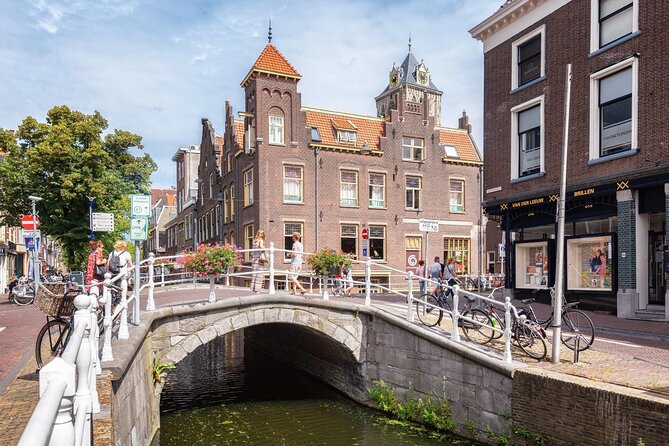
Your walk kicks off at Oostpoort 15, a historic starting point near Delft’s eastern gate. Delft’s brick Gothic architecture shows up clearly here, with construction dating to around 1400. Later changes added extra height and a more dramatic profile—around 1510, towers were enhanced with an additional octagonal floor and high spires.
Why this is a smart first stop for a game: city gates are built for movement and defense, so you get an immediate “why is this here?” feeling. The app challenge at this stage makes you look around instead of just passing by.
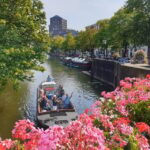
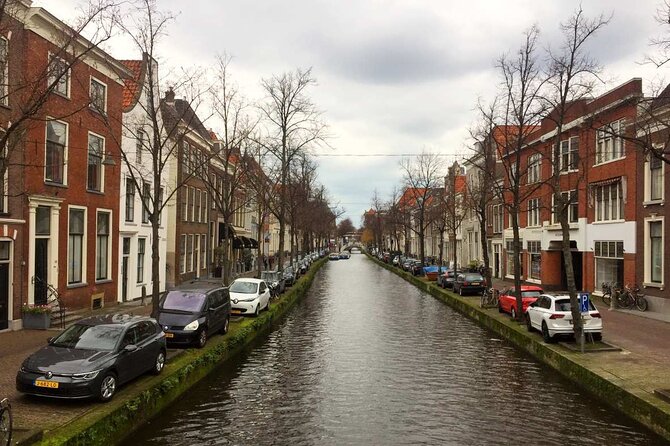
Then you move to Koornmarkt (Corn Market), a canal-and-street area that’s strongly associated with Delft’s classic layout. Koornmarkt is exactly the kind of place that looks pretty on a postcard and even better in person—especially when you’re hunting for the next clue. You’ll be looking for the answer that advances you, which encourages you to study street angles, building fronts, and canal edges instead of only taking broad views.
Practical tip for this early stretch
Wear shoes that handle uneven sidewalks and short canal-side edges. The game works best when you can walk steadily and stop quickly when you spot the clue.



Medisch Farmaceutisch Museum: antiques, but made playful
Next up is Medisch Farmaceutisch Museum, a museum with antique medical and pharmaceutical instruments. This is a great pivot in the route. After architecture and streets, you get something more unusual and human: objects tied to how people once treated illness and stored remedies.
In a normal tour, this kind of stop might be a quick “interesting museum, moving on.” In a game format, it becomes part of the challenge. You’re expected to look around and locate answers, which usually makes people pay closer attention to signage and details they’d otherwise skim.
What to watch for
The time pressure of a game can push you to “scan fast.” If this museum part catches your interest, slow down and let the artifacts register. The best value comes when you use the game as a reason to look longer, not a reason to rush.
Nieuwe Kerk and the Markt: gothic buildings plus civic life
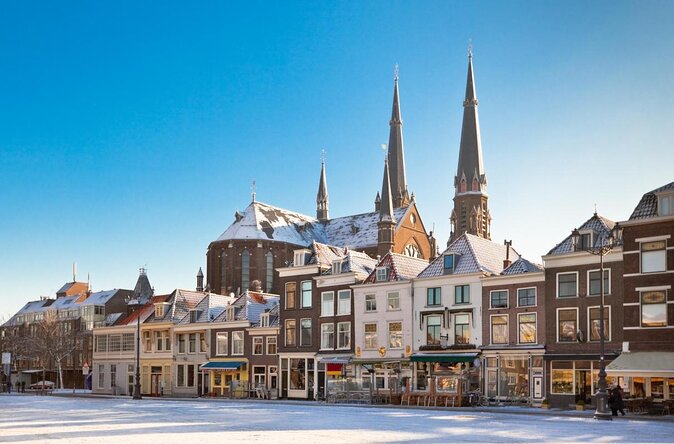
Delft’s biggest landmark cluster in this route centers around the Nieuwe Kerk area—and it’s one of the most rewarding parts of the experience.
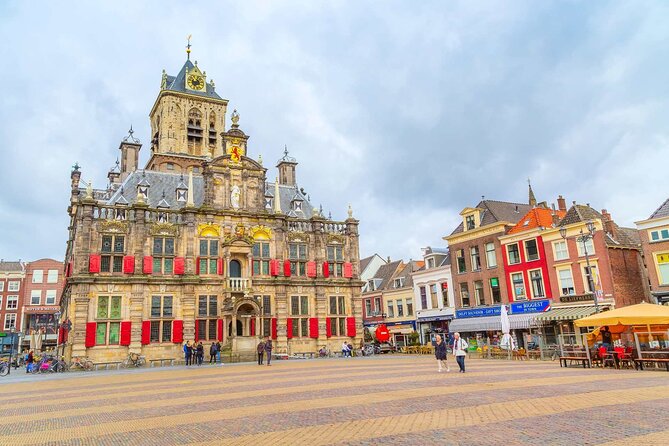
You’ll visit the Old Church area too, but before that you get the civic layer: the City Hall on the Markt, the big central market square. The city hall is a Renaissance style building on the market, and it’s tied to civic functions and public ceremonies like weddings. Most administrative work has moved to offices inside the Delft railway station building, but the old building still anchors the square.
Then the route takes you into the heart of the Markt itself. This square is huge for Delft—about 120 by 50 meters—and it sits on a raised ridge. The square’s height comes from a silted creek ridge raised by a tidal channel called de Gantel. That’s not just trivia. It helps explain why the center feels like a stable, defined “platform” compared with the narrower canal edges around it.
The app challenge here pushes you to notice how the Nieuwe Kerk lines up on the east side and how the town hall sits on the west. You’re basically learning the geometry of the city center as you solve the puzzle.
A note on the square vibe
Because the Markt is an open public space, this can be a good rest point. If you’re with kids, it’s also easier to pause and reorganize snacks and water before you head onward.
Clock tower details, bells, and the Vermeer connection
Another highlight is the stop connected to the tower with a long build timeline: built 1396–1496 by Jacob van der Borch. This is the same architect credited with the Dom in Utrecht (1444–1475), which gives the route a wider regional thread—Delft isn’t isolated; its builders worked across cities.
You’ll also see references to monuments and sound. A memorial for Hugo de Groot was made in 1781. The mechanical clock has 18 bells by François Hemony from 1659, plus 30 modern bells. That’s a lot of bell detail for a walking game, but it makes sense in context: clock towers are built for timekeeping and civic rhythm, so the clues push you to connect stone and sound.
After that, the route turns toward the Vermeer Centrum Delft. This building is historically significant even before you think about the art. It was once home to the St. Lucasgilde, a guild of painters and glass makers in the 17th and 18th century, and Johannes Vermeer joined in 1653. The guild ties to Saint Luke, the patron saint of painters—so the building connects craft, community, and reputation, not just celebrity.
If you love creative history
This part works well even if you don’t plan to go deep into any exhibit. The game’s clue format helps you remember why this site matters, not only that it exists.
The Old Church and Prinsenhof: medieval roots to William the Silent
Now you get two stops that feel like different chapters of Delft’s story.
First, the Old Church. It’s considered to have been founded in 1246, when Count William II gave Delft its charter. The church was originally named after St Bartholomew. Later centuries transformed it into a Gothic basilica—again, the kind of change you can’t fully appreciate without slowing down and looking at the structure.
Then you shift to the Prinsenhof. This urban palace began as a monastery in the Middle Ages and later became a residence for William the Silent. In 1584, William was murdered at the Prinsenhof. The walls still show holes from bullets at the main stairs, which is one of those details that hits differently in person than in a photo.
What this pairing does for your walk
This sequence mixes architecture and consequence: how a place starts (monastery), how power moves in (residence), and what history does to buildings over time (visible damage). In a puzzle format, you’re more likely to notice the features that make the story stick.
De Roos Windmill: your final clue by the finish line
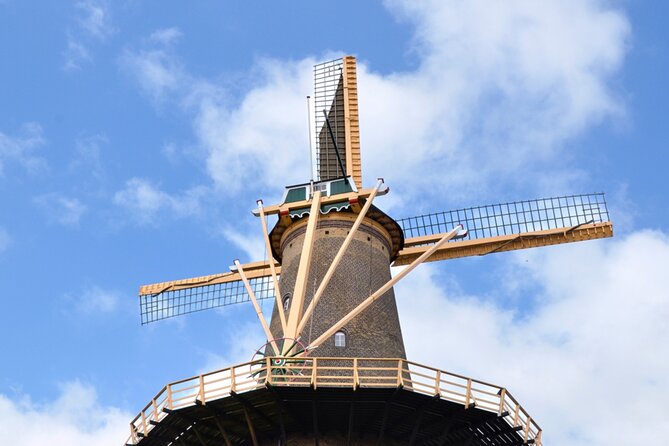
The game ends near Delft Windmill de Roos. The windmill was built in 1679, used for grinding corn. But the site matters even earlier: the first mention of a mill here dates back to 1352. De Roos is also described as the only remaining windmill of fifteen mills that once stood in the Delft region.
In other words, this ending isn’t just scenic—it’s meaningful. If you like closure, finishing at a working historic structure gives your walk a clean “we made it” feeling.
How long will you spend here?
The route ends at the windmill address area: Phoenixstraat 111, 112, 2611 AK Delft. Expect your last clue moment to take as long as you need to read the surroundings, plus a little time if you want to take photos before you call it a day.
Price and value: $7.53 for a self-guided city adventure
At $7.53 per person, this can be excellent value—especially because you’re not paying for transportation or a timed group schedule. The big value drivers are:
- Offline play: you can explore without depending on spotty mobile data
- 24/7 availability: you can fit it around your museum visits or day trips
- Freedom to pause: you’re not forced to keep pace with a group
- Free for KIDS: families can spread out the cost
Also, the experience is flexible by design. You can start at any hour, take breaks, and resume later. That kind of control usually matters more in real travel days than people expect.
The one cost-risk to think about
Even with offline play, you still need your smartphone to run the app and access the game. If your phone has low battery or you’re traveling with limited storage, plan ahead. Bring a charger when you can.
And there’s one more practical risk based on real-world setup issues: some people have had trouble accessing the game after purchase if the unlock/access code didn’t register correctly. If that happens to you, use the app’s chat support or contact [email protected] so you’re not stuck.
Who should book this escape-game walk?
This works best if you:
- like walking and want a reason to look closely at streets and buildings
- prefer flexible timing over a fixed group departure
- enjoy puzzle-solving as a travel style
- want a family activity that doesn’t feel like a lecture
It may not be ideal if you:
- want deep, face-to-face explanations from a guide
- dislike phone-based navigation or struggle with app check-in steps
- need a fully guided, step-by-step human presence the whole time
Should you book this Blue’s Clues Delft Exploration Game?
Yes, if you want a fun, self-paced way to learn Delft’s standout landmarks and its quieter corners. The price is low enough that you can treat it as a walking activity rather than a big commitment, and the offline, pause-and-resume format fits real travel days.
I’d especially recommend it for independent travelers and families who like learning by noticing. If you’re the type who gets energized by finding clues in real places—Oostpoort, Koornmarkt, the Markt, the Prinsenhof, and ending at de Roos—this is likely to feel worth your time.
If you’re short on phone battery, don’t love apps, or want a talkative guide, consider a traditional walking tour instead.
FAQ
How long does the Delft Exploration Game and Tour take?
It’s listed at about 1 hour 30 minutes.
Where does the experience start and end?
It starts at Oostpoort 15, 2611 RZ Delft, Netherlands, and ends near Delft Windmill de Roos at Phoenixstraat 111, 112, 2611 AK Delft.
Do I need an internet connection?
No. You can play offline while exploring.
Can I play solo or as a group?
Yes. The experience can be played solo or with a group.
Is there a physical guide with you?
No physical tour guide is included. The app guides you step by step.
Can kids join for free?
Yes. The experience is free for kids.
What’s the pricing?
The price is $7.53 per person.
Is it available at specific times?
It’s permanently available 24/7, and you can start at any hour.
Can I cancel for free?
Yes, free cancellation is available. You must cancel up to 24 hours in advance for a full refund.