REVIEW · THE HAGUE
Private Tour of Rotterdam and The Hague including Transfer
Book on Viator →Operated by Discover Delft · Bookable on Viator
Two Dutch cities in one half day.
I like how the tour gives you two city “moods”—The Hague’s formal political center and Rotterdam’s postwar reinvention—in one smooth run. I also love that you get an inside visit to the Cubic House, not just photos from the sidewalk. The main drawback to plan for is that the timing is tight: this is a 4h 30m “highlights + stories” format, so you’ll be moving at a steady pace rather than lingering.
You’ll ride in an air-conditioned vehicle between stops, with free admission listed for multiple viewpoint moments, plus a short transfer between cities. It’s private (just your group), so you can set your pace a bit, but the route still follows a set flow—meaning you should treat it like a smart orientation first, deeper exploring later.
In This Review
- Key highlights you’ll feel right away
- How this private half-day tour “works” (and who it’s best for)
- The Hague’s political core: palaces, parliament, and the Hofvijver pond
- Lange Voorhout, Noordeinde Palace, and the walk that feels like a boulevard
- Grote Kerk and Johan de Witt: famous faces, strange stories, real grit
- The switch to Rotterdam: station architecture and a quirky statue from the road
- Markthal: one stop that gives you food, art, and a feel for Rotterdam’s new identity
- Grote of Sint-Laurenskerk and Erasmus: surviving war, producing ideas
- Inside the Cubic House (Piet Blom): the stop that makes Rotterdam feel real
- Oude Haven to Witte Huis: old port vibes vs Europe’s old skyscraper
- Willemsbrug and the Maas skyline payoff: the view you’ll remember after the walking
- Tour timing, pace, and what you might miss (so you can plan smart)
- Value for the price: what $255.98 buys you in real terms
- Should you book this Rotterdam + The Hague private tour?
- FAQ
- Where does the tour start and end?
- How long is the tour?
- Is this a private tour or shared group?
- Can I choose whether to start in The Hague or Rotterdam?
- How do you travel between The Hague and Rotterdam?
- What’s included in the ticketing and admissions?
- Is hotel pickup included?
- Are cancellations free?
- Are service animals allowed and is it near public transportation?
Key highlights you’ll feel right away
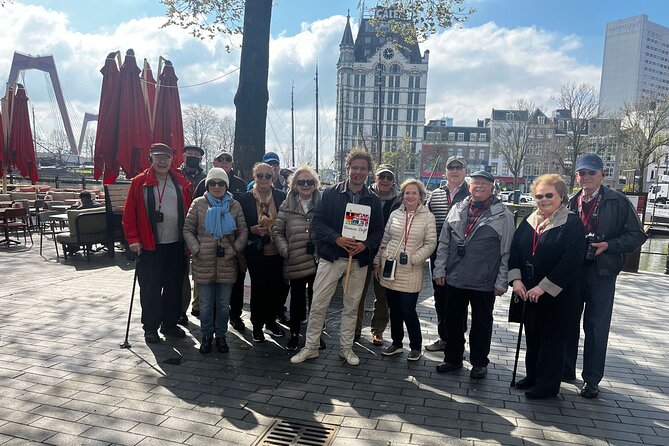
- The Hague’s power center, walkable and story-heavy, from Willem van Oranje to the parliament complex
- Mauritshuis, Ridderzaal, and Hofvijver stops that help you understand how Dutch government actually feels in real life
- Rotterdam’s rebuilding-to-survive attitude, including landmarks tied to WWII impact
- Markthal plus the food-floor vibe, where you can try Dutch cheese and look up at big art
- Cubic House from the inside (ticket included), a rare architectural “how is this even standing” moment
- Rotterdam skyline views from the Maas, with the Willemsbrug viewpoint as your payoff
How this private half-day tour “works” (and who it’s best for)
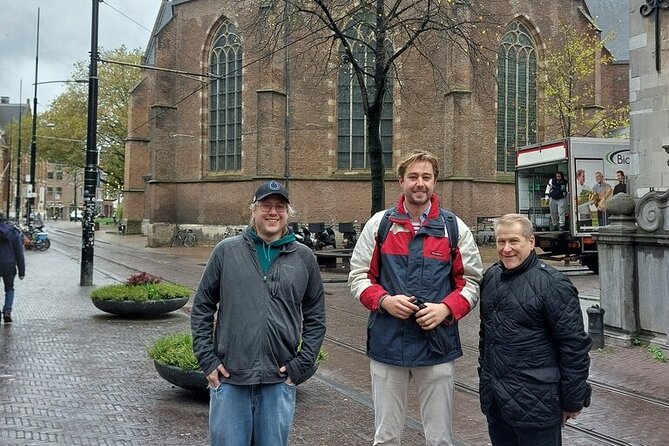
This is a private Rotterdam + The Hague tour designed for people who want context fast. In about 4 hours and 30 minutes, you’ll cover major sights on foot in both places, then shift between them with a short transfer (either by train or by car, depending on what’s arranged). Because it’s private, your guide can adjust pacing and questions to your group.
I think it fits best if:
- you’re on a short stay and want to get your bearings fast
- you like architecture and urban planning as much as museums
- you want fewer “random stops” and more meaning behind what you’re seeing
If you prefer slow museum time, this likely feels a bit tour-bus-like (even though it’s private) because the plan is intentionally brisk. You’re here to understand the cities, not to do everything.
You can also read our reviews of more private tours in The Hague
The Hague’s political core: palaces, parliament, and the Hofvijver pond
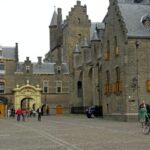
The Hague is a city that feels “official” even when you’re just walking. The first moments set the tone immediately: you start at Het Plein, linked to Willem van Oranje and the Dutch revolt story line that helped shape the country’s identity.
From there, your route threads through the places where power and tradition overlap. You pass by the Mauritshuis area, a major name in Dutch art—especially because the museum is known for famous Vermeer paintings. Even if you don’t spend long inside, the stop matters because it anchors what The Hague is famous for beyond politics.
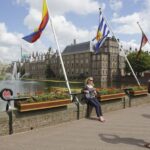
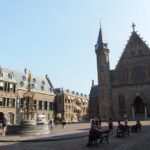
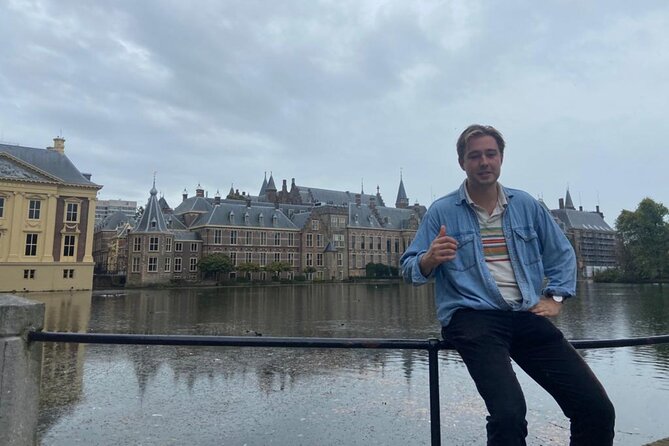
Next comes the parliament complex: the walk around Binnenhof & Ridderzaal gives you a real-feel sense of government spaces. The Ridderzaal (Knight’s Hall) is the kind of room-title that sounds ceremonial, and the point of the stop is exactly that—how architecture and politics reinforce each other. If you’re lucky, you might catch ministers or the prime minister moving through nearby space, since the area is active.
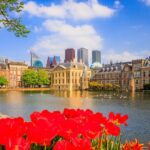
Then the route shifts to a smaller feature with a big symbolic role: Hofvijver, the pond in front of the parliament and the prime minister’s office area (including the small tower reference). It’s the type of spot where your guide’s story turns a view into something you remember, especially when you hear how the pond has been used through time.
A quick stop at the Thorbecke Monument adds one more layer: this statue connects directly to the constitution. It’s brief, but it’s the kind of stop that helps you connect “politics” to “why the system exists at all,” not just where offices are.
Lange Voorhout, Noordeinde Palace, and the walk that feels like a boulevard
After the governmental intensity, you get a more elegant street experience on Lange Voorhout. This stretch is described as The Hague’s version of the Champs-Élysées, and you can feel why: embassies, art museums, well-known hotels, and official buildings line the way. It’s also a good place to understand how The Hague functions as a diplomatic city, not just a national one.
You’ll also see Noordeinde Palace, the working palace of the Dutch king. The practical tip here is that the tour notes you can often use the flag to tell whether he is currently in the country. It’s a simple detail, but it gives you a live sense of the building’s real use rather than treating it like a static postcard.
Grote Kerk and Johan de Witt: famous faces, strange stories, real grit
The Hague’s stops keep mixing beauty with blunt history. Grote Kerk (“Big Church”) gets you thinking about symbolism and meaning, including a fun question your guide will answer—what a stork is doing up on top.
Then comes Johan de Witt’s statue. This is not a random sculpture stop. The story tied to the monument is unusually dramatic: it’s noted as the only head of government of the Netherlands eaten by an angry mob. That’s a jolt, but it’s also why the stop works. You go from elegant streets to a darker chapter fast, which is exactly how history often feels in real European cities.
The switch to Rotterdam: station architecture and a quirky statue from the road
Once you head toward Rotterdam Blaak, the tour includes a passing look at Rotterdam’s central station, opened in 2014. The key value here is not the building as a standalone object—it’s how it signals modern Rotterdam, a city that’s always rebuilding and re-branding itself.
You’ll also spot a peculiar statue from the car, officially called Santa Claus, but known by another name. Even if you can’t fully grasp it from the moving vehicle, that’s the point: it primes your eyes for the more playful, design-driven feel Rotterdam is famous for.


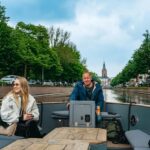
Markthal: one stop that gives you food, art, and a feel for Rotterdam’s new identity
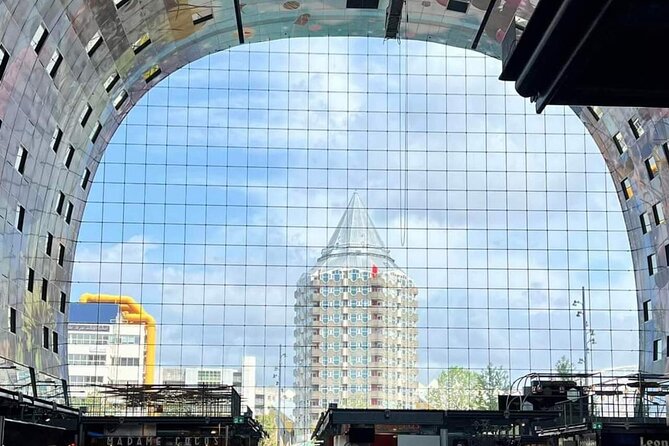
In Rotterdam, Markthal is a major anchor. You get out near Rotterdam Blaak, then head into the market hall itself. The tour emphasizes two standout aspects:
- the inside experience (lots of food choices and a chance to try Dutch cheese)
- the “look up” factor, because there’s large-scale art overhead
This is one of those places where a short visit still pays off. You don’t need hours to understand the concept: Rotterdam built something that works like a market and a neighborhood centerpiece all at once. If you like practical urban life—where locals shop and eat right inside major architecture—this stop is worth the time.
Grote of Sint-Laurenskerk and Erasmus: surviving war, producing ideas
Near Markthal is the older counterweight: Grote of Sint-Laurenskerk, a 14th-century church. The story connection is crucial—its tower is noted as having survived the bombing of Rotterdam. That survival detail changes how you see the building. It’s not just medieval architecture; it’s proof of endurance.
Another reason this stop clicks is Erasmus, a famous figure born here. Even if you only get a short viewing time, the guide’s link to Erasmus helps you place Rotterdam in the broader Dutch cultural timeline, not only the postwar city-rebuild narrative.
Inside the Cubic House (Piet Blom): the stop that makes Rotterdam feel real
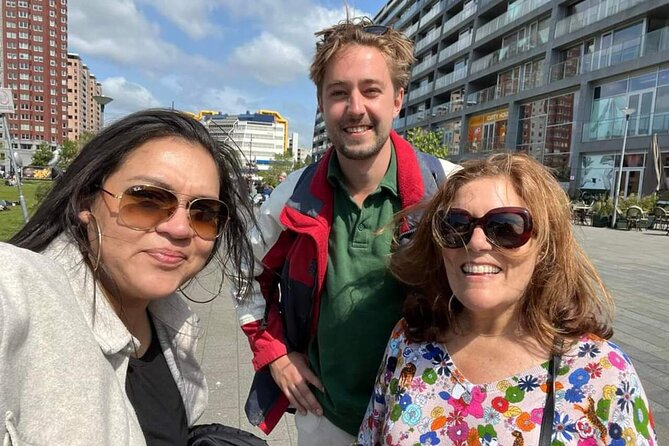
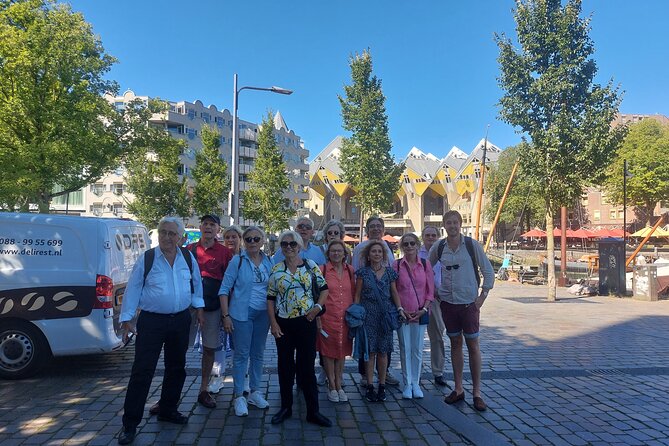
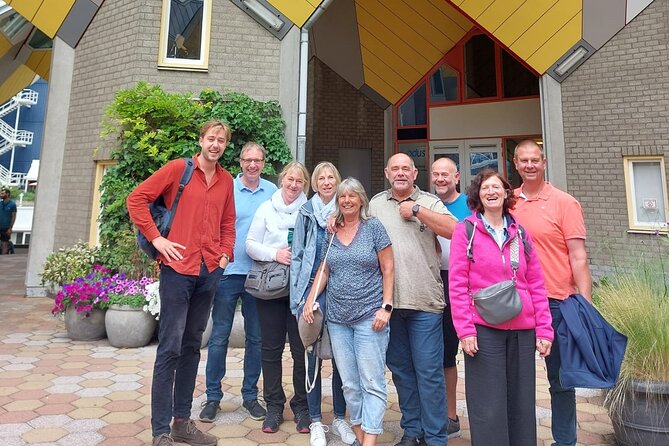
Then you get the most distinctive “try it, see it” part: Kijk-Kubus, the Cubic Houses by Piet Blom, viewed from the inside. The tour notes these were a product of the 1970s idea phase, built in the 1980s, and represent a concept of a village-like setup built inside a city.
This interior visit is one of the best uses of limited time because it answers a question most people have when they first see cubes: how do you live in this? The design becomes more than odd architecture when you see the space layout up close.
The tour price includes the Cubic House ticket, which matters for value. You’re not spending extra to reach the one “signature” attraction that would otherwise eat into your budget or time.
Oude Haven to Witte Huis: old port vibes vs Europe’s old skyscraper
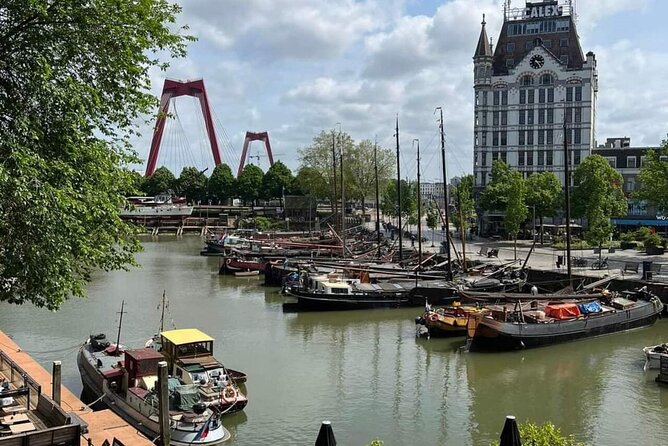
After the Cubic House, you move to Oude Haven (Old Harbour). This area is now a lively recreational zone with terraces. The tour also points out that old ships are anchored for restoration, and you’ll see more Piet Blom architecture around the edges.
One useful context detail: the real port of Rotterdam is many kilometers west now. That matters because it prevents the common confusion—Oude Haven feels “port-like” but it’s not the working industrial harbor. You’re looking at a historic port zone that has transformed into a place to hang out.
Then the route includes Witte Huis (Het Witte Huis), called the oldest skyscraper of Europe and dating from 1898. The guide also points out visible remnants of German bullet holes. That’s heavy subject matter, but it’s exactly why the stop is compelling: Rotterdam’s skyline isn’t just modern flair—it’s also layered with survival and scars.
Willemsbrug and the Maas skyline payoff: the view you’ll remember after the walking
Before you head back to the endpoint, you’ll reach the Maas river for a true skyline viewpoint from Willemsbrug. This is your visual reward. Rotterdam’s “only city with a skyline” idea isn’t just marketing—it’s a feeling you get when you finally step back and see the mix of designs.
If you’re the kind of person who usually only snaps photos, this is where your brain catches up. You see how architecture, history, and rebuilding come together in a single frame.
Tour timing, pace, and what you might miss (so you can plan smart)
Because the tour covers both cities in one half day, the time at each stop is naturally short—often around 10 to 20 minutes in walking areas, plus the included transfers. That means:
- you’ll learn a lot, but you won’t get long museum time
- you’ll see key exteriors and symbolic interiors (like the Cubic House) rather than deep-dive ticketed attractions
If you want to build on this after the tour, the good news is the itinerary ends in Rotterdam’s Old Harbour area—a convenient spot to keep exploring on your own with terraces and nearby options to head into Markthal or the center.
Value for the price: what $255.98 buys you in real terms
At $255.98 per person for a private 4h 30m tour with transfer and a Cubic House ticket included, the “value” comes from concentration. You’re paying for:
- a private guide to connect the stories between stops
- air-conditioned transport during longer stretches
- the short transfer between The Hague and Rotterdam
- ticket inclusion for the Cubic House interior (the single most experience-based attraction)
Many sightseeing add-ons can quietly add up in the Netherlands (especially if you’re planning museum time). Here, the tour’s structure keeps multiple stops admission ticket free and folds in the one costly-feeling interior experience—so you can budget without surprises.
Should you book this Rotterdam + The Hague private tour?
Book it if you want a smart first taste of both cities. You’ll get the political backbone of The Hague, then the postwar reinvention of Rotterdam, with the best kind of payoff: you don’t just see weird design, you step inside it at the Cubic House.
Skip or consider something else if your priority is slow museum browsing or you hate tight schedules. This is a “get the story, see the key sights” tour, not a long sit-and-stare art day.
If you’re doing a short stay and want to come away with clear impressions and a plan for what to do next, this one is an efficient, very practical choice.
FAQ
Where does the tour start and end?
The tour starts and ends in Rotterdam at Oudehaven (3011 Rotterdam, Netherlands). It finishes in the Old Harbour area.
How long is the tour?
The duration is about 4 hours 30 minutes.
Is this a private tour or shared group?
It’s a private tour/activity, so only your group participates.
Can I choose whether to start in The Hague or Rotterdam?
Yes. The tour can be done both ways, starting in The Hague or starting in Rotterdam.
How do you travel between The Hague and Rotterdam?
A short transfer between the cities is included, by train or by car.
What’s included in the ticketing and admissions?
The tour includes tickets for a Cubic House interior visit. Many other listed stops show admission ticket free.
Is hotel pickup included?
Hotel pickup and drop-off by car are available if you book that option.
Are cancellations free?
Yes, there is free cancellation. You can cancel up to 24 hours in advance for a full refund.
Are service animals allowed and is it near public transportation?
Service animals are allowed, and the meeting area is near public transportation.