REVIEW · ROTTERDAM
Rotterdam Travel to the Future Walking Tour
Book on Viator →Operated by Snurk.Travel · Bookable on Viator
Rotterdam can feel like science fiction. This walking tour aims right at that vibe, but it stays practical: you cover major “tomorrow” ideas in about three hours with a certified guide in English. I love how the route connects design, people, and public space instead of just pointing at landmarks.
Two things I really like: first, the mix of modern and everyday—roof farms, public art, and markets—so the city feels lived-in, not museum-only. Second, the storytelling focus shows up in the best reviews, where guides like Danya or Danil Hochlovic are praised for making even repeat visits feel fresh.
One thing to consider: it is a pricey tour at $274.03 per person, so you’ll want to commit to the full walk and plan for your own snacks and drinks.
In This Review
- Key highlights before you go
- Why Rotterdam’s future ideas show up fast on foot
- Price and value: what $274.03 buys you (and when it’s worth it)
- Meeting point to finishing at Erasmus Bridge: how the route works
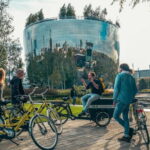
- Stop 1: yellow road, roof farm ideas, and Piet Oudolf garden design
- Stop 2: street sculptures and graffiti that actually add to the story
- Stop 3: Sint-Laurenskerk area, old city hall energy, and what survived
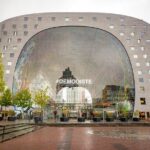
- Stop 4: Markthal by MVRDV, plus time to eat your way through architecture
- Stop 5: Erasmus Bridge views and OMA by Rem Koolhaas context
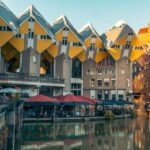
- Stop 6: Cube Houses, plus the Pencil and Apple buildings
- Who this tour fits best (and who should skip it)
- Practical tips to make the most of the 3-hour walk
- Should you book Rotterdam Travel to the Future?
- FAQ
- How long is the Rotterdam Travel to the Future walking tour?
- What language is the tour offered in?
- How much does it cost?
- Is the tour private?
- What is included in the price?
- What isn’t included?
- Do you need tickets for the stops?
- Where do you start and where does it end?
- Is the meeting area near public transportation?
- What is the cancellation policy?
Key highlights before you go
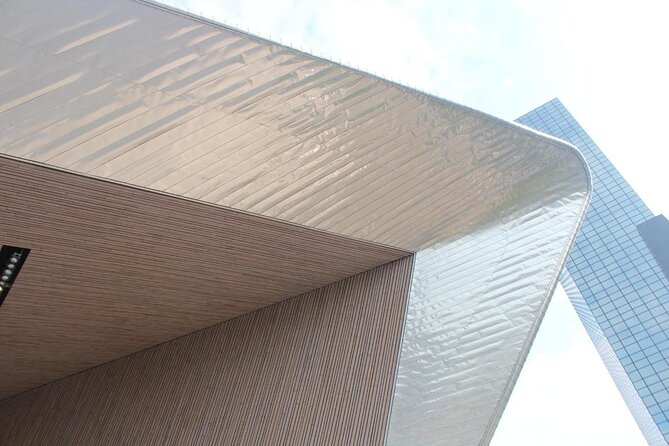
- Future-friendly public spaces: you’ll pass places built for people to meet, move, and grow food
- Street art with meaning: graffiti and sculpture are treated like a story, not random wall paint
- Markthal inside-out: architecture by MVRDV plus time to wander the market stalls
- Big-city views: the Erasmus Bridge gives you an easy “see the other side” moment
- Cube Houses context: modern housing ideas and 20th-century design principles, explained on-site
Why Rotterdam’s future ideas show up fast on foot
This tour earns its name because it doesn’t start with a “look, but don’t touch” attitude. Instead, you walk through Rotterdam’s public life where design, technology, and city planning show their work in the open.
You’ll also get a strong sense of why Rotterdam became a laboratory for modern building after major disruption. The best part is how the tour uses big icons (like Markthal and the Cube Houses) while still keeping the pace on human-scale details: textures under your feet, art on walls, and food that smells like you actually arrived somewhere.
And since it’s a private tour for your group, the guide can tune the walk to your interests—architecture if you want it, social history if you prefer that angle. The “future” here is not just gadgets. It’s how the city treats space and people.
You can also read our reviews of more walking tours in Rotterdam
Price and value: what $274.03 buys you (and when it’s worth it)
At $274.03 per person for about 3 hours, this is not a budget stroll. The value comes from three things that matter on a city walk:
First, you’re paying for interpretation. A certified guide helps you read Rotterdam’s modern design choices quickly—why buildings look the way they do, and what planners and artists were trying to solve.
Second, you get a tight route. You’re not scattered across the city with long gaps. You move from innovative public spaces to street art, then into major architecture hubs, ending with classic Rotterdam icons.
Third, you’re buying group attention. Because it’s private for your group, the guide isn’t juggling dozens of people. In the reviews, guides are praised for pacing and for keeping kids interested—so the guide’s control of the story arc is part of the package.
When it’s especially worth it: if you care about design, modern architecture, public art, or you already know the “standard postcard” spots and want something smarter than a highlight list.
When it might not be worth it: if you mainly want to photograph famous buildings and you’re okay wandering on your own. For pure DIY sightseeing, Rotterdam has plenty of self-guided appeal.
Meeting point to finishing at Erasmus Bridge: how the route works
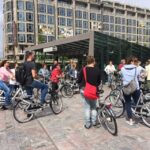
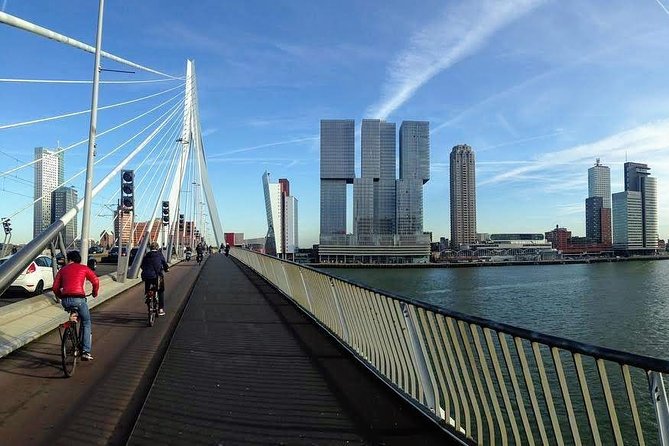
You start at Ode aan Marten Toönder, Verlengde Nieuwstraat, 3011 GA Rotterdam, and you end at Erasmusbrug, 3011 BN Rotterdam. That end point matters because it drops you right into an area where the views and the “walk-off” energy are easy—so you don’t feel stranded after the tour.
You should plan for a solid walking pace. The schedule lists multiple stops ranging from 15 to 30 minutes each, so you’ll likely spend most of the total time outside. If you’re the kind of person who likes to linger, leave yourself a little extra time before and after the tour for slow photos and market browsing.
Also note the practical stuff: it’s offered in English, you get a mobile ticket, and it runs near public transportation. That makes it easier to plug into a day that includes museums or lunch nearby.
Stop 1: yellow road, roof farm ideas, and Piet Oudolf garden design
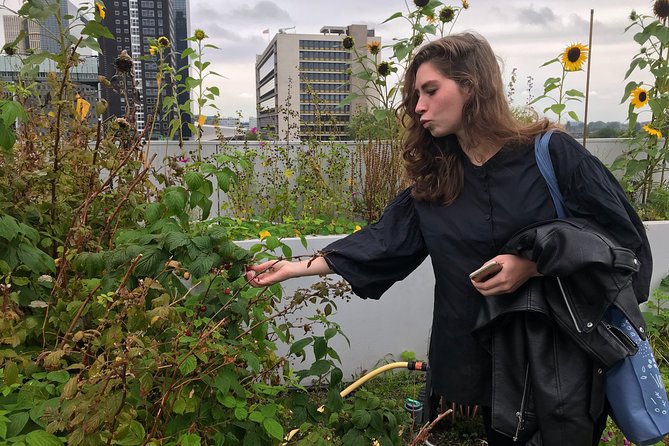
The first part is where the tour sets its tone: Rotterdam as a city that builds for daily life, not just skyline views. You’ll see several “future” public-space ideas on the way, including a yellow wooden road, an eco-farm on a rooftop, and a garden designed by Piet Oudolf.
Here’s what makes this stop click for most people: it teaches you to notice how cities manage practical needs—mobility, greenery, food production, and community—using design you can walk through.
The yellow wooden road is the kind of detail you might overlook on your own. On this tour, the guide frames it as an intentional public-space decision: the material, the color, and the way it shapes movement. You start reading Rotterdam’s streets as if they were a carefully edited page.
The roof farm idea is your quick reminder that “urban agriculture” is not a hobby. It’s a real part of how some neighborhoods try to stay resilient. Even if you’re not into plants, seeing that concept in an actual built environment makes it feel believable.
And with Piet Oudolf’s garden design, the point is not just flowers. It’s the thinking behind how a public garden stays interesting across seasons and everyday use. It trains your eye, so later stops feel more connected.
Potential drawback: this stop leans visual and conceptual. If you want only hard-history moments and less design talk, you may want to tell the guide early and ask for the social side of the design choices.
Stop 2: street sculptures and graffiti that actually add to the story
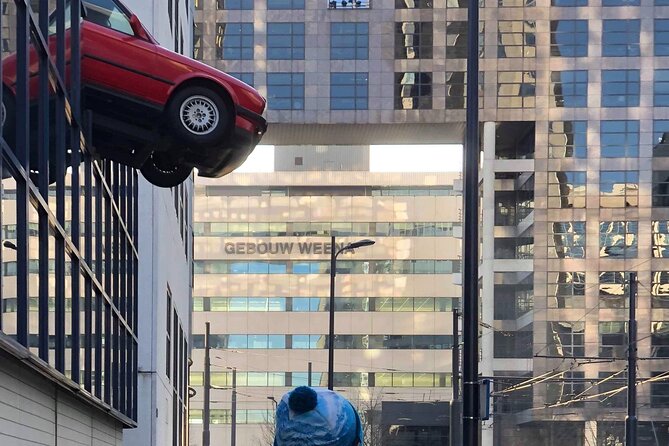
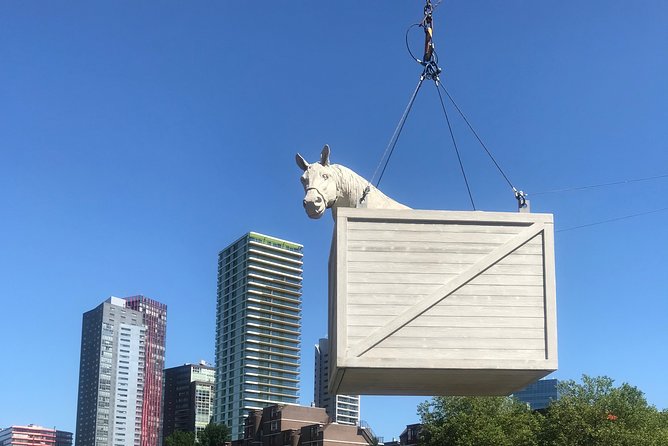
Next comes public art—street sculptures and graffiti—with a clear promise: you’ll hear the stories behind what you see. This is one of the most praised parts of the tour in past feedback, especially where guides are described as showing the city from angles you would normally skip.
This is also where Rotterdam’s “future” identity gets its teeth. Street art isn’t decoration. In many cities it’s reaction; in Rotterdam it often reads like commentary about identity, conflict, and community space.
On your walk, look at the layers:
- what’s painted or sculpted
- where it’s placed
- what the surrounding architecture makes you feel
A good guide helps you connect those dots without drowning you in dates. From the feedback I read, that balance is a strength: informative, but not heavy.
Time is short here (about 15 minutes), so you’ll want to keep your eyes open and save close-up photo time for a moment when the group pauses. If you’re traveling with kids, this is usually the section where you get the most “stop, look, ask” moments.



Stop 3: Sint-Laurenskerk area, old city hall energy, and what survived
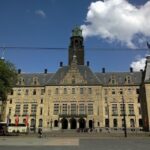
Even though Rotterdam looks modern fast, this stop gives you the other half of the contrast: the Grote of Sint-Laurenskerk area and nearby old city hall building context, plus the Laurenskerk itself.
Why it matters: you get a feeling for continuity. Modern Rotterdam is striking, but it didn’t appear from nowhere. Places tied to older civic life help you understand what the city’s identity used to anchor on—and why the later architecture speaks in a different voice.
Expect the guide to highlight key figures and explain why these structures still matter in a city known for experimentation. Even if you’re not a church person, Laurenskerk is part of Rotterdam’s “why” story.
This is also a good pause point in the walk. After street art, you shift into a slower, more reflective space. It helps the tour not feel like a nonstop architecture lecture.
Potential drawback: if you’re mainly here for indoor modern icons, this stop may feel quieter and less hands-on than Markthal or the Cube Houses. But it’s exactly the contrast that makes the whole “future” theme make sense.
Stop 4: Markthal by MVRDV, plus time to eat your way through architecture
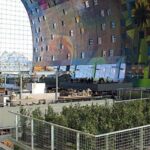
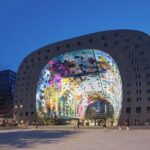
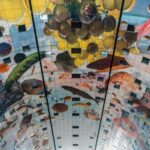
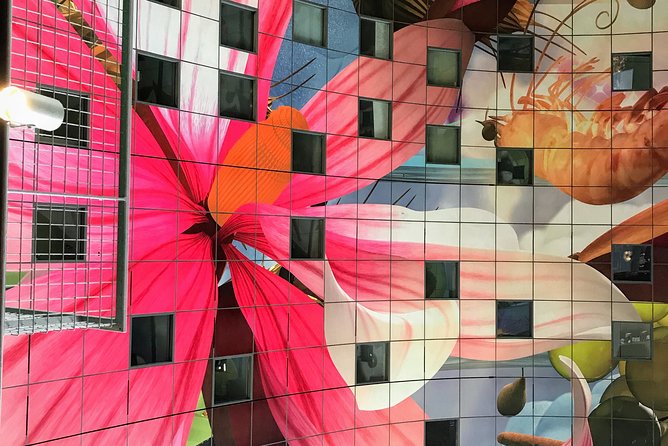
Then you hit Markthal, a standout project by MVRDV. It’s known for combining living space and a market hall in one big, bold plan, and your time here includes both architecture talk and wandering the market.
This stop is a practical traveler’s dream because it gives you something you can’t really replicate in a photo: smells and tastes. Since the tour doesn’t include snacks or coffee, this is your moment to turn the guide’s recommendations into real spending.
The tour notes explicitly suggest trying things like:
- herring
- homemade truffle sausages
- Dutch wine
- farmer cheese
- ethical food options
Even if you don’t try everything, the value is that the guide frames what to look for and how to move through the market efficiently. Market halls can be overwhelming without direction. Here, you’re also learning why the building matters: it’s architecture that wraps around public daily life.
Plan your approach:
- Decide one main taste and one small bite
- Keep your budget in mind since the tour does not include food
- Bring a little patience—markets are active places
Potential drawback: Markthal is the most “stop and browse” part of the route. If you’re a fast walker who hates crowds, you’ll still enjoy the architecture, but the shopping energy may not be your favorite.
Stop 5: Erasmus Bridge views and OMA by Rem Koolhaas context
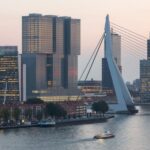
Next comes Erasmus Bridge, plus a look at OMA by Rem Koolhaas and a chance to get city views from the bridge area. This is your easy payoff section: you stop walking, you see the water and the built-up contrast, and you understand how the city’s pieces connect.
This part works because it gives you the spatial picture. You’ve heard a lot about design choices. Now you can translate them into real geography: how Rotterdam faces both land and water, and how each big project changes the experience of moving through the city.
From past experiences described in feedback, guides here also help you orient quickly—especially if you’ve visited Rotterdam multiple times and thought you’d already “seen it all.” The view from a bridge can be the same every day, but the way you interpret it is not.
Time is around 15 minutes, so don’t try to do a full sunset photography session mid-tour. Save deep photo time for after the guide’s planned moment.
Stop 6: Cube Houses, plus the Pencil and Apple buildings
The walk finishes with the famous Cube Houses and related architecture concepts, including 20th-century movements and social housing ideas. You’ll also get references to other iconic nearby structures, including the Pencil and the Apple buildings.
This is one of those Rotterdam moments where the city’s ambition becomes physical. Cube Houses aren’t just visually weird; they’re an argument. The guide’s job is to help you understand that the shape connects to housing thinking and urban design experiments.
You’re likely to do a mix of explanation and looking around. The best way to enjoy this final stop is to slow down and study:
- how the cubes relate to streets
- how the surrounding buildings frame the scene
- how the social housing story changes how you see the angles
The tour doesn’t treat these icons as isolated. It places them in a wider conversation about how Rotterdam builds and rebuilds. If you’re into architecture, this is the best “payoff clarity” you’ll get in the full route.
Potential drawback: depending on crowd levels, this stop can feel photo-focused. If you prefer deeper discussion over pictures, stick close to your guide and ask questions while you can still hear the story.
Who this tour fits best (and who should skip it)
This is a great fit if you:
- want modern architecture and public-space design explained in plain language
- like street art when it’s treated as social commentary
- enjoy markets and want a guided way to browse and taste
- travel with kids and want a guide who can keep the story light while still informative
It’s also a good option for first-time Rotterdam visitors who already know the big postcards and want a second layer—how Rotterdam thinks.
You might skip it if you:
- only care about famous landmarks and plan to DIY everything
- hate walking for about three hours and need a vehicle-based tour
- don’t want to spend extra on food or snacks, because those are not included
Practical tips to make the most of the 3-hour walk
A few small choices can make this tour smoother.
Wear comfortable shoes. You’re out for about three hours with multiple short stops, and the city is best experienced on foot.
Bring a bit of cash or card for market tasting. Coffee, tea, snacks, and entrance tickets are not included, and the tour suggests food options at Markthal.
If you have a specific interest—architecture, street art, or civic history—tell your guide early. In a private format, it’s much easier to steer the story than on a big-group tour.
And if you’re sensitive to crowds, plan to treat Markthal like your “busy moment” and stay flexible with your time and expectations there.
Should you book Rotterdam Travel to the Future?
If you want Rotterdam the way design-minded locals talk about it—public spaces, street art meaning, and the city’s modern housing experiments—this is a strong booking. The price is high, but you’re paying for a guided reading of the city, not just movement between icons.
I especially think this tour works well if:
- you enjoy learning how cities shape everyday life
- you want an efficient route that still feels personal
- you value the guide’s storytelling, not just the view
If you’re trying to do Rotterdam on a tight budget or you’d rather wander slowly with no structure, you might be happier with a self-guided day. But if you’re ready to trade a bit of freedom for smarter context, this walk earns its keep.
FAQ
How long is the Rotterdam Travel to the Future walking tour?
It lasts about 3 hours.
What language is the tour offered in?
The tour is offered in English.
How much does it cost?
The price is $274.03 per person.
Is the tour private?
Yes. It’s private for your group only.
What is included in the price?
A certified guide is included.
What isn’t included?
Coffee and/or tea, snacks, and entrance tickets are not included.
Do you need tickets for the stops?
The tour notes say admissions are free for the listed stops.
Where do you start and where does it end?
You start at Ode aan Marten Toönder, Verlengde Nieuwstraat, 3011 GA Rotterdam, and end at Erasmusbrug, 3011 BN Rotterdam.
Is the meeting area near public transportation?
Yes, it is near public transportation.
What is the cancellation policy?
You can cancel for a full refund up to 24 hours in advance. If you cancel less than 24 hours before the start, the amount paid is not refunded.