REVIEW · ROTTERDAM
Rotterdam: Wilhelminapier, High-rise & floating architecture
Book on GetYourGuide →Operated by De Rotterdam Tours · Bookable on GetYourGuide
Rotterdam’s skyline has a plot twist. This short, guided tour focuses on the Wilhelminapier transformation, and I love the combo of a rooftop view plus real access to the buildings behind it. You’ll also factor in the Foodhallen atmosphere without turning the whole trip into a food stop.
You’ll get the guided context that makes the modern shapes make sense, including the area’s former connection to the Holland America Line and today’s high-rise momentum. One thing to consider: it’s only 1 hour, so it’s not for slow wandering or long detours.
In This Review
- Key Things You’ll Remember
- Wilhelminapier’s Harbor Past Meets Today’s High-Rise Power
- Where the Tour Starts: Het Nieuwe Luxor Theater
- Getting the Big Picture of De Rotterdam
- Pakhuismeesteren: From Harbor Warehouse to Hotel and Foodhallen Hub
- Rooftop Views From Pakhuismeesteren
- Rijnhaven’s Floating Concepts: Park, Hotel, and Office
- Ending Near Fenix migration Museum: Keep the Day Going
- Price and Value: What $286 For Up to 6 People Really Means
- Who This Tour Fits Best
- Should You Book This Wilhelminapier Architecture Tour?
- FAQ
- How long is the tour?
- Where is the meeting point?
- Is rooftop entrance included?
- What’s included in the tour besides the guide?
- Which languages are available for the live guide?
- Is the tour wheelchair accessible?
- Is this a private tour?
- Can I cancel or pay later?
Key Things You’ll Remember
- Wilhelminapier transformation explained so the high-rises feel less random
- Pakhuismeesteren access in a former harbor warehouse repurposed for today
- Rooftop panoramic skyline time for a clear read on Rotterdam’s architecture
- Foodhallen stop for an easy taste of the neighborhood vibe
- Floating concepts: park, hotel, and office along the waterfront
- End near Fenix migration Museum so you can keep exploring after the tour
Wilhelminapier’s Harbor Past Meets Today’s High-Rise Power
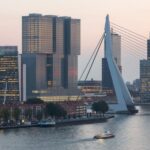
Wilhelminapier is Rotterdam in fast-forward: old port logic, new design ambitions, and a skyline that’s clearly meant to be read like architecture, not just scenery. On this tour, the story starts with how the area was reshaped into a modern district with high-rises designed by notable architects, and you’ll connect that to what came before.
A key hook is the mention of the former Holland America Line connection. Even if you’re not a maritime history person, that detail helps you understand why these buildings were built in the first place and why warehouses and harbor zones were so central to Rotterdam’s growth. The tour doesn’t just point at shapes; it gives you the reason the shapes exist.
What I like most about this angle is that it makes the walk feel purposeful. You’re not guessing why a building looks the way it does. You’re learning the “what changed” story and seeing the results right in front of you.
You can also read our reviews of more tours and experiences in Rotterdam.

Where the Tour Starts: Het Nieuwe Luxor Theater
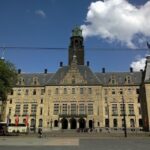
The meeting point is outside Het Nieuwe Luxor Theater, the red building. It’s an easy anchor in the city, which matters for an hour-long experience. When you start on time and stay on schedule, you get more value out of every stop, especially when the tour includes a rooftop.
You’ll be with a live guide, and the languages offered are Dutch, English, German, Spanish, and French. If you care about clarity, this matters: you’re not stuck reading signage while everyone else already has the meaning.
Also, the experience is set up as a private group, up to 6 people, so the pace can be more comfortable than a larger walking tour. One of the reviews mentions a guide named Willem, with the walk described as funny and informative. That’s a nice sign that the storytelling style is friendly, not just lecture-mode.
Getting the Big Picture of De Rotterdam
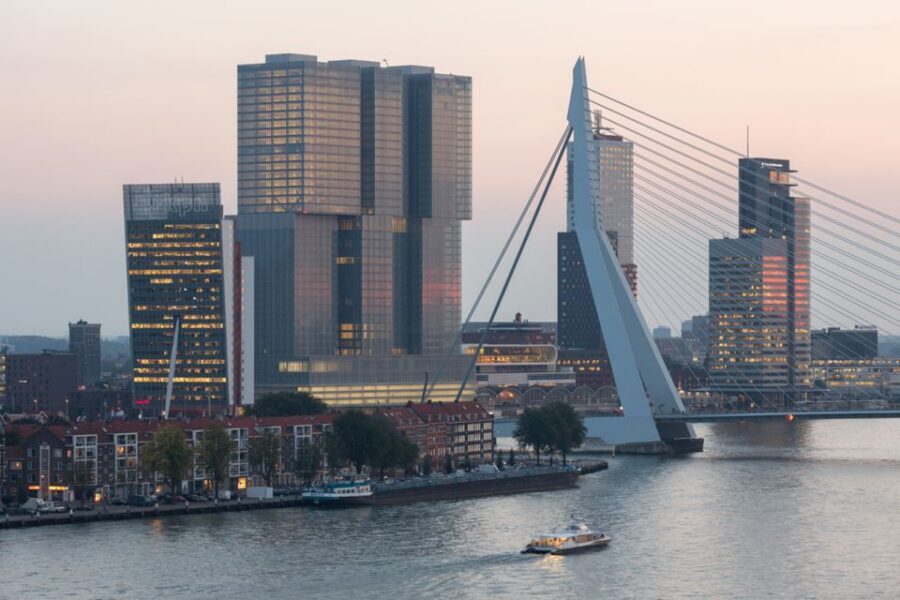
This is the part where the modern architecture becomes understandable. The guide walks you through the transformation of the Wilhelminapier area and explains the concept behind De Rotterdam. You’ll also hear about the former purpose of the district and how the new design philosophy changed the layout, density, and overall feel.
Why it’s worth it: Rotterdam’s big-name buildings can look like they were dropped into the harbor by designers with perfect vision and zero constraints. But in real life, urban change usually follows economics, land use, and reinvention. Learning that arc makes the skyline read better, even after the tour ends.
You’ll also get your first taste of the floating theme in the “design of tomorrow” way—because this tour isn’t only about steel-and-glass towers. It’s also about experimenting with how a city can use water more intentionally.
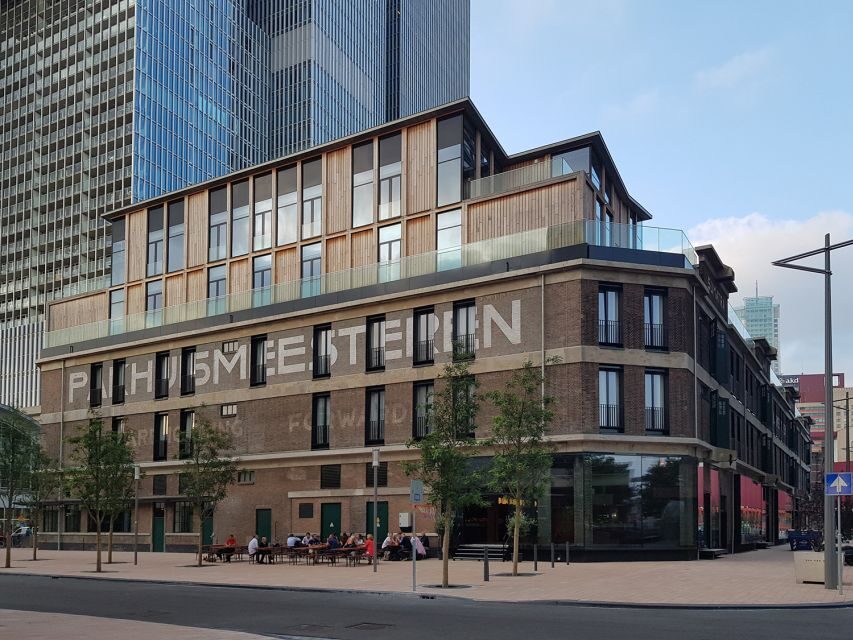
Pakhuismeesteren: From Harbor Warehouse to Hotel and Foodhallen Hub
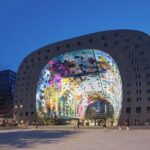
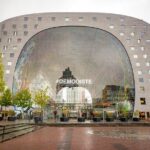
Next comes Pakhuismeesteren, a standout building on the Wilhelminapier. The key detail here is that it used to be a harbor warehouse and has since been transformed. Today it houses a hotel and the Foodhallen, which is why this tour works well for architecture fans and food lovers at the same time.
You’ll take a look around inside, which is one of the points that shows up in the reviews as a highlight. Being able to see the building interior (not just the exterior silhouette) helps you understand the scale of the former warehouse spaces and why they’re a good fit for repurposing.
Then there’s the Foodhallen factor. Even if you don’t plan to eat a full meal, you still get the buzz of a place designed for visitors to wander, snack, and browse. On this tour you’ll also receive a tasty Dutch treat, which is included, so you’re not left wondering what to do with your time once you arrive.
A practical tip: wear comfortable shoes. Pakhuismeesteren and Foodhallen are designed for people who walk, pause, and look. Even in an hour, that kind of rhythm helps you get more than just a checklist.
Rooftop Views From Pakhuismeesteren
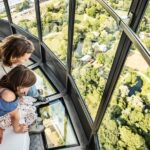
The main payoff is the rooftop time. The tour includes entrance to the rooftop of Pakhuismeesteren, and that view is where everything clicks. From above, Rotterdam’s architecture becomes readable: you can trace lines, spot the density shifts, and see how the skyline relates to the harbor zone.
This part is great if you like to do the “after-visit mapping” thing. Once you’re on the rooftop and see how the buildings sit relative to the waterfront, you’ll recognize more when you walk the streets afterward. The city becomes easier to navigate because you now have a mental model.
What to pay attention to while you’re up there:
- The way the Wilhelminapier district is organized around the water
- How different building styles stack and overlap in Rotterdam
- The contrast between refurbished warehouse structure and newer high-rises
One consideration: weather in the Netherlands can change fast. Since you’ll be outdoors for views, bring a layer and expect cooler air near the water.

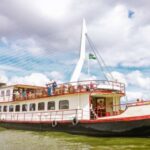
Rijnhaven’s Floating Concepts: Park, Hotel, and Office
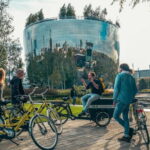
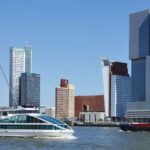
After the rooftop, the tour shifts from “towers and warehouses” to “floating innovation.” You’ll stroll along Rijnhaven to get a peek at floating projects, specifically a floating hotel, a floating park, and a floating office. The tour also says you’ll take a peak at a floating hotel and floating office.
This section is where Rotterdam feels experimental in a way that goes beyond architecture styling. Floating concepts are about practical engineering and design choices that respond to water as part of the city, not just next to it. Even if you don’t get deep into technical details, you’ll see how the city is testing flexible ideas for housing and working.
Why I think this is valuable: lots of Rotterdam tours focus only on the big iconic buildings. This one gives you a second layer—how the city imagines future land use. If your travel style includes curiosity about what’s possible, this floating stop will reward you.
Ending Near Fenix migration Museum: Keep the Day Going
The tour ends nearby the Fenix migration Museum. That’s a smart finishing point because it gives you an immediate option to continue exploring with another layer of Rotterdam context. Even if you don’t go in, you’ll likely want a walk or two afterward, and ending near a museum keeps the energy going.
If you’re short on time, you can also use this tour as a launchpad: you now understand the Wilhelminapier area and the way floating design fits into the broader Rotterdam identity. That makes later self-guided wandering more satisfying.
Price and Value: What $286 For Up to 6 People Really Means
The price is $286 per group up to 6, and the duration is 1 hour. On a per-person basis, this is easiest to value if you’re traveling with a small group. For example, if you bring the full 6 people, it comes out to roughly $48 each. If you’re only 2 people, it’s more like $143 each, so you’re paying for the private-group format.
Is it worth it? For the right travelers, yes. You get:
- A guided explanation (the architecture becomes more meaningful)
- Rooftop access at Pakhuismeesteren
- A included tasty Dutch treat
- A postcard featuring Rotterdam architectural photographer Ossip van Duivenbode
That rooftop entrance plus the “explained as you go” format are the two big value drivers. A self-guided walk can show you the buildings, but it can’t easily give you the transformation story and design concepts in the same compact time.
Also, the tour provider is De Rotterdam Tours, and the experience is private-group, meaning you’re not stuck waiting for a large crowd to regroup.
Who This Tour Fits Best
This is a strong match if you:
- Like architecture that has a real story behind it (not just a pretty facade)
- Want skyline views without committing to a longer full-day plan
- Care about design experiments, especially floating concepts
- Enjoy a mix of indoor look-ins and an outdoor view moment
It may feel less ideal if you want a slow, photo-heavy wandering day. This tour is built for efficiency. You’ll see a lot in an hour, but you won’t have time to treat each building like a standalone photo shoot.
And based on the reviews, guides can bring the material in a friendly, humorous way. One review notes laughter and learning with a guide named Willem, and another highlights that it’s fun to see the building from the inside and hear the background. That suggests the tour style is approachable, not stiff.
Should You Book This Wilhelminapier Architecture Tour?
I’d book it if you want a smart introduction to Rotterdam’s modern architecture with a real payoff view on the rooftop. The best reason is simple: you’ll connect the dots between Wilhelminapier’s transformation, Pakhuismeesteren’s warehouse-to-new-use story, and Rotterdam’s experiment-with-the-water thinking through floating hotel, park, and office concepts.
Skip it if your main goal is a long, unstructured walk or if you already know the architecture inside out and only need photos. But for most first-time visitors who want clarity plus skyline views, this is a practical, high-value hour.
FAQ
How long is the tour?
The tour lasts 1 hour.
Where is the meeting point?
Meet your guide outside Het Nieuwe Luxor Theater, the red building.
Is rooftop entrance included?
Yes. Entrance to the rooftop of Pakhuismeesteren is included.
What’s included in the tour besides the guide?
You get a tasty Dutch treat and a postcard of Rotterdam architectural photographer Ossip van Duivenbode.
Which languages are available for the live guide?
The live guide is available in Dutch, English, German, Spanish, and French.
Is the tour wheelchair accessible?
Yes, the tour is wheelchair accessible.
Is this a private tour?
Yes, this experience is for a private group.
Can I cancel or pay later?
You can cancel up to 24 hours in advance for a full refund, and you can reserve now and pay later.