REVIEW · ROTTERDAM
Rotterdam: Euromast Lookout Tower Ticket
Book on GetYourGuide →Operated by Euromast Rotterdam · Bookable on GetYourGuide
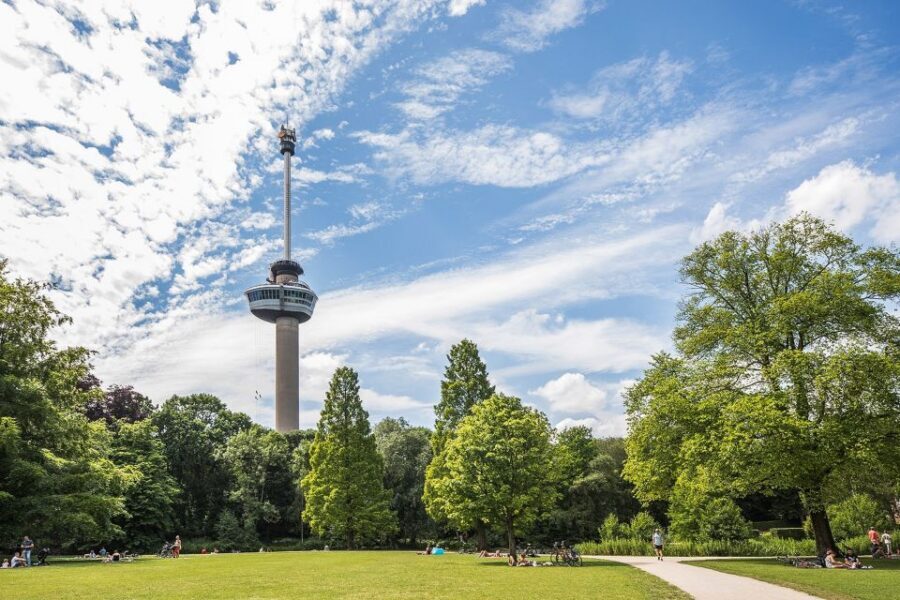
Standing above Rotterdam’s harbor changes everything. The Euromast is the city’s landmark, rising to 600-feet, and it turns the skyline into a clear, readable picture. I love that you get big views fast, and I also like the option to push higher with the Euroscoop rotating elevator and glass floor.
The main thing to weigh is the weather. On cold or windy days, parts of the upper experience can close, and if the Euroscoop doesn’t run, your refund can be limited to that component only.
In This Review
- Euromast at a Glance: Key reasons to go
- Euromast at 600 Feet: What You’re Really Buying
- Getting In: Ground Floor Reception and How the Visit Flows
- The 100-Meter Observation Deck: Big Views, Minimal Fuss
- Going Higher With the Euroscoop: Rotating Glass Floor at 185 Meters
- Timing Matters: When Rain, Wind, and Darkness Help or Hurt
- The Brasserie at 300 Feet and the Café on the Ground Floor
- Photos: How to Get Better Shots Without Stressing Out
- Mobility and Kids: What’s Accessible Here
- When You Should Skip the Extra and When You Should Add It
- Is It Worth $21: A Real Value Check
- Final Verdict: Should You Book Euromast With the Euroscoop?
- FAQ
- How long does the Euromast experience take?
- Where do I enter and where does the visit end?
- Is food and drink included with the ticket?
- Can I pay with cash?
- Which parts are wheelchair accessible?
- What happens in bad weather if the Euroscoop can’t operate?
Euromast at a Glance: Key reasons to go
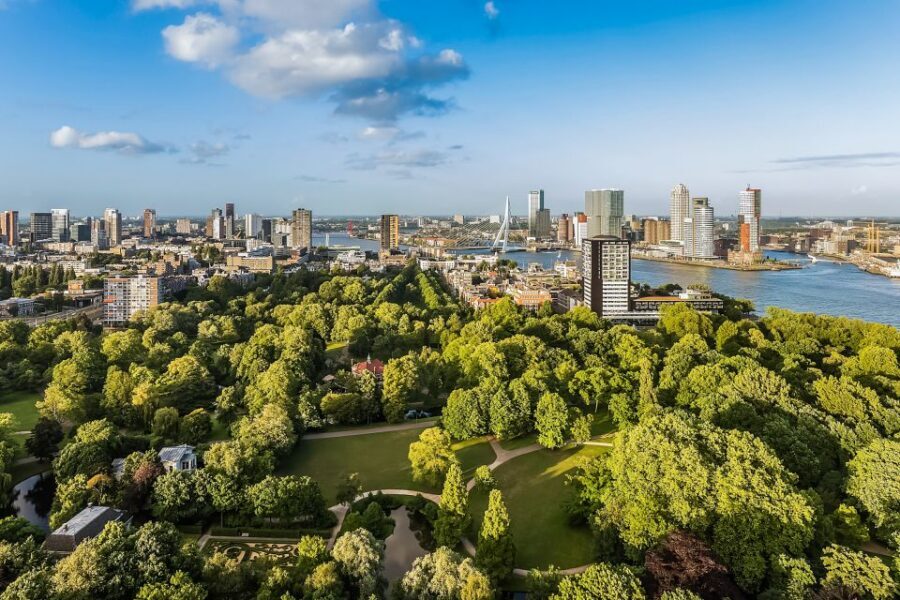
- 600-feet-high Rotterdam icon with sweeping harbor and city views
- Euroscoop glass floor option for a true adrenaline moment
- Up to 18 miles visibility when weather cooperates
- Brasserie and café at height so you can take a break with views
- Audio guide in English and Dutch to help you spot what you’re looking at
Euromast at 600 Feet: What You’re Really Buying
For €-shoppers, this is one of the rare city-ticket experiences that feels like it pays you back immediately. You’re not waiting for a show, and you’re not doing a long museum circuit. You’re heading up a watchtower that’s built to give you a strong sense of scale: Rotterdam is huge, engineered, and port-centered, and from above it finally clicks.
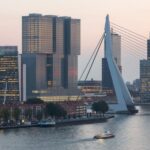
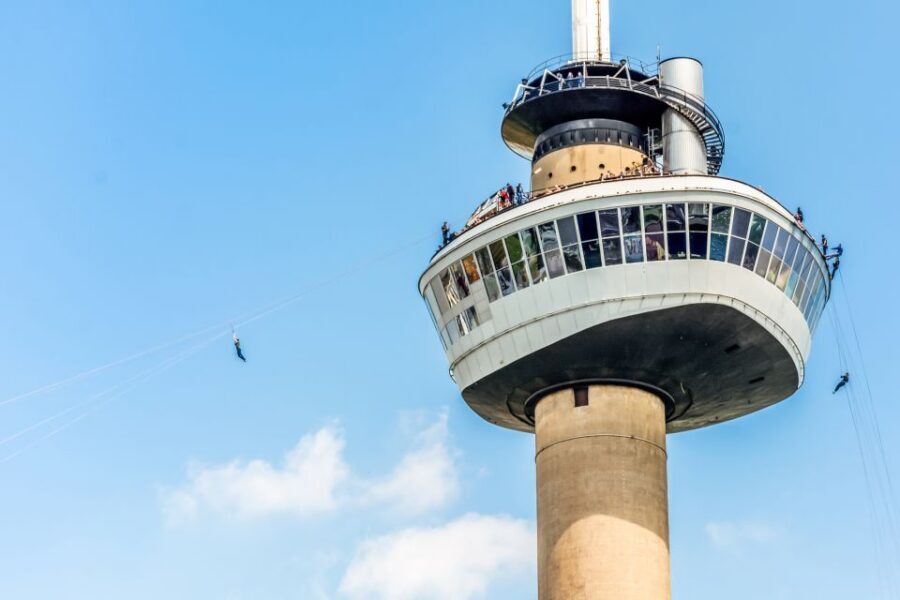
At 600 feet, Euromast is the highest watchtower in the Netherlands, and it’s part of the skyline identity you’ll see all around town. The view isn’t just pretty. It’s useful—you can understand where the harbor sits, how the city stretches, and how the river system shapes the whole area. On clear days, visibility can reach about 18 miles, which makes your photos look sharper and your sense of geography feel real.
Price-wise, the starting ticket is listed at about $21 per person, and that’s for the observation experience. If you add the Euroscoop, you’re paying extra for a different kind of thrill: a rotating elevator with a glass floor experience at 185 meters. If you’re the kind of person who likes a “wow” moment, the extra is often worth it for that final step up.
You can also read our reviews of more tours and experiences in Rotterdam

Getting In: Ground Floor Reception and How the Visit Flows
Your visit starts at the ground floor reception of Euromast. From there, you’re guided into the tower experience at your own pace. This place is set up to move people smoothly without feeling chaotic, and it’s one of the reasons you’ll feel comfortable going even with a tight schedule.
Plan for a total duration of about 45 minutes, which usually means you won’t be stuck for half a day. That speed matters in Rotterdam, where you can easily bounce between neighborhoods, ports, and modern architecture. You’re basically buying a high-altitude reset button.
One small practical note: the tower takes card only. Cash is not accepted, so have your payment ready before you queue.
The 100-Meter Observation Deck: Big Views, Minimal Fuss
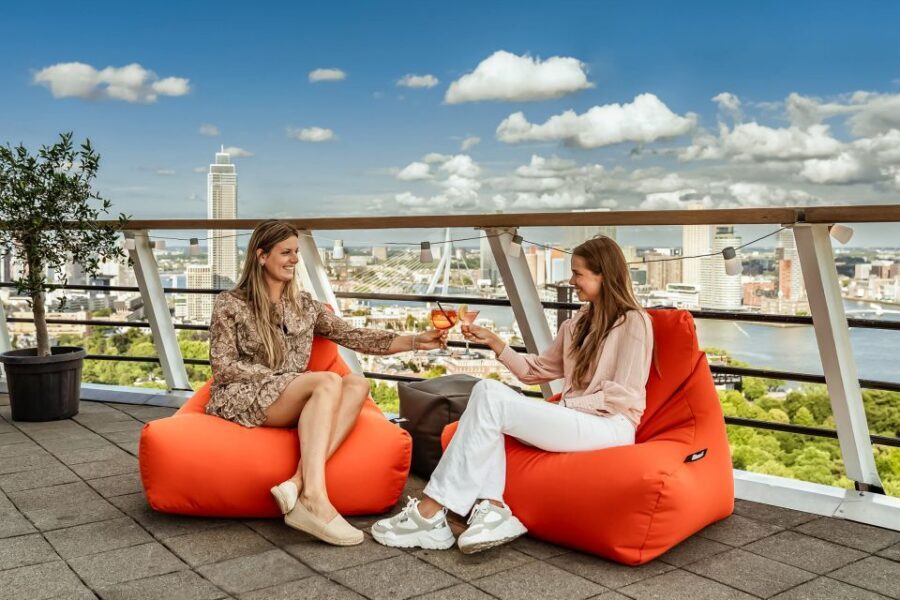
The observation deck sits at about 100 meters, and it’s wheelchair accessible. If you want the easiest entry into the panoramic experience, this is where you start. From here you get a strong, wide view over Rotterdam and the large harbor area in Europe.
This level is also a good choice if you’re with someone who doesn’t want the extra height thrill. It’s high enough to feel like you’re “away from street level,” and it’s not so high that every movement feels intense.
I also like using this deck as a photo warm-up. You’ll quickly spot the harbor lines, major bridges, and the overall city layout. Then, if you choose to go higher, you can orient your camera and not spend your “best light” time figuring out what’s where.
Going Higher With the Euroscoop: Rotating Glass Floor at 185 Meters
If Euromast is the big promise, the Euroscoop is the adrenaline bonus.
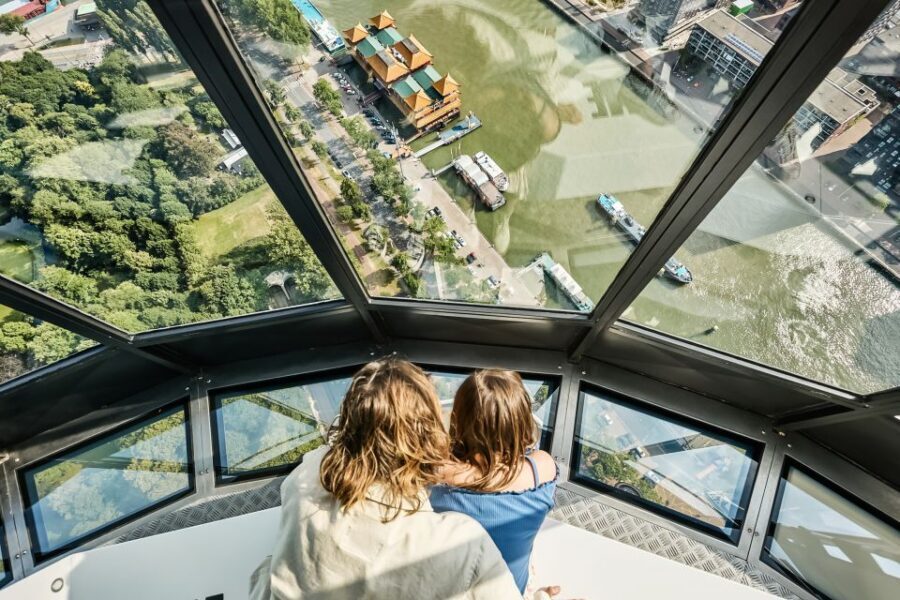
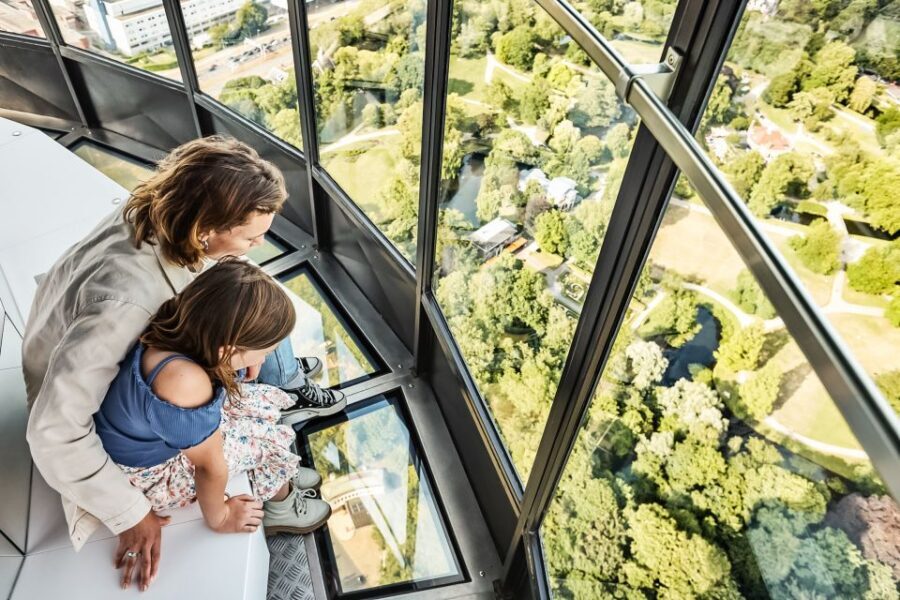
This is the rotating elevator experience with a glass floor, located outside the tower at about 185 meters. Because it’s outside, you get more of that exposed-feeling height. If you’re someone who’s fine with stairs and heights, you’ll probably love it. If heights make you uneasy, expect your stomach to do a small rehearsal.
The Euroscoop is also not wheelchair accessible, so keep that in mind if accessibility matters for your group. And because it can be affected by weather and technical conditions, it’s smart to treat the base observation deck as your “sure thing,” and the Euroscoop as the “if the sky allows it” upgrade.
The payoff is a view that feels like it’s changing around you while you’re suspended above the city. That rotation helps you avoid the common problem of taking photos from only one angle. You get multiple angles without walking around at height.
Timing Matters: When Rain, Wind, and Darkness Help or Hurt
Euromast can be a weather mood swing, and that’s not a bad thing—just plan around it.
- On clear days, you can see up to about 18 miles in the distance, and the harbor + skyline become sharply defined.
- At night, you may catch the city lights and even the stars coming into view, depending on conditions.
- In cold or windy weather, parts of the upper experience can close. One practical example: an evening visit still worked for views, but higher elements were unavailable due to weather.
Another timing issue is lines and time slots. The visit durations are tied to starting times, and if you arrive and the system is busy, you might wait longer than you expected—especially in bad weather when people stay focused on getting into the elevator rather than exploring slowly.
My advice: if you’re choosing between early afternoon and evening, pick based on your priorities. Clear daytime usually wins for distance and photo detail. Evening is great for lights, but you risk wind-related closures.
The Brasserie at 300 Feet and the Café on the Ground Floor
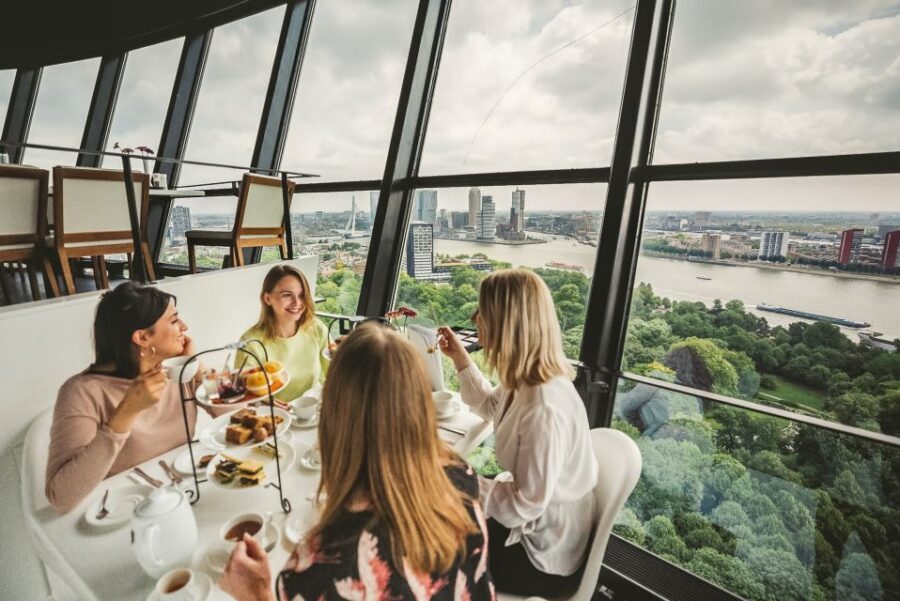
You don’t have to treat Euromast as a quick-in-quick-out experience. There’s food and drink built into the visit, and it helps you slow down long enough to enjoy the city instead of rushing your photos.
At about 300 feet, there’s a brasserie where you can go for brunch, lunch, dinner, high tea, or high wine. That’s a nice option when the city feels spread out and you want one destination that does both views and a real meal.
Down at the ground floor coffee corner, you’ll find coffee and snacks like pastries, warm panini, and wraps. People also call out the coffee as a standout, so if you’re a latte person (or you need caffeine before you go up), this is a good place to start. It’s also a useful way to keep the visit comfortable if you arrive a bit early.
Food isn’t included with your ticket, so think of this as an add-on you choose based on time and budget. The value here is that you can plan your “break” while still being surrounded by the tower environment.
Photos: How to Get Better Shots Without Stressing Out
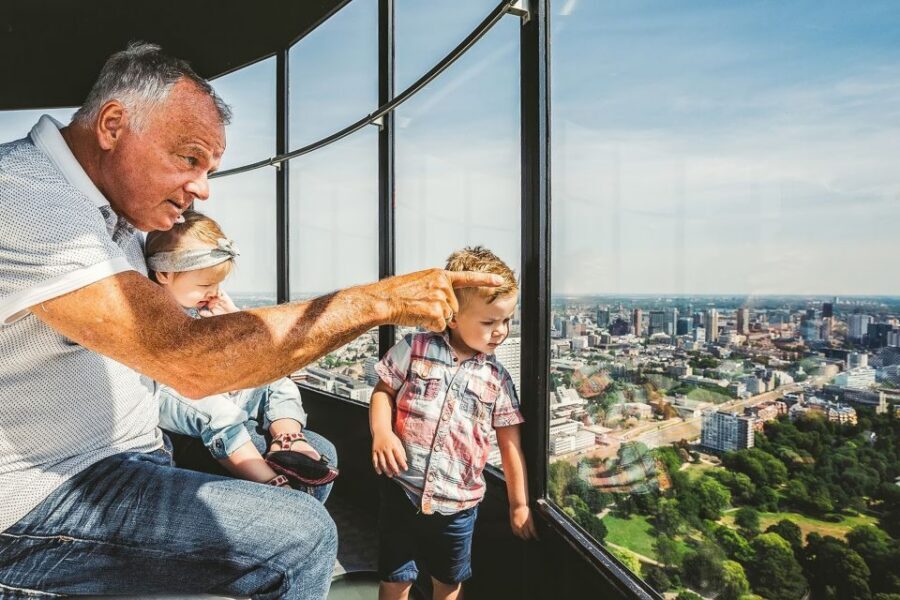
You’ll see the city from above, and you’ll want photos that show scale. Here’s how to make that happen without turning your trip into a camera workout.
First, use the 100-meter deck to identify major features. Once you know where the harbor edges and river lines sit, you’ll be able to aim higher shots confidently.
Second, if you do the Euroscoop, remember it’s rotating. That means your best photos might come from a sequence instead of a single click. Keep your lens ready and give the rotation time to swing the view across you.
Third, dress for the wind. Even if the weather looks fine from street level, height can feel sharper. A few reviews note it can get cold and windy. If you’re going at night, that effect can be more noticeable.
Mobility and Kids: What’s Accessible Here
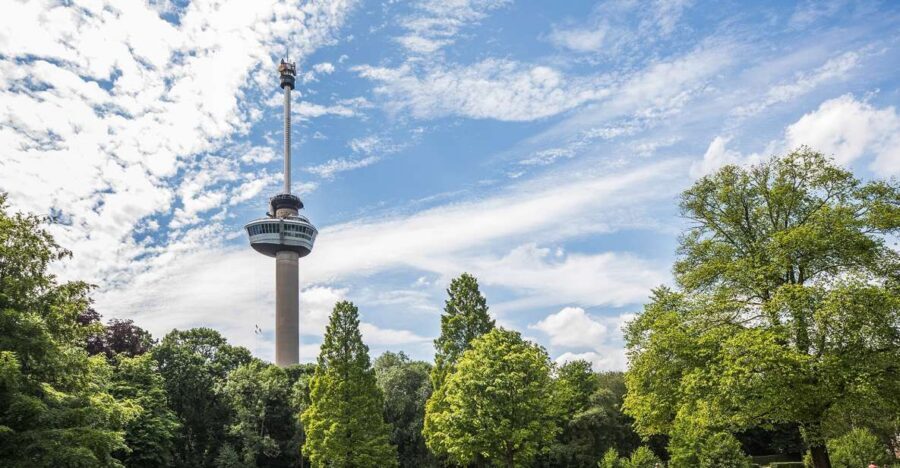
The observation deck at 100 meters is wheelchair accessible. The Euroscoop isn’t wheelchair accessible, so plan your expectations around that if accessibility is a requirement.
Kids aged 3 and under have free access to the observation deck. That’s useful if you’re bringing a small family member who won’t want the full height thrill.
If you’re traveling with mixed mobility needs, a practical strategy is simple: everybody does the accessible deck first, then decide whether the Euroscoop is right for the people who want it.
When You Should Skip the Extra and When You Should Add It
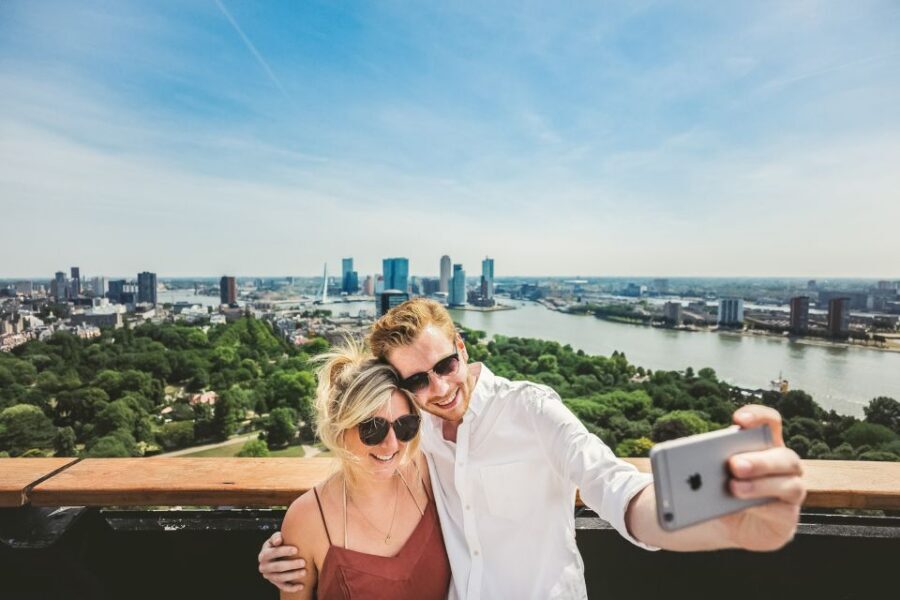
This is where value comes down to your personality and your schedule.
You should consider skipping the Euroscoop if:
- You’re limited by weather risk and want the most predictable experience.
- Heights make you anxious, and you’d rather trade thrill for comfort.
- You’re traveling with someone who can use the accessible deck but can’t do the Euroscoop.
You should add the Euroscoop if:
- You want the most memorable moment of the trip.
- You like glass-floor experiences and don’t mind that it feels exposed.
- You want changing angles without walking around at height.
In most cases, the Euroscoop is the part that feels most like a “special add-on,” because the glass floor and rotation create a moment you can’t replicate from the ground.
Is It Worth $21: A Real Value Check
At around $21 per person, Euromast is priced like a major city attraction, but it doesn’t feel overpriced because it gives you something simple and high impact: scale, skyline, and harbor views in one stop.
The real question is whether you’ll pay for the Euroscoop upgrade. If you’re already paying for the main observation experience, the extra can turn it from “nice view” into “story you’ll remember.” On the other hand, if you’re going in rough weather or you’re not into height, the base deck alone can still be satisfying and well worth the ticket.
For best value, I’d treat the ticket as your view foundation, then decide on the upgrade once you’re onsite and the sky looks good.
Final Verdict: Should You Book Euromast With the Euroscoop?
Book it if you want one high-altitude experience that helps Rotterdam make sense. Euromast is straightforward, easy to reach from the park area approach, and the views are the whole point—clear, wide, and genuinely worth the time.
Add the Euroscoop if you’re chasing a wow factor and you’re okay with heights. The rotating glass floor at 185 meters is the part that turns the visit into adrenaline.
Skip or downshift the upgrade if the forecast is rough or if your group prefers comfort over thrill. Either way, you’ll still get a strong panoramic experience from the observation deck.
If you’re short on time in Rotterdam, Euromast is the kind of stop that earns its slot fast.
FAQ
How long does the Euromast experience take?
Plan on about 45 minutes, with specific starting times depending on availability.
Where do I enter and where does the visit end?
You enter at the ground floor reception of Euromast, and the experience ends back at the meeting point.
Is food and drink included with the ticket?
No. The ticket covers entry, and food and drinks are not included.
Can I pay with cash?
No. You can only pay by card, and cash is not accepted.
Which parts are wheelchair accessible?
The observation deck at 100 meters is wheelchair accessible. The Euroscoop is not wheelchair accessible.
What happens in bad weather if the Euroscoop can’t operate?
If bad weather or technical issues stop the Euroscoop, refunds are issued only for the Euroscoop tickets, not for tickets to the platform.