Rotterdam hits different when you know what to look for. This private walking tour stitches together old Rotterdam and post-WWII reconstruction in one smooth half-day plan.
Two things I really like: you get a tailored private guide who can steer the walk toward what you care about, and you finish with a 75-minute harbor cruise that turns the city’s port power into real views and real context.
One thing to consider: it’s a lot of on-foot time before the boat, so bring comfortable walking shoes and expect roughly 3 hours of steady strolling.
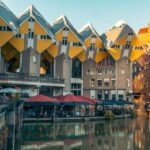
- Cubic Houses (Kijk-Kubus): tilted cube homes tied to Piet Blom’s postwar experiments
- St. Laurenskerk spire views: a restored medieval landmark after the 1940 bombing
- Museumpark mix: major cultural stops clustered in one walkable zone
- Old Haven waterfront: historic harbor energy with modern cafés nearby
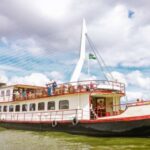
- 75-minute working-port cruise: shipyards, docks, containers, and the Rotterdam Steamship in the mix
- Private, language-led pacing: tours run in English (plus French, German, Spanish) and can be adjusted to your interests
In This Review
- Rotterdam Walking Tour + Harbor Cruise: Why This Half-Day Works
- Price and What You’re Really Paying For
- Getting Oriented at Plein 1940 and Why the Meeting Point Helps
- Kijk-Kubus: The Cube Houses That Make Rotterdam Feel Like the Future
- Museumpark: Art, Science, Design—All in a Tight Walking Zone
- Huis Sonneveld: Modern Home Design With Human Scale
- Rotterdam Centraal: The City’s Big Hub in a Short, Focused Moment
- Oude Haven (Old Harbour): Where Rotterdam’s Old Meets Its Present-Day Hangouts
- Markthal: A Big Modern Interior Public Space
- Grote of Sint-Laurenskerk (St. Laurenskerk): Rotterdam’s Great Church After WWII
- The Harbor Cruise: A 75-Minute Reality Check for Port-Lovers
- How the Cruise Complements the Walk (Instead of Repeating It)
- What This Tour Feels Like on the Ground: Pace, Weather, and Shoes
- The Guides Matter: What the Best Moments Had in Common
- Small Practical Tips to Make This Tour Feel Worth It
- Should You Book This Private Rotterdam Tour With Harbor Cruise?
- FAQ
- FAQ
- How long is the Rotterdam tour?
- Is this a private tour?
- What’s included in the price?
- Do any of the museum stops require paid admission?
- Where does the tour start?
- Where does the tour end?
- What language is the tour offered in?
- Does the tour run in bad weather?
- Is food included?
- What should I bring or wear?
- What if I need to cancel?
Rotterdam Walking Tour + Harbor Cruise: Why This Half-Day Works
Rotterdam can feel like a design project that grew up into a port giant. That’s exactly why this tour format clicks: you walk the city’s story first, then you see the port that helped shape its attitude.
The walking part is built around major landmarks you’d otherwise piece together yourself. Instead of just ticking boxes, your guide connects the buildings to the city’s pivot point—how Rotterdam rebuilt after the 1940 destruction and turned that pressure into modern planning.
Then the harbor cruise gives you a breather. After all the street-level architecture and museum façades, you settle into the boat for skyline views and practical, no-nonsense port history.
Price and What You’re Really Paying For
At $192.77 per person for a private tour, the value depends on how many people are in your group and how much you want a guide to steer your time. This price bundles two big things: a private guide with commentary and a 75-minute harbor cruise.
The harbor element matters because Rotterdam’s port is the city’s engine. The cruise is also the moment you stop looking at plans and start seeing operations—container stacks, docks, and working shipyard views.
If you’ve got limited time in Rotterdam, paying for a guided half-day can be smarter than doing it all on your own. You’re not just getting sights; you’re getting pacing, context, and a plan that avoids random wandering.
You can also read our reviews of more walking tours in Rotterdam
Getting Oriented at Plein 1940 and Why the Meeting Point Helps
The tour starts at Plein 1940. If you’re getting pickup, it’s for hotels in the city center, with a backup meeting point near the Zadkine statue by the Maritime Museum Rotterdam.
This matters because Rotterdam’s center is compact, but it can still eat time when you’re figuring out trams and walking routes. Meeting in the right spot helps you start moving quickly and keep the day from feeling stretched.
If you didn’t provide a hotel name, you’ll meet at Rotterdam Central Station near the cloudlamp. That’s a clear plan, and it keeps the tour from turning into a scramble.
Kijk-Kubus: The Cube Houses That Make Rotterdam Feel Like the Future
Your first stop is Kijk-Kubus (the Cube Houses). The idea is simple and the effect is not: these are high-density homes built as tilted cubes supported on hexagonal poles.
Even if you’re not an architecture nerd, you’ll get it fast once you’re close. The buildings look like they’ve been angled to dodge reality, and they’re a great symbol of Rotterdam’s postwar mindset—experimental, problem-solving, and willing to redraw how cities can work.
One practical tip: this is a stop where you’ll want a good look from multiple angles. The shape and the engineering are part of the experience, not just the façade.
Museumpark: Art, Science, Design—All in a Tight Walking Zone
The tour then moves through Museumpark, and this is one of the smartest choices in the whole half-day. You’re not jumping across town; you’re staying in one area where multiple cultural institutions sit close together.
Along the way you’ll pass or visit:
- Kunsthal Rotterdam (art exhibitions in a flexible space)
- Museum Boijmans Van Beuningen (a major museum stop in Museumpark)
- Chabot Museum (another culture anchor within the park area)
- Natural History Museum Rotterdam (science and nature in the same zone)
- Netherlands Architecture Institute (architecture focus, which matches the whole tone of this tour)
- Huis Sonneveld / Villa Sonneveld (modern domestic design history)
The value here is how the guide can connect these stops to what Rotterdam does well: mixing practical modern life with museums and design thinking. One of the best parts of walking a cluster like this is that you can actually compare styles back-to-back.
A drawback to consider: Museumpark is a lot to process in one go. If you’re museumed-out, ask your guide to steer the conversation toward what matters most—architecture cues, WWII contrasts, or how the city plans public life.
Huis Sonneveld: Modern Home Design With Human Scale
Huis Sonneveld (Villa Sonneveld) is the kind of stop that rewards slow attention. You’re looking at a lived-in slice of design history, not just an exterior “photo spot.”
This stop also helps you understand that Rotterdam’s modern story isn’t only big public buildings and bold street shapes. It’s also how people wanted everyday spaces to function.
If you prefer design and daily life over galleries, this is one of the moments that can feel extra satisfying.
You can also read our reviews of more boat tours in Rotterdam

Rotterdam Centraal: The City’s Big Hub in a Short, Focused Moment
Next you reach Rotterdam Centraal Station. Even if you don’t go inside for long (time is limited), the station is worth a look because it acts like a map of Rotterdam’s priorities: movement, function, and connection.
A station stop also resets the walking rhythm. It gives you a quick landmark break so the rest of the walk—especially the older and waterfront sections—lands better.
If you like photo moments, this is usually one of the easier ones to capture without disrupting the tour pace.
Oude Haven (Old Harbour): Where Rotterdam’s Old Meets Its Present-Day Hangouts
After the Museumpark area, you shift into a warmer, more waterfront feel at Oude Haven (Old Harbour). This historic harbor dates back to the 14th century, and today it’s a lively waterfront lined with restaurants and cafés.
That contrast is the point. You get medieval-era roots, then modern street life right beside it. It’s a strong reminder that Rotterdam’s history isn’t only in ruins or museums—it’s also in places where people actually spend their afternoons.
If your feet start to feel heavy, this section still works because the pace can naturally slow down with the scenery and the café-lined edges.
Markthal: A Big Modern Interior Public Space
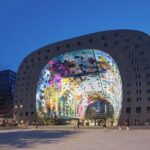
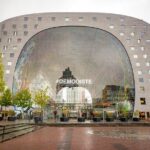
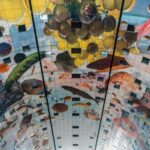
You’ll also see Markthal. It’s impressive as an architectural stop, and it works well in this tour because it shifts you from open-air waterfront views into a dense modern “market hall as landmark” vibe.
This is where you get another slice of Rotterdam’s modern identity: planning that brings commerce, design, and public space into the same structure. For anyone who likes architecture as everyday life, Markthal is a quick highlight.
If you’re not shopping-minded, you can still enjoy the building and the design without treating it like a retail mission.
Grote of Sint-Laurenskerk (St. Laurenskerk): Rotterdam’s Great Church After WWII
The walking tour includes Grote of Sint-Laurenskerk, also known as St. Laurenskerk. This is the city’s sole remaining medieval structure, and it was heavily damaged in the 1940 bombing before being restored.
What makes this stop more than a pretty church? Your guide can frame it as a city signal: Rotterdam didn’t just rebuild; it chose what to preserve and how to renew identity.
If you climb or look up toward the spire area, the payoff is the skyline view sense you’ll get from the restored heights. For many people, this church is the emotional hinge of the walk—where the WWII story stops being abstract.
The Harbor Cruise: A 75-Minute Reality Check for Port-Lovers
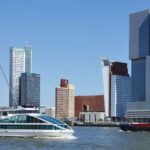
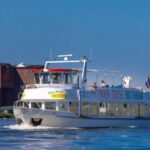
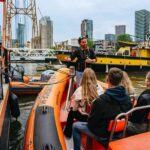
After walking, you head to the port for the 75-minute Rotterdam Harbor cruise. This is the moment when Rotterdam stops being a design story and becomes a logistics story.
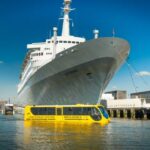
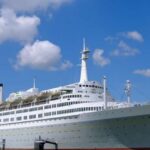
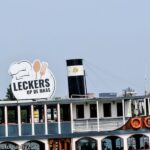
You’ll see the harbor shipyards, docks, and shipping containers. You’ll also pass the Rotterdam steamship, described as the former cruise flagship of Holland America Line.
The best part of a cruise like this is how it changes your scale. Walking in the city center can make everything feel “human-sized.” On the water, you instantly understand why Rotterdam built itself around movement and trade.
One honest note: not everyone loves this part equally. One person felt the harbor stretches they sailed past were less interesting than expected, while others loved the working-port feel. If you’re only in Rotterdam for aesthetics, manage your expectations and go in for the practical view of a working port.
How the Cruise Complements the Walk (Instead of Repeating It)
The harbor ride works because it connects back to what you learned on foot. When the guide explains how Rotterdam became a major harbor city—and how it was the busiest in the world until the title shifted to Singapore, followed by Shanghai—the cruise becomes proof, not just trivia.
You also get a great pacing trade. The walking portion is about street-level contrasts; the harbor portion is about an overall picture. After hours of architecture and museum façades, sitting down for skyline views is a real win.
What This Tour Feels Like on the Ground: Pace, Weather, and Shoes
This tour operates in all weather, so plan for rain or cold snaps. Bring a light layer or rain shell. Rotterdam weather can be changeable, and you’ll appreciate being prepared.
You should also plan for solid walking. One guide-led day was described as close to four miles, with brief stops, and that feels believable for a route that strings together Museumpark plus Centrum plus Old Haven.
The upside of a private tour is pacing. Guides in the group of outings you provided—like Adrien, Niels, Raphael, Jacob, and Anthony—were praised for matching the pace and adjusting on the fly. If you’re running late, one guide even waited in rain, which tells you the experience is managed with real attention to timing.
The Guides Matter: What the Best Moments Had in Common
The most consistent praise across guide experiences is not just facts. It’s the storytelling style and the way they connect places into a picture.
Some guides used early Rotterdam images to help you see what got lost and what came back. Others made connections through personal anecdotes, including references to growing up in Rotterdam.
One very practical example: one guide tailored the walk based on interests, like shifting focus when a guest wasn’t into shopping. That’s a small thing, but it’s exactly how you turn a half-day tour from generic sightseeing into a personal route.
If your travel style is more Q&A and explanations than a silent march, a private guide is the right call.
Small Practical Tips to Make This Tour Feel Worth It
- Wear comfortable shoes. This is not a light stroll.
- Bring a rain layer. The tour runs in bad weather, so you’ll stay outside for parts of it.
- If you love architecture, ask your guide to highlight why certain buildings were restored or redesigned after 1940.
- If you prefer markets or street life, ask for more time around the waterfront and Markthal rather than speeding through.
- For photo stops, the Cube Houses and St. Laurenskerk spire areas are usually the easiest to frame without rushing.
Should You Book This Private Rotterdam Tour With Harbor Cruise?
I’d book it if you want a guided way to understand Rotterdam’s rebuild-and-port identity in one half-day. It’s especially good for first-timers who don’t want to spend their limited time stitching together transport, museums, and waterfront viewpoints.
I’d also book it if you like architecture and design, because the route hits Cube Houses, Museumpark institutions, Huis Sonneveld, and St. Laurenskerk in one coherent arc.
I’d think twice if you hate walking or you’re only interested in one side of Rotterdam (either medieval/old or modern/port). This tour does both, and it takes a couple hours before the harbor cruise lets you breathe.
With an overall rating of 4.6 and a strong recommendation rate (96%), plus the chance to choose your guide’s language (English, French, German, or Spanish), this is a high-odds plan for a satisfying Rotterdam day.
FAQ
FAQ
How long is the Rotterdam tour?
The walking tour is about 2.5 to 3 hours, and the harbor cruise adds 75 minutes, for a total around 4 hours.
Is this a private tour?
Yes. It’s a private tour, so only your group participates.
What’s included in the price?
You get a private guide with commentary, the 75-minute Rotterdam Harbor cruise, and hotel pickup if your hotel is in the city center.
Do any of the museum stops require paid admission?
The stops listed are listed with free admission (where applicable) for the included viewing points.
Where does the tour start?
The start point is Plein 1940. Pickup is available near the Zadkine statue by the Maritime Museum Rotterdam or from your downtown hotel.
Where does the tour end?
It ends back at the meeting point.
What language is the tour offered in?
The tour is offered in English and also French, German, or Spanish based on your selection when booking.
Does the tour run in bad weather?
Yes. The tour operates in all weather conditions.
Is food included?
No. Food and drinks are not included unless specifically noted.
What should I bring or wear?
Comfortable walking shoes are recommended because the experience is mostly on foot.
What if I need to cancel?
Free cancellation is offered up to 24 hours before the experience start time for a full refund. Service animals are allowed, and most travelers can participate.