REVIEW · ROTTERDAM
Rotterdam: Architectural Highlights Guided Walking Tour
Book on GetYourGuide →Operated by Walk Rotterdam · Bookable on GetYourGuide
Rotterdam’s buildings tell a story. This 2-hour architect-led walk links the city’s industrial roots to the way Rotterdam rebuilt after the bombing of 1940, then points forward to what’s next on the waterfront like the Erasmus Bridge. You’ll cover a focused route from Rotterdam Centraal toward the riverside, with stops that make architectural styles click fast.
What I like most is the mix of famous landmarks with real context. You’ll get to Markthal and walk past the row of Cube Houses, but the guide also explains why the city chose these forms and what they mean for daily life.
One drawback to consider: 2 hours moves quickly. It’s a 3–4 km walk, so if you want long photo breaks or extra Q&A at each stop, you might feel a little rushed.
In This Review
- Key highlights that matter
- Getting Oriented at Rotterdam Centraal Station
- Lijnbaan and City Hall: why Rotterdam went modern
- Timmerhuis and Sint Laurents Church: layers of style, not one style
- Markthal: stepping into a modern indoor street
- Cube Houses: how playful design became a housing answer
- Riverside development: learning Rotterdam by looking at water
- Pacing, distance, and what $53 buys you
- Who should book this Rotterdam architecture walk
- Should you book this Rotterdam architecture walk?
- FAQ
- Where do I meet the guide for the Rotterdam architecture walking tour?
- How long is the tour, and how far do you walk?
- Is the tour wheelchair accessible?
- Does the tour run in bad weather?
- Is food or drinks included?
- Can kids join the tour?
Key highlights that matter
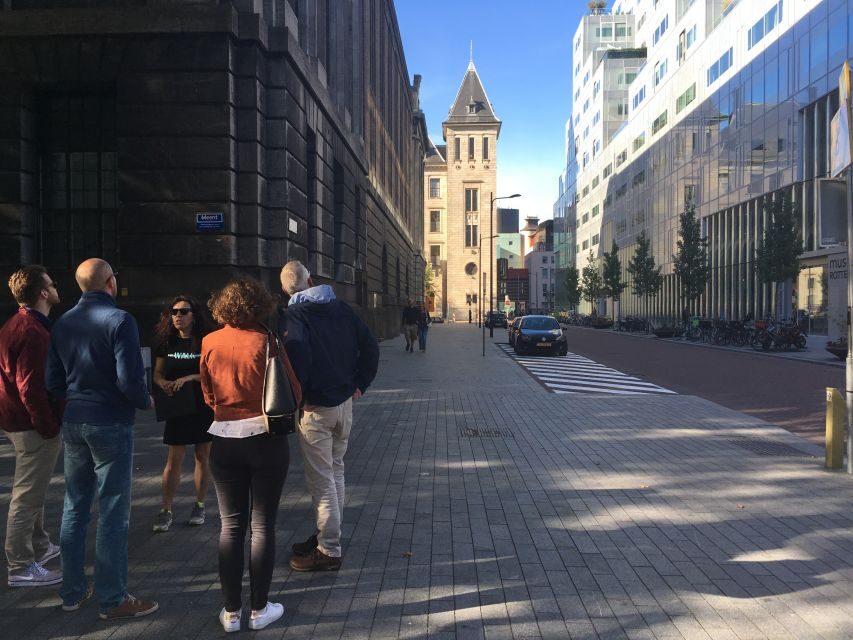
- Architect guide, not a script: You’re led by a working architect or architecture expert, with explanations that connect design to city planning.
- A tight route with big payoffs: The walk runs from Rotterdam Centraal to the waterfront, so you leave with a mental map of the city center.
- Rebuild lessons you can actually see: The tour focuses on how Rotterdam’s mid-20th-century destruction shaped the way it rebuilt and planned.
- Markthal inside, then Cube Houses nearby: You don’t just look from the outside—you experience two of Rotterdam’s most recognizable design ideas.
- South Bank + Erasmus Bridge viewpoint: The end of the walk helps you understand how Rotterdam keeps upgrading its riverfront.
Getting Oriented at Rotterdam Centraal Station
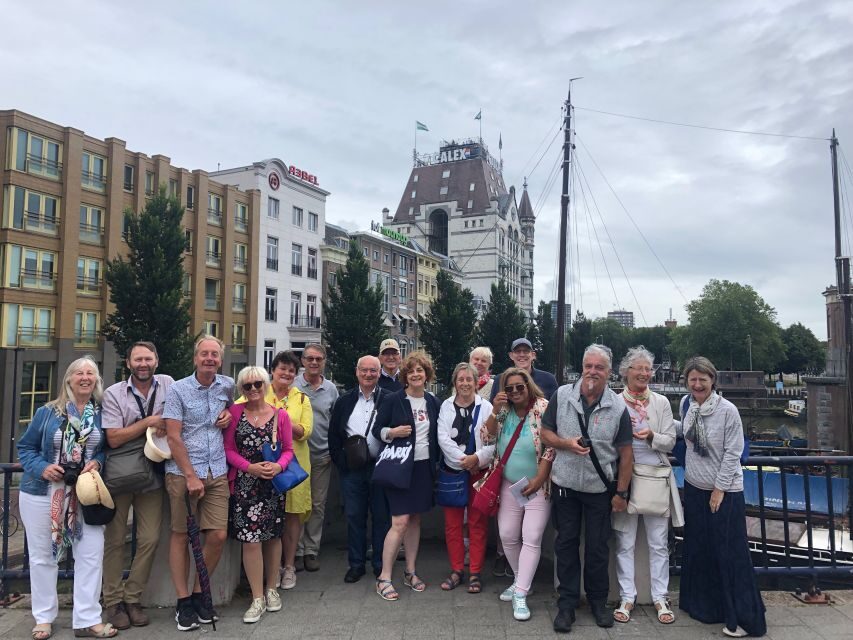
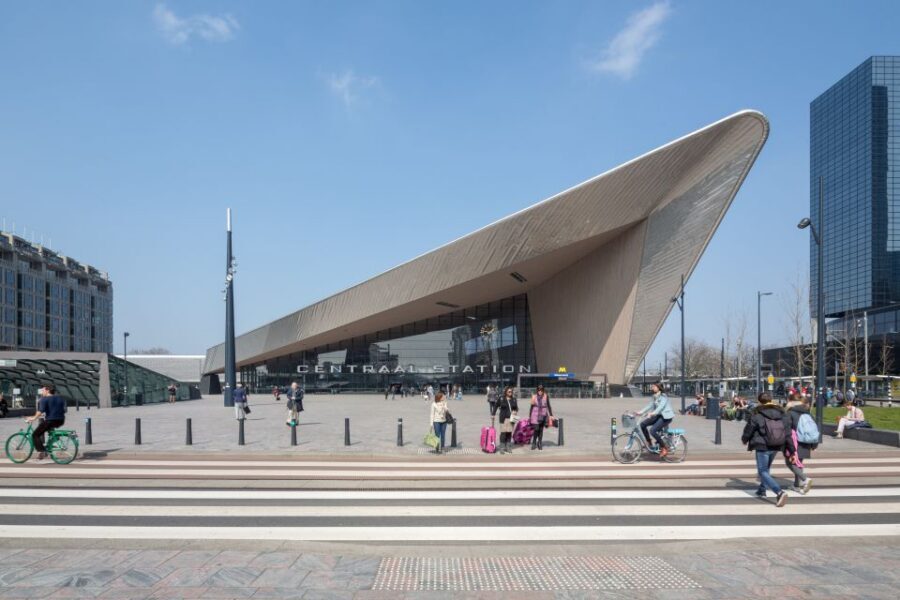
Your tour starts at Rotterdam Centraal Station, meeting your guide underneath the clock. Even if you only know Rotterdam from trams and cruise ships, this is a smart beginning: Rotterdam Centraal is the city’s modern arrival point, and the tour uses it to set the theme—how the city keeps reinventing itself.
You’ll start walking from the station toward the riverside, which matters because Rotterdam’s architecture isn’t just scattered around. It’s arranged as part of a living plan: movement, transit, water, and rebuilding all shape what you see.
This is also where the guide’s style shows. Names you might encounter include Tina, Tanya/Tanja, Silvia/Sylvie, and Tania-Maria, and many of these guides are praised for connecting buildings to the city’s daily life and industrial past.
You can also read our reviews of more walking tours in Rotterdam

Lijnbaan and City Hall: why Rotterdam went modern
Next comes the core city-center stretch, including the Lijnbaan area and the City Hall. The value here is that you’re not learning architecture as isolated objects. Instead, you’re seeing how design choices match a city that had to recover, re-plan, and rebuild with ambition.
Lijnbaan is one of those Rotterdam names that sounds like a street and turns into a concept once a guide frames it. You’ll learn how the area represents a modern way of shaping public space—shopping streets and urban form as a response to earlier eras and needs.
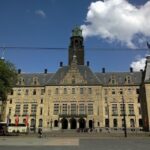
At City Hall, the focus shifts to civic identity. Rotterdam’s architecture has often been about function and future-readiness, not just ornament. Expect your guide to explain how the building fits into the broader urban story—what leaders wanted the city to look like after major disruption, and how architecture became part of that message.
If you love street-level design, this section is your warm-up act. You’ll start picking up patterns fast: materials, shapes, and the way buildings relate to streets instead of treating them like separate islands.
Timmerhuis and Sint Laurents Church: layers of style, not one style
After the big civic and shopping stops, the tour moves into a more layered mix, including the Timmerhuis and the Sint Laurents church. This is a key part of the walk because Rotterdam doesn’t present one “signature” style. It presents choices made across time—and you can see those choices in the street.
The Timmerhuis is especially useful for understanding why Rotterdam’s architecture often looks direct and purposeful. In guides’ explanations, it’s not just about the building’s look; it’s about what it signals to a city that runs on commerce, ports, and logistics.
Then comes Sint Laurents church, which adds the contrast you need. A church can feel like a different world, but it’s also part of the same city system: history beside rebuilding, tradition beside new planning. Your guide’s job here is to connect the dots so it doesn’t feel like a random mash-up of landmarks.
Practical tip: if you’re the type who reads buildings like puzzles, ask a question here about how the guide distinguishes “form” from “function.” Several guides are praised for answering questions well, including follow-ups about city planning decisions over decades.
Markthal: stepping into a modern indoor street

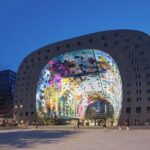
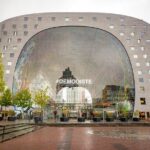
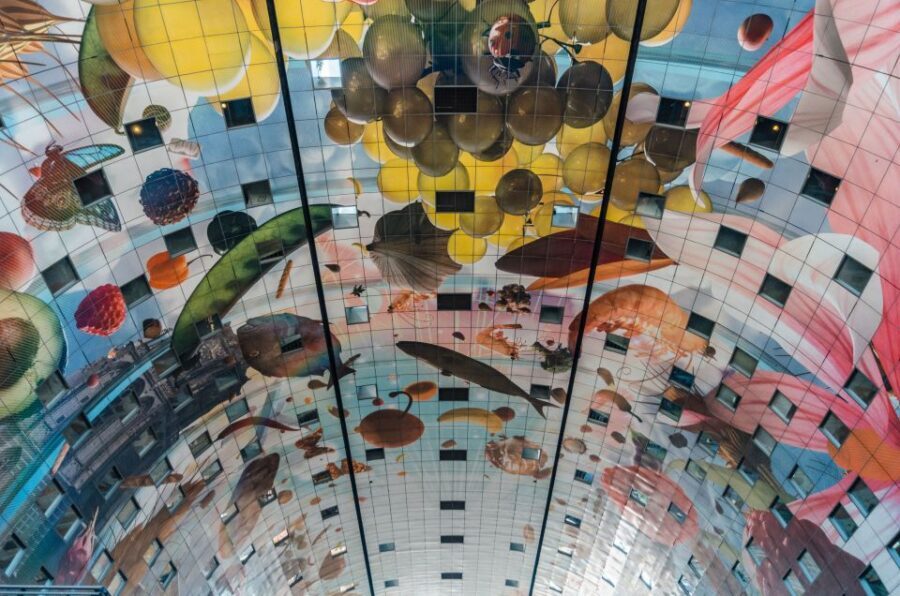
One of the biggest “wow” moments comes when you enter Markthal. This stop is one of the most satisfying on the tour because it changes the scale of what you’re seeing. Outdoors, you’re reading the city. Indoors, you’re reading how Rotterdam designed space for daily life.
Markthal is famous for being more than a market hall—it’s a piece of architecture that shapes how people flow, pause, and gather. Walking into it on a guided tour helps you notice details you might miss on your own, because you’re not just looking; you’re being taught what to look for.
You’ll also get the context that makes it click: Rotterdam is a city with a long industrial identity, and modern design often treats public space like an engine. Markthal feels like that engine—an indoor public corridor with a strong architectural identity.
One caution: Markthal can feel busy in peak hours. If you’re sensitive to crowds, plan to keep your camera quick and focus on the guide’s explanation while you’re moving.
Cube Houses: how playful design became a housing answer
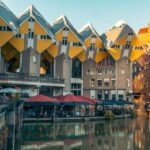
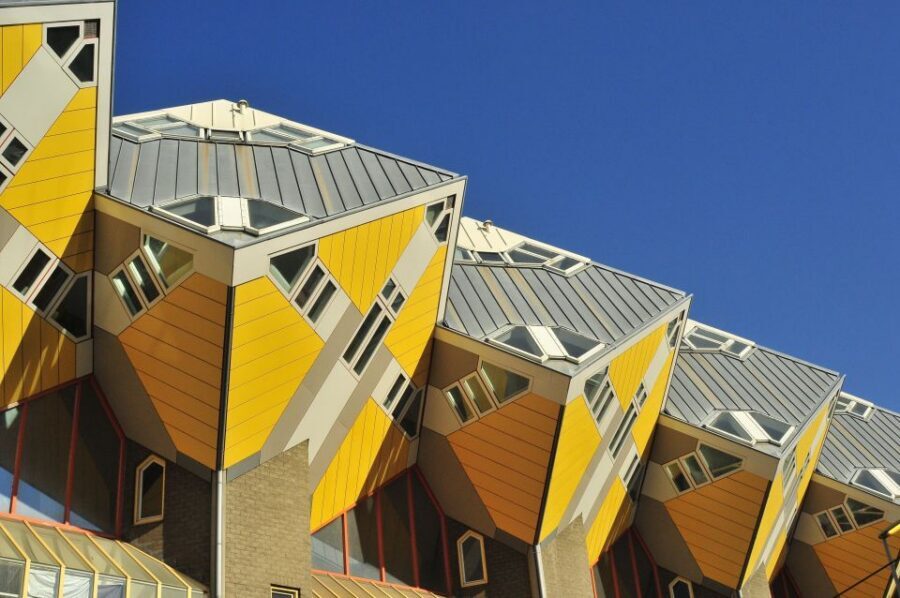
After Markthal, you’ll walk past the row of the Cube Houses. Yes, they’re visually strange on purpose. But the best part of a guided architecture walk is that you get the reasoning behind the shape, not just the novelty.
These houses are often treated like an art photo spot, but in this tour they’re positioned as part of Rotterdam’s ongoing experiment with how people live in the city. Your guide will connect the Cubes to larger themes: rebuilding, rethinking space, and designing for how cities evolve.
It’s also a stop where you’ll naturally slow down, because the geometry grabs you. Still, keep your eyes open for what your guide says about trade-offs and practicality. One reviewer even flagged debate around the idea of social housing projects not being included in a similar tour, which is a good reminder: this walk focuses on key architecture highlights, not a full neighborhood-by-neighborhood housing policy tour.
If you’re visiting Rotterdam for the first time, this is one of the quickest ways to understand why the city is willing to be bold—and why that boldness isn’t just for tourists.
You can also read our reviews of more guided tours in Rotterdam


Riverside development: learning Rotterdam by looking at water
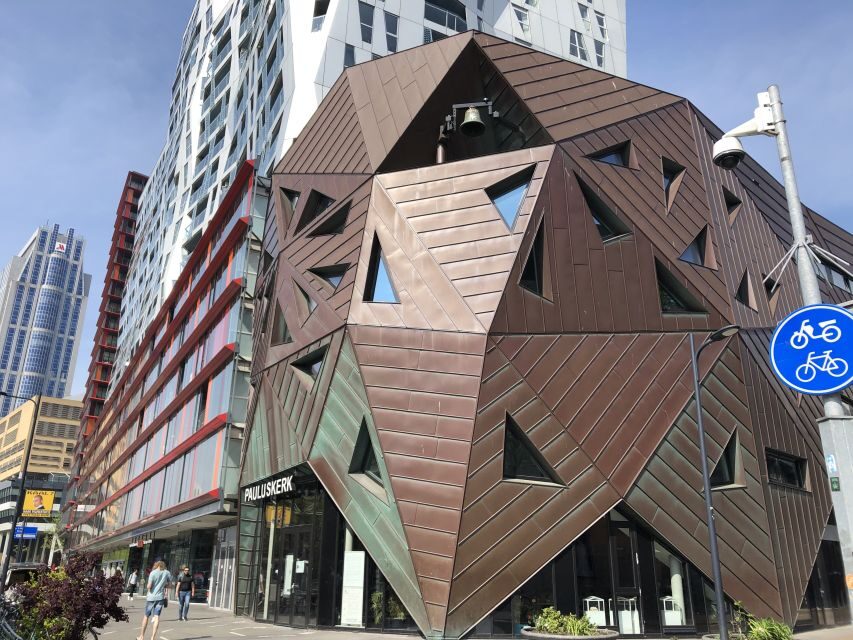
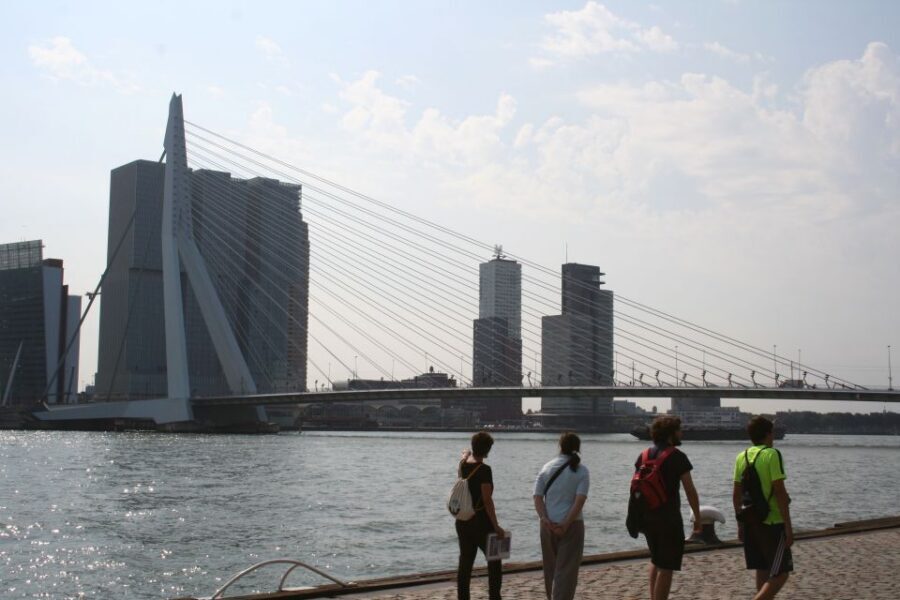
Once you’re moving toward the riverfront, the tour shifts to the new riverside development and the skyline of the South Bank. This is where Rotterdam’s architecture starts to feel like a living strategy. The waterfront shows how the city treats the river not as a border, but as a design driver.
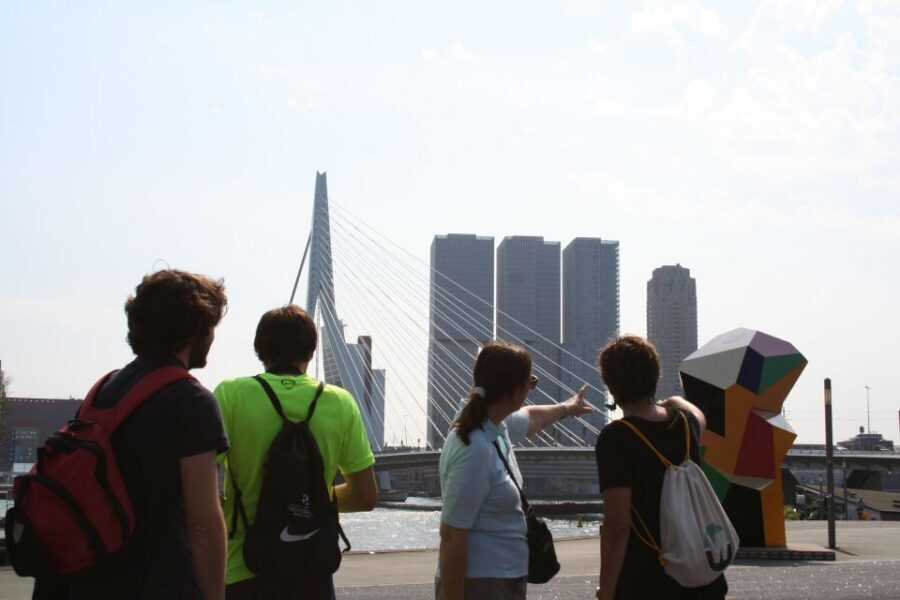
A major highlight here is Erasmus Bridge. You’ll likely see it from a perspective that makes the bridge feel like part of the urban system, not just a photo backdrop. The bridge is a landmark, but the tour uses it to explain Rotterdam’s future-facing planning mindset—how infrastructure, skyline, and development work together.
This section is also useful if you’re the kind of traveler who wants the “why” behind modern form. Rotterdam’s story is shaped by rebuilding and industrial demands, and the riverside is where you see the outcome: high-rise ambition paired with a sense of momentum.
Also note the tour covers rain or shine. Walking near the water can bring extra wind, so check the forecast and dress for it, not just for the air temperature.
Pacing, distance, and what $53 buys you
Let’s talk value. At about $53 per person for a 2-hour walking tour, you’re paying for two things that matter: an architect guide and a route that hits major sites without wasting time. A self-guided walk could get you photos, but it won’t give you the design decisions, planning context, and “how Rotterdam thinks” explanations.
The route covers about 3–4 km, so it’s not too long for most visitors—just long enough to feel like you earned your understanding. Still, 2 hours is tight. The guide has to cover a lot: station area, Lijnbaan, City Hall, Timmerhuis, Sint Laurents, Markthal, Cube Houses, and the riverside.
If you’re easily tired by city walking, bring snacks on your own (food isn’t included) and plan to take quick breaks only where the group pauses naturally. Since there are no built-in stops for drinks, hydration is on you.
What to wear:
- Comfortable shoes you can walk 3–4 km in
- Weather-appropriate clothing since it runs rain or shine
And one small language consideration: the tour runs in English, but one review mentioned a guide with a strong Spanish accent that could be hard to catch. If you’re sensitive to accents, it’s worth noting that—though many guides are praised for clarity and friendly pacing.
Who should book this Rotterdam architecture walk
This tour is a great match if you want an efficient introduction to Rotterdam’s architecture and how the city’s past connects to its future. It’s also ideal if you like learning through walking—seeing buildings at street level while someone explains how the urban plan “thinks.”
You’ll probably enjoy it most if you’re:
- Visiting Rotterdam for the first time and want a reliable architectural overview
- Interested in post-war rebuilding and how cities recover through planning
- Curious about how design choices affect daily life, not just aesthetics
If you already know Rotterdam deeply and want a longer, neighborhood-by-neighborhood architecture deep plan, the 2-hour format may leave you wanting more time at a few stops. In that case, consider using this tour to set your bearings, then expand on your favorite areas afterward.
Should you book this Rotterdam architecture walk?
If you want a fast, meaningful way to understand Rotterdam’s modern identity, I’d book it. For the price, the biggest win is the architect-led explanations paired with a route that makes the city’s design story easy to follow—from Central Station through the center to the riverside and Erasmus Bridge.
Book it if you’re okay with a brisk 3–4 km walk and you want context over extra free time. Skip it only if you expect a long, slow-paced stroll or if you specifically want neighborhoods and housing policy in depth rather than headline architectural landmarks.
FAQ
Where do I meet the guide for the Rotterdam architecture walking tour?
Meet your guide at Rotterdam Centraal Station underneath the clock.
How long is the tour, and how far do you walk?
The tour lasts about 2 hours and covers roughly 3–4 km on foot.
Is the tour wheelchair accessible?
Yes, the tour is listed as wheelchair accessible.
Does the tour run in bad weather?
Yes. The tour operates rain or shine.
Is food or drinks included?
No. Food or drinks are not included.
Can kids join the tour?
Yes. Kids ages 0–12 can join for free, though parents should consider the distance, the content, and the duration of the walk.