Rotterdam moves fast, even in half a day. What makes this tour fun is the mix of modern rebuild and older city remnants, all stitched together with a local sense of how the city works. I especially like that admission tickets are included, so you do not get hit with surprise add-ons when you arrive. I also like the pacing: it is just enough walking and tram time to feel oriented, without trying to cram everything into one marathon. The only real drawback to plan for is that it is mostly on foot and public transit, so you will want comfy shoes and a weather-ready mindset.
This is a private tour, so you can ask questions and adjust the tempo with your guide (and yes, service animals are welcome). Guides on this experience have been praised for real personality and clear storytelling, including locals like Eleftheria, Smaranda, Abdullah, and Elmar. If you are new to Rotterdam, or you only have a few hours between connections, this kind of route helps you “get your bearings” quickly and then choose what to revisit later.
And it is a good value for the time: you are paying once and getting core sights covered, plus lunch/local street food, drinks, bottled water, and a public transportation ticket. The water-taxi ride is included too, though it depends on availability at booking time, so manage expectations if you are traveling with tight scheduling.
In This Review
- Key highlights you will actually feel
- A half-day Rotterdam tour that helps you choose your next day
- What you pay for: the value math behind the $151 price
- Getting around: why walking + tram works here
- Stop-by-stop: what you’ll see and why it matters
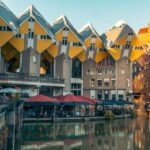
- Kijk-Kubus (Cube Houses): experimental living as a design statement
- Luchtsingel: a city initiative turned into a people-space
- Rotterdam Tourist Information on Coolsingel: fast orientation in a friendly setting
- Stationsplein 2 and the Central Station story: the city rearranged its transit
- Grote of Sint-Laurenskerk (Laurenskerk): the medieval spine that survived
- Markthal: food hall walls turned into city-wide art
- Nieuwe Delftse Poort: a gate moved for progress (and saved details anyway)
- Oude Haven: the harbor that kept its charm
- Witte Huis: the region’s early skyscraper
- Meent: cafés, shops, and the simple joy of hanging out
- Lunch, tickets, and drinks: small comforts that keep the pace humane
- Who should book this private Rotterdam half-day tour
- Should you book this private Rotterdam tour?
- FAQ
- How long is the Rotterdam private tour?
- Where do we meet, and does it end at the same place?
- Is pickup available?
- What’s included in the price?
- Are all attraction tickets included?
- Is the water-taxi ride guaranteed?
- Are service animals allowed, and is the tour weather-dependent?
Key highlights you will actually feel
- Admissions handled upfront: cube houses and Laurenskerk are covered, so you can focus on the stops instead of pricing.
- Design-forward Rotterdam: Kijk-Kubus, Markthal, and the city’s housing reinvention show how Rotterdam rebuilt after WWII.
- A well-timed mix of old and new: you see the medieval Laurenskerk and then pivot to the modern food-and-art scene at Markthal.
- Public transit routing: tram and walking legs keep things efficient without a car.
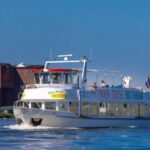
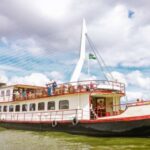
- Possible water-taxi moment: it turns the tour from a normal walk into something more memorable for photos and atmosphere.
- A guide you can talk to: this is private, so you can ask, pause, and steer the conversation toward what you care about.
A half-day Rotterdam tour that helps you choose your next day
Rotterdam is not built like a classic museum city where the big sights sit all in one tidy circle. It is a working port city, rebuilt with big ideas after WWII, and that means the best way to understand it fast is to see the key “language” the city uses: architecture, public space, and how people move around.
This tour is designed for that. In roughly 3 to 4 hours, you get a path that starts with a showpiece of experimental housing, moves through civic and cultural spaces, and then finishes with waterfront energy. By the end, you should know where you want to spend more time—whether that is architecture, food halls, or just hanging out near the water.
If you like cities where you can read the story in the buildings, you will enjoy this. If you dislike walking, you might still manage it because the group is private, and you can slow down or take small pauses. Still, plan for a moderate amount of movement, because Rotterdam’s “compact and easy to get around” feel is true—but you do walk.
You can also read our reviews of more private tours in Rotterdam
What you pay for: the value math behind the $151 price
At $151.23 per person for about half a day, the sticker shock is real—until you look at what is included.
You get:
- Lunch or local street food
- Bottled water
- Coffee and/or tea
- Soda/pop
- A public transportation ticket
- Admission tickets for the cube houses (Kijk-Kubus), Laurenskerk (Grote or Sint-Laurenskerk), and Markthal (where applicable)
- A guided route that uses walking and public transport (no private car transfer)
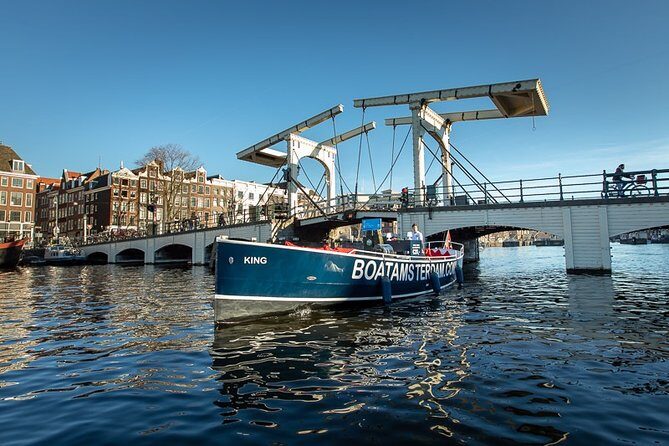
- A watertaxi ride if available at the time of booking
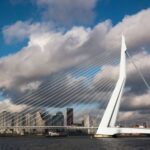
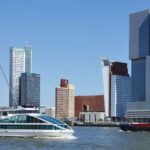
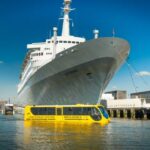
That last point matters because Rotterdam’s waterfront is more than scenery. It is part of the city’s identity. A water-taxi moment gives you a different view of the quays and skyline than you get on foot.
Also, a lot of the “headline” sights on this route include free stops (you will see things like Oude Haven, the Witte Huis, and Meent without paying extra on site). So you are not just paying for admissions—you are paying for a guide to connect the dots.
If you only have a few hours, the best value is the one that removes friction. This tour does that: you show up, pay once, and get a coherent overview without hunting for tickets or figuring out transit on your own.
Getting around: why walking + tram works here
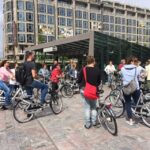
The tour gets around on foot and public transportation, with no car ride. That is actually a smart choice in Rotterdam. The city center is walkable, and the transit system helps you cover distance without feeling like you are stuck in traffic or in a vehicle you do not need.
What that means for you:
- You will likely spend short chunks moving between stops, then longer chunks standing, looking, and listening.
- If your feet are tired, build in a few rest moments. This is private, so your guide can usually work with your pace.
- You will get a more “local flow” feeling than you would from a vehicle-only overview.
One practical tip: wear comfortable shoes. Rotterdam can feel flat, but cobblestones, long blocks, and city curbs add up.
Stop-by-stop: what you’ll see and why it matters
This route has a clear arc: it starts with experimental housing, moves through public-space culture, then pivots to the city’s rebuilt centerpiece buildings and waterfront.
Kijk-Kubus (Cube Houses): experimental living as a design statement
Your tour kicks off at Kijk-Kubus, the cube houses. These are not just a quirky photo stop. They connect to a specific post-WWII mindset: architects and planners trying to create housing that feels interactive and humane, rather than repeating grey, top-down modernism.
When you look closely, you see the idea behind the visual oddness. Rotterdam wanted to be hospitable and experimental, and these buildings became a symbol of the city’s ability to rebuild with personality.
Plan to take your time here, even if it is a shorter stop. If you rush, you miss the architectural logic that makes the cubes more than a gimmick.
Luchtsingel: a city initiative turned into a people-space
Next is Luchtsingel, a public project connected to citizen participation. The story here is that Rotterdam set aside funding to encourage residents to submit projects that would enliven the city and improve quality of life.
So yes, you get a quick visual moment, but the bigger value is the context: Rotterdam does not treat public space as decoration. It treats it as infrastructure for social life.
Rotterdam Tourist Information on Coolsingel: fast orientation in a friendly setting
You also stop at the Rotterdam Tourist Information center on Coolsingel. This is the part where your guide helps you translate what you just saw into what you should do next—where to go, how to think about neighborhoods, and what fits your time.
And it is not just a desk and brochures. Your tour includes time inside the exhibition area, with a warm welcome from the mayor mentioned as part of the visit. If you want to understand Rotterdam quickly, this kind of context stop is worth it.
Stationsplein 2 and the Central Station story: the city rearranged its transit
Then you head to Stationsplein 2 for a key history moment: before the central station at its current location, there were four stations around the center. In 1957, the central station opened where it is now, and later renovations were needed because the passenger influx outgrew the existing setup.
Admission here is free, so what you are really buying is perspective. Rotterdam’s modern identity is tied to movement—people, goods, and transport systems. Understanding that makes the rest of the city make more sense.
Grote of Sint-Laurenskerk (Laurenskerk): the medieval spine that survived
You will then visit Grote or Sint-Laurenskerk. This church is the only remnant of the medieval center of Rotterdam, which makes it emotionally important even if you are not a church person.
It is built between 1449 and 1525, and the design is a blend: it mixes the feel of a hall church (side aisles and nave with similar heights) and a cruciform basilica (with a main tower and lower side towers). That hybrid design is part of why it feels distinct.
If you are trying to understand Rotterdam’s “old vs new” story, this is the anchor. Everything else on the route feels like the city’s response—what came after the medieval heart was shattered by history.
Markthal: food hall walls turned into city-wide art
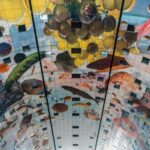
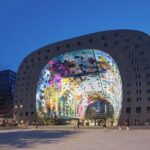
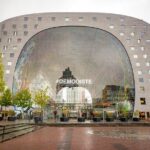
After Laurenskerk, you go to Markthal. The highlight here is the interior façade covered with a huge artwork called Hoorn des Overvloeds—an 11,000 m² scene that includes enlarged fruits, vegetables, grains, fish, flowers, and insects.
The title matters too. It refers to the Cornucopia, a Greek symbol for abundance. In a city like Rotterdam, abundance is not just a myth. It is a working idea connected to trade, ports, and supply lines—perfectly matched to a food market that people actually use.
One more thing: in the background, you can also see the Laurenskerk tower. That visual link helps you feel how the city layers time on top of itself.
Nieuwe Delftse Poort: a gate moved for progress (and saved details anyway)
Next is Nieuwe Delftse Poort, a former city gate. The story goes back to the Middle Ages, when Rotterdam had ten gates. Later, traffic and city growth made the gate an obstacle, and the decision was made to move it about 100 meters.
WWII damaged the gate severely, and after the bombing the gate was demolished because it could no longer be finished. Some ornamental works were saved and incorporated into the walls of buildings on the corner of Town Hall Square.
This stop is short, but it gives you something useful: Rotterdam does not keep everything intact. It keeps the important pieces and reuses them in new contexts.
Oude Haven: the harbor that kept its charm
Oude Haven is one of the historic places that survived. Here you see historic, charming old boats in the harbor and a colorful mix of buildings along the quays.
This is where the tour becomes less about architecture facts and more about atmosphere. It is the part you can enjoy even if you do not remember every detail your guide shares.
Witte Huis: the region’s early skyscraper
You then pass by the Witte Huis, a striking white building built in 1889. At 43 meters, it was described as the first skyscraper in Belgium, the Netherlands, and Luxembourg.
It is a reminder that Rotterdam was already thinking vertically before the modern skyscraper era became a universal language. Seeing it after Laurenskerk and Markthal helps you notice how the city’s “scale” changes over time.
Meent: cafés, shops, and the simple joy of hanging out
Finally, you end near Meent, a hotspot for cafés, eateries, and clothing shops. It is also a street where people watch and social energy matters.
This is a good way to finish because the tour ends with a place you might want to return to on your own. You leave with ideas, and you also leave with a neighborhood vibe.
Lunch, tickets, and drinks: small comforts that keep the pace humane
One thing I like about this format is that your tour includes lunch or local street food plus bottled water, coffee/tea, and soda/pop. That is not just a nice perk—it helps your energy level so you can enjoy the sights instead of “toughing it out” between stops.
The tour also includes public transportation ticketing, so you do not get the annoying moment of figuring out fares mid-tour.
And because admissions for key sights are covered, you are not scrambling for phones, tickets, or extra payments while you are standing outside.
Who should book this private Rotterdam half-day tour
This is a great fit if:
- You have limited time and want a strong overview fast
- You like architecture and city planning more than just museum shopping
- You want a guide you can ask questions to in real time
- You are cruising or arriving briefly and need efficient orientation in the center
It is also a solid choice for families or groups who want privacy and flexibility, since only your group participates.
If you absolutely hate walking, you might still do it only if you are okay with a slower pace and frequent stops. But the core promise here is orientation plus key landmarks, which means movement is part of the deal.
Should you book this private Rotterdam tour?
Yes—if your goal is to understand Rotterdam quickly and decide what to do next. The strongest reason to book is the value mix: admissions are handled, food and drinks are covered, and you get both the city’s rebuilt-modern identity and the surviving medieval anchor.
If your time window is very tight, or you are sensitive to walking and public transit, do not ignore the pace. Still, because the tour is private, you can usually handle it by leaning into a slower rhythm.
If you want a Rotterdam “starter pack” that feels local rather than checklist-y, this is one of the better ways to spend a half day.
FAQ
How long is the Rotterdam private tour?
The tour runs about 3 to 4 hours.
Where do we meet, and does it end at the same place?
You start at Rotterdam Central Station (3013 AJ Rotterdam, Netherlands) and the tour ends back at the meeting point.
Is pickup available?
Pickup is offered. The tour notes that you get around by walking and public transportation, with no car transportation.
What’s included in the price?
Admission tickets for key sights (including the cube houses and Laurenskerk), a public transportation ticket, lunch or local street food, bottled water, coffee and/or tea, and soda/pop are included.
Are all attraction tickets included?
The tour includes admission tickets for the cube houses and Laurenskerk, and it also covers the Markthal stop. Some other stops on the route are free.
Is the water-taxi ride guaranteed?
It is included if available at the time of booking.
Are service animals allowed, and is the tour weather-dependent?
Service animals are allowed. The tour requires good weather, and if it is canceled due to poor weather you will be offered a different date or a full refund.