REVIEW · ROTTERDAM
Skip the Line: SS Rotterdam Steam Ship Entrance Ticket
Book on Viator →Operated by ss Rotterdam · Bookable on Viator
The S.S. Rotterdam feels like time travel.
This visit is interesting because you’re not just looking at a ship—you’re walking through it, using an audio headset to pick up details as you go. I love the choice between upper decks (with big command areas like the bridge) and lower decks (including the engine rooms), which lets you tailor the experience. I also like that it works well as a family-friendly break from typical city stops. One possible drawback: the ship has lots of stairs and the engine-room area can be cold, so plan accordingly.
In about an hour, you can see a lot of the ship’s most eye-catching sections, and you’ll do it with a small group size (max 15 travelers) and a mobile ticket you can show on your phone. It’s also offered in English, and service animals are allowed. If you’re pushing a wheelchair, your route matters, since the lower-deck option isn’t suitable for wheelchairs while the upper-deck option is.
If you want ocean-liner vibes without a long museum day, this is a strong, practical pick. Just make sure you reserve ahead, because slots can fill up.
In This Review
- Key things to know before you go
- Entering S.S. Rotterdam: what your ticket really buys
- Upper decks route: bow, bridge, sports decks, and the captain’s world
- Lower decks route: engine rooms, replicas, and a colder reality check
- The ship layout: why some visits feel smooth and others feel confusing
- What makes the audio headset so useful (and not just a gimmick)
- Staff, volunteers, and how to make your visit better
- Timing and value: $15.99 and why booking ahead matters
- Who should book: the best matches for upper vs lower decks
- Quick FAQ
- FAQ
- How long does the S.S. Rotterdam ticket take?
- What’s included with the entrance ticket?
- Do I need to choose between upper and lower decks?
- Is the lower-deck route wheelchair accessible?
- Are food and drinks included?
- Is the ticket mobile and offered in English?
- Can I cancel for a full refund?
- Should you book the S.S. Rotterdam steamship entrance ticket?
Key things to know before you go

- Pick upper or lower decks so your ticket matches what you actually want to see.
- The bridge and navigation spaces are a standout highlight on the upper-deck route.
- Engine rooms are the wow factor on the lower-deck route, with real mechanical detail and a colder feel.
- Audio is built in via the included headset, helping you explore at your own pace.
- Stairs are part of the deal, and they can be slippery if the weather is wet.
- Small group size (max 15) keeps the visit from feeling like a cattle line.
Entering S.S. Rotterdam: what your ticket really buys
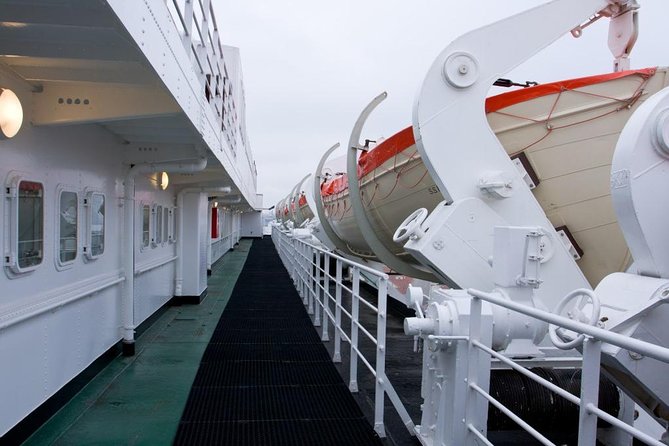
Your ticket gets you access to S.S. Rotterdam and an included audio headset, so you can move through the ship’s open areas while learning what you’re seeing. The big value here is that you’re choosing a route that fits your curiosity—either the command-and-public spaces on the upper decks or the working guts (the engine rooms) on the lower decks.
Also, this isn’t a long guided bus-style tour. The experience is built around self-paced exploration with audio support, with a route length that works out to about one hour for the main sections included in your chosen option. That timing is perfect if you’re sightseeing hard all day and still want something “different” before dinner.
One more practical note: it’s near public transportation, so you can tack it onto other Rotterdam plans without much fuss. And because this is a working building (it has hotel use for parts of the ship), what’s open can feel a bit like a living ship, not a sealed-off set.
Upper decks route: bow, bridge, sports decks, and the captain’s world
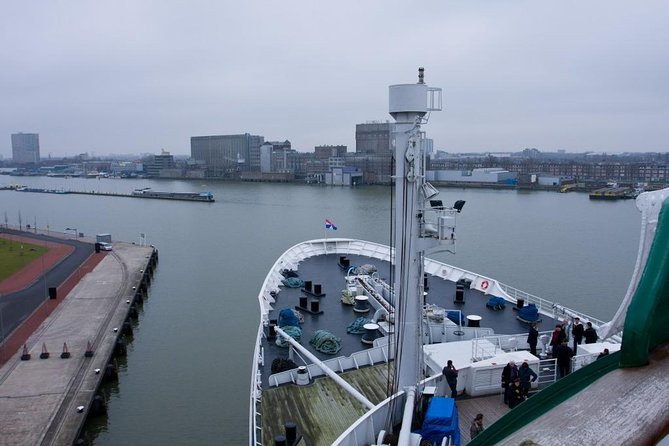
If you’re the type who loves the “how did they steer this thing?” side of history, the upper decks option is the one to choose. You’ll get access to major exterior and command areas, plus several key rooms that explain how ocean-liner life functioned from the front.
On this route, you can explore the bow area and get to the bridge and pilothouse. You can even peek into areas at the back, which helps you connect what you’re seeing on deck to the ship’s internal layout. One of the best moments is standing where navigation decisions were made—this is where the ship’s purpose becomes real, not just decorative.
The upper-deck experience also includes stops like:
- the chart room, radio room, and captain’s cabin
- a view from the upper sports decks and the stern
And there’s one extra learning feature: you can watch a short movie in the Experience Center on the Lower Promenade Deck. That’s handy if you want a quick narrative “reset” so the audio headset details make more sense as you continue.
Logistically, the upper-deck route is also noted as suitable for wheelchair users. If you’re mobility-limited, this is the safer bet between the two options. Still, plan for walking and stairs in general, since the ship is, well, a ship.
Lower decks route: engine rooms, replicas, and a colder reality check
The lower decks option is for people who want the ship’s machinery and staff spaces, not just the elegant parts. This route includes access to the engine rooms, which is where the ship stops being romantic and starts being mechanical—in the best possible way.
You’ll be able to:
- visit the engine rooms
- peek into replicas of original passenger rooms and crew areas
- return via the Promenade Deck
That replica element matters. It helps you understand what “life aboard” looked like without you needing a full imagination jump. You’re seeing scaled or recreated spaces that give context to the working sections.
The tradeoff is stated clearly: the lower-deck option is not suitable for wheelchair users. Also, there’s a consistent theme that the engine-room area can be cold, so bring layers. You don’t need expedition gear, but you will likely appreciate a warmer top—engine rooms don’t care about your optimism.
If you’re deciding between upper and lower, think of it like this: the upper decks help you understand the ship’s leadership and public spaces, while the lower decks show you what kept the ship moving and how crew environments fit into the overall design.
The ship layout: why some visits feel smooth and others feel confusing
One of the interesting parts of S.S. Rotterdam is that it’s not a flat museum. It’s a multi-deck ship with corridors, staircases, and open public spaces mixed in with areas that are part of the ship’s day-to-day use.
That’s also why you’ll see two different reactions. If your route matches your interests—upper for command spaces, lower for engine rooms—the visit tends to feel focused. You’ll know what you’re aiming for, and the audio headset helps you connect the dots.
But if you wander without a plan, it can feel overpriced for a self-tour and a bit confusing in layout. You’re moving through a real structure, not a tidy exhibition floor. Add to that the fact that there are a lot of stairs, and they can be slippery if it’s raining.
My practical advice is simple: choose your route first, then stick to it. If you have the energy, you can add extra exploring. If you don’t, don’t force it—hit the key spaces included in your option and call it a win.
What makes the audio headset so useful (and not just a gimmick)
The audio headset is included, and it really changes how you experience the ship. It’s one of the reasons this feels like more than walking around a beautiful, restored hull.
The audio tour helps you interpret details you might otherwise miss, like how rooms relate to each other or why certain spaces matter to daily operations. It also gives you pacing. Instead of reading signs the whole time, you get a guided “listen-and-look” experience.
In particular, the content around navigation and operating spaces tends to feel practical. You’re not just getting decoration history—you’re getting a sense of function. That’s why the bridge and related areas often land as a highlight: you’re learning while standing in the exact spot those systems were used.
If you’re traveling with kids, audio can be a relief. You get to move at their pace while still delivering facts and context. If your group likes hands-on learning, the audio headset gives a satisfying structure to the visit without feeling like a lecture.
Staff, volunteers, and how to make your visit better
The overall tone around the experience is positive, especially when you run into volunteers or knowledgeable staff. Several parts of the ship are explained with real enthusiasm, and that can add a lot—especially for guests who want the “why” behind what they see.
That said, it’s not a perfect world. There’s at least one complaint about staff being unhelpful or disorganized, and another about a rude volunteer interaction. So if you hit a snag—like you’re unsure where to go—stay calm and ask again more than once if needed.
Your best move: keep your route choice in mind and follow the areas intended for your ticket. If you get stuck, find staff/volunteers and ask where the next included stop is for the route you purchased.
Timing and value: $15.99 and why booking ahead matters
At $15.99 per person, this is priced like a “meaningful stop,” not a luxury add-on. You’re paying for a restored ship you can explore through real spaces, with an included audio headset and route options that target different types of curiosity.
The value angle is the skip-the-line part. Visits to ships like this can become a time sink if you show up hoping for open slots. Booking ahead—often about 13 days in advance on average—helps you lock in a time that fits your day and reduces stress.
How long should you plan? The ticket format is about one hour for the main included route. But if you want a slower pace and more roaming, I’d plan extra time. Not because you must, but because ship visits can eat minutes—stairs, photo stops, and audio pauses add up quickly.
Who should book: the best matches for upper vs lower decks
This is a strong choice if you like maritime history, ocean-liner design, or simply want a different kind of museum experience than what you get on land.
- Choose upper decks if you love public spaces and want to spend time on the bridge, chart room, radio room, and captain’s cabin. It’s also the better option if wheelchair access is important to you.
- Choose lower decks if you’re excited by machinery and want the engine rooms plus replicas of original passenger and crew areas. Dress warmly for this route, since the engine-room area can feel cold.
It’s also a good family option. The visit is short enough to avoid a meltdown, and the ship’s look is kid-friendly in a way that many museums aren’t. Just remember children must be accompanied by an adult.
And if you’re in Rotterdam for a day and already have city sights queued up, this gives you a change of pace without requiring a full afternoon.
Quick FAQ
FAQ
How long does the S.S. Rotterdam ticket take?
It’s listed as about 1 hour (approx.) for the visit.
What’s included with the entrance ticket?
You get an audio headset included.
Do I need to choose between upper and lower decks?
Yes. You can choose an upper decks visit or a lower decks visit, depending on what you want to see most.
Is the lower-deck route wheelchair accessible?
No. The lower decks option is stated as not suitable for wheelchair users, while the upper decks option is suitable.
Are food and drinks included?
No. Food and drinks are not included.
Is the ticket mobile and offered in English?
Yes. It’s a mobile ticket, and the experience is offered in English.
Can I cancel for a full refund?
Yes. You can cancel for a full refund if you cancel up to 24 hours in advance of the experience start time.
Should you book the S.S. Rotterdam steamship entrance ticket?
Yes, if you want a ship visit that feels real and grounded, with an audio guide and a route that you can tailor. It’s especially worth it if you care about the difference between the ship’s command/public spaces and the working engine rooms.
Book ahead to lock in a time, then pick upper vs lower based on your interests rather than trying to do everything. If you’re sensitive to cold or stairs, consider the route carefully—upper decks are the smoother accessibility choice, while lower decks bring the mechanical wow factor with less comfort.