REVIEW · AMSTERDAM
Amsterdam: Red Light District 1-hour Smartphone Audio Tour
Book on GetYourGuide →Operated by Clio Muse Tours · Bookable on GetYourGuide
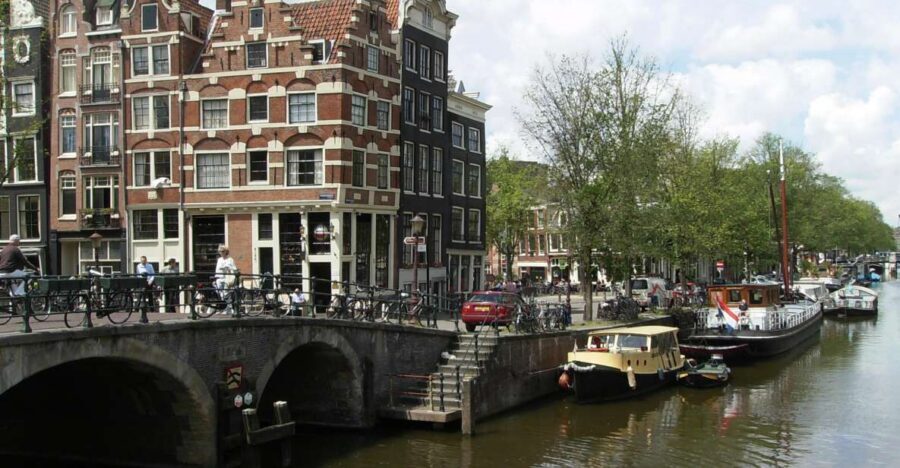
You’ll walk past more than shopfronts. This 1-hour smartphone audio tour nudges you to look at Amsterdam’s Red Light District through architecture, old streets, and the city’s changing laws—starting at Dam Square and ending near Nieuwmarkt.
I like that the stories are designed for your own pace, so you can pause for photos, take a breath, or simply re-listen when a detail clicks. Two other strong points for me are the offline interactive map (so you’re not stuck hunting signal) and the mix of stops that reaches beyond the usual headlines—like the Oude Kerk and the chapel at Ons’ Lieve Heer op Solder.
The main drawback to consider: the tour leans history and places over explicit discussion, so if you’re hoping for a more direct focus on prostitution itself, you may feel a bit underfed.
In This Review
- Key highlights to know before you go
- Starting at Dam Square: set your pace in the city’s birthplace
- Oude Kerk and Belle: history in stone, rights in bronze
- Hidden corners: sailors, merchants, and Café In’t Aepjen
- Ons’ Lieve Heer op Solder and Bloedstraat: the story behind the names
- Ending at Nieuwmarkt: Waag’s changing roles
- How the smartphone audio works (offline map, languages, and device needs)
- Price and value for about $7: when audio beats a live guide
- Should you book this Red Light District audio tour?
- FAQ
- Where does the audio tour start?
- Does this include entrance tickets to sites and museums?
- Is there a live guide on the walk?
- What languages are available?
- Can I use it offline?
- Is it suitable for children?
Key highlights to know before you go
- Start at Dam Square, no meeting point, and follow the audio at your pace
- Offline map + downloadable audio to avoid roaming headaches
- Stops include Oude Kerk, Café In’t Aepjen, Ons’ Lieve Heer op Solder, and Waag
- A small statue, Belle, connects the area to sex workers’ rights
- The storytelling is quirky and respectful, built to move you through the neighborhood’s layers
- You’ll need your own device setup: headphones + a charged smartphone
Starting at Dam Square: set your pace in the city’s birthplace
You begin at Dam Square, the starting point in the tour’s story of Amsterdam itself. The audio opens with the basic idea that a simple dam on the Amstel River helped set the stage for a city that later shaped Dutch history. From there, you’re guided on foot through the older street pattern and quieter corners that many people speed through.
There’s no live guide, and there’s no fixed meeting point beyond the starting spot. That means you’re in charge of timing. If you want a calm, photo-friendly walk, you can slow down. If you’re trying to fit it between museum stops, you can keep moving and just catch the most important segments.
Dam Square is also easy to reach. It’s about a nine-minute walk from Centraal station, which matters because the Red Light District can feel like a maze if you start late or arrive without a plan. The audio format helps here: you’re not relying on printed directions, and you’re not guessing which turn makes sense next.
Practical tip: before you step outside, make sure your phone battery is healthy. This kind of neighborhood walk is exactly where signal drops. The tour is designed for offline use, but your phone still needs power to keep the audio going.
You can also read our reviews of more tours and experiences in Amsterdam



Oude Kerk and Belle: history in stone, rights in bronze
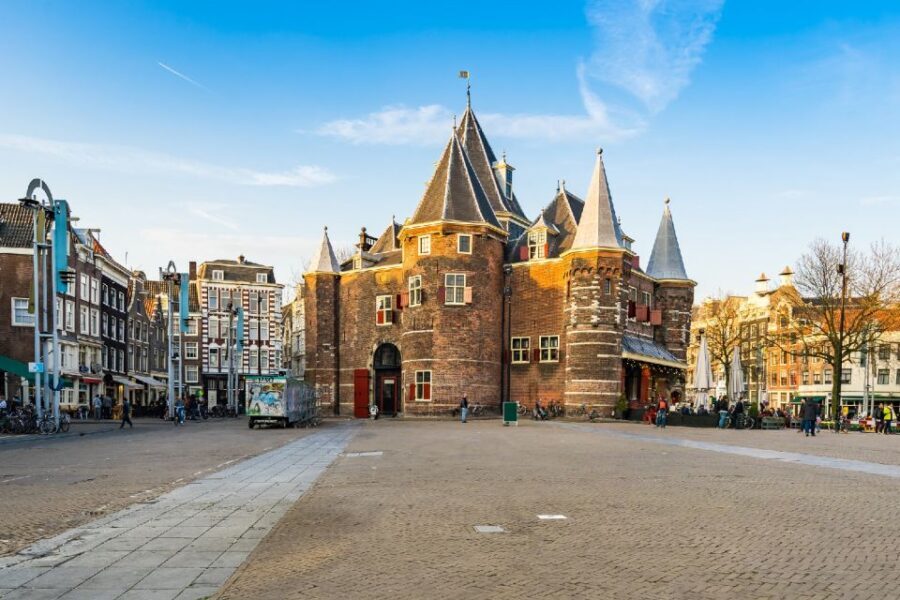
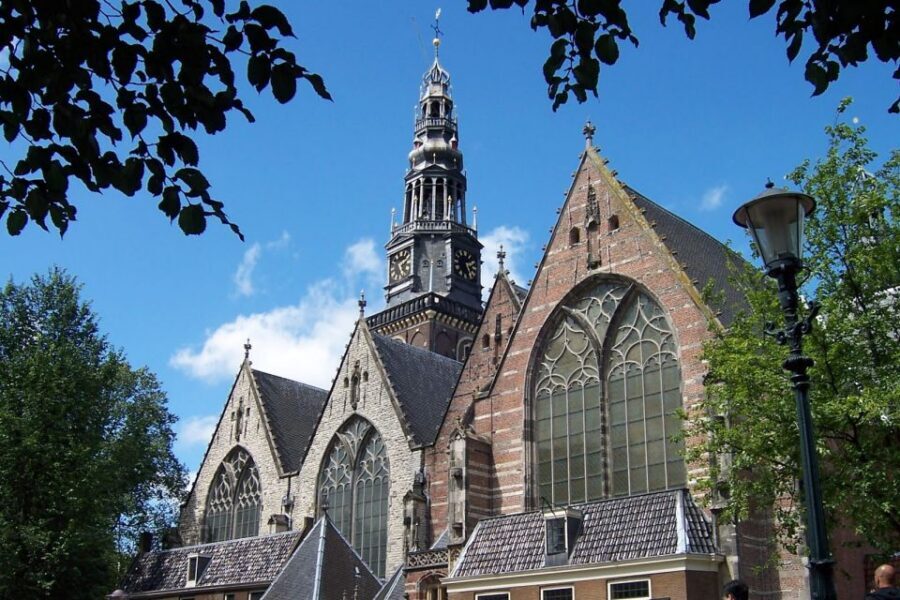
One of the best ways to understand the area is through what still stands. The audio has you look at the Oude Kerk, described as Amsterdam’s oldest building. Hearing it framed in the tour’s storyline helps you notice how “old” buildings can act like anchors—places that make modern street life feel less random.
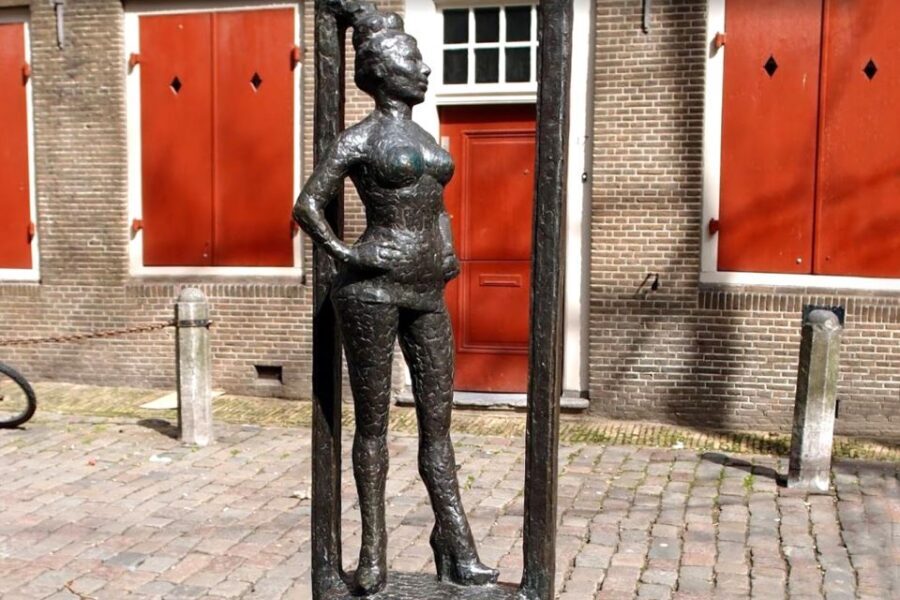
Right alongside the church moment is a small but meaningful stop: Belle, the statue connected to sex workers’ rights. The tour uses it to add a human and legal layer to what’s often treated like a spectacle. You’re not just walking through a famous zone—you’re learning how the city has talked about rights, rules, and public attitudes over time.
This is a good fit if you want a tour that stays respectful and contextual. The audio’s focus is explicitly on the neighborhood’s past and heritage, not a guided tour of windows. That approach can change your whole mood. You’ll likely find yourself looking at streets and buildings as evidence of how Amsterdam has evolved.
One thing to keep in mind: since this is audio-led and self-guided, you control how long you linger. If you like reading small details on plaques, plan extra minutes here. If you’re more interested in movement than in visuals, you can treat this as a quick but important checkpoint.
Hidden corners: sailors, merchants, and Café In’t Aepjen
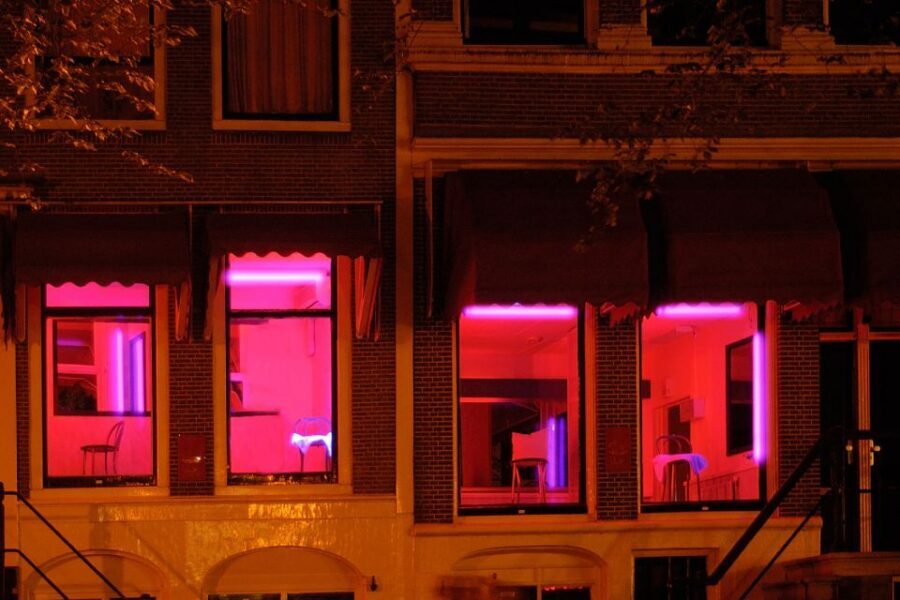
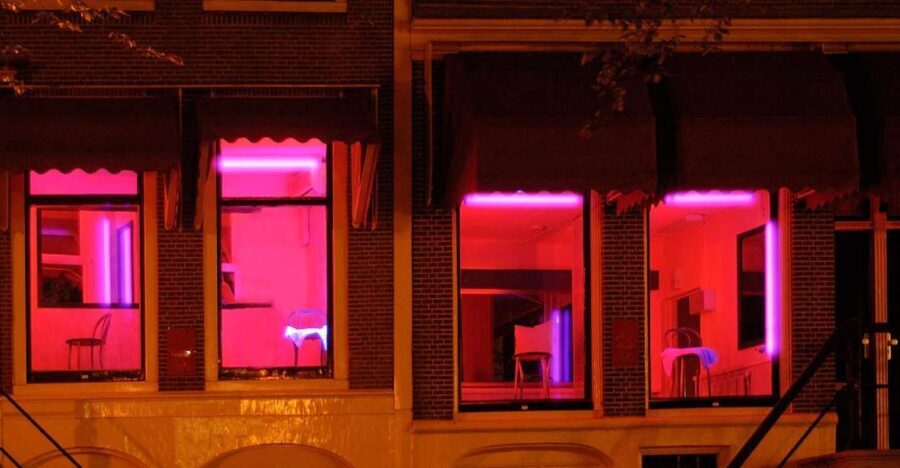
The audio route leans into the idea that this district was never only about one industry or one moment. Instead, you follow footsteps tied to sailors, merchants, residents, and travelers. That broad cast matters, because it helps explain why the streets feel so layered—commercial life, population shifts, and port energy all leave marks.
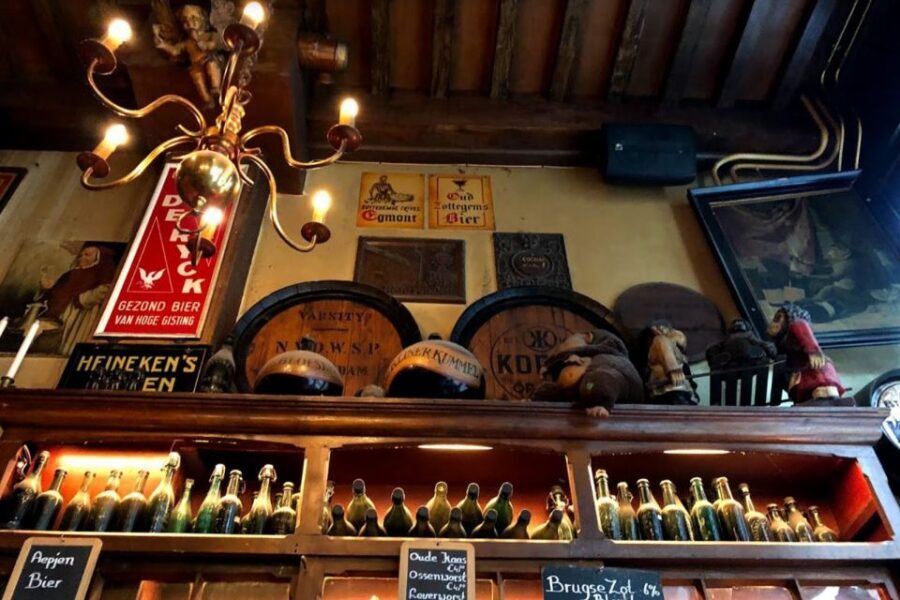
A named stop on this stretch is Café In’t Aepjen. You’re not going there for a formal lesson; you’re using it as a human-scale pause in the walk. When the audio points you toward places like this, it nudges you to think about everyday Amsterdam life—where people met, waited, and traded stories.
The neighborhood itself is built for short, twisty turns. Expect narrow alleys and frequent changes in street character. That’s part of the experience. Without a live guide, the audio helps you connect each stretch to a story, so you’re not just walking for the sake of it.
Practical note: keep your headphones handy and think of the audio as your “eyes.” In areas like this, it’s easy to feel distracted by everything around you. The audio gives the walk a thread, and that thread makes it easier to look intentionally instead of just react to the scene.
Also, if you’re using offline mode, don’t wait until you’re midway down a street to start the download. Do it before you go, while you’re still somewhere with decent internet.
Ons’ Lieve Heer op Solder and Bloedstraat: the story behind the names
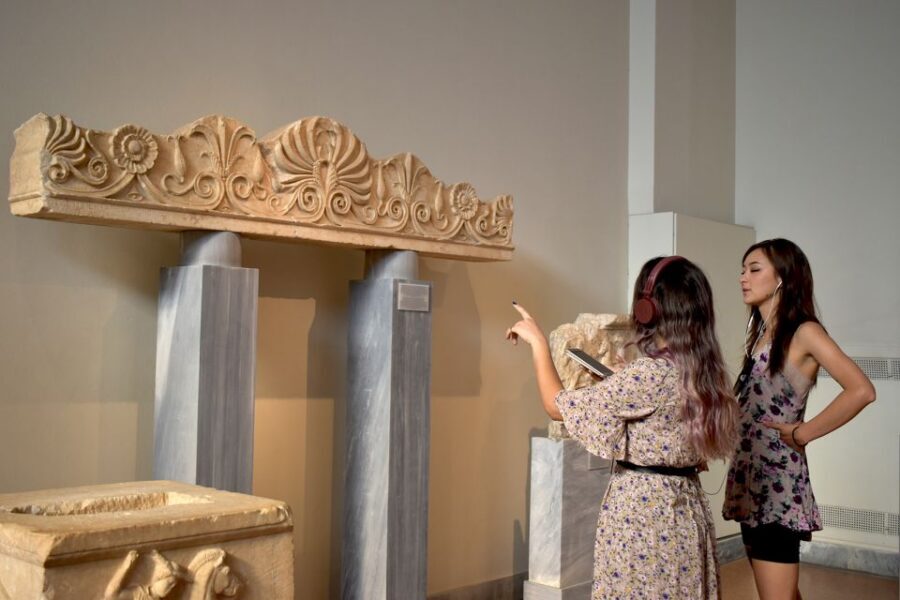
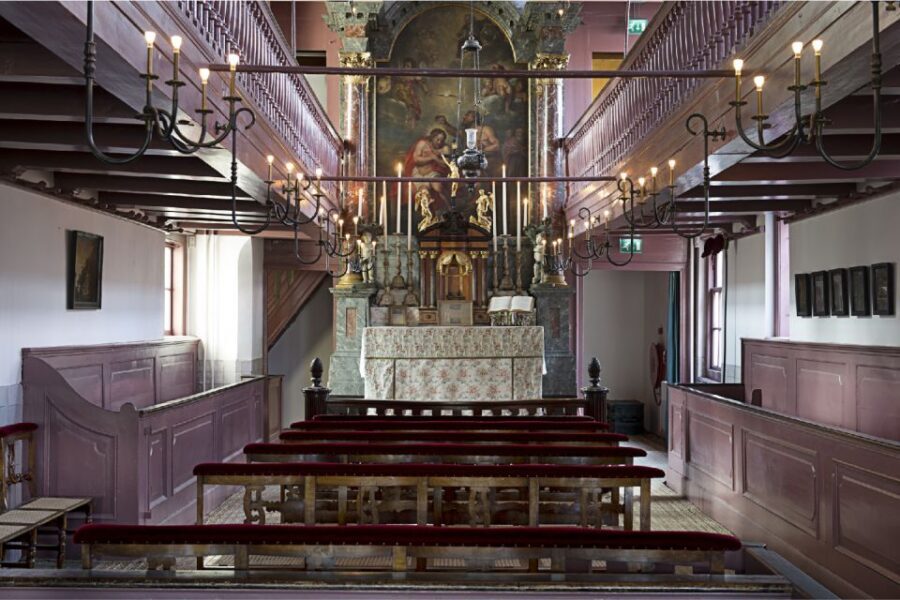
The tour includes one of Amsterdam’s most talked-about oddities: the clandestine chapel Ons’ Lieve Heer op Solder. The audio frames it as a place tucked into the city’s history, and the idea of a chapel hidden above everyday life adds a “how did they even manage that” energy to the walk.
Why this matters: it shifts your attention from the district’s reputation to its survival stories. You start seeing the neighborhood as a place where people built practical solutions—sometimes quietly—because the city’s rules and beliefs weren’t always simple.
Another stop with personality is Bloedstraat, a street name that already signals that the story will not be sanitized. In audio form, this kind of name works well because you can hear the explanation at your own pace without needing to study signs or memorize dates.
This segment is especially valuable if you want your walk to feel like a guided conversation rather than a checklist. You’ll likely notice how the audio keeps tying buildings and street names back to social change—who had power, who had to adapt, and what Amsterdam chose to protect or ignore.
If you’re expecting a long, straight talk on prostitution itself, this is where you may want to adjust expectations. The emphasis here is on the neighborhood’s history and the layers behind famous labels. That’s not bad—it just sets the tone clearly.
Ending at Nieuwmarkt: Waag’s changing roles
Your tour ends at Nieuwmarkt, where the audio points you to the striking Waag building. This is a strong finish because the Waag isn’t presented as a random photo spot. It’s explained in terms of changing roles over time: once a city gate, later a guildhall, and now a symbol of Amsterdam’s evolving identity.
That “evolving identity” framing is what makes the endpoint satisfying. You can look back along your route and see how the tour taught you to read the neighborhood. Instead of thinking only about the district’s reputation, you start connecting the dots between commerce, governance, and everyday life.
Nieuwmarkt also feels like a good transition area. Ending here helps you step back into more general Amsterdam street life after walking through a zone that can feel intense for some people. It’s easier to keep exploring the city if you end in a spot where you can choose what comes next—quiet walking, snacks, or another museum.
Time-wise, this tour is designed to be about an hour. If you’ve spent extra time on earlier stops—especially at the church or the chapel—you may finish a little later. That’s normal with self-guided audio.
You can also read our reviews of more tours and experiences in Amsterdam





How the smartphone audio works (offline map, languages, and device needs)
This is a downloadable self-guided audio tour. You get an activation link, and your audio content is designed to work offline, with an offline interactive map to help you avoid roaming charges. The big practical win here is control. You don’t have to keep reconnecting or hunting for a signal every few minutes.
The tour includes English, German, and Italian audio. That’s a useful detail if you’re traveling with a friend who speaks a different language, or if you want to compare how the story sounds across languages.
A few setup details that matter:
- Plan for about 100–150 MB of storage for the content
- Bring headphones
- Bring a charged smartphone
- Internet access may be weak in parts of the area, so download first
Compatibility is also part of the equation. It’s not compatible with Windows phones, and it won’t work on older iPhone/iPod/iPad models listed in the product notes. It’s also one booking per device, not per person, so if you’re in a group, make sure everyone understands they need their own phone.
Also, this matters emotionally: there’s no live guide and no VR/AR. That can be a plus if you want privacy and control. It can also mean the audio has to do everything. So listen closely at the start and take a second to confirm your next stop when the audio prompts it.
Provider note: the tour is by Clio Muse Tours, delivered through a phone-based experience rather than a traditional guided walk.
Price and value for about $7: when audio beats a live guide
At $7 per person, this is priced like an impulse add-on—cheap enough that you can justify it even if you’re not sure you’ll stay through every minute. For that money, you’re not buying access to museums or paid attractions. You’re buying a route and the stories to frame what you see on the street.
That’s why the value depends on what kind of visit you want:
- If you want a low-cost orientation and a respectful, place-based explanation, this kind of audio tour can be a great deal.
- If you want a guide to ask questions, adjust for your sensitivities, or provide a deep, direct explanation of prostitution and its realities, you’ll likely find this format limiting.
Another value point: the audio includes major named sites—Oude Kerk, Café In’t Aepjen, Ons’ Lieve Heer op Solder, Waag, plus the Belle statue. You don’t need to pay entry fees to feel like you saw something purposeful. And because tickets for specific sites are not included, you can decide on the spot whether it’s worth paying separately.
One more practical angle: the tour is set up for small groups with a limit of 10 participants, but it’s still self-guided. In practice, that usually means less waiting and less crowding around a guide. You’re walking, listening, and stopping when you want.
Should you book this Red Light District audio tour?
I’d book it if you want a history-first way to understand the area, and you’re comfortable reading the neighborhood through buildings, street names, and short, focused story segments. It’s a good match for adults who prefer a calm pace, hate crowds around guides, and want offline audio that you can start and stop freely.
Skip it—or pair it with something else—if your main goal is more direct explanation of prostitution itself. The tone here is more about heritage and context than explicit detail. You might still learn a lot, but you may feel like certain parts of the conversation are intentionally kept at arm’s length.
If you’re visiting Amsterdam for the first time and you want a respectful way to make sense of a famous neighborhood without committing to paid entrances, this $7 audio walk is a smart, low-risk choice.
FAQ
Where does the audio tour start?
The tour starts at Dam Square. There is no meeting point and no live guide.
Does this include entrance tickets to sites and museums?
No. Tickets or entry to specific sites or museums are not included in this product.
Is there a live guide on the walk?
No. This is a self-guided smartphone audio tour with narration on your device.
What languages are available?
The audio guide is available in English, German, and Italian.
Can I use it offline?
Yes. The tour includes offline content and an offline interactive map to help you avoid roaming charges.
Is it suitable for children?
The tour is not suitable for children under 18.