REVIEW · AMSTERDAM
Amsterdam’s Red Light District: A Self-Guided Audio Tour
Book on Viator →Operated by VoiceMap Audio Tours · Bookable on Viator
A quiet way to see a loud place. This self-guided Amsterdam Red Light District walk uses GPS to trigger audio as you move, with offline audio so your data stays put. It’s short, focused, and built for moving through the area with clarity instead of chaos.
I especially like the fact that the directions come in bite-size segments you can pause and replay. The route also gives you more context than the usual street-level guesswork, from canal-era defenses to the Belle statue and the Oude Kerk site. One thing to consider: this is a self-guided format in an in-your-face neighborhood, so if you want lots of live, back-and-forth guiding, you might feel a little shortchanged.
In This Review
- Key highlights to know before you start
- Dam Square to Belle: how this 35-minute route actually feels
- VoiceMap on GPS and offline audio: the real-world value
- Stop 1: the Red Light District lesson that starts with tolerance
- Stop 2: Zeedijk and Amsterdam’s flood-protection story
- Stop 3: Nieuwmarkt Square, markets, and that hipster energy
- Stop 4: Belle, Els Rijerse’s statue, and Mariska Majoor’s intent
- Stop 5: de Oude Kerk site basics, from wooden church to brick hall
- Sex themes, street reality, and how to stay respectful
- Price and value: what $9.99 buys you in Amsterdam terms
- Who this self-guided audio tour is best for
- Practical tips before you go
- Should you book this Amsterdam Red Light District audio tour?
- FAQ
- How long is the Amsterdam Red Light District self-guided audio tour?
- Where does the tour start and end?
- What language is the audio offered in?
- Does the audio work offline?
- Do I need a smartphone for this experience?
- What’s included in the price?
- Are transportation or tickets included?
- Can I cancel and get a refund?
Key highlights to know before you start
- GPS-triggered audio that starts as you reach each stop, so you don’t have to keep checking your screen
- Offline access to audio, maps, and geodata, which helps when your signal gets spotty
- A route designed for the area’s rules, using a self-guided approach instead of a tour format
- Stops with real meaning, including the Belle sex worker commemorative statue and the Oude Kerk church timeline
- Clear segment-by-segment walking directions, with cues that make staying oriented easier
Dam Square to Belle: how this 35-minute route actually feels
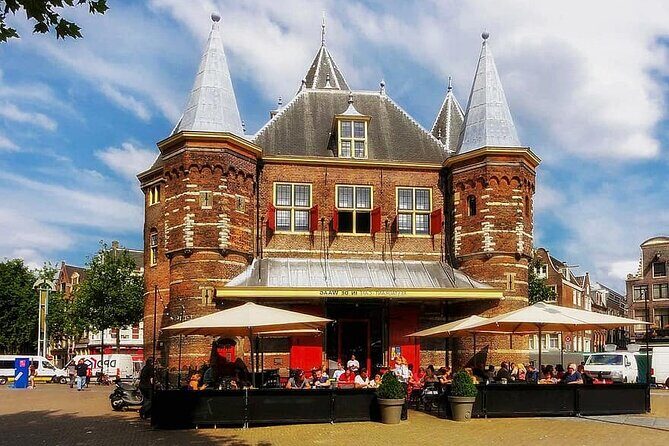
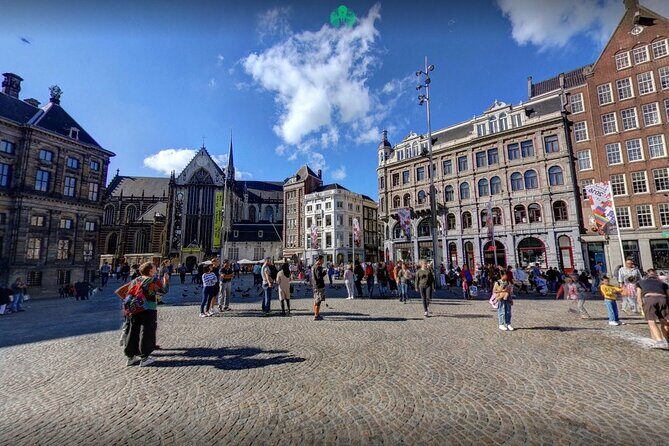
Your walk starts at Dam Square (Dam, 1012 Amsterdam) and ends at the Belle (Sex Worker Commemorative Statue) near Oudekerksplein 19 (1012 GX). In about 35 minutes (approx.), you’ll cover a tight loop of street history, local landmarks, and the most talked-about pieces of the Red Light District area.
The biggest practical win is that the tour is laid out like a sequence, not a vague stroll. You get audio segments tied to your physical location, so you can keep moving while the story plays. If you’re the type who likes to pause often, you can. If you’re the type who likes speed, you can also keep a brisk pace.
One small reality check: Amsterdam’s Red Light District is not quiet. Even with a guided-feeling audio track, you’ll still hear street noise and see the full mix of day-to-day visitors. Your best move is to treat the audio like your steady guide and let the neighborhood be the neighborhood.
You can also read our reviews of more guided tours in Amsterdam



VoiceMap on GPS and offline audio: the real-world value
This experience runs on the VoiceMap Audio Tours app. The audio plays automatically as you approach each stop using phone GPS. The key detail here is that it also supports offline access for audio, maps, and geodata, so you can walk without constantly feeding your phone with data.
In practice, that means less fiddling. You’re not constantly reloading content or hunting for a signal. And because the tour is self-paced, you can adjust when the street gets crowded near a window area or when you pause for a photo.
One tip I’d take from experience with this kind of app: download the audio/maps when you have Wi-Fi before you start the walk. One benefit of downloading early is that it reduces the chance of missing segments if your connection is weak once you’re outside.
You can also expect the audio to be easy to understand and to come with clear walking directions plus helpful cues. Several people highlight that the sound prompts help you stay on the route even when you keep your phone in your pocket and just follow the segment logic.
Stop 1: the Red Light District lesson that starts with tolerance
The first audio stop basically tells you to look past the stereotypes and the obvious party energy. You’re asked to notice that this is a living neighborhood, not a theme park. It points at Dutch tolerance and pragmatism as part of why this area looks the way it does.
It also includes a heads-up: this tour contains sexual themes. That doesn’t mean it becomes graphic, but it does mean you should be mentally ready for the subject matter and the street reality.
Why this first stop matters: it sets the tone for the rest of the route. If you start with the idea that you’re walking through a neighborhood that’s been shaped by policy, culture, and economics, the later stops land better. If you start with only shock or only curiosity, you may miss the deeper point the audio is trying to make.
Stop 2: Zeedijk and Amsterdam’s flood-protection story
Next up is Zeedijk, literally a sea-dike. The audio explains that it’s a former dike or flood protection wall, most likely built around the 1100s to protect early Amsterdam from the tides of the sea.
This is a smart twist in the pacing. Instead of staying only on the most sensational headlines about the district, the tour reminds you that Amsterdam’s big defining force is water management. You’ll look at the street layout differently after hearing the flood-protection context.
A practical note: when you’re standing on a busy street, it can be easy to assume history is just a museum thing. Here, history is built into the shape of the city. That makes the walk feel more like place-reading than sightseeing.
Potential drawback: this stop is historical. If you’re hoping for more immediate, window-focused street interpretation, you might feel the story slows down. On the other hand, this is often the stop that turns the experience from awkward to genuinely interesting.
Stop 3: Nieuwmarkt Square, markets, and that hipster energy
The route then connects you to Nieuwmarkt Square. The audio gives you a sense of how changeable it can be: depending on the time of year, it might feel empty, it might host a market, or it might be running some sort of carnival activity. It also frames Nieuwmarkt as a hotspot for today’s hipsters.
This is one of those segments that works whether you’re doing the tour early in the day or later. You’re not stuck with a single scene. You’re given a framework to read what’s happening around you.
What I like about this stop is that it pushes you to notice street-level Amsterdam culture without making it complicated. You can glance at the square, hear the context, and move on. It’s a small reset before the tour gets very specific again at the next stops.
You can also read our reviews of more tours and experiences in Amsterdam





Stop 4: Belle, Els Rijerse’s statue, and Mariska Majoor’s intent
Then you get to the centerpiece that gives the whole experience its most grounded meaning: Belle, made by Dutch artist Els Rijerse. The audio explains it was created by request of Mariska Majoor, founder of the Prostitutes Information Center, and that the statue’s aim is to encourage respect.
This is where the self-guided format really helps. You can stand at the end point and actually take it in without feeling rushed by a group schedule. And because the audio is short and organized, it doesn’t overload you with interpretations.
Why this stop matters: the tour doesn’t only point at sex work as spectacle. It links the subject to dignity, respect, and an organization that focuses on information and support. That framing tends to make the rest of the neighborhood feel less like a caricature.
One caution: because Belle is tied to a sensitive topic, you’ll still notice how people behave around you—some will be curious, some will be awkward, some will be loud. Your best strategy is simple: focus on the audio’s message, not the surrounding reactions.
Stop 5: de Oude Kerk site basics, from wooden church to brick hall
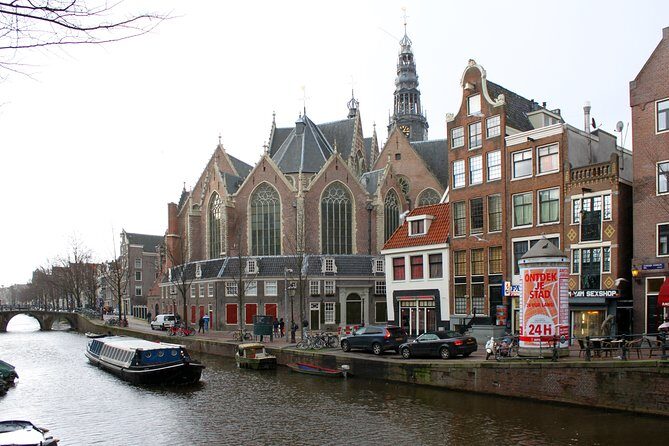
The last major segment centers on the site of de Oude Kerk. The audio explains that the first wooden church at this site dates to the 1200s, and that it was replaced in 1306 by a brick structure. You’ll hear that today the main hall remains, with other parts added over the centuries.
This is history that feels close-up because it’s presented as a timeline you can picture while you’re walking. You’re not forced to imagine a faraway landmark. You’re standing in the old-city layer of Amsterdam, where centuries stack next to each other.
This stop also gives you a different kind of balance. The Red Light District is one of Amsterdam’s most controversial areas, and it’s easy to get stuck in moral debate only. The church timeline is a reminder that the city has always been made of practical changes: structures replaced, rebuilt, expanded.
Sex themes, street reality, and how to stay respectful
Because the tour contains sexual themes, you should treat it like adult content, even though it’s delivered through audio rather than live commentary. The warning at the start is not just legal wording. It sets expectations so you’re not surprised while walking.
You’ll also be moving through a neighborhood where people can be both casual and intense. If you’re the kind of person who hates uncomfortable social energy, go in with a plan: keep your attention on the audio segments and on the historic context the route provides. Don’t engage with strangers. Don’t stare longer than you’d like to be stared at. And if the street is too much, pause the app and step aside for a minute.
The good news is that this experience is built to be compliant with regulations that bar Red Light District tours in the usual sense. That matters because it’s not trying to run a scripted group tour. It’s asking you to walk and listen.
Price and value: what $9.99 buys you in Amsterdam terms
At $9.99 per person, this tour is priced for real use, not big-ticket attraction thinking. You’re not paying for museum tickets or transport. You’re paying for a short story-driven walk in a place where context is everything.
You also get lifetime access, which means you’re not locked into a single day. If you want to revisit the route later, or if you return to Amsterdam, you can do it again without paying twice.
The other value angle: offline support. In busy city walking, losing data is common. Having offline audio and maps reduces friction and helps you avoid the usual self-guided frustration of an app going silent when your connection dips.
Time value is strong too. Roughly 35 minutes means it can fit into a half-day schedule. If your day is already packed with canals, museums, and neighborhoods, this won’t steal hours from the rest of your plan.
Who this self-guided audio tour is best for
This tour fits best if you like:
- Self-paced walking with the option to pause and replay
- Clear directions that help you avoid getting lost in busy streets
- Context over shock, especially about why the district looks and functions the way it does
It’s also a good match if you don’t want a live guide in the mix. If you’ve heard that live Red Light District tours can be restricted or limited, a self-guided audio approach can feel more practical.
Skip it if you want:
- A long, interactive explanation session
- A focus on very specific sights not included in the route
- A social group experience with a conversation-led guide
One more practical point from the way people describe the route: the audio is tied to location and starts automatically as you arrive at each stop. That makes it easier if you like keeping your phone out of constant use and just following the segment cues.
Practical tips before you go
Here’s how you can set yourself up for a smoother walk:
- Charge your phone fully. You’ll be using GPS and playing audio.
- Use Wi-Fi to download the audio/maps ahead of time. If your connection isn’t great, that extra step helps.
- Plan for crowds near the most famous areas. Even if your route is orderly, the neighborhood can get busy.
- Keep your expectations realistic: it’s a short 35-minute tour, not an all-day narrative history of Amsterdam.
Also, it’s offered in English, so if that’s your comfort zone you’ll be set. If you prefer other languages, you’ll want to check availability before booking.
Service animals are allowed, and the meeting/end points are near public transportation. That’s helpful in a city where walking is common but you still may want a quick transit hop at the end.
Should you book this Amsterdam Red Light District audio tour?
Book it if you want a respectful, rules-friendly way to understand what you’re seeing without a live group tour. The GPS-triggered audio, offline playback, and clear directions make it a low-stress format, and the stops at Zeedijk, Nieuwmarkt Square, Belle by Els Rijerse, and the de Oude Kerk timeline give you more than just street spectacle.
Skip it if you’re craving a long guided experience with lots of live Q&A, or if you’re hoping to see a wider set of specific sights beyond what this route covers. At $9.99, it’s a good value bet for a focused walk, but it won’t act like an all-inclusive Amsterdam history course.
If you’re curious, a bit cautious, and you like learning while you walk, this one is an efficient way to turn a controversial neighborhood into a place you can actually read.
FAQ
How long is the Amsterdam Red Light District self-guided audio tour?
The tour runs for about 35 minutes.
Where does the tour start and end?
It starts at Dam Square and ends at Belle (Sex Worker Commemorative Statue) at Oudekerksplein 19, 1012 GX Amsterdam.
What language is the audio offered in?
The tour is offered in English.
Does the audio work offline?
Yes. You get offline access to audio, maps, and geodata.
Do I need a smartphone for this experience?
Yes. A smartphone is not included.
What’s included in the price?
You get lifetime access to the Amsterdam Red Light District tour, plus the VoiceMap application with offline audio support.
Are transportation or tickets included?
No. Transportation and any museum or attraction tickets are not included.
Can I cancel and get a refund?
No. The experience is non-refundable and cannot be changed for any reason.