REVIEW · AMSTERDAM
Amsterdam: Official Audio Guide for Rijksmuseum Visit
Book on GetYourGuide →Operated by GetYourGuide Tours & Tickets GmbH · Bookable on GetYourGuide
Rijksmuseum can feel huge at first. This audio guide helps you move through the museum with confidence, using a search tool and an interactive floor plan to get to the works you actually came for. I like that you can follow guided-style routes (Rembrandt, highlights, or the building), and I also like that you can switch to self-guided exploration without getting lost. One thing to watch: the audio guide does not include the museum entrance ticket, so you’ll need to buy that separately.
What makes this experience practical is the way it reduces decision fatigue. Instead of wandering randomly, you can look up a painting by name or number and then follow the fastest route to it. You still get stories from the museum plus expert and artist interviews, so the visit feels more thoughtful than a quick circuit.
In This Review
- Key highlights you can actually use
- What this Rijksmuseum audio guide does for you (and what it doesn’t)
- The interactive floor plan: your anti-lost map in a big museum
- Choosing a route: Rembrandt, highlights, or the building itself
- Using the search tool to go straight to Milkmaid and other favorites
- Expert and artist interviews: when the audio adds meaning
- How to plan a one-day Rijksmuseum visit with this guide
- Price and value: is $8 a smart add-on?
- Language support and accessibility you can plan around
- The best fit: who should book this audio guide
- Should you book this Rijksmuseum audio guide with navigation?
- FAQ
- Does the audio guide include the Rijksmuseum entrance ticket
- How long is the audio guide valid for
- What languages are available in the audio guide
- What tools are included besides the audio
- Can I use the guide to find a specific painting fast
- Is the experience wheelchair accessible
- What’s the cancellation policy
Key highlights you can actually use
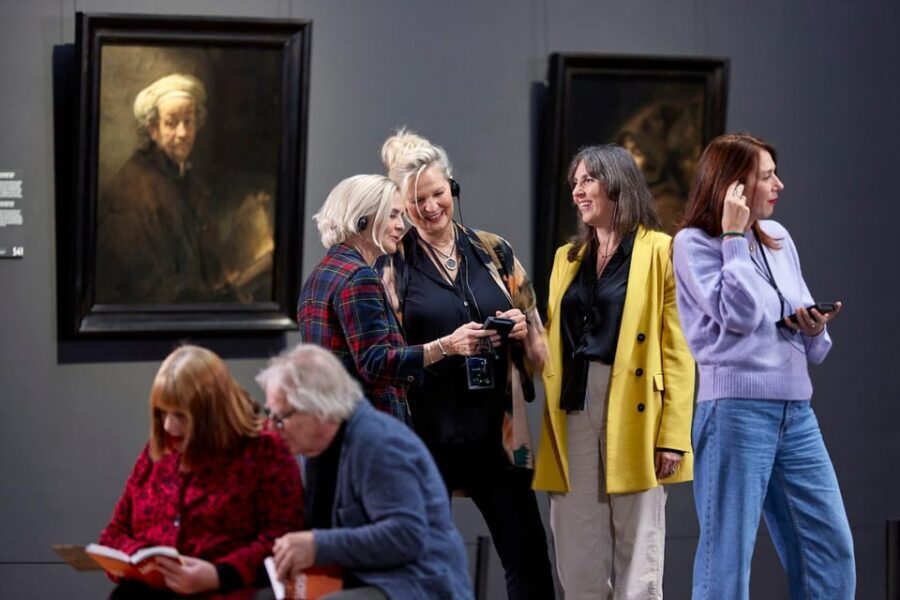
- Audio tours in multiple languages, including Dutch Sign Language plus English and several others
- Interactive floor plan + navigation tool for moving gallery to gallery
- Search by work number or name to find objects you care about
- Fast routing options like the quickest way to Milkmaid by Vermeer
- Expert and artist interviews to add context beyond labels
- Numbered object lookups even when you are not following a set route
What this Rijksmuseum audio guide does for you (and what it doesn’t)
For $8 per person, you’re paying for the guidance layer, not the museum admission. The museum itself is a ticketed experience, and you buy that separately. That division matters, because you’ll want to plan your day around when you’ll enter the Rijksmuseum, then let the audio guide do the work once you’re inside.
The main promise here is simple: you get an audio guide experience with tools that help you stay oriented. You can pick a tour path (Rembrandt, highlights, or the building) or use the navigation tool and interactive floor plan to find your own way. In practice, that means the guide is built for people who want structure, and also for people who want control.
The content side is also useful. You get stories from the Rijksmuseum, plus interviews with experts and artists. That combination is a big deal in a museum like this, where a normal visit can turn into seeing a lot of paintings with little connection between them. Here, the audio is designed to give you threads to follow.
You can also read our reviews of more guided tours in Amsterdam



The interactive floor plan: your anti-lost map in a big museum
A museum floor plan sounds like a small feature until you’re standing in front of a wall and realizing you have no idea which way leads to the next room. This experience includes an interactive floor plan and a navigation tool to solve that problem.
The value is not only getting from point A to point B. It’s the feeling of momentum. When you’re able to see a route on the map and follow it, you spend less time recalculating and more time looking closely at the art.
You also get a method that fits real museum behavior: search, then route. The guide is set up so you can find works by number or name and then navigate to them using the fastest route option. That’s especially helpful in a place where the galleries can blur together if you’re relying only on signage.
If you like making a short list of must-sees, the interactive floor plan turns that list into an efficient path instead of a wish list.
Choosing a route: Rembrandt, highlights, or the building itself

You can take different tours depending on your mood that day. The experience offers routes like:
- A tour tied to Rembrandt
- A route focused on the museum highlights
- A route centered on the building
That range matters because it changes what you pay attention to. If you choose a Rembrandt route, you’re likely to see connections in technique, storytelling, and themes rather than treating each painting as a random stop. If you pick highlights, you’ll get a broader overview that helps you understand what people talk about when they recommend the Rijksmuseum. And if you lean into the building, you’re shifting focus from the art alone to how the museum space shapes your experience of the art.
You’re not locked into one mode, either. Even without following a named tour, you can still enter information for numbered objects into the app’s search tool to read more details about the artist or work. That flexibility is one reason this kind of guide can feel better than a rigid tour.
Using the search tool to go straight to Milkmaid and other favorites
This is where the guide becomes more than audio. You can search for works by number or name, and you can use it to look up information about works and where to find them in the museum.
The experience specifically calls out practical examples, like using the guide to get the fastest route to Milkmaid by Vermeer. It also mentions finding paintings by Van Gogh and Mondriaan. Even if Milkmaid is not on your list, the underlying function is what you’ll value: you’re able to target works quickly instead of relying on memory or guessing.
There’s a smart advantage to searching by number. Museums often label objects with numbers that don’t translate well from quick glances at a wall. If you can type in a number and then have the guide tell you what it is and where it is, you lose less time.
I also like that the guide works when you’re browsing. If you stumble on a painting and want to understand it, you can look up details without needing to be on a set tour route.
Expert and artist interviews: when the audio adds meaning
Audio guides often fall into two traps: either they read like a textbook, or they sound generic. Here, the guide includes stories from the Rijksmuseum plus interviews with experts and artists. That format is useful because interviews tend to answer the questions you naturally have while looking: What should I notice? Why does this work matter? What’s going on in the artist’s thinking?
In a museum visit, labels give you facts. Interviews and stories can give you interpretation. You end up spending more time in front of each work because your attention has a target.
Language options also play into this. The guide is available in multiple languages, including English, French, Spanish, Italian, German, Chinese, and Russian. Dutch Sign Language is also available through the tour options. That matters if you’re traveling with mixed language skills or if you personally prefer hearing the stories in a specific language.
If you’re the kind of visitor who likes to read some, listen some, and then look longer, this format fits well.
You can also read our reviews of more tours and experiences in Amsterdam






How to plan a one-day Rijksmuseum visit with this guide
This is listed as valid for 1 day, with starting times available based on availability. That should push you toward one clear strategy: decide how you want to spend your time first, then let the guide support that plan once you’re inside.
Here’s a practical way to use it without turning your day into a checklist:
1) Start with a route concept
Pick a tour theme: Rembrandt, highlights, or building stories. This gives your visit a backbone.
2) Use search to connect your must-sees
When you have a specific work in mind (for example, Milkmaid by Vermeer), search it by name and follow the fastest route. That prevents detours.
3) Leave room for numbered lookups
The guide lets you enter numbered objects to read details about the artist or work. If you see something that grabs you, you can pause and learn without needing to commit to a full stop in the route.
4) Balance listening time with looking time
Audio is most helpful when it turns your attention into better looking, not when it replaces looking. Use it to understand what you’re seeing, then spend more time letting your eyes do the work.
If your day is short, the navigation tools are the real advantage. If your day is longer, the interviews and stories can help you slow down and connect ideas across rooms.
Price and value: is $8 a smart add-on?
$8 per person is not a big line item, but it can still feel like extra if you’re planning to rely on signage and brochures. So the question isn’t the price alone. It’s what you get for that $8.
You get:
- Audio guide content in multiple languages
- Interactive floor plan and navigation tool
- Expert and artist interviews
- Search by work number or name, including routing to specific highlights
That bundle is a value win if you care about efficiency and context. The Rijksmuseum is popular, and time disappears fast when you’re trying to locate specific works. Being able to search and get a fastest route can reduce wasted walking.
It’s also a value win if you want a more meaningful visit. Without audio, you can still enjoy the art. But with stories and interviews, the same paintings can feel more connected and easier to remember.
Just keep one thing straight: you’ll pay museum admission separately. Once you account for that, the $8 still looks like a small cost relative to the experience quality you’re buying—especially if you’re the type who likes targeted viewing.
Language support and accessibility you can plan around
The audio guide is offered in multiple languages: Dutch, English, French, Spanish, Italian, German, Chinese, and Russian. Plus, Dutch Sign Language is mentioned as part of the available tour options.
That matters for planning because it reduces friction. You can choose a language that feels comfortable, and you can keep the experience consistent even if your group has different preferences.
Wheelchair accessible is listed as a feature as well. That doesn’t tell you everything about every corner of the building, but it does confirm that the experience is designed with mobility needs in mind.
The best fit: who should book this audio guide
This guide is most worth it if you:
- Want to spend your time intentionally, not wandering for hours
- Have a list of specific works you want to find quickly
- Like listening to stories and interviews while you look
- Travel with people who benefit from different language options
It’s less ideal if you:
- Prefer completely independent museum wandering with no digital tools
- Expect the guide to include the museum entrance ticket (it doesn’t)
- Want a fully guided, on-your-feet human tour (this is an audio and navigation experience)
The rating here is 3.5 out of 5 from 20 reviews. That tells me the experience works well for many people, but not everyone finds it helpful the same way. The good news is that the tools support both modes: follow a route or explore freely with search.
Should you book this Rijksmuseum audio guide with navigation?
If you’re planning a one-day Rijksmuseum visit and you want to see more of what you came for, I think booking makes sense. For $8, you’re getting both content (stories, expert and artist interviews) and practical navigation (interactive floor plan, fastest routes, search by number or name). That combination helps you avoid the most common museum problem: walking around without a plan.
Just don’t forget the key tradeoff: the museum entry fee is separate. If you already plan to buy the Rijksmuseum ticket, the audio guide is a low-risk upgrade that can make your day feel smoother and more connected.
If you like museum experiences that feel guided without forcing you to stick to a group pace, this one is worth considering.
FAQ
Does the audio guide include the Rijksmuseum entrance ticket
No. The audio guide experience does not include museum entry. You need to buy the entrance ticket separately.
How long is the audio guide valid for
It’s valid for 1 day. You’ll need to check availability for the starting times.
What languages are available in the audio guide
The audio guide is offered in Dutch, English, French, Spanish, Italian, German, Chinese, and Russian. Dutch Sign Language is also listed as an option in the tour choices.
What tools are included besides the audio
You get an interactive floor plan and a navigation tool, plus the ability to search works by number or name.
Can I use the guide to find a specific painting fast
Yes. The guide supports finding the fastest route to works, and you can search for items by number or name. It specifically mentions routing to Milkmaid by Vermeer.
Is the experience wheelchair accessible
Yes, wheelchair accessible is listed.
What’s the cancellation policy
Free cancellation is available up to 24 hours in advance for a full refund.