REVIEW · ROTTERDAM
Rotterdam: Steamship Rotterdam Audio Tour Entry Ticket
Book on GetYourGuide →Operated by ss Rotterdam · Bookable on GetYourGuide
This ship is a time machine with a soundtrack. The SS Rotterdam is the biggest oceanliner ever built in the Netherlands, a former Holland-America Line flagship moored permanently in Rotterdam, by Katendrecht. With an included audio guide, you pick your route and walk the decks (and parts below) like a passenger who never made it off for good.
I really like the ship’s “real use” feeling: you’re not just looking at props, you’re moving through spaces meant for travel life—bow views, bridges, chart and radio areas, and styled passenger rooms. I also like the break you get built into the day, with time to sit on the ship’s terrace with a drink or snack after you’ve finished your walk. One thing to plan for: the start can feel confusing at first, so give yourself a few extra minutes to find the correct deck and begin listening.
In This Review
- Key things you’ll notice fast
- Rotterdam’s SS Rotterdam: a ship museum you can actually walk
- Choosing your route: Complete, Seabreeze Deluxe, or Steam and Chrome
- Finding your start point on board without losing the afternoon
- Upper decks and the bow: big views, ship-built drama
- Passenger interiors: stylish rooms that explain how travel felt
- Chart room, radio room, and the captain’s cabin
- The terrace stop: where your ship day gets a breather
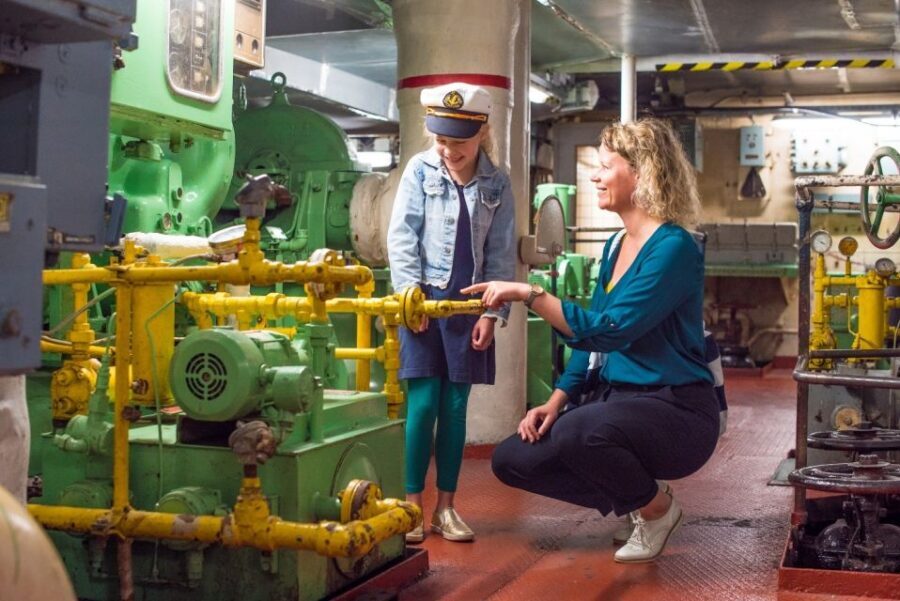
- Optional engine room time for machinery lovers
- How long it takes and how to avoid the disorientation trap
- Price and value: what $16 buys you (and what you may add)
- Who should book this audio tour (and who might want a different day plan)
- Should you book the SS Rotterdam audio tour?
- FAQ
- Where does the SS Rotterdam audio tour start?
- How long is the audio tour?
- What tour options can I choose?
- Is the audio guide included?
- What languages are available for the host or greeter?
- Can I cancel for a full refund?
- Is there a reserve now & pay later option?
- Is it suitable for wheelchair users?
Key things you’ll notice fast
- Pick your tour style: Rotterdam Complete, Seabreeze Deluxe, or Steam and Chrome changes what parts of the ship you see
- See working-era rooms: chart room, radio room, and the original captain’s cabin are major highlights
- Luxury interiors, not a mock-up: passenger spaces show how 1950s–60s travel actually looked
- Orientation matters: the first minutes can feel disorienting before the route clicks
- Optional engine room time: an extra one-hour engine room tour can be worth it if you’re into machinery
- Food can fit the flow: grab coffee or a meal onboard after your self-paced sections
Rotterdam’s SS Rotterdam: a ship museum you can actually walk
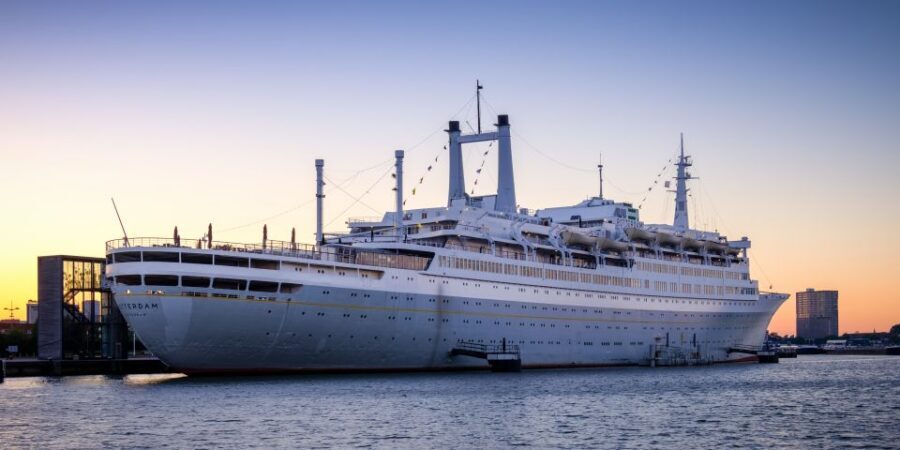
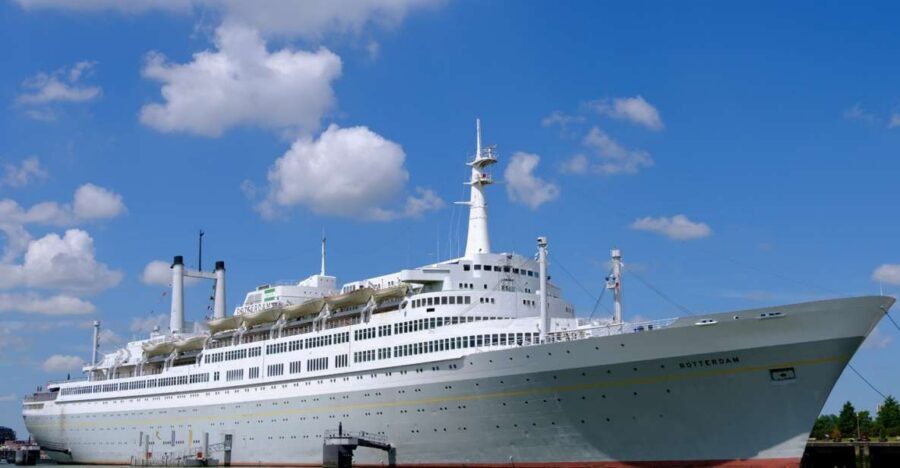
The SS Rotterdam isn’t just displayed behind glass. It’s permanently moored at the Maashaven and used as a hotel and event venue, so the experience has that odd-but-good mix of museum calm and real ship structure. You get to roam above and below the waterline and see how this kind of liner was designed for movement, comfort, and command.
If you’re into ship design, you’ll notice the scale right away. The bow looks like it could still push through waves, and the ship’s “monumental” forward lines make for strong photo angles. If you’re more into people and daily life, the styled interior spaces (built for passenger routines) do the heavy lifting.
You can also read our reviews of more tours and experiences in Rotterdam

Choosing your route: Complete, Seabreeze Deluxe, or Steam and Chrome
Your ticket gives you an audio guide, and then you choose between three tour options. The key is that each one changes your access to different areas of the ship.
- Rotterdam Complete Tour
This is the best fit when you want the broadest experience—more decks, more of the ship’s story, and more time spent in varied spaces.
- Seabreeze Deluxe Tour
This option tends to feel like a “great hits” version. You still get the liner vibe, but you may not see every far-flung corner that the Complete route covers.
- Steam and Chrome Tour
This one is ideal if you’re interested in the ship’s technology and functional side. It pairs well with people who like radio rooms, chart areas, and the “how it works” feel of a command vessel.
One practical tip: if you’re deciding between these options, think about your mood that day. If you want maximum variety, choose Complete. If you want a tighter, purpose-driven route, pick the one that matches your interest—especially if you plan to add time elsewhere in Rotterdam afterward.
Finding your start point on board without losing the afternoon
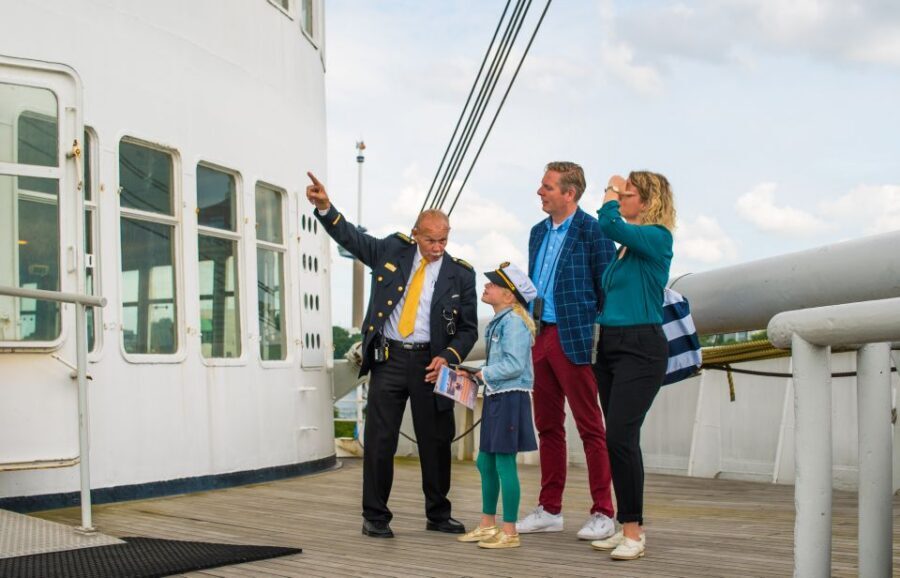
Getting your bearings is the most common make-or-break moment. People often expect clear signage the second they step aboard; instead, you may have to hunt a bit for where the route begins and where to collect the audio gear.
My advice is simple: when you arrive at the ship, head toward the gift shop area first. It’s a common starting point for sorting tickets and picking up the audio guide, and it usually cuts down the awkward wandering. Then start your route promptly, because once you’re moving, the ship’s layout makes more sense.
Also, watch your timing. The planned audio tour duration is about 2 hours, but if you add extra options (like an engine room tour), you should expect the day to stretch closer to 3 hours.
Upper decks and the bow: big views, ship-built drama
One of the best parts of this experience is how quickly the ship’s design turns into perspective. You walk through decks that feel tall and open, then you shift your attention to the forward spaces, including the bow area. Even if you’ve never been on a real oceanliner before, you’ll understand why liners looked grand from the outside—this place is built to be seen.
You’ll also notice ship hardware: windlasses and the kind of working structures that show up in engineering spaces and bridge-adjacent areas. These are not decorative touches. They point to the ship’s original job—moving people across oceans with systems that had to be reliable every day.
If the weather is clear, take your time near the forward sections. That’s where the sense of scale really lands, and where you can plan a few photos without feeling rushed.
Passenger interiors: stylish rooms that explain how travel felt
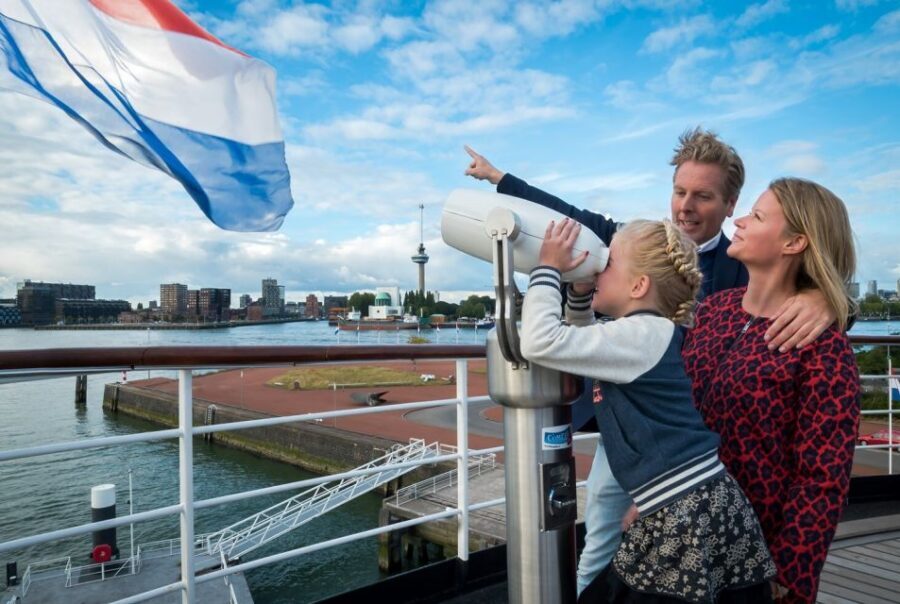
The interior areas are where the SS Rotterdam earns its keep. This ship doesn’t just look “old”—it looks designed. The passenger spaces have the feel of 50s and 60s luxury, with rooms that communicate privacy, routine, and social life.
As you move through the interior, keep an eye out for how the ship “channelizes” movement. There are clear paths, doorways, and transitions that made sense when people dressed up and moved between dining, lounges, and cabins on a schedule. The result is that you start to imagine the passenger day: where you’d stroll, where you’d wait, and where you’d want to be when the ship was rolling.
A nice bonus is that the ship is now used as a hotel and conference centre, so the interior experience has a living quality. You’re seeing restored areas in a real-world setting, not just a frozen display.
You can also read our reviews of more tours and experiences in Rotterdam



Chart room, radio room, and the captain’s cabin
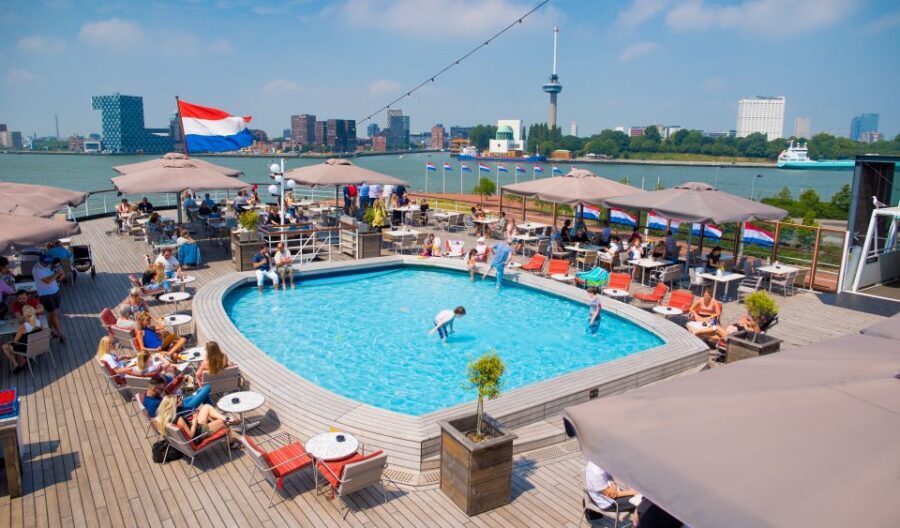
This is the part that most people remember after they’ve left the ship. The audio route takes you toward spaces tied to navigation and communication—specifically the chart room and radio room—and then onward to the original captain’s cabin.
Even if you’re not a tech person, you’ll feel the shift in tone. These rooms are built around decisions and control, not comfort. The chart room connects you to route planning and mapping. The radio room helps you picture how ships communicated across distance, long before today’s devices made everything instant.
The captain’s cabin adds the human layer. It’s the closest you can get to how command leadership was physically represented on board—private, structured, and positioned for authority. If you’re the type who enjoys museum spaces that show roles and jobs clearly, this section delivers.
The terrace stop: where your ship day gets a breather
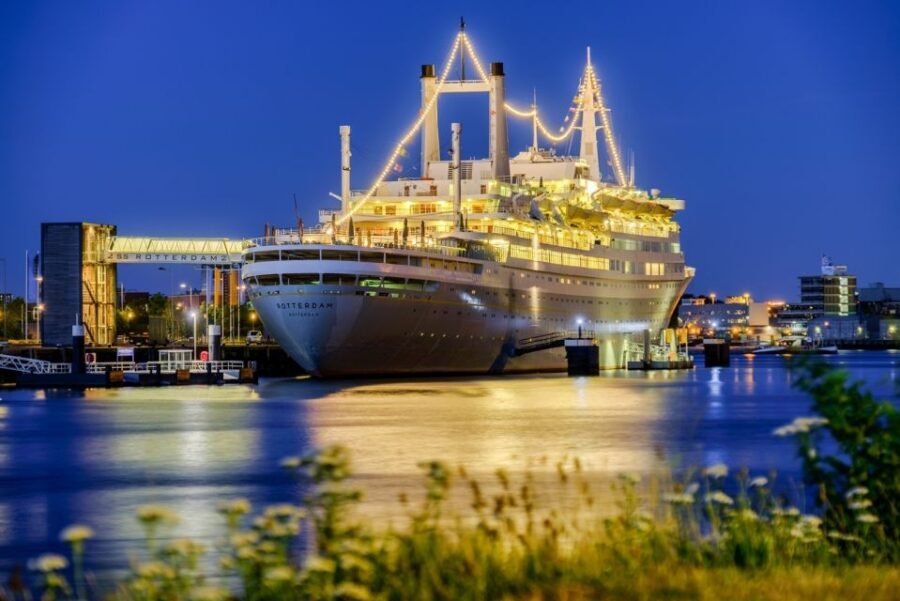
You don’t have to race through SS Rotterdam. There’s time to slow down and take in the ship from a different angle, especially on the terrace. You can grab a drink or a bite, and this is a great moment to reset after walking.
If you’re hungry, plan around food while you still have energy to explore. Coffee and cake onboard have gotten a clear nod from visitors, and a lunch stop can make the overall day feel complete instead of like just “a walk-through.”
And if you’re visiting in better weather, treat the terrace as your reward zone. It’s one of the few places where the ship stops feeling like a museum and starts feeling like a ship you could stay on.
Optional engine room time for machinery lovers
There’s an extra one-hour engine room tour that some visitors choose to add. If your interest leans toward ship mechanics, propulsion, and how large liners actually run, this upgrade can turn the day from ship beauty into ship systems.
From what you can expect, the engine room route is led by a guide, and it’s described as a standout component—especially for people curious about diesel engines and the technology behind ship movement. Even if you normally skip engineering sections in museums, this is worth considering if you want a practical understanding of what powers the place you’re touring.
If you’re not into that kind of topic, you can stick to the main audio route options and still have a full, satisfying ship day.
How long it takes and how to avoid the disorientation trap
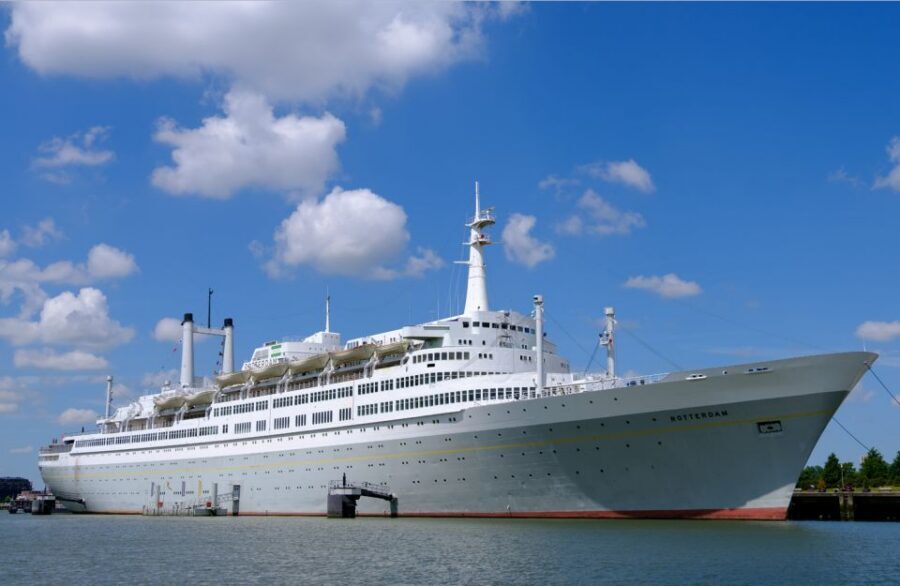
The tour length is listed at about 2 hours for the audio route. In real life, your time depends on how often you pause for photos, how quickly you navigate the ship, and whether you add any extra guided options.
One thing that can slow people down: portions of the audio route involve walking and listening with checkpoints. If you hit a checkpoint where the audio feels off, or if you’re trying to follow signage in a big ship layout, you might take longer to understand where you’re meant to go next.
My fix is also simple: build in patience for the first 10–15 minutes. Once you’ve found your flow—deck to deck, room to room—the experience tends to click.
Also, the ship day can be a bit longer than expected if you choose add-ons. It’s smart to keep your other Rotterdam plans flexible unless you’re very sure about how much time you want to spend onboard.
Price and value: what $16 buys you (and what you may add)
At about $16 per person, the big value comes from two things: you get access to multiple parts of a major historic liner, and you get an audio guide included. For many visitors, that combo is what makes the cost feel reasonable—especially compared with paid-entry museums that only show a small slice of a property.
The trade-off is that you’re responsible for your own navigation during the audio sections. If you want maximum handholding, the visit may feel a little self-guided. Still, the ship itself is the star, and the route covers enough meaningful rooms—interiors plus command areas—to keep your time from feeling wasted.
If you’re deciding whether to spend more, the engine room upgrade is the clearest “value add” option mentioned in visitor experiences. If ship systems matter to you, that extra hour can justify the extra money because it adds a whole new type of learning.
Who should book this audio tour (and who might want a different day plan)
This tour is a strong match if you:
- Like ship history tied to real spaces, not just photos
- Enjoy audio walks through complex buildings
- Want a mix of comfort-and-command areas—passenger interiors plus chart and radio rooms
- Are traveling with at least one person who likes technical details
It may be less ideal if you:
- Hate any amount of figuring out signage on your own
- Prefer fully guided tours where someone stays with you the whole time
- Have trouble navigating large indoor spaces at your own pace
There’s also mixed information on mobility. The info says wheelchair accessible, but it also notes it’s not suitable for wheelchair users. If this matters for you, you should check directly with the operator before you commit.
Should you book the SS Rotterdam audio tour?
Yes, I’d book it if you want a practical, weather-proof Rotterdam activity that feels like an actual ship day. The combo of passenger interiors plus the chart room, radio room, and captain’s cabin is what makes this more than a casual stroll.
I’d think twice if you’re expecting perfect wayfinding from minute one or if you need a completely guided experience. In that case, you might still enjoy it, but you’ll want to arrive with extra time to get oriented, and you may want to consider adding the engine room tour only if your interests are strong.
If your goal is a memorable Rotterdam “do something real” day—one that mixes design, scale, and ship operations—this audio tour fits the bill.
FAQ
Where does the SS Rotterdam audio tour start?
The meeting point is ss Rotterdam, 3e Katendrechtse Hoofd 25, 3072 AM Rotterdam, Netherlands.
How long is the audio tour?
The duration is approximately 2 hours.
What tour options can I choose?
You can choose between the Rotterdam Complete Tour, the Seabreeze Deluxe Tour, or the Steam and Chrome Tour.
Is the audio guide included?
Yes. The audio guide is included, and it’s available in Dutch, English, French, and German.
What languages are available for the host or greeter?
A host or greeter is available in Dutch, English, French, and German.
Can I cancel for a full refund?
Yes. You can cancel up to 24 hours in advance for a full refund.
Is there a reserve now & pay later option?
Yes. You can reserve now and pay later.
Is it suitable for wheelchair users?
The information provided is mixed: it says wheelchair accessible, but it also says it’s not suitable for wheelchair users. If mobility access is important, check with the operator before booking.