REVIEW · AMSTERDAM
Private tour: Your own Amsterdam: walk through the old city
Book on Viator →Operated by Snurk.Travel · Bookable on Viator
Rain turns Amsterdam into a storytelling machine. This private, 3-hour old-city walk strings together the Golden Age in a way that feels human, not like a lecture. I especially like the tight historical thread from Amsterdam Centraal to the Jewish Quarter, and I love the way the guide talks details through real places, from church politics to Rembrandt’s world. One thing to plan for: the Portuguese Synagogue admission is not included.
You’ll meet at Amsterdam Centraal and end at the Portuguese Synagogue of Amsterdam (so plan transport for the finish). The tour runs in English, uses a mobile ticket, and it’s just your group—so you can ask questions without waiting for a big crowd to catch up.
I’ve seen the kind of energy this tour gets: guides like Anna, Sasha, and Oleksandr have been singled out for staying focused even when weather turns nasty, and for adjusting to what people want to know on the spot. If you’re the type who likes history you can point to, this is your kind of walk.
In This Review
- Key points you’ll actually care about
- Meet at Amsterdam Centraal, Then Follow the Golden Age Thread
- St. Nicholas Basilica: Catholic vs Protestant in Plain Sight
- ’t Aepjen Bar and the Oldest Wooden House Feel
- Chinatown Break: A Quick Look at Another Amsterdam
- Nieuwmarkt and De Waag: Myths, Punishments, and the Anatomical Theatre
- Rembrandt House: Extra Attention to the Artist’s Fate
- Portuguese Synagogue Finish in the Jewish Quarter
- Price and Value: Is $265.05 per Person Worth It?
- What to Bring (Because Food and Tickets Aren’t Covered)
- Should You Book This Private Walk Through Amsterdam’s Old City?
- FAQ
- How long is the private walk through Amsterdam?
- Is this tour private?
- What language is the tour offered in?
- Where do we meet and where does it end?
- What’s included in the price?
- Are coffee, tea, or snacks included?
- Is admission included for every stop?
- Is the tour suitable for most people?
- Can I cancel and get a full refund?
- Is a ticketing process used on the day?
Key points you’ll actually care about
- Private old-city routing: your group walks at your pace from Centraal toward the Portuguese Synagogue.
- Mostly free stops: several key sights include free admission for the time you’re there.
- Big themes in small steps: Golden Age religion, war consequences, Dutch drinking culture, and Jewish diaspora.
- A special focus on Rembrandt: you’ll spend extra time on his life, talent, and what mattered to succeed as an artist.
- Guide flexibility: the tour can bend toward your questions and comfort level when needed.
Meet at Amsterdam Centraal, Then Follow the Golden Age Thread

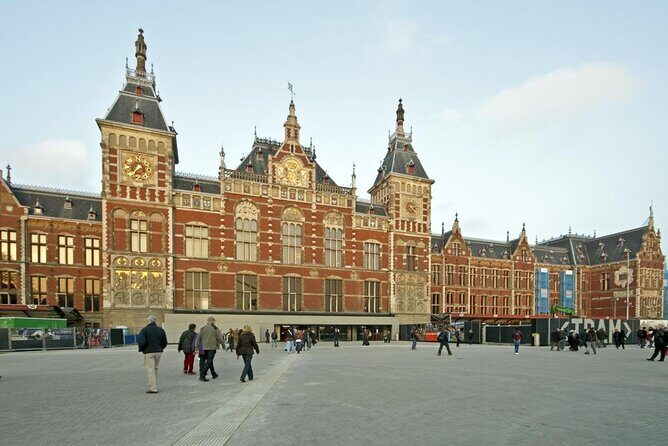
Amsterdam Centraal is more than a transit hub. It’s a clean starting point and a strong “why Amsterdam matters” moment, right where the city’s older energy still feels close to the surface. You’ll meet at Stationsplein 13a, 1012 AB, and the guide kicks things off with a Golden Age overview designed to give you context before you start turning corners.
This is smart pacing. If you walk the old streets first without a framework, you tend to see pretty buildings and canals. With the framework first, you start spotting patterns: who had power, who built influence, and how religion, trade, and art shaped daily life.
The stop is short—about 15 minutes—so don’t expect a long museum-style start. Do come with shoes that work on cobblestones and a willingness to stand still for a moment or two. You’ll appreciate it more.
One practical note: since you’re meeting at a major station, it’s easy to arrive on public transport. The route also lets you stop and regroup as you go, which is useful when the group gets mixed interests.
You can also read our reviews of more walking tours in Amsterdam



St. Nicholas Basilica: Catholic vs Protestant in Plain Sight
Next up is the St. Nicholas Basilica (St. Nicholas Cathedral), and it comes with a twist. Even though this church was built after the Golden Age, the guide uses it to explain something that does belong to that era: the push and pull between Catholics and Protestants, and the consequences of the Eighty Years’ War.
This is where the tour gets more than postcard-viewing. You’re not just looking at architecture. You’re learning why major conflicts leave fingerprints on everyday institutions, including churches. It helps you understand Amsterdam’s long-running cultural mix without turning it into a textbook.
You’ll spend around 15 minutes here, with free admission for the time you’re there. That short stop length matters. It’s enough to connect the dots, but it won’t drain your legs before the darker, weirder parts of the city story start showing up later.
If you’re sensitive to religious history, you might want to mentally prepare for the topic to come up in a straightforward way. The upside is that it’s framed around “what changed and why,” not just drama for drama’s sake.
’t Aepjen Bar and the Oldest Wooden House Feel
Then you step into a very Amsterdam kind of scene: ’t Aepjen, an authentic bar located in one of the oldest wooden houses in the city. This is a clever pivot from wars and churches to something you can actually imagine in your own evening plans.
Here, the guide turns to Dutch drinking traditions and what they say about national mentality. You’ll hear about favorite drinks and the ritual of social life, and you’ll connect the culture to celebrations and even game-playing traditions.
There’s also an art layer to this stop. The guide uses paintings by artists like Jan Steen and Frans Hals to help explain the attitude behind the scene—how ordinary life got recorded and even teased through art. Even if you’re not an art person, you’ll likely enjoy this because it’s not just facts; it’s story logic.
Time is about 15 minutes, and admission is free for the visit portion. Don’t expect a tasting deal or a bar program. Since coffee and snacks are not included, this is more of a cultural stop than a food stop. Still, it can be a great moment to reset with a drink if you want to continue the theme on your own after the guide finishes.
Chinatown Break: A Quick Look at Another Amsterdam
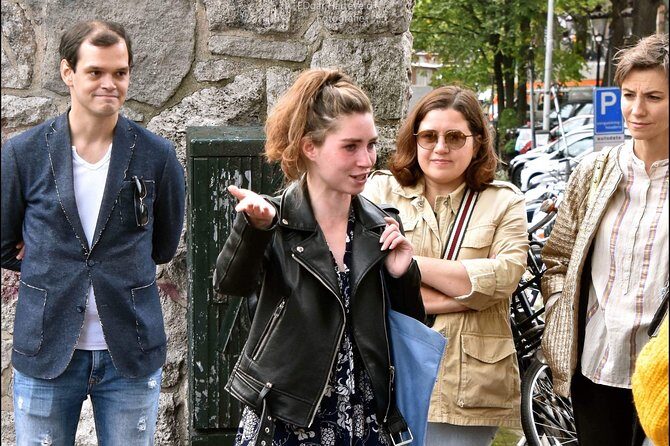
The tour then moves into Chinatown for about 15 minutes. It’s brief, but it gives you a useful reminder: Amsterdam wasn’t only shaped by the Golden Age “core.” Later waves of community life also left a visible imprint.
In a short stop like this, you won’t get a deep historical lecture. Instead, you’re getting a sensory change in the route—different street energy, different shopfront vibes, and a different kind of cultural story to hold alongside the older Dutch one.
This stop works well if you enjoy variety without losing momentum. It also breaks up the heavier historical stops coming next.
A small consideration: because it’s short, you’ll get the best value if you’re actively looking—signs, street life, and how the neighborhood feels compared to the earlier areas. If you’re mostly focused on stepping through quickly, you may miss the point.
Nieuwmarkt and De Waag: Myths, Punishments, and the Anatomical Theatre
Now the walk turns into the part you’ll remember after dinner: Nieuwmarkt and De Waag. You’ll spend about 30 minutes here, and it’s built around secrets, myths, and the strange mix of leisure and fear that the Golden Age could produce.
The guide points out why this square was popular for families to spend their leisure time around the former anatomical theatre. That contrast matters. It shows how normal life and big moral shock could live close together.
You’ll also hear about stories tied to witches, prisoners, and punishments—again, framed as part of how the Golden Age operated and how power worked through public spaces. It’s not meant to be a scare show. It’s meant to explain what people believed and how systems enforced those beliefs.
There’s an art connection too: the guide uses paintings connected to Rembrandt to illustrate the era. Even if you don’t know his work well, the tour is designed to make him feel like a person living inside these tensions, not a name on a museum wall.
As a practical matter, this stop runs long enough that your legs may start asking questions. It’s a good place to take in the surroundings slowly. If you want photos, do it here, because the tour’s later segments become more focused on specific biographies and places.
You can also read our reviews of more city tours in Amsterdam






Rembrandt House: Extra Attention to the Artist’s Fate
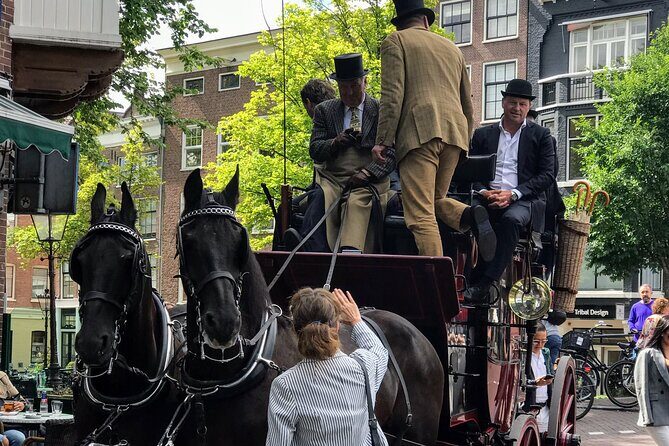
After De Waag, the tour gives special attention to the Rembrandt House. This is one of those moments where the guide slows down the story engine and focuses the lens on one person.
You’ll learn about Rembrandt’s life, talent, and fate, and you’ll hear what mattered for a successful artist in the Golden Age. This is valuable because it shifts the question from what Rembrandt produced to why an artist could rise, stay relevant, and survive changing tastes and economics.
This kind of focus can change how you see his paintings later. Instead of looking only at technique, you start thinking about context: patrons, reputation, and the risks artists took in public life.
The tour doesn’t promise an inside visit here based on the information provided. So treat this as a guided, on-the-ground emphasis—what you’re meant to absorb is the biography and the stakes tied to the place.
If you love art history, you’ll likely want more time afterward. If you’re not an art person, you can still enjoy it, because the story is tied to the human side: ambition, pressure, and survival.
Portuguese Synagogue Finish in the Jewish Quarter
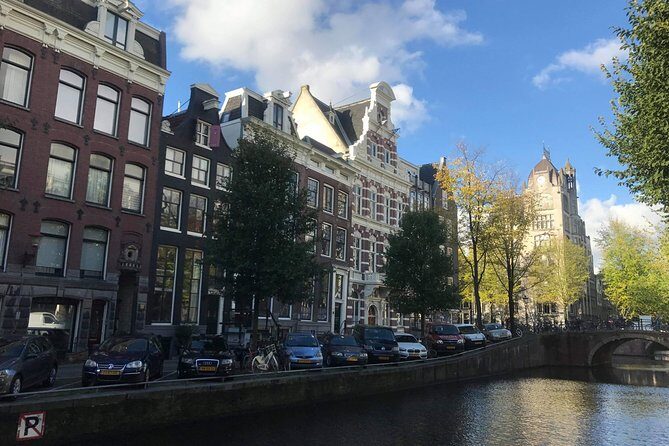
The final stop brings you to the Portuguese Synagogue of Amsterdam area in the Jewish neighborhood. You’ll spend about 20 minutes here, and the guide uses this quiet, distinct corner of the city to explain the Jewish diaspora in the Netherlands—their traditions, lifestyle, and rights.
The area is also handy for orientation. You might notice nearby landmarks like the Jewish Historical Museum and a famous flea market in the neighborhood. Even if you don’t go into museums, the neighborhood layout helps you understand why this area has its own identity within Amsterdam.
Important money note: admission here is not included. So if the synagogue itself is part of what you want to see, budget for the ticket separately. The good part is that the guide still prepares you with context, so you won’t just walk in cold.
This ending works especially well if you like closure: you’ve walked from major civic power (Centraal) to religious identity (churches) to cultural habits (a classic wooden-house bar) and then into a distinct community narrative. You end with a sense of Amsterdam as a set of overlapping worlds, not one single story.
Since the tour ends at Mr. Visserplein 3, 1011 RD, plan your next step before you leave. It can be easy to hop on transit, but you don’t want to be improvising with a tired group.
Price and Value: Is $265.05 per Person Worth It?
At $265.05 per person for about 3 hours, this is not a bargain. It’s priced like a true private experience, meaning you’re paying for an in-person guide who can tailor the walk to your questions and your pace.
Where it can feel like good value is in the way the tour reduces friction. You don’t have to plan the narrative yourself. You get a guided route that connects multiple themes—Golden Age religion and conflict, drinking culture, neighborhood identity, and Rembrandt’s personal story. You also get free admission for several of the stops, so you’re not hit with ticket costs at every corner.
If you’re traveling solo, the price can feel steep because you’re carrying the full private-guide cost. If you’re booking as a small group, the experience often becomes more reasonable—especially because the tour is private, not a crowded group where you can’t ask follow-ups.
My rule of thumb: book it if you want a guided story you can walk through on your own time later. Skip it if your plan is mostly photos and you’d rather wander on your own with a map and minimal talking.
What to Bring (Because Food and Tickets Aren’t Covered)
This tour includes an in-person guide and uses a mobile ticket. It does not include coffee/tea or snacks, so plan your energy.
Bring:
- Comfortable shoes for old-town pavement
- A light layer and rain protection (Amsterdam can change moods fast)
- Water if you tend to get thirsty during long walks
Weather resilience is part of this experience’s appeal. Even with rain and hail reported in feedback, the tour runs as a story-walk, not a fragile plan that collapses at the first wet cloud. Still, you’ll feel better if you come prepared.
Also remember the big ticket consideration: the Portuguese Synagogue admission is not included. If you know you want to go inside, you may want to handle that quickly when you arrive so the end of the tour doesn’t turn into a rushed scramble.
Should You Book This Private Walk Through Amsterdam’s Old City?
Yes, if you want a guided route that actually connects ideas, not just buildings. The structure is built for people who like history told through real locations: Golden Age politics, the Catholic-Protestant split, Dutch social habits, neighborhood change, and Rembrandt’s personal arc.
Book it if:
- You prefer private pacing over big groups
- You enjoy asking questions and getting direct answers
- You want a “starter kit” for Amsterdam that you can build on later
Maybe skip it if:
- You’re hoping for a museum-heavy day with long indoor time
- You don’t want to pay extra for the Portuguese Synagogue ticket
- You’re only interested in quick photo stops and don’t care about context
If you’re aiming for that sweet spot—3 hours of focused storytelling plus free-entry stops—this tour is a strong fit.
FAQ
How long is the private walk through Amsterdam?
It runs for about 3 hours.
Is this tour private?
Yes. It’s a private tour/activity with only your group participating.
What language is the tour offered in?
The tour is offered in English.
Where do we meet and where does it end?
You start at Amsterdam Central Railway Station, Stationsplein 13a, 1012 AB Amsterdam, and you end at the Portuguese Synagogue of Amsterdam, Mr. Visserplein 3, 1011 RD.
What’s included in the price?
The tour includes an in-person guide. A mobile ticket is also provided.
Are coffee, tea, or snacks included?
No. Coffee/tea and snacks are not included.
Is admission included for every stop?
Most stops list admission as free, but Portuguese Synagogue admission is not included.
Is the tour suitable for most people?
Yes. Most travelers can participate.
Can I cancel and get a full refund?
You can get a full refund if you cancel at least 24 hours before the experience starts.
Is a ticketing process used on the day?
Yes. You’ll have a mobile ticket, and confirmation is received at booking time.
If you want, tell me how many people are in your group and what time of year you’re going, and I’ll help you judge whether the $265.05 per person price feels right for your style of trip.