REVIEW · ROTTERDAM
Rotterdam Architecture Highlights Walking Tour
Book on Viator →Operated by Walk Rotterdam · Bookable on Viator
Modern Rotterdam tells its story on foot. This 2-hour walk focuses on architecture that changed after WWII, then points you toward the city’s most famous modern hits—up close, on a real street route. It’s a simple format, but the buildings make sense when your guide explains the why, not just the what.
I really love the fact that you’re walking with a professional architect guide who can answer follow-up questions without hand-waving. I also like the small-group feel (up to 15 people), which makes it easier to ask things like how Rotterdam’s rebuilding decisions shaped what you see today.
One thing to plan for: it’s a walking tour, and Rotterdam’s waterfront breeze can be chilly. If you’re sensitive to cold or long walks, pack layers and expect about the length of an active 2-hour stroll.
In This Review
- Key Highlights You’ll Actually Feel On This Walk
- Why Rotterdam’s Architecture Feels Different From Other Dutch Cities
- Meeting at Rotterdam Centraal, Then Walking the Story to Boompjeskade
- Stop 1: Rotterdam Centraal Station’s City Gateway Entrance
- Schouwburgplein and a Postwar Monument: Culture and Memory in Public Space
- Timmerhuis by OMA: An Architecture Icon You Can Read from the Street
- Markthal: The Indoor Market Where Architecture and Daily Life Collide
- Boompjeskade and Maas Views: Where the Walk Ends with Air and Perspective
- What You Get for About $54: Value Beyond the Price Tag
- Who This Tour Suits Best (and Who Might Want a Different Style)
- Quick Tips to Make the 2-Hour Walk Easier and Better
- Should You Book This Rotterdam Architecture Highlights Walking Tour?
- FAQ
- How long is the Rotterdam Architecture Highlights Walking Tour?
- Where does the tour start and end?
- Is the tour in English?
- Is hotel pickup included?
- Are entrance tickets needed for the stops?
- What should I know about fitness and age?
Key Highlights You’ll Actually Feel On This Walk
- Small-group size (max 15) helps the guide tailor explanations to your interests
- Architect guide brings design and city planning context, not just building facts
- Route through big Rotterdam symbols: Centraal, Timmerhuis, Markthal, and the Maas views
- Photo-friendly stops where you can pause without feeling rushed
- Postwar rebuilding narrative ties the modern architecture together in a clear story
- End by the riverside (Boompjeskade) so you finish with open-air views instead of more streets
Why Rotterdam’s Architecture Feels Different From Other Dutch Cities
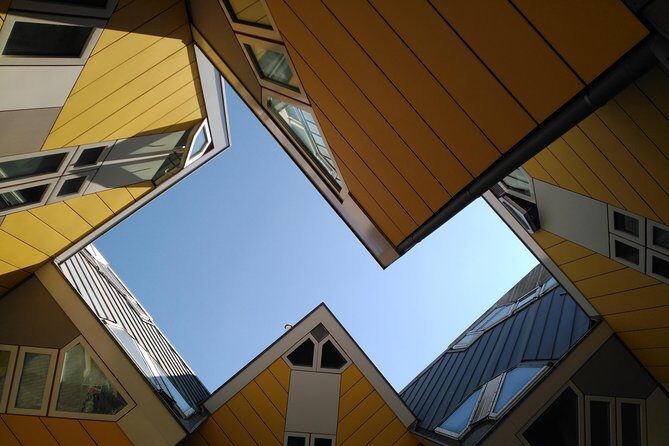
Rotterdam is the Netherlands’ loudest lesson in planning under pressure. The city grew up in a world where damage and rebuilding shaped almost every major decision, so modern architecture here isn’t just style. It’s a response: to new needs, new technology, and the reality that you can’t rebuild without making choices.
That’s what makes this kind of walk work. You’re not bouncing between random landmarks. You’re moving through a storyline, step by step, from the city gateway to cultural space, to office icons, to an indoor market, and finally to the river views that frame the whole city.
And the best part is that the talk stays practical. You don’t just hear dates and names. You learn what problems those buildings were meant to solve, and why Rotterdam kept pushing forward even as the city changed.
You can also read our reviews of more walking tours in Rotterdam

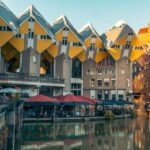
Meeting at Rotterdam Centraal, Then Walking the Story to Boompjeskade
The tour starts at Rotterdam Central Station (3013 AJ) and ends on the riverside at Boompjeskade (3011). That’s a smart setup. You spend the walk moving forward through the city core, and you finish where the air opens up and the Maas pulls your eyes along the South Bank.
The tour is roughly 2 hours with short stops designed for looking, talking, and photographing. Each stop is listed with a time window, so it has enough structure to keep momentum, but not so tight that you never get your questions answered.
One practical note: meeting points can be tricky in busy hubs. I’d recommend arriving a few minutes early, especially since at least one person flagged that the meeting place instructions can be confusing compared with a map. If you show up early, you avoid the awkward last-minute hunt.
Stop 1: Rotterdam Centraal Station’s City Gateway Entrance
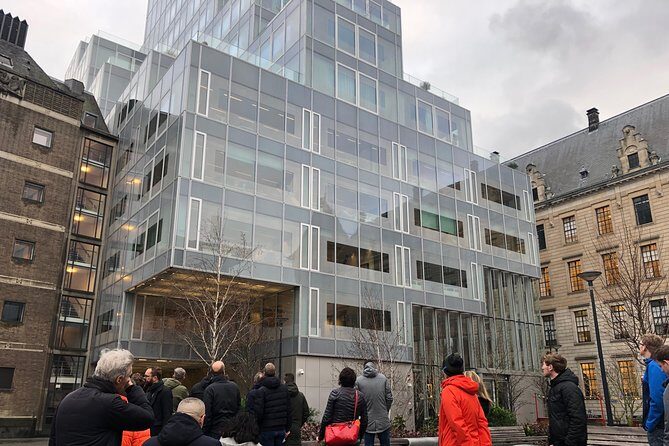
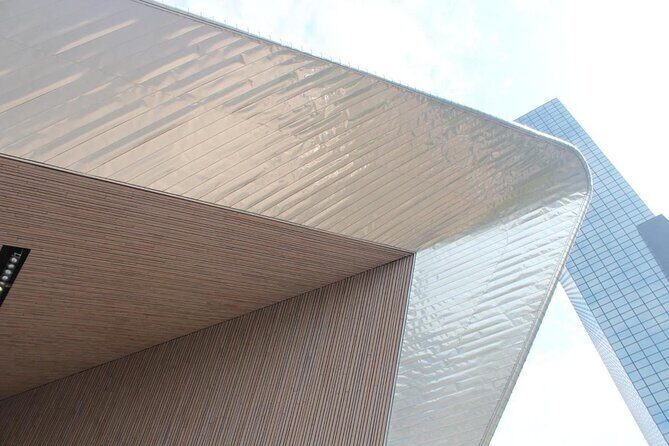
Your first stop is Rotterdam Centraal Station, specifically the newly built city entrance area. This isn’t just a place to board trains. It’s a piece of the city’s self-image—how Rotterdam presents itself to the world when people step off the platform.
You’ll spend about 10 minutes here, and because the stop is marked ticket free, it stays flexible. You can focus on what you’re seeing: the scale of the station space, the way it functions as a threshold, and how public architecture can make a city feel organized and confident.
Why it matters: when a city rebuilds, the central station is usually treated like more than infrastructure. It becomes a welcome sign. Rotterdam’s station entrance helps you get the right mindset for the tour: modern, direct, and designed for movement.
If you’re the type who likes big-picture context, this is a great first stop. It gives you the baseline for everything that comes after.
Schouwburgplein and a Postwar Monument: Culture and Memory in Public Space
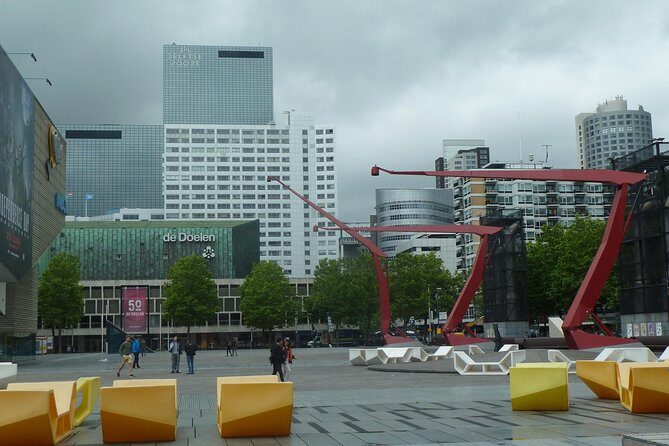
Next you move to Schouwburgplein, described as the cultural podium square of Rotterdam. This is the kind of location that’s easy to walk past—until you’re given a framework for what it represents.
You’ll have around 10 minutes here. The area matters because public squares are where a city performs its identity. They’re not just empty space between buildings; they’re meant for civic life, culture, and moments of public gathering.
Right around this section, you’ll also encounter a postwar national monument. Even without a name listed in the tour details, the point is clear: the tour is tying the modern architecture to Rotterdam’s rebuilding story and the collective memory of what happened and what followed.
This is where your guide’s architect perspective can really pay off. The explanations tend to connect form to intent—how people use space, how monuments help anchor meaning, and how the city makes room for reflection while still moving forward.
Possible drawback: the material at this stop can be more about civic purpose than about technical building details. If you’re expecting a pure design-nerd breakdown at every corner, you may find this part more historical and social than structural.
Timmerhuis by OMA: An Architecture Icon You Can Read from the Street
Then comes Timmerhuis – OMA, one of the stops the tour highlights as an architecture icon. The tour description notes it was designed by OMA, and that single detail is enough to signal you’re in the realm of major contemporary design.
You’ll spend about 5 minutes here—so this is a quick “look and learn” moment rather than a long linger. Even in a short time, it can click because the building becomes easier to understand when you know the city context. Rotterdam’s postwar reality helped shape its taste for bold solutions, and Timmerhuis is part of that modern language.
Why this stop is valuable: it shows you modern architecture as a living part of the city, not a museum piece. You see it from the outside, you get the context, and you leave with a mental checklist of design cues your guide points out.
If you love office architecture, this is also a good contrast stop. You go from transit gateway to public square to a major contemporary building, and the city’s different functions start to feel connected.


Markthal: The Indoor Market Where Architecture and Daily Life Collide
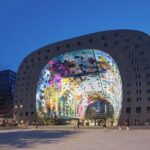
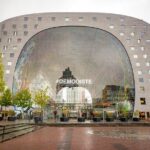
The Markthal stop is listed for about 15 minutes, and it’s framed as a famous indoor market hall—described in the tour highlights as among the most fancy indoor markets in the world.
Here, you get a different kind of architecture payoff. Outside, modern design can feel distant. Inside an indoor market, architecture becomes practical: lighting, flow, crowd movement, and the way the space supports everyday routines.
Because the stop is ticket free in the tour details, you can treat it as a visual and experiential pause. Even if you don’t buy anything, it’s worth stepping in (if open) or at least taking in the scale and layout your guide discusses.
Why I’d put Markthal near the top of the route: it’s architecture you can sense immediately. The design isn’t just for show. It’s built for people to move, eat, browse, and linger. That makes the city feel human, even while you’re surrounded by large-scale design.
A small consideration: it’s an indoor market setting, so it can get busy depending on the time of day. The tour still keeps this stop to a manageable 15 minutes, which helps you get the architectural story without getting stuck in a long queue.
Boompjeskade and Maas Views: Where the Walk Ends with Air and Perspective
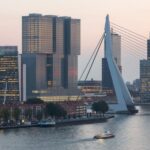
Your final stop is Boompjeskade, positioned on the riverside with views of the Maas and the South Bank. This is your “take it all in” ending.
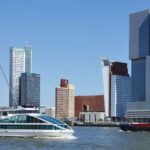
You’ll have about 15 minutes here, which is just enough time to stand, look, and connect the dots. From the water, Rotterdam reads differently. The buildings stop being isolated objects and start feeling like parts of a larger plan—water traffic, urban edges, and the relationship between the city and its geography.
The tour description promises a spectacular view on the South Bank, and that fits the logic of the route: you spend the earlier part learning how Rotterdam rebuilds and redesigns, and you finish by giving your eyes a wider context.
Practical note from real-world experience in places like this: near water, the breeze can cut through. Plan on layers. If you’re visiting in cooler months, gloves are not silly—they’re smart.
What You Get for About $54: Value Beyond the Price Tag
At $54.31 per person for an approximately 2-hour group walk, the value mostly comes from three things you can feel during the tour:
1) A trained architect guide
This isn’t a standard sightseeing pass where you mostly listen to general facts. You’re paying for someone who can explain design choices and connect buildings to decisions about rebuilding and city planning.
2) Time that doesn’t feel wasted
Short stops (5 to 15 minutes) mean you aren’t trapped in one location forever. And multiple guides reported flexibility, including adding extra time to finish the tour and answer questions. That kind of extra attention is where the money feels justified.
3) Small-group interaction
With a maximum of 15 travelers, you can usually hear explanations clearly and ask questions. That matters because architecture gets more interesting when you can ask, Why did they choose this here? or How does this relate to the rebuilding era?
One more subtle value point: you’ll learn what to notice on your own later. A good architecture guide teaches your eyes. After a tour like this, it’s easier to spot patterns in Rotterdam’s modern design—especially the way form, function, and history overlap.
Who This Tour Suits Best (and Who Might Want a Different Style)
This walk is a strong fit if you like modern architecture, postwar urban planning, and explanations that connect buildings to real life. It also works well for couples and small groups, because the guide can adapt to what the group cares about—whether it’s history, design details, or just getting oriented in a new city.
If you’re traveling from another city (for example, as a day trip), this tour is also a time-efficient way to get an initial read on Rotterdam. Starting at Central Station and ending at the Maas gives you a clean arc through the center.
Who might not love it as much:
- If you expect a long, step-by-step interior visit to the most famous buildings, this tour is more of an exterior and public-space walk.
- If you need deep constructability or engineering-level detail at every stop, the balance can lean toward context and civic story in some sections.
Minimum age is 12, and you should have a moderate physical fitness level. Since the tour is an active walk, it helps to be comfortable standing and walking for close to the full 2 hours.
Quick Tips to Make the 2-Hour Walk Easier and Better
- Wear real walking shoes. You can easily rack up around 12,000 steps on a tour like this, especially if you keep stopping for photos.
- Bring layers. Rotterdam near water can be windy, and the “short tour” still includes open-air sections.
- Bring a phone for photos, but also for notes. A photo of the building is good; a quick note of what your guide said is better.
- If you’re sensitive to noise or crowds, aim for less peak times at indoor stops like Markthal.
Guide style matters on architecture tours, and this one tends to be conversational. People praised guides like Tanja and Sylvia for being well prepared, answering questions, and explaining clearly while still keeping it fun.
Should You Book This Rotterdam Architecture Highlights Walking Tour?
I’d book it if you want an organized, story-driven way to understand Rotterdam’s modern architecture in only 2 hours. The route hits the core landmarks that make Rotterdam feel like Rotterdam: the station gateway, Schouwburgplein’s civic setting, the Timmerhuis – OMA icon, the Markthal indoor market experience, and the Maas views at Boompjeskade.
Skip it only if you’re looking for a long interior-focused tour or if you dislike active walking in cooler, breezy weather. For most people, this is a high-value introduction because the architect guide helps you see the city’s logic, not just its shapes.
If you’re even mildly curious about how cities rebuild and reinvent themselves, this is one of the better ways to start.
FAQ
How long is the Rotterdam Architecture Highlights Walking Tour?
It’s about 2 hours.
Where does the tour start and end?
It starts at Rotterdam Central Station (3013 AJ Rotterdam) and ends at Boompjeskade (3011 Rotterdam) on the riverside.
Is the tour in English?
Yes. It’s offered in English. A multilingual guide may operate the tour.
Is hotel pickup included?
No. Hotel pickup and drop-off are not included.
Are entrance tickets needed for the stops?
The tour details list admission ticket free for the highlighted stops.
What should I know about fitness and age?
The tour has a minimum age of 12, requires moderate physical fitness, and has a maximum of 15 travelers. It also requires good weather.