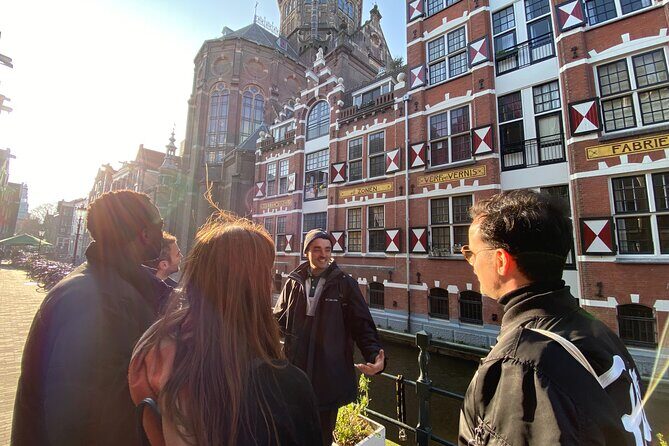
Two hours to learn Rotterdam’s pulse. This tight walk strings together big photo stops and human stories, so you get a quick sense of how Rotterdam actually works as a city. I like the way it hits Markthal and the Cube Houses area early, so you’re oriented fast. I also like that your guide isn’t just reciting facts; you can pick their brain for what to do next. The one watch-out: the tour can feel fast-paced, with a lot of ground to cover, so you’ll want to be comfortable walking.
For first-timers, this is a smart way to spend a short window in Rotterdam without feeling lost. The price point is low, and it’s offered in English with a tip-based model, so think of it as paying for a solid local orientation—not a museum-ticket day. Just bring your walking shoes, keep your phone ready for the mobile ticket, and plan to move when the group moves.
In This Review
- Key Things I’d Focus On
- Why This 2-Hour Rotterdam Walk Feels Efficient
- Starting at Westnieuwland 501, Near Blaak
- Markthal: Your Indoor “Welcome to Rotterdam” Stop
- Grote of Sint-Laurenskerk: A Landmark That Outlasted Disaster
- Rotterdam’s Walk-Through Highlights: Cube Houses and Leuvehaven
- Cube Houses: photos, angles, and that “wait, what is that?” feeling
- Leuvehaven: Rotterdam beyond the postcard
- Witte de Withstraat: Where Food and Drinks Become a Plan
- Kijk-Kubus Museum-house: When You Want to Go Inside the Cube
- Walking Reality: What the 2 Hours Actually Mean
- Guide Styles: Storytelling, Humor, and Asking Better Questions
- Price and Value: $3.62 Plus Tips
- Practical Tips to Make It More Enjoyable
- Who This Tour Best Fits
- Should You Book This Rotterdam 2-Hour Walking Tour?
- FAQ
- How long is the Rotterdam walking tour?
- What’s the price for the tour?
- Is the tour in English?
- Where does the tour start and end?
- Do I need to pay for entry at the stops?
- Is transportation included?
- Is this a fixed-price tour?
- How big are the groups?
- What if the weather is bad?
- What happens if I’m late to the meeting point?
Key Things I’d Focus On
- Markthal as your “starter” hub: a great place to grab a snack before or after the walk
- WWII-era survival in Grote of Sint-Laurenskerk: history you can stand in front of
- Cube Houses + port vibe in one route: architecture mixed with Rotterdam’s working-city mood
- Witte de Withstraat for where to eat and drink: useful, practical food-and-wine street knowledge
- Optional interior visit to Kijk-Kubus Museum-house: pay the small extra if you want to go inside
- Small-group feel (max 25): enough people for energy, not so many that you disappear
Why This 2-Hour Rotterdam Walk Feels Efficient
Rotterdam can be a head-scratcher at first. The city’s style is modern, the street layout isn’t always intuitive, and landmarks feel spread out. This tour’s format helps you stitch it together quickly by moving you from a major indoor landmark (Markthal) into the older-and-story-rich center.
What I like most is the blend: you get architecture, local context, and quick “what to do next” guidance in one go. It’s built for people who have limited time or who hate wandering aimlessly trying to guess where the best sights are.
The pacing is the trade-off. Two hours means you’ll be walking a fair bit between stops, and the group tends to keep moving rather than lingering.
You can also read our reviews of more walking tours in Rotterdam

Starting at Westnieuwland 501, Near Blaak
You meet at Westnieuwland 501 (3011 PB Rotterdam), and the tour returns to the same place at the end. That’s genuinely helpful because you don’t have to play logistics games with trams or buses after you’re done.
This meeting area is close to station Blaak, which matters if you’re doing Rotterdam as part of a longer Netherlands trip. It also makes it easy to pop into Markthal before the walk for a snack or afterward to browse for food and souvenirs.
Bring your mobile ticket (it’s part of the experience), and arrive a little early so you’re not stressed when the guide sets off. One more practical note: if you’re late, you won’t catch up with the group, and you’d need to book a new time slot.
Markthal: Your Indoor “Welcome to Rotterdam” Stop
The walk starts and ends at Markthal, the famous market hall near Blaak. Even if you don’t plan to go inside on the tour itself, it’s a smart first stop because it instantly gives Rotterdam a sense of place. The hall is set up for browsing, with food and souvenirs that work as easy takeaways.
On a walking orientation tour, Markthal also does a nice job of resetting your expectations. You start in a place that feels “central” and social, then you step outward into streets that can feel more like Rotterdam’s ongoing design project.
If your timing allows, I’d treat Markthal like your buffer zone:
- Go early if you want a coffee or pastry first
- Stay after if you want to shop or grab a casual meal
Even with the tour’s short duration, this stop makes the day feel complete because you’re anchored at a real hub.
Grote of Sint-Laurenskerk: A Landmark That Outlasted Disaster
Next you’ll see Grote of Sint-Laurenskerk, a 15th-century basilica that’s among the few buildings left from before Rotterdam’s WWII bombing. That detail isn’t just trivia—it helps explain why Rotterdam’s cityscape has such a modern feel. When you look at the skyline and streets around you, this church gives you a fixed point to measure change against.
Practically, it’s also an easy stop. You don’t need tickets, and it works well even if the weather turns. The basilica is still active today and can host events, so it doesn’t feel like something locked in the past.
A useful way to approach this stop: look at it as a historical marker, then notice what’s built around it. Rotterdam’s story shows up when you compare surviving older structures with newer design.
Rotterdam’s Walk-Through Highlights: Cube Houses and Leuvehaven
The middle stretch is where the tour earns its keep. You’ll move through some of Rotterdam’s most striking sights, including the Cube Houses area and the port of Leuvehaven.
You can also read our reviews of more city tours in Rotterdam




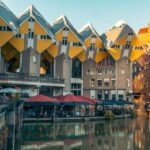
Cube Houses: photos, angles, and that “wait, what is that?” feeling
Cube Houses are one of those places people recognize instantly—but the real payoff is how they look from street level. You’ll be guided to the best viewpoints so you understand the shape and why it looks so odd yet works so well in the city.
This is also where the tour helps you escape the usual tourist checklist. Instead of treating Rotterdam like a single attraction, it connects the architecture to the streets around it.
Leuvehaven: Rotterdam beyond the postcard
Then comes the port vibe. Rotterdam is a working city, and Leuvehaven is part of that identity. You don’t need to be a shipping nerd to appreciate the scale and function, especially after you’ve been staring at modern design.
This pairing—quirky architecture plus an active port area—gives you a balanced sense of Rotterdam. The city isn’t only about looks. It’s about movement, labor, and how the waterfront shapes everything.
If you like asking questions, this is a great time to do it. Ask how Rotterdam’s rebuilding changed the city’s layout, or what locals consider worth seeing in the same neighborhoods you’re walking through.
Witte de Withstraat: Where Food and Drinks Become a Plan
Rotterdam doesn’t always feel like one neat “city center” you can wander forever. That’s why the stop at Witte de Withstraat is useful. This street is where you’ll find many of the places for food and drinks—wine bars, brown cafes, and a mix of other eateries.
The tour’s angle here is practical. You’re not just seeing a street; you’re getting a guide’s recommendations for what kinds of places to look for when you’re hungry and short on time. That can save you from the usual problem: spending your first night searching Google maps while everyone else already knows where to go.
Even if you don’t eat or drink immediately, jot down what you hear. A good local recommendation can turn one dinner decision into a whole mini-itinerary.
Kijk-Kubus Museum-house: When You Want to Go Inside the Cube
The tour ends near Kijk-Kubus Museum-house, a cube house you can actually visit. The stop is short, but the option matters: you can keep it as a photo moment or add a small extra admission (listed as €3) if you want to see how the interior works.
This is the kind of optional add-on that fits the tour style. You’re already there at the right location, so you can decide based on your energy. If you love architecture and want a little more tactile experience, the interior visit makes sense.
If you’re mostly in Rotterdam for walking and city atmosphere, you can skip it and still leave with a good handle on what makes the Cube Houses so special.
Walking Reality: What the 2 Hours Actually Mean
This is an all-walking experience, and you’ll cover a fair amount of ground in a short time. That makes it great for people who want a compact orientation day, but it’s not the best choice if you’re hoping for lots of long sit-down breaks.
Comfort shoes are more than a slogan here. The tour runs on good weather, and if rain hits hard, keeping the group together becomes harder and the tour can feel less relaxed. The good news: surfaces are walkable and the city is not known for steep hills in this area, so it’s mostly about stamina, not climbing.
Also, because it’s a tip-based model, you’re choosing this for the guide experience. If you like lots of chatty pacing and slow photo stops, you might want to choose a slower moment for yourself afterward, because the tour itself moves.
Guide Styles: Storytelling, Humor, and Asking Better Questions
Your guide is the heart of this walk. The tour includes cultural insights, architecture focus, local stories, and local tips, and the reviews suggest the storytelling approach is a big reason people rate it highly.
You may get different guides, and their styles vary:
- You might hear humor and a lively approach with guides like Peter and Hans
- You might experience big energy and infectious enthusiasm with Danielle
- You might get an extremely structured, fact-heavy style like Mewis’s or a strong local perspective like Nida
- You might find the guide very capable at managing a group size like Bram did for a larger group
That variety is good, but it also means you should come with a plan for how you want the walk to help you. I recommend asking 2–3 targeted questions early, like:
- What should I prioritize if I have one more day in Rotterdam?
- Which neighborhoods are best for walking without getting bored?
- Where would you go for a classic Dutch meal versus a more modern spot?
Also be aware that some guides use casual language. If you prefer a very formal, family-friendly tone, keep that in mind when you’re booking.
Price and Value: $3.62 Plus Tips
The listed price is $3.62 per person for about two hours. On its face, that’s startlingly low. Here’s the practical way to think about it: the real value comes from the guide’s time and the convenience of having a route that hits the right neighborhoods quickly.
This is also a tip-based tour, so the payment is not the same as a fully paid, fixed-price sightseeing ticket. In other words, treat it like a pay-what-you-think-is-fair situation after you’ve seen how the guide handles pacing, keeps the group together, and answers questions.
If you’re budgeting carefully, also double-check what the payment covers for your booking confirmation. Some guests have been surprised by how the booking cost relates to the tip-based model, so it’s smart to read your confirmation closely.
If you do that and you’re happy to support a good guide at the end, this tour can be a very cost-effective way to make Rotterdam click.
Practical Tips to Make It More Enjoyable
A walking tour succeeds or fails based on small choices. Here’s what I’d do:
- Wear comfortable shoes with grippy soles
- Bring a light rain layer since the experience depends on weather and heavy rain can disrupt pacing
- Keep your mobile ticket handy so you’re not fumbling at the start
- Arrive early so you don’t risk being unable to rejoin if you’re late
- If you want the Cube Houses inside experience, plan a little extra time for Kijk-Kubus after the walk
- If you’re sensitive to speech speed, sit closer at the front so you can hear the guide clearly
And if you’re traveling with a service animal, the tour allows service animals, which is a helpful detail for planning.
Who This Tour Best Fits
This tour is ideal if you:
- Are in Rotterdam for a short visit (two days or less)
- Want a quick orientation that connects modern design with historical context
- Like architecture, city stories, and practical tips for where to eat
- Prefer walking to jumping between multiple attractions
It’s less ideal if you:
- Need lots of breaks or a slower rhythm
- Struggle with continuous walking for two hours
- Want a deeply detailed, stop-by-stop museum-style tour
Should You Book This Rotterdam 2-Hour Walking Tour?
Yes, with one smart condition: book it early in your Rotterdam trip. The payoff is highest when you can apply what you learn right away—where to eat, what streets to return to, and how the city’s layout makes sense.
If you’re okay with a brisk walk and you’re excited by modern architecture plus a working port atmosphere, this is a strong value use of time. If rain is likely, keep a flexible mindset and expect the guide to do their best when the group can’t move as easily.
For a first taste of Rotterdam that goes beyond a checklist, this tour is an efficient choice. Just come prepared to walk, and bring a couple of questions—you’ll get a lot more out of the guide experience that way.
FAQ
How long is the Rotterdam walking tour?
It runs for about 2 hours.
What’s the price for the tour?
The price is $3.62 per person.
Is the tour in English?
Yes, it’s offered in English.
Where does the tour start and end?
It starts at Westnieuwland 501, Rotterdam, and ends back at the same meeting point.
Do I need to pay for entry at the stops?
The stops listed for Markthal, Grote of Sint-Laurenskerk, and the main walking sights are free to view as part of the tour. The Kijk-Kubus Museum-house has an admission fee of €3 if you choose to visit inside.
Is transportation included?
No. You walk everything.
Is this a fixed-price tour?
It’s tip-based, which means you should plan to tip your guide.
How big are the groups?
The maximum group size is 25 travelers.
What if the weather is bad?
The experience requires good weather. If it’s canceled due to poor weather, you’ll be offered another date or a full refund.
What happens if I’m late to the meeting point?
You won’t be able to catch up with the group. You’d need to book a new time slot.