REVIEW · GUIDED
The Hague Must-See attractions Private Walking Tour With A Guide
Book on Viator →Operated by Guydeez · Bookable on Viator
Politics meets art on your feet.
This private walking tour of The Hague strings together the city’s biggest themes—Orange-Nassau origins, Dutch government, famous paintings, and royal life—without making you bounce around town. You’ll go stop to stop with an English-speaking guide, and you’ll learn what you’re looking at as you walk, starting at Het Plein and ending right back at the meeting point area.
What I really like is the smart mix: you get both the cultural hit near Mauritshuis and the power-and-policy stories around the Binnenhof complex. I also like that it’s customizable, so you can steer the conversation toward what you care about most. One possible drawback: the schedule is tight, with only about 10–15 minutes at each place, so you won’t have time for long museum or church-style lingering unless you add extra time yourself.
In This Review
- Key highlights you’ll feel during the walk
- Why this 2-hour The Hague walking tour works so well
- Start at Het Plein: Willem van Oranje and the 1500s that shaped everything
- Mauritshuis area: seeing the Vermeer masterpieces by context
- Binnenhof and Ridderzaal: the political heart in historic stone
- Hofvijver and the stories hiding in plain sight
- Thorbecke Monument: how the constitution turned into daily democracy
- Lange Voorhout, the Escher Museum area, and the embassy-studded feel
- Noordeinde Palace: the working palace outside the gates
- Grote Kerk (St. Jacobskerk) and the stork statue
- Statue of Johan de Witt: the Rampjaar and political violence
- Tickets, value, and what the price really buys you
- Where this tour fits best in your The Hague plans
- Should you book this private Walking Tour with a guide?
- FAQ
- How long is the The Hague private walking tour?
- Is this tour private?
- What language is the guide?
- Where does the tour start?
- Does the tour include admission tickets to attractions?
- Does the tour include food or drinks?
- Is transportation included?
- What kind of ticket do I receive?
- What is the cancellation policy?
Key highlights you’ll feel during the walk
- Private and exclusive: it’s just your group, so questions aren’t awkward.
- A nonstop political timeline: Willem van Oranje to the 1848 constitution and on to the Rampjaar story.
- Mauritshuis + Vermeer context without getting lost in museum planning.
- Binnenhof & Ridderzaal explained in plain terms, tied to what’s happening around you.
- Elegant streets and art links along Lange Voorhout, with the Escher Museum area in the mix.
- Royal and sacred landmarks: Noordeinde Palace outside, then Grote Kerk and its nearby stork statue.
Why this 2-hour The Hague walking tour works so well
The Hague can feel “official” at first glance. You see ministries, palaces, and stone buildings. That’s exactly why this tour format is useful: walking keeps you anchored in the street-level geography, and your guide can connect each landmark to the bigger Dutch story.
In about 2 hours, you cover a concentrated run of sites tied to government, art, and national memory. Each stop is short, so think of it as guided orientation plus the most meaningful backstory—not a slow, hour-by-hour museum day. You’ll finish with a clearer mental map of what matters in Den Haag.
The fact that it’s private changes the vibe. If you want more explanation about the Dutch Revolt, you can ask. If you’d rather focus on architecture and statues, you can do that too. I like when a tour doesn’t treat everyone like they want the same thing.
Start at Het Plein: Willem van Oranje and the 1500s that shaped everything
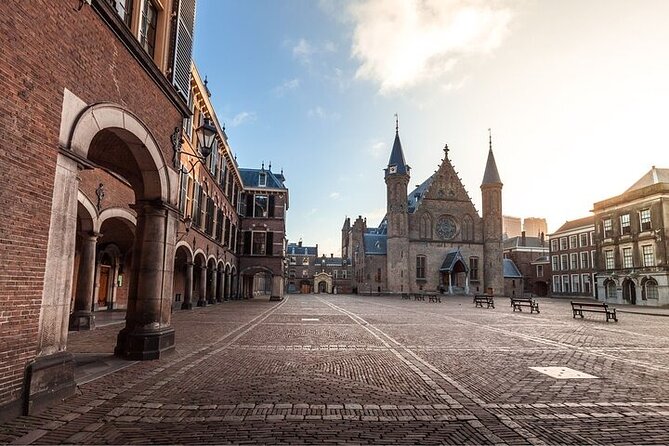
You begin at Plein 17 and head into the story of Willem van Oranje, often called the Father of the Nation. This matters because the Dutch Revolt against Spanish rule didn’t just make headlines. It helped form the country’s political identity, and the rest of your walk keeps echoing that theme.
Het Plein is a good first stop because it sets the tone fast. You’re not starting with a random building. You’re starting with a person, the Dutch Revolt, and a political idea: how a nation decides who deserves power. The tour gives you just enough time—about 15 minutes—to understand why Oranje is mentioned everywhere.
Practical tip: if you’re the type who likes to take notes, this is the easiest moment to do it. The guide’s timeline at the beginning helps you connect later stops without getting confused.
Mauritshuis area: seeing the Vermeer masterpieces by context
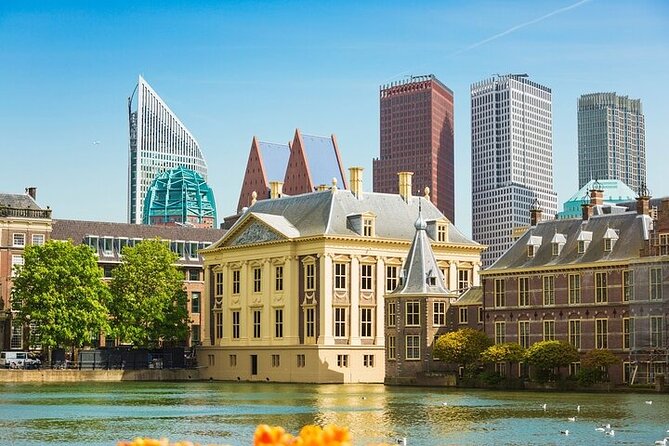
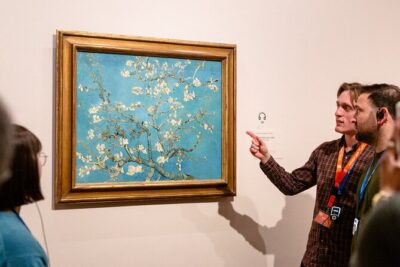
Next comes the Mauritshuis area, where you’ll get a feel for the famous painting collection associated with Johannes Vermeer. Two titles you’ll hear in this part of the walk are Girl with a Pearl Earring and View of Delft. Even if you’re not planning a full museum visit, this stop gives the paintings a human frame instead of treating them like names on a wall.
What I like here is the pacing. You get about 15 minutes, enough to understand why Mauritshuis is such a big deal, and then you’re already walking toward the seat of government. That contrast is smart. Art becomes part of national identity, not a separate category.
One consideration: the tour is not built as a deep museum session. If you want to spend a long chunk of time inside Mauritshuis, you’ll need to plan that separately. The guide can help with ticket booking for desired visits, but tickets for attractions are not included as part of the base tour price.
Binnenhof and Ridderzaal: the political heart in historic stone
The Binnenhof & Ridderzaal stop is where The Hague stops feeling like “just another city.” The Binnenhof complex houses the Dutch Parliament, and your guide ties that role back to how long the site has mattered—dating to the 13th century.
Then there’s the Ridderzaal (Knight’s Hall), where important political events and ceremonies take place. That’s not a casual detail. It helps you understand why people built monumental rooms for public life. When you stand there and hear the story, you get a sense of how formality and power work together in the Netherlands.
This part of the walk is designed for comprehension, not memorization. About 15 minutes gives you time to grasp what happens here, what the Ridderzaal is for, and why the Parliament setting is tied to the country’s identity.
Small practical note: if you’re sensitive to crowds or noise, pick a moment to step a bit to the side while listening. The location is important, and it can get busy around government areas.
Hofvijver and the stories hiding in plain sight
From political buildings, you shift to Hofvijver, a pond surrounded by historic structures. It’s picturesque, but the tour’s angle is more interesting than “pretty water.” You’ll hear how it was used as a hunting ground for medieval nobility.
This is one of those stops that makes a city feel real. It connects “what you see now” to what the space was used for when the Netherlands was organized under very different rules. About 15 minutes is plenty to get the meaning and then move on without turning the walk into a slow rest break.
If you’re photographing, this is an easy place for a few steady shots. Just remember: this tour is about understanding, so let a couple minutes be fully listening time before you lift out your phone.
Thorbecke Monument: how the constitution turned into daily democracy
Next is the Thorbecke Monument, focused on Johan Rudolph Thorbecke, a prominent Dutch statesman tied to the drafting of the Dutch Constitution in 1848. The point of this stop is not just to name him—it’s to connect constitutional ideas to what modern parliamentary democracy actually means.
A good guide will translate big legal change into something you can picture. You’ll get that here, in short form. The structure of the walk keeps you moving, but Thorbecke’s message fits perfectly after the Binnenhof: you see old political buildings, then learn how constitutional thinking helped define the modern system.
This segment is about 15 minutes, which is ideal for keeping the storyline from getting heavy. If your mind tends to wander during formal topics, ask your guide for a simple “so what” explanation right here.
Lange Voorhout, the Escher Museum area, and the embassy-studded feel
Now you walk along Lange Voorhout, an elegant street lined with stately mansions and embassies. This part is more than a change of scenery. Your guide links the street to how official residence areas create a certain feel—formal, orderly, and deeply connected to national and international presence.
The Escher Museum is part of what you’ll pass in this area. Even if you don’t enter, this stop gives you an art-related thread for M.C. Escher. It’s a nice way to keep the tour from becoming only politics and monuments.
You’ll also get that “The Hague is a capital of culture and state” vibe without needing to jump to a separate neighborhood. About 15 minutes on this street is enough to register the architecture and setting.
Practical tip: keep one ear free while walking. This is the area where street-level details matter, and guides often share the kind of specifics that are easy to miss if you’re walking while half-looking down.
Noordeinde Palace: the working palace outside the gates
You’ll reach Noordeinde Palace, known as the official residence of King Willem-Alexander and Queen Máxima. This is an exterior-focused stop, but it’s still meaningful because you’re learning how royal presence functions in the country’s everyday political landscape.
The key idea here is “working palace.” Your guide helps you see that this isn’t a museum set dressing. It’s part of the living governance picture, where symbolism and real responsibilities overlap.
This stop is shorter—about 10 minutes—which makes sense. It’s focused on exterior impressions and context rather than long interior exploration.
If you want to make the most of it, stand at a comfortable spot, listen fully for the explanation, then take a few photos at the end. That keeps you from spending your whole time photographing while missing the point.
Grote Kerk (St. Jacobskerk) and the stork statue
Next is Grote Kerk, also known as St. Jacobskerk. You’ll hear its history reaching back to the 15th century. Churches like this tell you how a city’s values show up in stone—through design choices and the way communities organize around worship.
Nearby, don’t miss the stork statue. This detail is easy to overlook on your own, and it becomes memorable once your guide puts it in context. You get about 10 minutes, so it’s best to treat this as a quick but intentional stop.
If you’re traveling with kids or family, this is a great moment to point out the stork and ask what they think it symbolizes. It gives the tour a lighter beat.
Statue of Johan de Witt: the Rampjaar and political violence
Your final themed stop is the Statue of Johan de Witt, with the story also involving his brother Cornelis de Witt. You’ll learn how, in 1672, they were lynched by an angry mob during a period of turmoil called the Rampjaar (Disaster Year).
This is heavy material, but it’s framed in a way that helps you understand how fragile political life can be. The Hague isn’t only about calm government buildings. It has had moments when politics turned violent, and statues like this are how those moments stay visible.
This part is about 10 minutes, and it works as a strong ending. You leave with a clearer sense that The Hague’s official image grew out of conflict, negotiation, and long political change.
If history makes you want to ask questions, this is your last chance. Ask your guide for a quick “what to read or see next” recommendation based on what you’re most curious about.
Tickets, value, and what the price really buys you
The tour costs $88.72 per person and lasts about 2 hours. At first glance, that might sound steep for a walking tour. But the price mostly buys you two things: private guiding and the structure that helps you connect sites without guessing.
You also get help booking tickets for the visits you want. Tickets to attractions are not included in the price. That’s important. In practice, this tour seems designed around free or ticket-free viewpoints, like the stops noted as ticket-free. If you want an inside experience—especially a museum visit—plan to handle that separately, with your guide’s help if you choose.
The tour also includes a mobile ticket, which is a small convenience but helpful when you’re coordinating meeting points in the city center. And there are group discounts, which can help if you’re booking a larger party within your private group size.
When does it feel like a bargain? When you care about learning context fast, and you don’t want to piece it together with a phone map while standing in front of official-looking buildings. You pay for someone to translate what you’re seeing into a story.
Where this tour fits best in your The Hague plans
This private walking tour is best when you want a quick, guided way to orient yourself in The Hague’s core. It’s ideal for first-time visitors who want government landmarks, art references, and royal connections without needing a full-day plan.
It also fits well if you already have another big plan later (like a museum day) and you want the political and cultural thread beforehand. By the time you go elsewhere, the city will feel less random.
Because most stops are short, it also suits people who don’t want a long, slow tour. And since it’s private, you can keep it calm and discussion-heavy if that’s your style.
If you want to maximize the value, think about your priority. Are you most excited about Vermeer and art history, or about Dutch politics and constitutional change? A good guide will match the emphasis to you.
Should you book this private Walking Tour with a guide?
If you want a tight, high-context overview of The Hague’s government center and cultural landmarks, I think this is a strong choice. The private format and English-language guidance make it feel like a conversation with direction, not a scripted lecture.
Book it if you like history tied to specific places, and if you’re okay with short stops instead of long indoor visits. Skip it only if you’re hoping for a slow-paced museum experience inside multiple ticketed attractions. This tour gives you the map and the meaning first, then you decide what to add.
FAQ
How long is the The Hague private walking tour?
It runs for approximately 2 hours.
Is this tour private?
Yes. It’s a private and exclusive tour, and there won’t be anyone else in your group.
What language is the guide?
The guide is in-person and English-speaking.
Where does the tour start?
The start point is Plein 17, 2511 CS Den Haag, Netherlands.
Does the tour include admission tickets to attractions?
Tickets to attractions are not included. The tour also includes help from the team to book tickets for the visits you want.
Does the tour include food or drinks?
No. Food and drinks are not included.
Is transportation included?
No. Transportation is not included, and public transport costs are your own expense.
What kind of ticket do I receive?
You receive a mobile ticket.
What is the cancellation policy?
Free cancellation is available. You can cancel up to 24 hours in advance for a full refund.