REVIEW · THE HAGUE
The Hague: City Walk Audio Guide in 7 Languages on your Phone
Book on Viator →Operated by City App Tour · Bookable on Viator
Let your phone map your Hague stroll. This self-guided city walk helps you discover The Hague’s sights (and a few surprises) on your own schedule, using GPS route guidance and a 7-language audio guide. I like that you control the pace, so you can slow down for photos or speed up when you’re feeling energetic. I also like how the route is built for walking across the center, with stops that connect culture, government, and everyday city life.
One catch: you’ll need your own phone, plus a working internet connection and GPS to keep everything on track. Also, headphones aren’t included, so plan to bring yours—because hearing the story without the sound is a sad kind of sightseeing.
In This Review
- Key highlights at a glance
- Phone-First City Walk: what the tour really gives you
- Using GPS and audio in 7 languages (and why that matters)
- Stop-by-stop: from royal residence vibes to Dutch Golden Age art
- Palace Noordeinde: monarchy in a historic shell
- Mauritshuis: the art museum housed in a story
- The Hague city center: built-in freedom
- Binnenhof and the Ridderzaal: politics you can actually walk through
- Shopping Passage: a covered break that feels like part of the route
- How long it takes, and how to pace yourself without rushing
- Who this self-guided audio walk suits best
- Should you book this The Hague audio city walk?
- FAQ
- What does this tour include?
- What do I need to bring?
- How long is the walking audio tour?
- Can I finish the tour later if I get interrupted?
- Do I need internet access?
- How many languages are available?
- Is this a guided tour with a person?
- Where does the tour start and end?
- What’s the cancellation policy?
Key highlights at a glance
- GPS guidance on your phone keeps you oriented as you walk between major stops
- Audio in 7 languages means you can match your comfort level right away
- Flexible timing: you choose how long to spend at each site
- Big-name stops plus everyday streets, from Palace Noordeinde to the Shopping Passage
- A finish window until the end of the next day, so you’re not rushed
Phone-First City Walk: what the tour really gives you
For around $8.69 per person, this is a low-commitment way to explore the center of The Hague without locking yourself into a fixed group schedule. The format is simple: you download (or activate) the audio guide, follow the GPS route, and press play when it’s time to learn what you’re looking at.
What makes this worth it for many people is how it changes the city experience. The Hague is easy to walk through, but it can feel confusing if you’re not sure what each building means. This audio tour gives you quick context on what you’re seeing—royal power, Dutch art, and the political heart of the Netherlands—while still letting you enjoy the streets at normal walking speed.
You’re also not just walking past landmarks in a straight line. The route blends major icons with more lived-in stops, like a covered shopping arcade, so the city feels like a place you could actually spend an afternoon—not just a set of postcard targets.
Value check: if you like self-guided travel, you’re paying mostly for convenience: the audio content, the app, and the GPS routing. If you prefer a live guide who can answer questions on the spot, this won’t replace that. But for flexible, independent sightseeing, the price lands in the sweet spot.
You can also read our reviews of more tours and experiences in The Hague.


Using GPS and audio in 7 languages (and why that matters)

The tour is built around your smartphone, with a virtual audio guide in 7 languages plus GPS guidance. That combo is the difference between a generic audio recording and something that actually helps you walk.
Here’s how to get the smoothest experience:
- Plan for internet. The instructions specifically note you need an internet connection, plus GPS on your phone. If your signal is weak, the app may be slower or the guidance may not behave as expected.
- Bring headphones. The tour information is clear that headphones aren’t provided.
- Test your setup before you start. Once you’re standing outdoors, you don’t want to be troubleshooting settings.
Also, be aware of how activation works. You receive instructions in a separate email, including what you need to activate the self-guided tour. If your activation fails, the most practical fix is to revisit that email and make sure the code/instructions are applied correctly. And if everything looks right but nothing plays, check the basics first—internet connection and GPS.
A small but important detail: the tour is private in the sense that only your group participates. That’s more about the structure than about a guide standing beside you.
Stop-by-stop: from royal residence vibes to Dutch Golden Age art
You can think of the itinerary as a walking route that strings together three themes: royalty, art, and government. You’ll start your walk in The Hague, then loop through the main center areas and come back to the meeting point at the end.
Palace Noordeinde: monarchy in a historic shell
Palace Noordeinde is presented as a major royal site, dating back to the 16th century and serving as the official residence of King Willem-Alexander and his family. Even if you’re not a monarchy super-fan, you’ll likely appreciate what this stop offers: it’s a clear visual reminder that the Netherlands’ political story isn’t only about parliaments and paperwork—it also has ceremonial and royal layers.
What you’ll get on foot: you’ll be guided through what makes the palace notable: its stately appearance and its central role in Dutch royal life.
A practical consideration: palaces can feel slightly “look-but-don’t-touch” for visitors. The audio helps you see beyond the facade, so you know what you’re looking at without guessing.
Mauritshuis: the art museum housed in a story
Next up is the Mauritshuis, described as a classic museum in a beautiful 17th-century building that used to be the residence of Count Johan Maurits of Nassau-Siegen. The big draw here is the museum’s collection of paintings from the Dutch Golden Age, including works by Johannes Vermeer, Rembrandt van Rijn, and Jan Steen.
Even if you’re only doing a quick visit or just taking in the museum area as part of your walk, this stop adds weight to your day. The Hague often gets labeled as a political city, but this reminds you it’s also an art destination with deep roots.
What’s valuable: instead of treating the museum as a name on a list, the audio gives you a sense of why these paintings matter and why this building matters too.
Possible drawback: a museum stop can eat time. If you’re short on time, plan to move at a pace that keeps the rest of your route realistic. The good news is you don’t have to rush—more on pacing later.



The Hague city center: built-in freedom
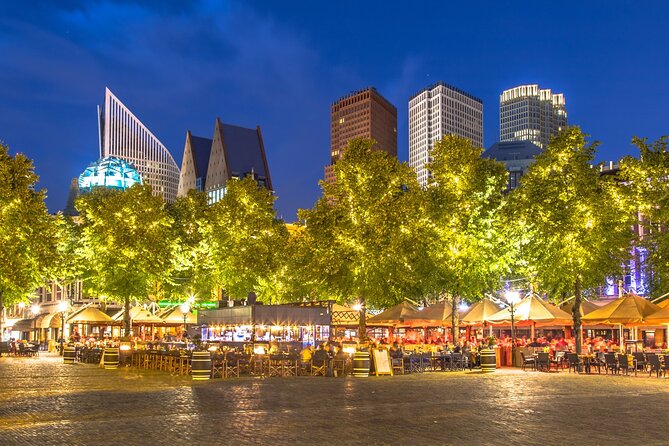
Before you lock onto the big stops, the tour sets the stage by encouraging you to explore the beautiful city center at your own pace. The audio framing is useful because it hints that The Hague isn’t only a summer beach city. It’s the seat of the Dutch government, home to the Royal Family, and it has cultural sites and lively festivals year-round.
That matters because it changes what you notice on the walk. You start paying attention not just to what’s impressive, but to how the city functions—cafés, streets, public spaces, and the rhythm of everyday visitors and locals.
Binnenhof and the Ridderzaal: politics you can actually walk through
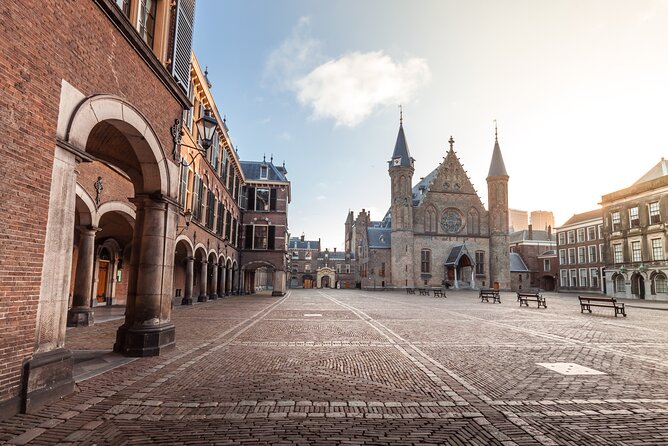
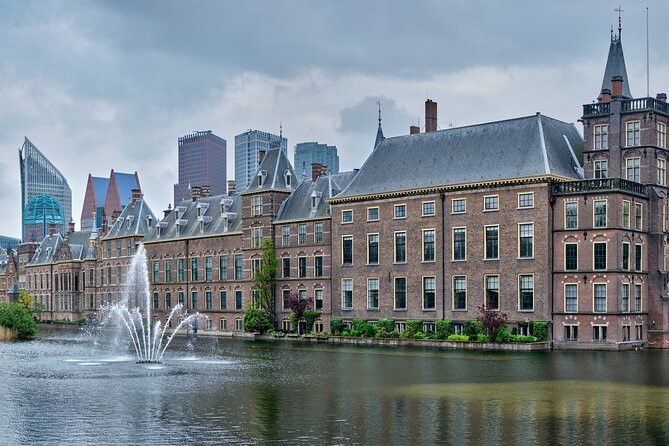
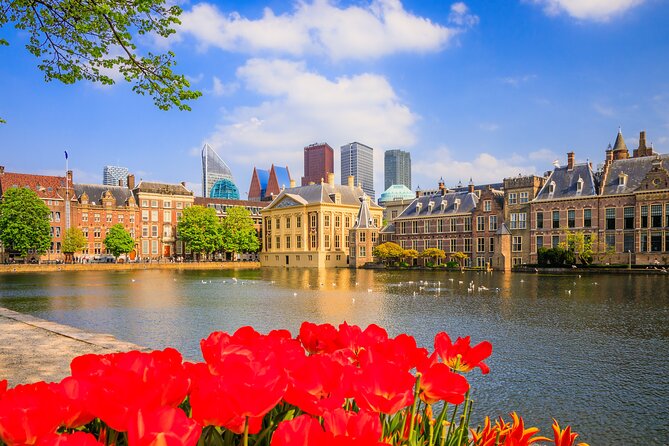
The Binnenhof is the political icon in this route: a complex of buildings that has been the center of Dutch politics and governance for over 800 years. The audio focuses on the idea that this place isn’t just historical—it’s still active, housing the Dutch government and the First and Second Chamber of the States General, along with many other governmental institutions.
The highlight structure is the Ridderzaal, described as a medieval architectural beauty used for royal speeches and important state ceremonies.
This is one of the reasons a self-guided walking format works well here. When you move around on foot, you naturally notice the layout—how buildings cluster, how the canals frame views, and how the surrounding facades contribute to the formal tone of the site.
What you’ll likely notice as you walk: the canal-side atmosphere and the stately surroundings. The audio context turns those visual cues into meaning, so the Binnenhof doesn’t feel like a random cluster of offices.
Timing tip: if you want the full effect, give yourself a little breathing room at this stop. It’s the kind of place where pausing for a few minutes helps more than sprinting to the next attraction.
Shopping Passage: a covered break that feels like part of the route
The Shopping Passage (also known as the Passage) is a different kind of stop, which is why I like it. After royal and political landmarks, this covered arcade brings you back to a human scale: shops, boutiques, and the comfort of a sheltered indoor walk in the middle of the city.
The tour description frames it as one of the oldest covered shopping arcades in the Netherlands, dating back to the 19th century.
Why it’s a smart inclusion: it gives you a natural place to pause, refuel, and keep walking without thinking too hard about logistics. If the weather is doing its own thing, a covered passage is a practical win.
How to use it: treat it like a rest stop, not a mission. Even if you just browse for 20 minutes, you’ll likely finish the tour feeling like you saw more than just monuments.
How long it takes, and how to pace yourself without rushing
The tour is listed as about 2 to 3 hours. But the real flexibility is the finish window: you have until the end of the next day to complete it. That means you can start in the late morning, take a longer museum break, grab a drink, and still have time to finish later.
This flexibility matters if you’re traveling with mixed interests. You might care deeply about the museum stop, while someone else just wants the highlights. With a self-guided route, you can adapt without waiting for a group.
Here’s a pacing approach that usually works well for walking audio tours:
- Start with enough daylight to enjoy outdoor views around the Binnenhof area.
- Give Palace Noordeinde and the surrounding center a moderate amount of time—focus on listening and photos.
- Treat the Mauritshuis as your time variable. If you want more art time, your route still holds up because you’re not forced into a strict timeline.
Who this self-guided audio walk suits best

This is a good fit if you:
- like exploring independently and at your own tempo
- want GPS support instead of guessing street-by-street
- enjoy short, targeted historical context rather than long lectures
- travel in a small group where scheduling everyone can be tricky
It’s less ideal if you:
- strongly prefer a live guide who can respond to your questions
- expect the tour to function well without internet or GPS
- don’t want to manage your phone settings, volume, and headphones during a walking route
In plain terms: this tour rewards people who are comfortable using their phone for navigation and audio. If you are, you’ll likely feel the city click into focus fast.
Should you book this The Hague audio city walk?

I’d book it if you want an efficient way to connect The Hague’s major themes—royal life, Golden Age art, and centuries of governance—while still walking at your own pace. The price is reasonable for the convenience of GPS routing plus audio in multiple languages, and the itinerary doesn’t ignore everyday city space like the Shopping Passage.
Skip it only if you know you won’t have reliable internet/GPS, or if you want the back-and-forth of a human guide. Otherwise, this is a practical, flexible way to turn a simple stroll into a route with meaning.
If you do book: bring headphones, check your internet/GPS settings before you begin, and keep an eye on the email instructions so activation doesn’t become your biggest sightseeing obstacle.
FAQ
What does this tour include?
You get an app with the audio guide in 7 languages on your smartphone, plus GPS guidance.
What do I need to bring?
You need your own smartphone and headphones.
How long is the walking audio tour?
It’s approximately 2 to 3 hours.
Can I finish the tour later if I get interrupted?
Yes. You can finish it until the end of the next day.
Do I need internet access?
Yes. The experience requires an internet connection and GPS function on your phone.
How many languages are available?
The audio guide is available in 7 languages.
Is this a guided tour with a person?
No. It’s self-guided with a virtual audio guide and GPS route guidance.
Where does the tour start and end?
It starts in The Hague, Netherlands, and ends back at the meeting point.
What’s the cancellation policy?
You can cancel for a full refund if you cancel at least 24 hours in advance. If you cancel within 24 hours of the start time, the amount paid isn’t refunded.