REVIEW · AMSTERDAM
Amsterdam: The Life of Anne Frank Walking Tour
Book on GetYourGuide →Operated by Tour Company · Bookable on GetYourGuide
Anne Frank’s story feels different when you walk it. This 90-minute Anne Frank walking tour in Amsterdam South focuses on her everyday life before the Secret Annex took over. You’ll move through the neighborhoods and schools that shaped her, then connect those streets to the diary that made her name known worldwide.
I especially like two things. First, you get specific places tied to her childhood routine, including the bookstore where she bought her diary. Second, you see the home of Miep Gies, one of the courageous helpers whose role often gets less attention than the hiding itself.
One consideration: this walk is powerful, but it’s outside-focused. You do not enter the Anne Frank House, and there’s a small amount of walking, so it’s not a fit if you have mobility limitations.
In This Review
- Key highlights you’ll actually notice
- Walking from Merwedeplein 61: where the story starts in Amsterdam South
- Anne’s pre-hiding life: schools and neighborhoods you can picture
- The diary bookstore stop: why that detail lands
- Meeting Miep Gies: the helper’s story beyond the headlines
- Why Amsterdam-Zuid is part of the point, not just the setting
- The walk itself: timing, comfort, and how to get the most out of 1.5 hours
- Price and value: is $18 worth it?
- Who should book this Anne Frank walking tour
- Should you book this tour or choose something else?
- FAQ
- How long is the Anne Frank Walking Tour in Amsterdam South?
- Where does the tour start?
- How much does the tour cost?
- Is entry to the Anne Frank House included?
- What language is the guide?
- Is the tour suitable for wheelchair users or people with mobility impairments?
- What should I bring?
Key highlights you’ll actually notice
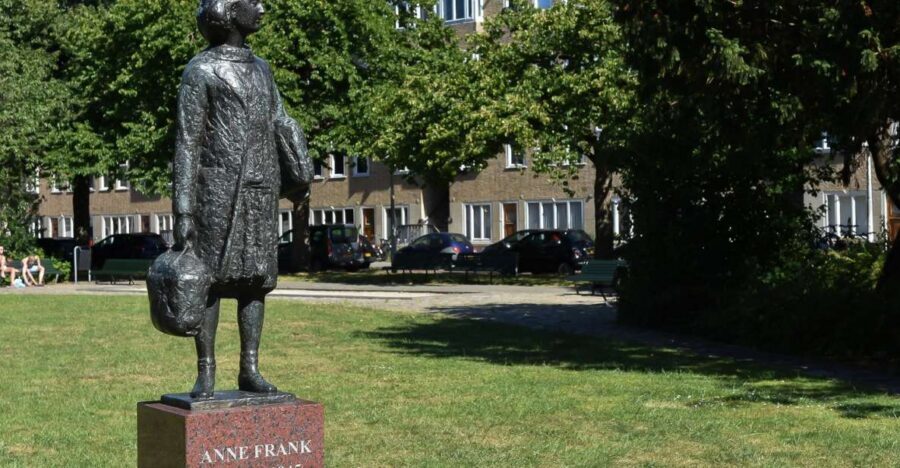
- Merwedeplein 61 and Anne’s square statue set the tone fast, right where her life in this area began.
- Schools and nearby streets show the normal-world side of Anne, not just the wartime tragedy.
- A stop tied to her diary purchase helps the famous words feel less like a distant book and more like a real object.
- Miep Gies’s home gives weight to the helpers who took risks.
- Amsterdam-Zuid’s 1920s–1930s design helps you understand the city Anne grew up in beyond the usual postcard center.
- Fun, energetic guiding and good question time can make the walk feel lively rather than like a lecture.
Walking from Merwedeplein 61: where the story starts in Amsterdam South
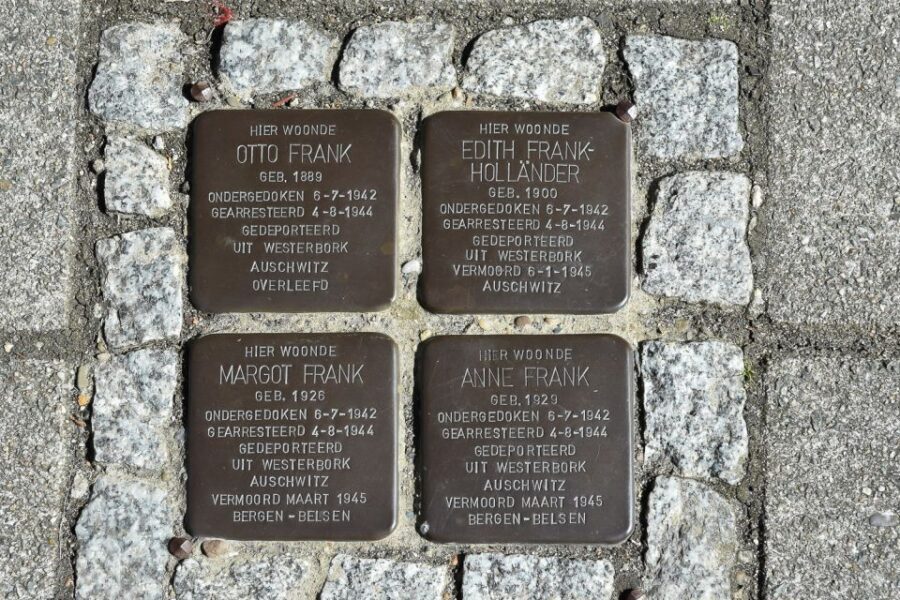
The tour begins at Merwedeplein 61, in Amsterdam-Zuid, in front of the statue of Anne on Square Merwedeplein. That choice matters. Instead of starting near the most famous museum door, you start in the kind of place a child would know: a square, a neighborhood rhythm, everyday streets.
You’ll find yourself listening for details you’d normally skip. The goal is not to treat this like a scavenger hunt. It’s to watch how a guide links places to moments in Anne’s life. And because the walk is only 1.5 hours, the route stays focused. You don’t get the fatigue that comes from trying to see half the city in one go.
This is also where Amsterdam South quietly earns its keep. The area was built in the 1920s and 1930s, when planners were thinking about housing and city design in modern ways. As you walk, you’ll get a feel for how the neighborhood worked as a community—schools, streets, everyday errands—and that makes the wartime story hit harder later.
You can also read our reviews of more walking tours in Amsterdam



Anne’s pre-hiding life: schools and neighborhoods you can picture
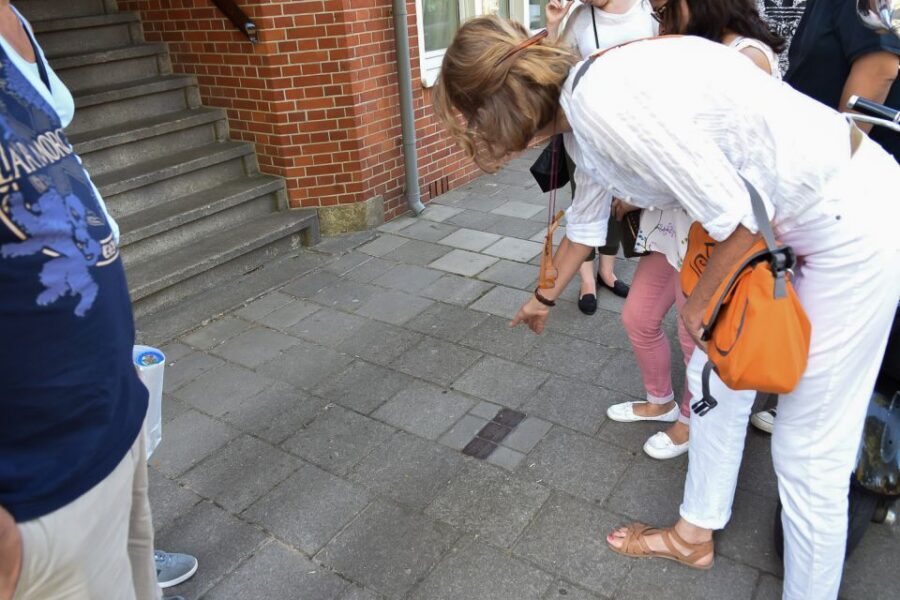
One of the best parts of this tour is that it slows the story down. You spend time on Anne’s life before she went into hiding. That’s not just a nice add-on. It’s the difference between reading about a tragedy and understanding a person.
You’ll visit the schools and neighborhoods where Anne grew up. Your guide connects what you see outside to what Anne likely experienced day to day—moving through streets, going to classes, interacting in her local world. The effect is simple but moving: Anne becomes a girl with ordinary routines, not only a name printed on book covers.
A practical note: because this tour is walking and sightseeing, your feet will do some work. Wear comfortable shoes. You’re not sprinting across town, but it’s enough walking that you’ll want to be ready.
The route also gives you a chance to observe how Amsterdam neighborhoods feel at street level. Amsterdam isn’t only canals and “must-see” corners. In Amsterdam South, you’ll get to see a different side of the city—more residential, designed with a planning mindset, and less overwhelmed by visitor traffic.
The diary bookstore stop: why that detail lands
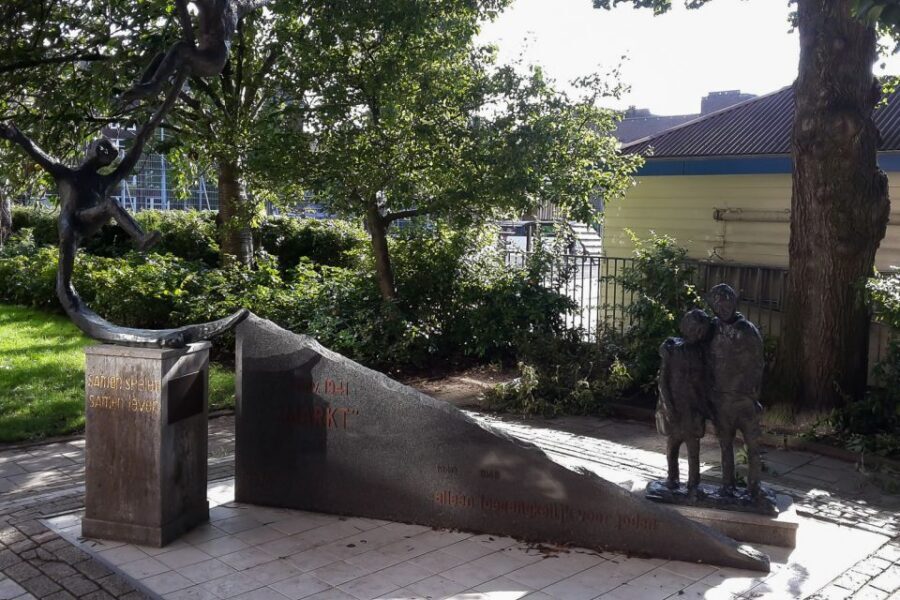
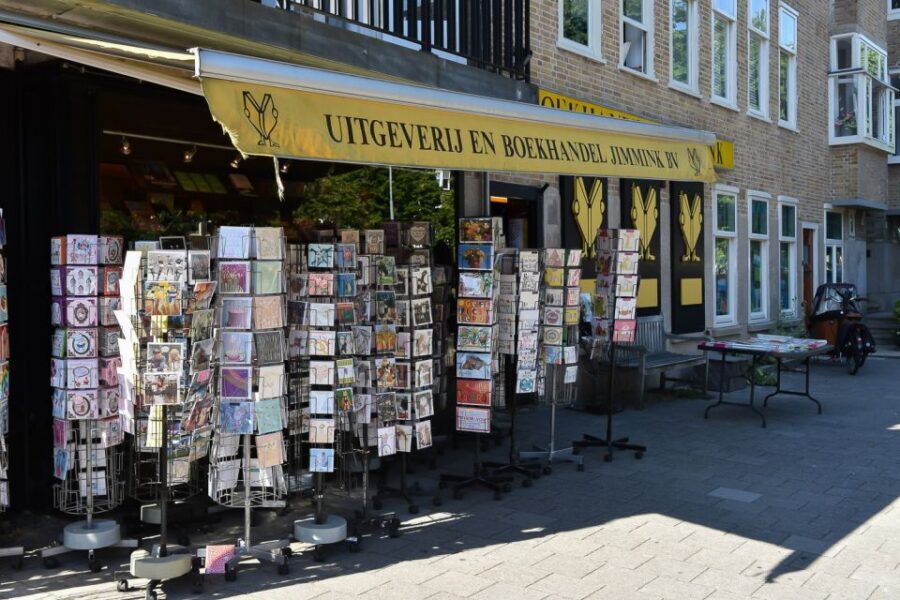
You’ll see the bookstore where Anne bought her diary. This is the kind of stop that sounds small on paper, then becomes huge once you’re there. The diary isn’t just a wartime document. It starts as something personal and ordinary: a notebook Anne chose, in a place she could reach in her normal life.
That’s why this stop matters for your understanding of the diary. When you picture Anne buying it, you’re reminded that she wasn’t writing only because something terrible had already happened. She was writing because she was growing up, thinking, reacting, and trying to make sense of her world. The diary becomes both a record and a conversation—one that begins before the Secret Annex story becomes unavoidable.
Also, don’t underestimate how much a guided explanation changes a location. A bookstore is just a storefront unless someone helps you see what makes it specific. On this tour, the guide ties the diary purchase to the timeline of Anne’s life, and the story clicks.
Bring your camera if you like taking photos, but also be ready to put it away. Some moments are better taken in through listening, not through a lens.
Meeting Miep Gies: the helper’s story beyond the headlines
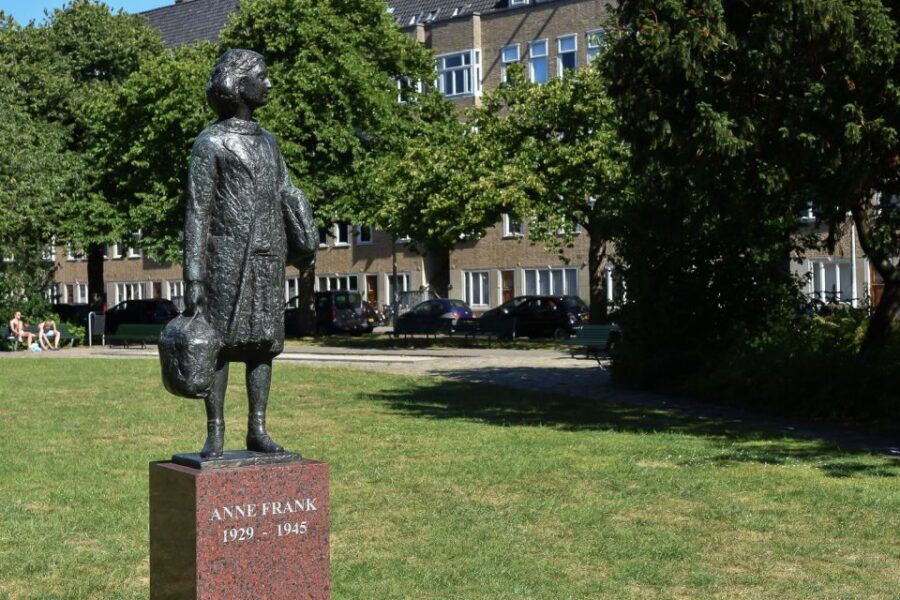
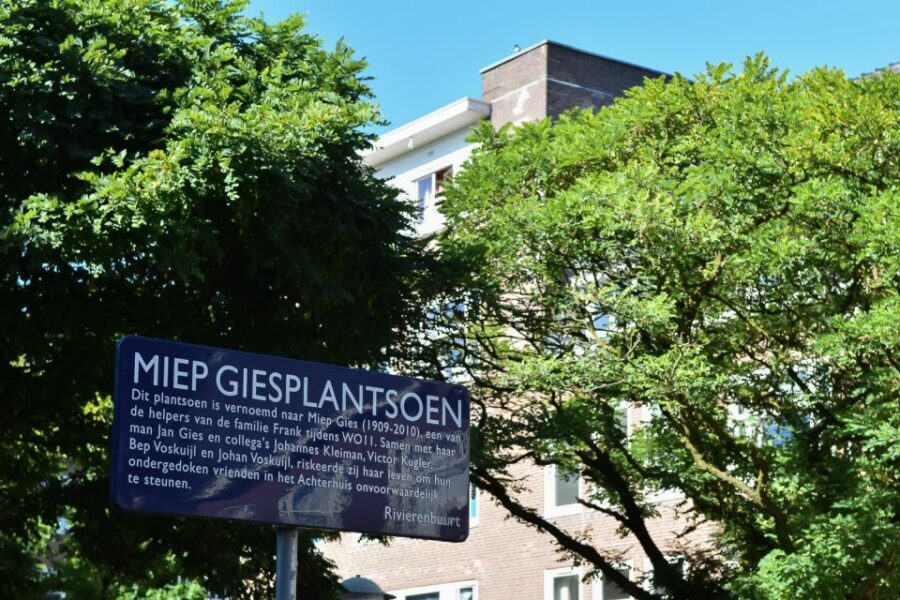
Another strong stop is the home of Miep Gies. If you’ve read the diary or watched the story unfold in films, you already know Miep as one of the helpers. But seeing her home location helps you grasp the scale of courage. This wasn’t abstract heroism. It was something carried out in a real neighborhood, by real people living real lives.
This stop gives you perspective that’s easy to miss when a story is reduced to the hiding place. The Secret Annex is central, yes. But the helpers, including Miep, are part of why the diary survived. The tour uses this location to connect bravery to everyday geography: homes, streets, and the willingness to act when it could go badly.
If you’re the type who wants history with a human face, this is one of your best moments on the route. It turns “someone helped” into “someone lived nearby, within a community, and took risks anyway.”
Why Amsterdam-Zuid is part of the point, not just the setting
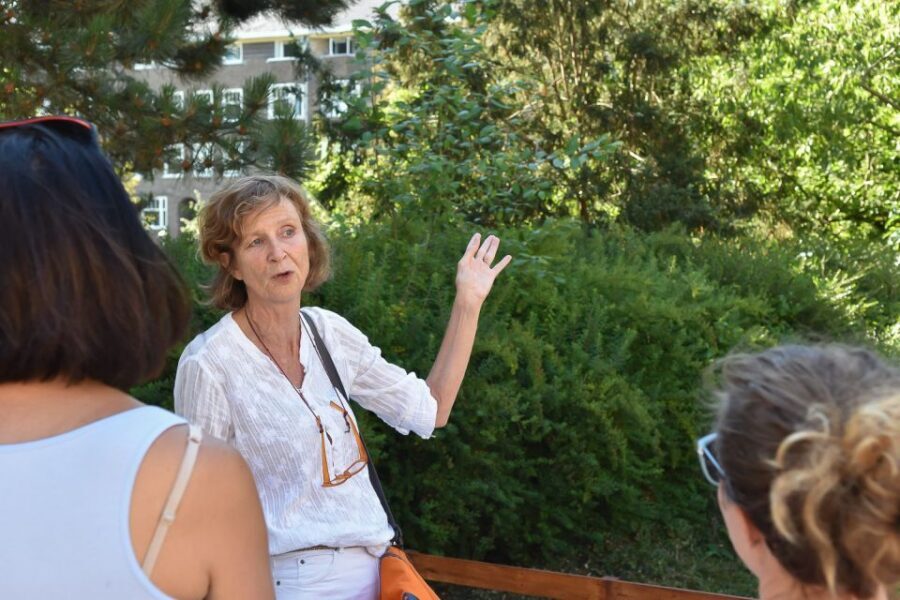
It’s tempting to treat Amsterdam South as a detour. After all, many visitors spend most of their time in the canal belt area and the places tied to big-ticket attractions. This tour flips that logic. It uses Amsterdam South to show you where Anne’s everyday life took place.
The neighborhood’s 1920s and 1930s planning is part of the experience. You’ll hear how the area reflects approaches to urban design and social housing from that era. And even if you’re not an architecture enthusiast, it helps your mental map. You start to understand the city that formed Anne’s childhood, not just the city that appears in guidebooks.
That’s also where the tour feels authentic. You’re walking in a living city quarter, not only a curated zone built for visitors. You’ll likely notice yourself slowing down just to observe: building style, street layout, and the way the square and streets feel as a neighborhood space.
And in a story like Anne’s, that matters. When a life is interrupted by war, you need the baseline—what “normal” looked like. This tour tries to give you that baseline in a smart, manageable way.






The walk itself: timing, comfort, and how to get the most out of 1.5 hours
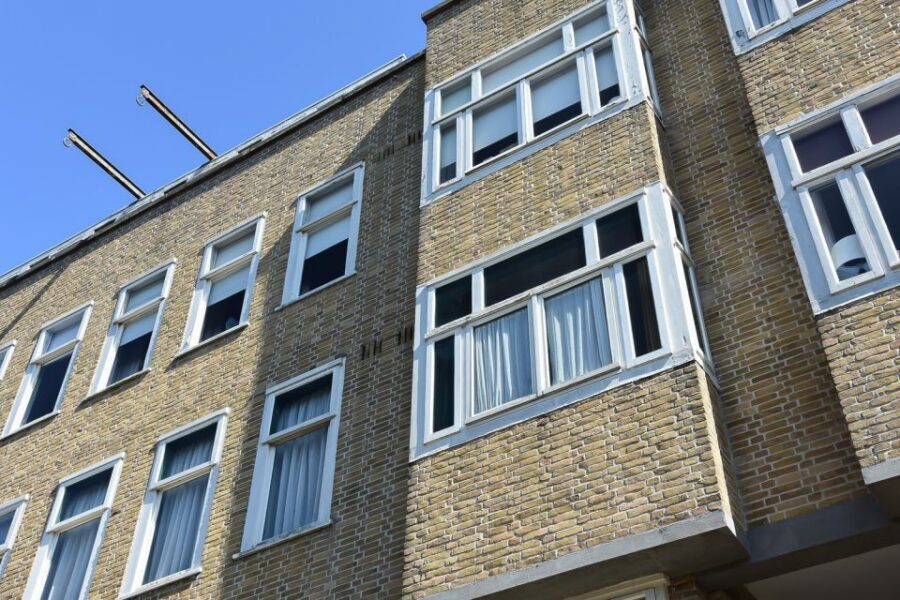
At 1.5 hours, you should expect a brisk-but-not-rushed walk. You’re not chasing every corner of Amsterdam. The tour keeps you on a specific line tied to Anne’s early life locations, then wraps you back at Merwedeplein 61.
Because time is limited, the guide’s job is synthesis: connect the facts to the story in a way you can hold in your head. This is where the reviews’ tone makes sense. You can tell the guiding approach aims to be energetic, question-friendly, and structured around understanding rather than memorizing.
For you, that means you’ll do best if you treat the tour like a conversation. If something sparks a question—about timeline, daily life, or the significance of a specific place—ask. The tour’s style (from what you’re told and what you can expect) is built for that back-and-forth.
Comfort tips from the basics:
- Bring comfortable shoes. The tour says there’s a small amount of walking, but small can still feel long if your shoes are wrong.
- Bring an umbrella for rainy days. The weather in Amsterdam can change quickly, and the tour runs outdoors.
- Pack a camera, but don’t let it steal your attention. Take photos when appropriate and then listen.
Price and value: is $18 worth it?
At $18 per person, this tour prices itself as accessible. You’re not paying museum-entry money. You’re paying for a guided walk that connects multiple meaningful locations into one coherent story.
Here’s the honest value math: you get a live English guide, the route is curated around Anne’s early life, and taxes and fees are included. The only thing you do not get is entry into the Anne Frank House. That matters, because the Anne Frank House is a major-ticket attraction. If your top goal is standing inside the famous annex space, you’ll need a separate plan for that.
But if your goal is understanding Anne’s life before hiding—her schools, neighborhoods, the diary purchase, and the helper network—then $18 is a pretty fair deal. For the time you spend, you also avoid the common problem of doing random “Anne Frank-related stops” on your own without context. A good guide turns locations into meaning, and that’s the part you’re really buying.
It’s also worth noting the popularity: the tour has a 4.7 rating from 53 reviews, which usually signals that the guide approach and overall experience land well.
Who should book this Anne Frank walking tour
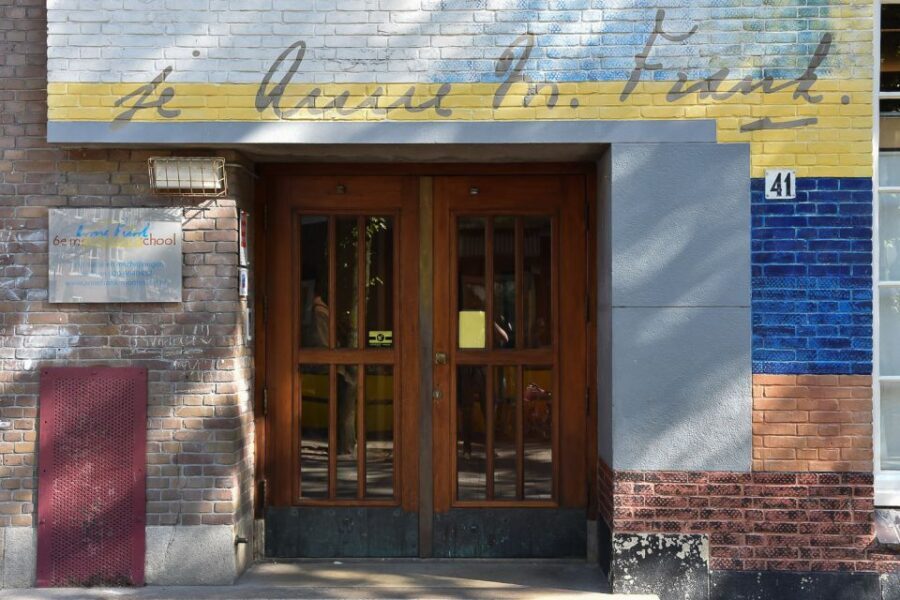
This tour is a strong fit if:
- You want the story to start earlier than the Secret Annex.
- You like history with specific addresses and outdoor context.
- You enjoy neighborhood-level exploring in Amsterdam South, not only the center.
- You’d rather spend 1.5 hours learning clearly than try to DIY a scattered route.
It may not be the best fit if:
- You need wheelchair access or mobility-friendly routes. This tour is not suitable for wheelchair users or people with mobility impairments.
- You’re expecting museum entry. This walk shows places connected to Anne’s early life, but it doesn’t grant access to the Anne Frank House.
And one more practical detail: pets are not allowed, so leave them at home.
Should you book this tour or choose something else?
Book it if you want a focused, guided look at Anne Frank’s early-life environment in Amsterdam South. For $18 and 1.5 hours, you’ll leave with a clearer picture of Anne as a growing child shaped by schools, streets, and daily life—not only as a diary author in hiding.
Skip it (or plan differently) if your must-do list centers on entering the Anne Frank House itself. This tour doesn’t cover that door. But if you’re building a fuller day around Anne Frank—one part outside understanding, one part inside-ticket access elsewhere—this walking tour is a smart first step. It gives the background that makes the famous site hit differently.
If you like your history human, place-based, and not too long, this one is worth your time.
FAQ
How long is the Anne Frank Walking Tour in Amsterdam South?
The tour lasts 1.5 hours.
Where does the tour start?
It starts at Merwedeplein 61, in Amsterdam South, in front of the statue of Anne on Square Merwedeplein.
How much does the tour cost?
The price is $18 per person.
Is entry to the Anne Frank House included?
No. The tour does not grant access or allow you to enter the Anne Frank House. It shows the area where she grew up.
What language is the guide?
The live tour guide is English.
Is the tour suitable for wheelchair users or people with mobility impairments?
No. It is not suitable for wheelchair users or people with mobility impairments.
What should I bring?
Bring comfortable shoes, an umbrella (especially on rainy days), and a camera.