REVIEW · AMSTERDAM
Amsterdam: Queer City Walking Tour With Local Guide
Book on GetYourGuide →Operated by LGBTOUR_Amsterdam · Bookable on GetYourGuide
Queer Amsterdam starts at Dam Square. This 2-hour small-group walk, led by Sanne from LGBTOUR_AMSTERDAM, strings major landmarks and lesser-known corners together with stories of love, being gay and single in Amsterdam, and the push-pull of pride and protest. It’s historically grounded, but the emotional center is personal.
I love how the route feels like a living conversation, not a lecture. You’ll hit places like Homomonument and Café ’t Mandje, plus short stops that connect activism to everyday life. One thing to plan for: it runs rain or shine, so bring shoes you can walk in for a solid stretch around the oldest part of town.
In This Review
- Key things that make this tour worth your time
- Why a queer city walk makes sense in Amsterdam
- Getting oriented at the National Monument (Dam Square)
- Homomonument: where visibility turns into memory
- Belle and Condomerie: quick stops with big emotional weight
- Red Light District + Zeedijk Street: the queer heart in plain sight
- Eagle Amsterdam and Pride Clothing: symbols you’ll actually notice later
- Kokopelli: guided time that slows your brain down
- Dancing Houses: a photo stop with real storytelling value
- Finishing at Café ’t Mandje: the quiet payoff
- The $59 value question: what you’re really paying for
- What to bring and how to handle rain (because it will happen)
- Who should book this tour
- Quick notes on timing and what to expect
- Should you book the Amsterdam Queer City Walking Tour with Sanne?
- FAQ
- Where is the meeting point for the tour?
- How do I recognize the guide?
- How long is the walking tour?
- What does the tour cost?
- What languages are offered?
- Does the tour run in bad weather?
- What should I bring?
- Is the tour wheelchair accessible?
- What are some of the main stops along the way?
- Is there a cancellation policy?
Key things that make this tour worth your time
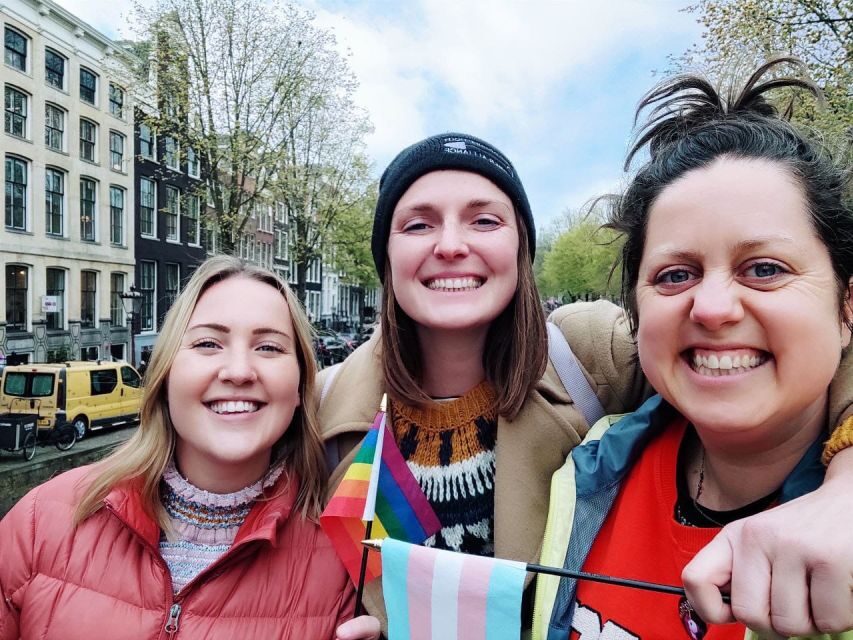
- Sanne’s personal storytelling ties LGBTQI+ landmarks to real-life moments, including love, identity, and community.
- A tight circuit of iconic sites and quick stop-details keeps you moving while still getting guided time at the big anchors.
- Pride and protest meet history: you’ll hear how public events shaped Amsterdam’s queer life.
- HIV/AIDS-era necessity gets attention through the story of the first condom shop in the world.
- A clear finish in queer nightlife territory at Café ’t Mandje, a classic old meeting point.
Why a queer city walk makes sense in Amsterdam
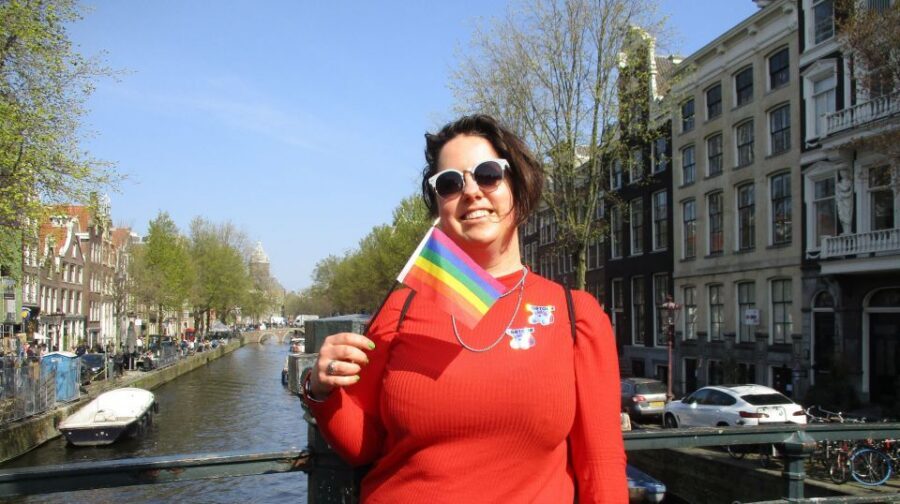
Amsterdam can feel like it has two faces at once. On one side, it’s famous for openness and visibility. On the other, the city’s LGBTQI+ story wasn’t handed over like a gift—it was built with people, protests, heartbreak, and organizing.
That’s why this Queer City Walking Tour works so well. It keeps you outside, on the streets where the names, buildings, and symbols actually live. And instead of presenting queer history as something sealed behind glass, it frames it as a chain of connections: who knew whom, what happened when, and how change traveled from private life into public space.
Sanne also keeps the tone welcoming in a very practical way. The tour is built for an audience that includes queers and allies, and the message is simple: the rainbow is for everyone. You’ll also notice the pacing is designed for a real walk—around 2 hours, not a multi-hour marathon.
You can also read our reviews of more walking tours in Amsterdam


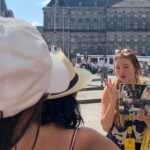
Getting oriented at the National Monument (Dam Square)
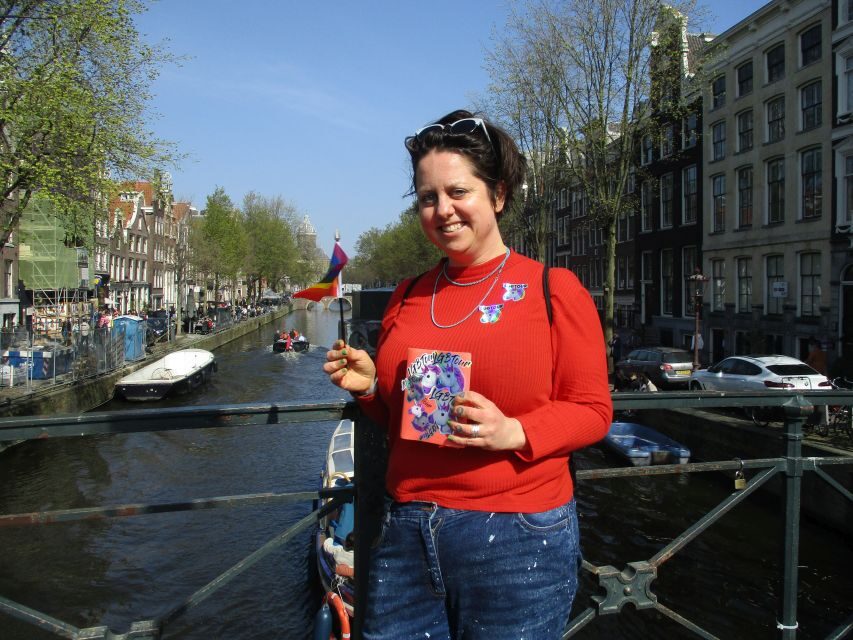
You begin at the Nationaal Monument at Dam Square, the kind of spot where you instantly understand you’re in Amsterdam’s “main stage” zone. It’s an easy meeting place, and it matters because the tour’s themes are public: monuments, protest, and visibility.
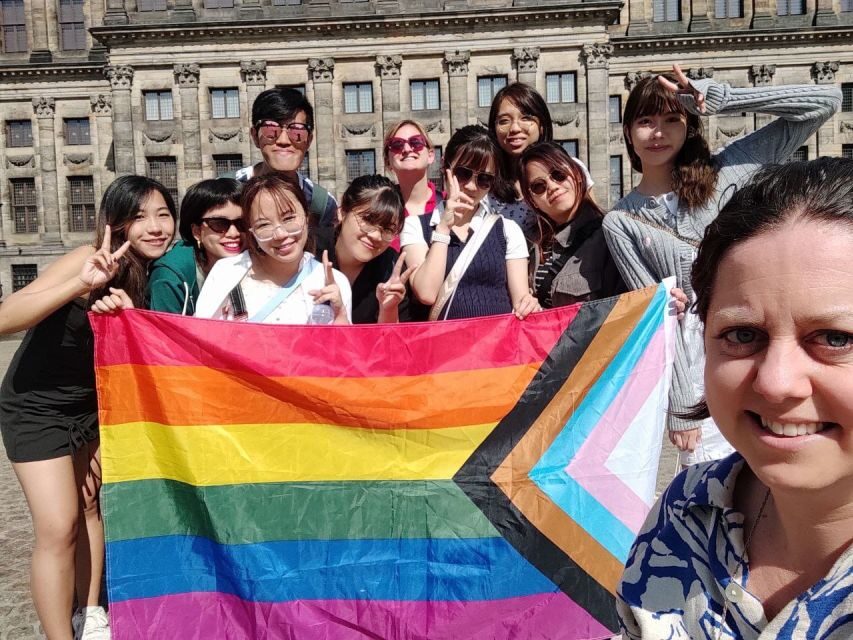
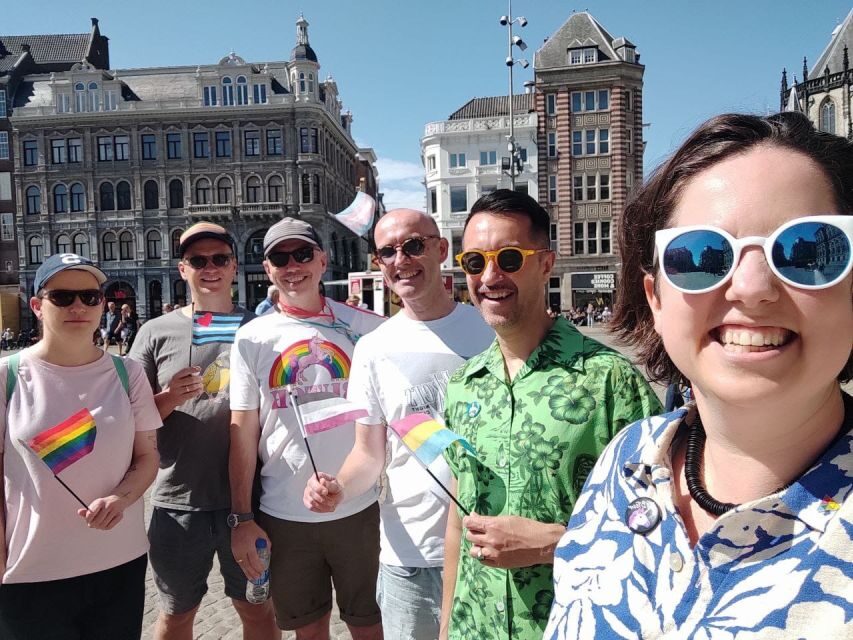
Sanne makes it easy to find the group—she’ll be recognizable by a tiny rainbow flag—and then you get set up with what the walk is trying to do. The goal isn’t just to see sites; it’s to learn how the “least expected” are connected in queer Amsterdam.
A practical tip: Dam Square can be busy. Arrive a few minutes early so you can settle your shoes, get your water bottle situation sorted, and avoid stressing in a crowd.
Homomonument: where visibility turns into memory
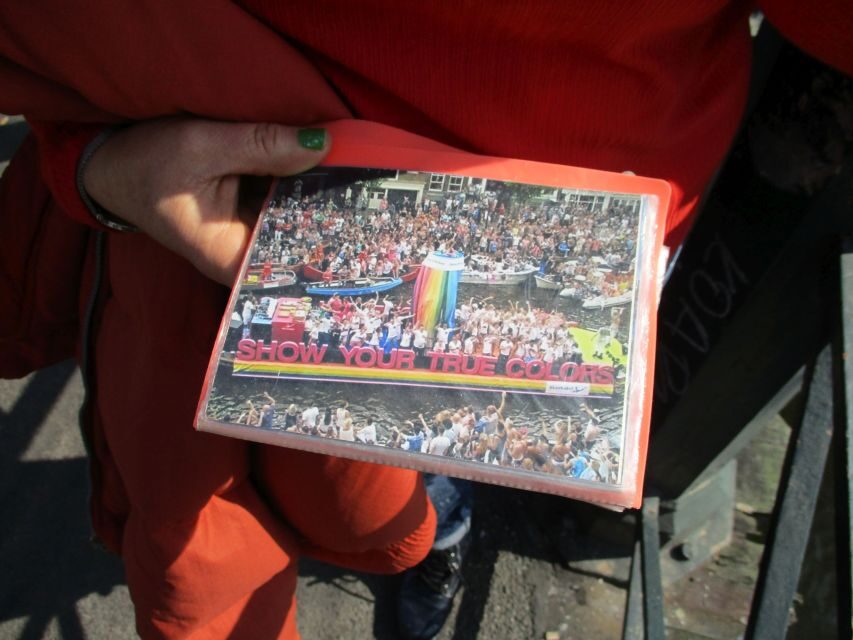
One of the first guided stops is Homomonument, with about 20 minutes set aside. This is the kind of place where you can’t just glance and move on. You need a guide to slow your brain down and help you read what’s in front of you—names, meaning, and the reason remembrance belongs in the street.
On a walking tour like this, the value of a longer guided stop is huge. It gives you time to process rather than sprint. If you’re the type who likes learning by standing somewhere and imagining the past playing out around you, Homomonument is where that method pays off.
If you’re not into heavy emotional stops, don’t worry—the tour balances intensity with other moments: symbols, nightlife edges, and the lighter curiosity of street-level details.
Belle and Condomerie: quick stops with big emotional weight
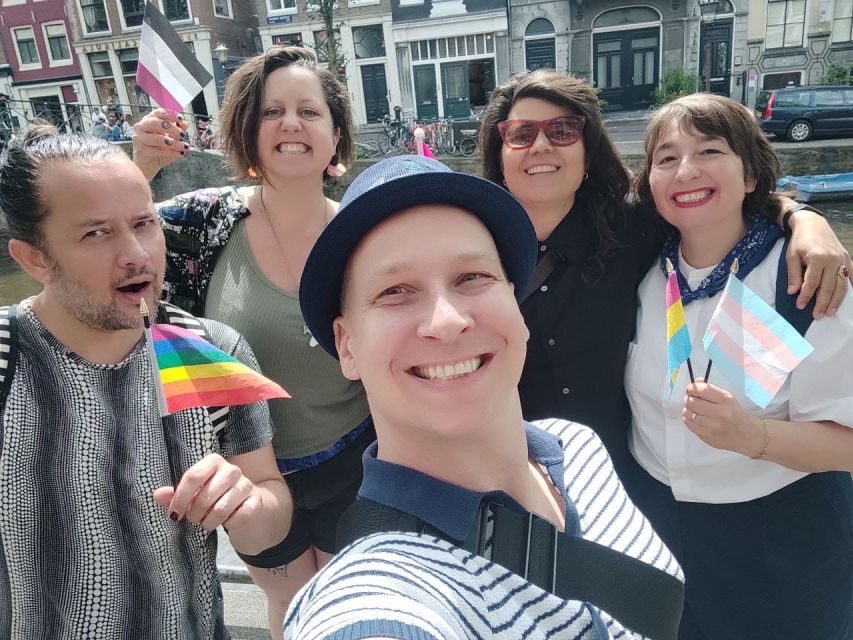
Next up you’ll visit Belle for around 10 minutes of guided time, then Condomerie for another 10 minutes.
These stops are short on the clock, but they’re powerful because they bring a different kind of history into the story. Amsterdam’s LGBTQI+ past isn’t only about parades and landmark names. It’s also about survival, healthcare, and the practical inventions people needed to protect each other.
That practical angle becomes explicit in the tour’s Condomerie focus. You’ll hear about the first condom shop in the world and how it was born out of necessity during the AIDS crisis. That’s a reminder that activism and queer life don’t live only in romance or celebration. They live in harm-reduction too.
A consideration: if you’re expecting a purely upbeat tour, this part can hit with seriousness. But that’s also why the tour feels respectful rather than performative.
Red Light District + Zeedijk Street: the queer heart in plain sight
Then you step into the Amsterdam Red Light District for about 15 minutes. This is framed as the historic heart of queer Amsterdam—the oldest part of town—so it’s not just about what the district looks like today. It’s about why the area became part of the queer public landscape in the first place.
After that, you move through Zeedijk Street (about 15 minutes walking). This is where you’ll start seeing how the tour stitches streets together: one landmark story leads to the next neighborhood clue, and the city starts to feel like a map of relationships.
If you care about street-level context—how communities form in specific areas, how visibility changes over time—this section is one of the best uses of your time. It’s also a good place to remember: Amsterdam’s queer story isn’t tucked away in a single museum. It’s part of everyday geography.
You can also read our reviews of more guided tours in Amsterdam




Eagle Amsterdam and Pride Clothing: symbols you’ll actually notice later
You’ll pass Eagle Amsterdam for around 5 minutes, and then Pride Clothing for another 5 minutes pass-by stop.
These aren’t long. But short stops can be useful when they point out details your eyes would otherwise skip. These moments help you train your attention: you begin to notice symbols, references, and visual cues that keep queer culture visible in public space.
If you’re the kind of visitor who loves photo stops and “I didn’t know that was there” moments, don’t rush through these segments. They’re quick, but they often make the rest of the walk click.
Kokopelli: guided time that slows your brain down
Next comes Kokopelli with about 10 minutes of guided tour. This kind of stop is valuable because it gives you a moment of guided interpretation in a place that likely feels familiar from the outside.
It also helps break up the walk rhythm. You’re not only in motion; you get a guided perspective that makes street-level details meaningful.
Dancing Houses: a photo stop with real storytelling value
You’ll have a 10-minute photo stop at Dancing Houses, Amsterdam. This is one of those moments where you might think, ok, we’re just taking pictures. But in a tour built around connections, the photo stop isn’t filler. It’s a visual pause—architecture as a kind of language.
Take a couple photos, then spend ten seconds looking around before you move on. In Amsterdam, buildings carry character and references, and the best time to notice them is when the tour has primed your attention.
Finishing at Café ’t Mandje: the quiet payoff
The walk ends in front of Café ’t Mandje. This is where you’ll wrap up, with the tour framed as a strong ending at one of the city’s older queer bars.
Finishing at a real gathering spot is smart. It turns the tour from information into a next step. You leave with a place to orient yourself for the evening—or at least with a sense of where community has historically gathered.
It also ties back to the tour’s emphasis on personal stories and connections. Even after the last stop, you still get the sense of continuity: people didn’t just show up for events. They met, talked, dated, built friendships, and made plans in places like this.
The $59 value question: what you’re really paying for
At $59 per person for 2 hours, this isn’t a “see a couple buildings” kind of experience. You’re paying for several things that are hard to replicate on your own:
1) Guided interpretation at key moments. Some stops are guided for 20 minutes and others for 10, so you’re not stuck with only pass-by points.
2) A clear thematic thread. The tour isn’t just location hopping. It’s organized around Follow the Rainbow, Pride and protest, and the reality that queer life includes both celebration and necessity.
3) A personal voice. Sanne’s style is described in a way that emphasizes care and real connection. That matters. People remember how a story is told, not just what the story contains.
So ask yourself: do you want a route, or do you want meaning? If you want meaning—and you’re comfortable walking and taking in personal stories—this price starts to look fair fast.
What to bring and how to handle rain (because it will happen)
You’ll want comfortable shoes first. Then plan for weather because the tour runs rain or shine. Bring rain gear if you can, and if the forecast looks bright, don’t forget a sun hat and sunscreen.
Also, keep your day simple. This is a concentrated, guided walk. If you schedule something right after, give yourself a bit of buffer so you can decompress without feeling rushed.
Who should book this tour
This fits best if you:
- want queer history told through personal stories as well as public landmarks
- like walking tours that move through neighborhoods rather than only museum-style stops
- are curious about how Pride, protests, and community formed in the street-level reality of Amsterdam
- enjoy a mix of solemn and uplifting moments, including topics like the AIDS crisis and LGBTQI+ visibility
It may not feel like the right match if you:
- hate walking in the center of town for about two hours
- want a purely light, party-only vibe (this includes serious material)
Quick notes on timing and what to expect
This tour runs around 2 hours and includes guided segments plus shorter pass-bys. Expect to move at a comfortable walking pace through central Amsterdam, with time set aside to actually talk, not just point.
Languages are English and Dutch, so you’ll be fine if you’re anywhere in that range.
Should you book the Amsterdam Queer City Walking Tour with Sanne?
Yes, if you want a guided walk that treats queer history as lived reality—full of love, protest, and the practical side of community survival. The combination of guided stops, a thematic focus on Pride and protest, and a personal guide voice makes it feel more human than “just another tour.”
Book it if you like to learn by standing in the city and seeing how stories fit the buildings. Skip it only if you can’t handle rain or serious topics, or if you want strictly light sightseeing.
If you do book, wear shoes you can trust, show up a little early at Dam Square, and go in with a mindset of curiosity. You’ll end the walk not only knowing more about Amsterdam, but also understanding how people connected across time.
FAQ
Where is the meeting point for the tour?
The tour meets at the National Monument at Dam Square.
How do I recognize the guide?
You can recognize Sanne by a tiny rainbow flag.
How long is the walking tour?
The tour lasts about 2 hours.
What does the tour cost?
The price is $59 per person.
What languages are offered?
The tour is guided in English and Dutch.
Does the tour run in bad weather?
It takes place rain or shine.
What should I bring?
Bring comfortable shoes, a sun hat, sunscreen, rain gear, and comfortable clothes.
Is the tour wheelchair accessible?
Yes, it is wheelchair accessible.
What are some of the main stops along the way?
You’ll visit Homomonument, Belle, Condomerie, the Amsterdam Red Light District, Kokopelli, and end at Café ’t Mandje. There are also several pass-by stops along the route.
Is there a cancellation policy?
Free cancellation is available up to 24 hours in advance for a full refund.