REVIEW · THE HAGUE
Your Own Hague. Behind The Scenes of The Royal City
Book on Viator →Operated by Snurk.Travel · Bookable on Viator
This is a royal city walk with street-level details.
The Hague can look modern and futuristic from a distance, but this experience brings you close to the places where power, tradition, and everyday city life overlap. You’ll follow a guided route that starts at the historical heart of Dutch governance and moves through surprising architecture, tight alley rhythms, and landmark facades that scream status. I like the way it mixes palace-adjacent history with real city atmosphere, and I really enjoy the small, quirky details that make the center feel human, not museum-like.
Two things I love most are the free access to key stops and the guide’s talent for making buildings feel personal, not distant. I also like that the route doesn’t just grandstand about royalty; it includes the kind of “wait, that’s tiny” and “how fancy is this” moments that make you look twice. One drawback to plan for: the stop involving the prime minister is luck-based, and you’ll still be walking in whatever weather shows up.
In This Review
- Key Highlights to Expect on This Walk
- A Royal City Walk Through Power and Tiny Details
- Price and Value: What $254.50 Buys You in the Center
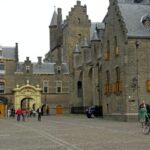
- Stop 1: Het Binnenhof and the Feeling of Living Monuments
- Stop 2: Torentje and the Luck-Based Prime Minister Moment
- Stop 3: Hotel Restaurant ‘t Goude Hooft (1423) for the Old-Inn Perspective
- Stop 4: De Passage, Where Shopping Got Its Modern Shape
- Stop 5: Lange Voorhout 32A and the Smallest-House Shock
- Stop 6: Hotel Des Indes and When Wealth Shows Up in Full Color
- How the Guide Turns Buildings Into a City Story
- Planning Your Day: Where to Meet, How to Pace It
- Who This Tour Fits Best
- Should You Book Your Own Hague: Behind The Scenes of The Royal City?
- FAQ
- How long is the tour?
- How much does the tour cost?
- Where do we meet and where does the tour end?
- Is this tour private?
- What’s included in the price?
- Are entrance tickets included for the stops?
- Is there a mobile ticket?
- Are coffee, tea, snacks, or drinks included?
- When will I receive confirmation after booking?
- What if my plans change last minute?
Key Highlights to Expect on This Walk
- Het Binnenhof’s political roots: the literal birthplace of The Hague, explained as living monuments.
- A prime-minister spotlight at Torentje: you’ll try to see him from the outside, with a chance-based twist.
- ‘t Goude Hooft (1423): a very old inn/café story tied to knights, travelers, and modern locals.
- De Passage, shopping’s earlier version: Paris-inspired design in a 19th-century style setting.
- Lange Voorhout 32A’s scale shock: the smallest house in town, only 183 cm wide.
- Hotel Des Indes’ wealth display: a high-gloss reminder that The Hague isn’t all “modest.”
A Royal City Walk Through Power and Tiny Details
The Hague is often described as the city of courts, diplomats, and officialdom. This experience doesn’t ignore that. It leans into it, but it also keeps you watching the street: how people move between gates, how grand facades sit next to older corners, and how the city’s old function still shapes what you notice today.
I think it’s a great length for a first visit. At around 3 hours 30 minutes, you get enough time to connect the dots between governance, royalty, and the everyday city around it. And because the tour is private (just your group), the pacing feels like it can match your questions rather than forcing you into a fixed lecture tempo.
You’ll also get a walking route that stays concentrated in the central area. That matters because it keeps the day from turning into a “transportation day” instead of a “seeing day.”
You can also read our reviews of more city tours in The Hague

Price and Value: What $254.50 Buys You in the Center
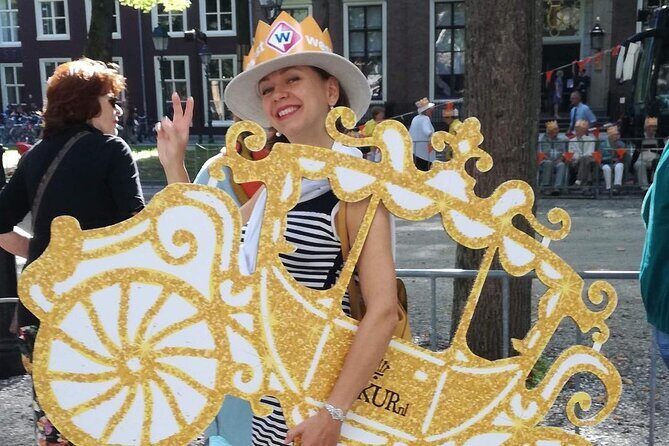
The price is $254.50 per person, and it’s fair to judge it by what’s included. You get a guide, a mobile ticket, and each stop lists admission ticket free. That combination is what keeps the value honest: you’re paying for guided time and access to context, not for a stack of museum entries.
If you’re traveling with friends, couples, or a small group, the private format can make the cost feel more reasonable. You can ask follow-ups about why specific places matter, and you don’t have to compete for attention in a crowd. If you’re on your own, you’ll still benefit from the guide’s ability to make the city readable, but you may want to be extra sure you like walking and chatting with a local-led route.
One more practical value point: this is built around central stops. That usually means fewer logistical headaches and less time lost getting between sights.
Stop 1: Het Binnenhof and the Feeling of Living Monuments
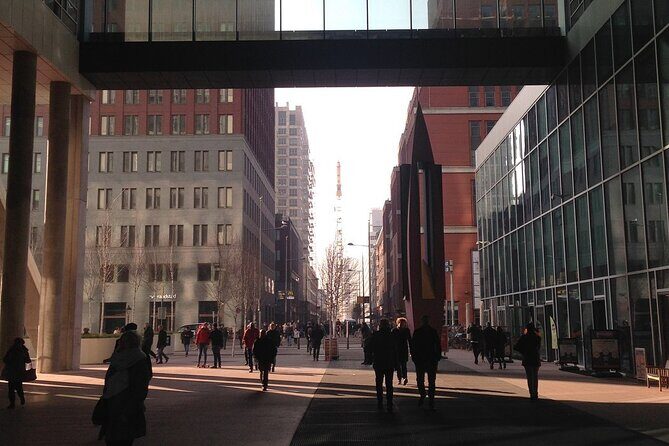
You start at the core of the city’s power story: Het Binnenhof. It’s described as the literal birthplace of The Hague, and the key idea here is that you’re not looking at history behind glass. The buildings are framed as living monuments and works of art, tied directly to how the city functions.
What I like about this first stop is that it sets your mental map. Once you understand what Binnenhof represents, other stops start clicking into place as parts of the same system: royal presence, political work, tradition carried forward, and the city’s long memory.
A drawback to consider is simple: if you’re not into government-adjacent architecture, you might find the first moments feel more “explanatory” than scenic. But even then, it’s still a strong foundation because it helps you read the streets that follow.
Stop 2: Torentje and the Luck-Based Prime Minister Moment
From there, you shift to a more teasing, slightly playful stop: Torentje Onderhoudsbedrijf. The tour frames it as a place where, if you lived in The Hague for more than a week, you’d likely see the Dutch prime minister. The plan here is to test your luck and see if he appears, with a hope of getting a glimpse into his working office if possible.
That “maybe” factor is the point. It turns the walk into something closer to a city scene than a checklist. You’re watching what’s happening, not just standing where someone once stood.
Practical consideration: since this depends on real-world timing and access, don’t build your ideal day around an inside glimpse. If you see him, it’s a bonus. If you don’t, the stop still supports the bigger theme: The Hague isn’t only royal on postcards. It’s active.
Stop 3: Hotel Restaurant ‘t Goude Hooft (1423) for the Old-Inn Perspective
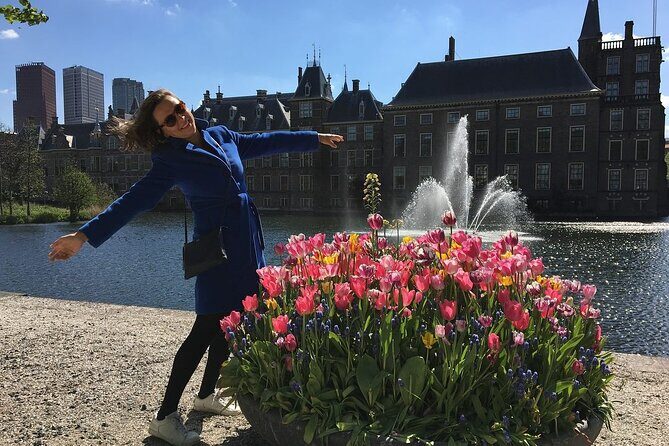
Next comes a big step away from formal power and into lived-in tradition: Hotel Restaurant ‘t Goude Hooft. It’s described as the oldest café/inn in the Netherlands (dating to 1423). The story starts with knights and travelers, then moves to the present, where it serves regular citizens.
What you gain here is a shift in tone. You’ve been thinking politics and royal structure; now you get the long thread of hospitality. The guide’s job at this point is usually to show how a place can keep its identity while adapting to new eras of visitors.
One thing to plan for: the tour does not include coffee or tea, snacks, or alcohol. If you want a mid-walk break, treat ‘t Goude Hooft as a meaningful stop to experience the setting and maybe grab something on your own schedule.





Stop 4: De Passage, Where Shopping Got Its Modern Shape
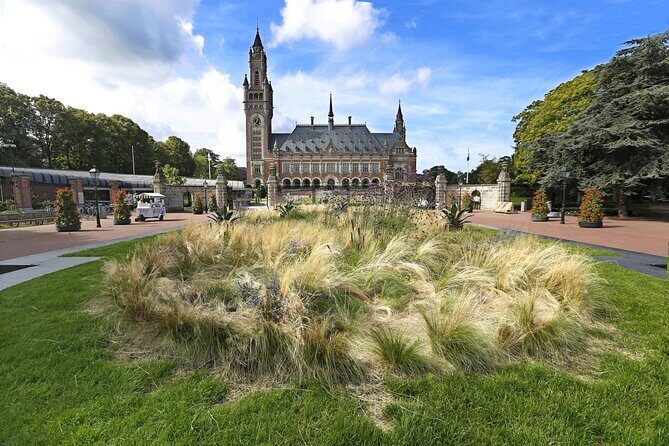
Then you step into De Passage, presented as the first place in the Netherlands where shopping as we know it began. It’s inspired by Parisian architecture in a way that still feels impressive as it did in the 19th century.
This stop works especially well if you like design details. You’re not just looking at storefronts; you’re seeing how a specific architectural idea shaped consumer life. And since this is a covered or passage-style setting (so you’re not fully exposed to the street), it also tends to be a comfortable segment if the weather shifts.
The only “watch-out” here is expectation-setting. This isn’t a modern mall experience. It’s more about architectural context and how the city’s commercial history lives in the building itself.
Stop 5: Lange Voorhout 32A and the Smallest-House Shock
Now comes the kind of detail that makes the whole tour memorable in photos and in your brain. Lange Voorhout 32A is the smallest house in The Hague, only 183 cm wide.
You’ll likely pause and notice how design and daily life collide. It’s a reminder that cities grow with constraints. People have to make things fit, and old neighborhoods solved space in clever ways.
A small consideration: if you’re traveling with accessibility needs, narrow spaces and tight viewing areas can be harder to navigate. The tour says most travelers can participate, but “most” doesn’t mean every space will feel equally comfortable. Use your judgment and take your time near tighter spots.
Stop 6: Hotel Des Indes and When Wealth Shows Up in Full Color
Finally, you end with a statement building: Hotel Des Indes. The tour frames the Hague as not just humble, and this hotel is used as proof. It’s described as shining, and not afraid to show its wealth.
This works as a strong emotional finish. After you’ve learned about royalty, governance, and older inn traditions, you arrive at a place that tells you something about status and visual confidence. It’s a reminder that the Hague has always attracted power and money, not only solemn institutions.
If you like architecture that makes a point, you’ll probably enjoy this ending. If you prefer quiet, low-key sights, this last stop may feel more “showy” than the earlier ones.
How the Guide Turns Buildings Into a City Story
The guide is doing more than giving dates. This experience is built around narration that connects the dots between eras: medieval origins, royal presence, and then the Hague’s role as an influential political capital. Even the modern city feel gets addressed, especially the way high-rise urbanism sits near older streets and traditions.
That balance is backed up by what people tend to praise: guides who answer questions clearly, explain historical background without turning it into a lecture, and show how each building connects to the people who used it.
You also get a sense of flexibility. The walk is structured, but it still leaves room for conversation. That’s where a private group format helps. If you care more about architecture than politics, you can ask. If you want more about daily life than royal symbolism, you can steer the conversation.
Planning Your Day: Where to Meet, How to Pace It
You meet at Starbucks, Kon. Julianalaan 10-15, 2595 AA Den Haag and finish at Noordeinde Palace, Noordeinde 68, 2514 GL Den Haag. Both are in a very central, walkable part of The Hague, and the experience is noted as being near public transportation.
Timing wise, plan for a slow-to-moderate walk with pauses. The total duration is about 3 hours 30 minutes, and each stop is set for roughly 30 minutes. That’s enough time to hear the story, look around, and ask questions without feeling rushed.
Weather matters. One review notes the weather wasn’t great, but the tour still worked. Still, bring a jacket you can trust. If rain hits hard, you might want to wear shoes that handle slick sidewalks.
Also remember: no coffee/tea, snacks, or alcohol are included. If you want a break or a treat, plan to purchase it along the way.
Who This Tour Fits Best
This tour is a solid fit if you want a guided introduction to the city center that goes beyond surface photos. It’s especially good for you if:
- You like the mix of royal and political themes.
- You enjoy architecture details, including quirky ones like the 183 cm house.
- You want something walk-focused that doesn’t run all day.
- You prefer a guide who can handle questions and explain clearly.
It may be less ideal if you want a long, museum-heavy day or if you hate walking between multiple points.
Should You Book Your Own Hague: Behind The Scenes of The Royal City?
If you’re trying to understand why The Hague feels both traditional and modern, I’d book it. The strongest selling point is that you’ll see the city’s power story and its character in the same route. Het Binnenhof gives you the foundation, Torentje adds a real-life prime-minister “will we catch him” moment, and the final stops bring the design contrast that makes The Hague memorable.
The main reason to think twice is the luck factor at the prime minister stop. If you’re only going for that one dramatic possibility, you might leave disappointed. But if you’re there to enjoy the buildings, the stories, and the practical way a guide teaches the city, the “maybe” is part of the charm, not a dealbreaker.
In short: this is a good value-guided walk for people who want The Hague to make sense fast, without turning the day into a ticket-stacking exercise.
FAQ
How long is the tour?
It runs for about 3 hours 30 minutes.
How much does the tour cost?
The price is $254.50 per person.
Where do we meet and where does the tour end?
You start at Starbucks, Kon. Julianalaan 10-15, 2595 AA Den Haag, and end at Noordeinde Palace, Noordeinde 68, 2514 GL Den Haag.
Is this tour private?
Yes. Only your group will participate.
What’s included in the price?
A guide is included.
Are entrance tickets included for the stops?
The stop information lists admission ticket free for each location.
Is there a mobile ticket?
The experience includes a mobile ticket.
Are coffee, tea, snacks, or drinks included?
No. Coffee and/or tea, snacks, and alcoholic beverages are not included.
When will I receive confirmation after booking?
Confirmation is received at time of booking.
What if my plans change last minute?
You can cancel for a full refund up to 24 hours in advance of the experience start time.