REVIEW · ROTTERDAM
Rotterdam: Private Tour with Local Guide + Cube House visit
Book on Viator →Operated by Discover Delft · Bookable on Viator
Rotterdam’s big ideas fit a short walk. This private tour uses a local guide to connect the city’s architecture to everyday life, politics, and the scars of war. You’ll love the inside visit to the Cube House, plus the way the route links modern icons like the Markthal with older landmarks like St. Laurenskerk and the Witte Huis.
There is one catch: it’s a tight, 2-hour loop, with several stops where you’ll get great context but not long linger time at each place. If you’re the kind of visitor who wants 45 minutes per building, plan to do follow-up stops on your own after the tour.
In This Review
- Key highlights you should know before you go
- Blaak to Markthal: why this route gets you oriented fast
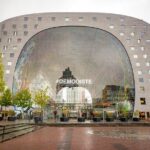
- Inside the Markthal: the architecture icon and the food-museum mood
- City Hall on Coolsingel: spotting pre-war survival in a modern capital
- St. Laurenskerk and Erasmus: a tower that lived through bombing
- The Witte Huis: bullet holes you can actually find
- Oude Haven: old port atmosphere, restoration energy, and Piet Blom echoes
- Cube House Museum-house: the inside view that makes it all click
- Price and value: what $294.55 buys you in real terms
- Tips to get the most from a 2-hour Rotterdam walk
- Who should book this private Rotterdam highlights tour
- Should you book it?
- FAQ
- How long is the Rotterdam private tour?
- Is this tour private?
- What group size is this tour designed for?
- What language is the tour offered in?
- Where does the tour start?
- What’s included with the tour?
- Do we need to buy a ticket for the Cube House Museum-house?
- Is there a mobile ticket?
- Are service animals allowed?
- Can I get a full refund if I cancel?
Key highlights you should know before you go
- Markthal first: a fast way to understand Rotterdam’s shift from roots to modern city planning
- The ceiling artwork at Markthal: you’ll know what you’re looking at before you even turn your head
- Wartime clues at the Witte Huis: the city doesn’t hide its history in plain sight
- St. Laurenskerk and Erasmus: a medieval tower that survived and a famous name tied to Rotterdam
- Oude Haven at street level: old port atmosphere now used for hanging out and restoration work
- Cube House inside access: see how Piet Blom’s geometry changes how people live
Blaak to Markthal: why this route gets you oriented fast
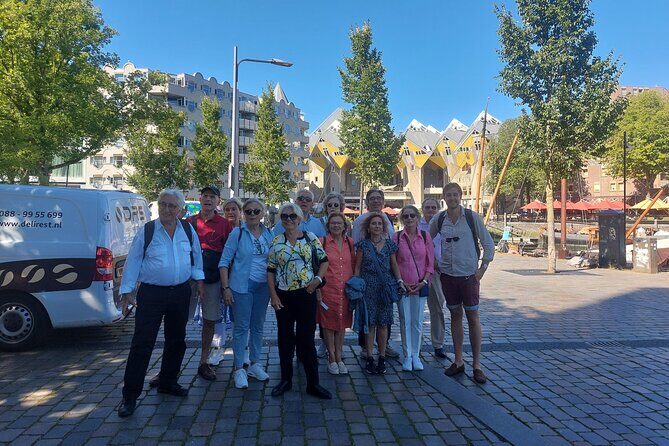
I like tours that help you read a city instead of just ticking off sights. This one starts around Blaak, where Rotterdam’s story begins with a river dam on the Rotte. From there, your guide sets you up to understand why the city rebuilt so boldly after major destruction.
Then you move into the Blaak-to-Markthal zone, which is perfect for a first-time Rotterdam day. You’re not just walking past impressive buildings. You’re learning the logic behind them: what Rotterdam decided to keep, what it chose to rebuild, and how the city uses design to shape daily life.
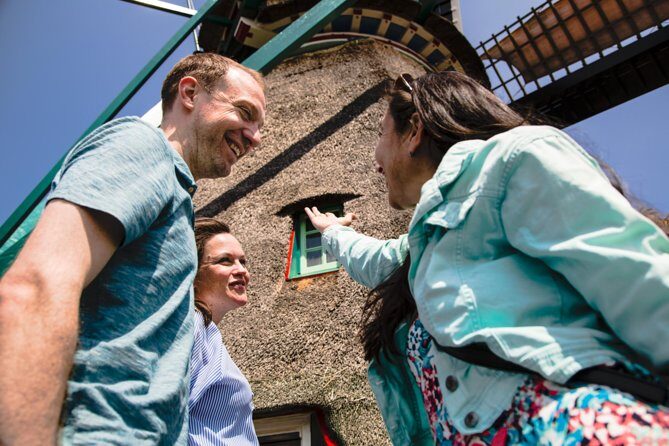
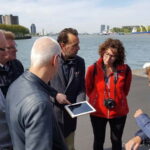
One reason this works well is the guide style. In the best versions of this tour, your guide turns architecture into a plain-language story. One guide named Fleur was singled out for being both entertaining and informative, with clear connections between buildings and the political climate and social movements of the time. Even if you normally skip history, that storytelling approach usually keeps people engaged.
Practical note: the opening stretch is where you’ll hear the “how to look at Rotterdam” coaching. So if you’re tempted to wander off early for photos, try to stick close for the first few minutes. You’ll get more out of the later stops once the guide has framed what to notice.
You can also read our reviews of more guided tours in Rotterdam


Inside the Markthal: the architecture icon and the food-museum mood
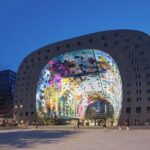
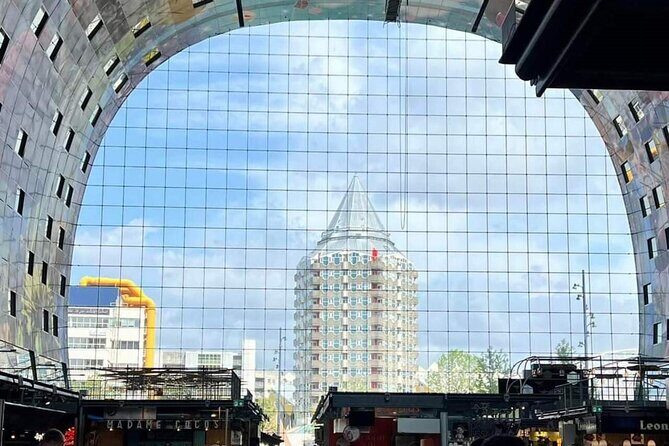
The Markthal is the sort of place where you’ll look up almost automatically. The building is an icon for Rotterdam, and it isn’t just a big hall you walk into and out of. On the sides you have apartments, and inside you find a dense mix of food and vendors that feel international without trying too hard.
What makes this stop special is the “two worlds at once” idea. From street level, the Markthal looks like a modern statement. But once you’re inside, it feels like a working part of the city: people doing errands, grabbing bites, browsing, and lingering. That gives the architecture context. It’s not design for design’s sake. It’s design that shapes how people move and meet.
Also, don’t miss the ceiling artwork. Your guide will point it out and explain why it matters, and you’ll likely feel the scale once you’re standing there under it. This is a huge visual field, and knowing what you’re looking at changes the experience from photo opportunity to real appreciation.
If you’re sensitive to crowds, treat Markthal like a place to observe. You don’t need to stop at every stall to enjoy it. Let the guide handle the orientation, then you can choose whether you want to sample something or just soak up the atmosphere. Even a quick look is meaningful because you’ll leave with the “why” behind what you saw.
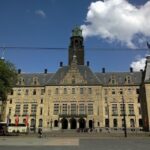
City Hall on Coolsingel: spotting pre-war survival in a modern capital
After Markthal, the walk turns toward Rotterdam’s town hall on Coolsingel. Coolsingel is often compared to the main boulevard energy you’d expect from a major city center, and it’s a useful corridor for understanding Rotterdam’s contrast: tall modern ambition beside older structures that survived.
The town hall is one of the few pre-war buildings in the city. That detail matters more than it sounds. In Rotterdam, survival architecture becomes a kind of timeline. When you learn which buildings lived through destruction, you start to see the city as a layered rebuild rather than a blank slate.
This stop is shorter by design, so it’s mainly about getting oriented and picking up a few key facts you can carry with you later. You’ll get to see the building close enough to notice its presence along the street, then move on before you start losing the momentum of the route.
A small drawback: if you’re hoping for a full interior visit here, don’t expect it from what’s included. This is more of a “see it with context” stop than a museum deep dive. Still, that context is what helps the bigger stories of Rotterdam click into place.
St. Laurenskerk and Erasmus: a tower that lived through bombing
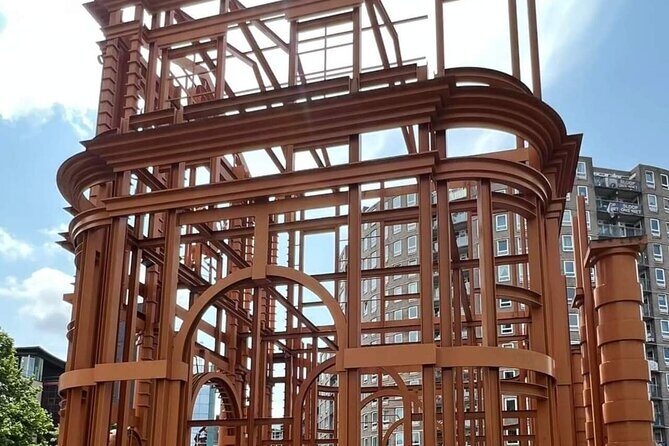
Near the Market Hall, you’ll find the 14th-century St. Laurenskerk and, especially, its tower. The standout detail is that the tower survived the bombing of Rotterdam. That’s not a trivia fact. It’s the kind of detail that changes how you see everything around it, because it anchors you to a real past in a city that had to rebuild.
Today, the church is mostly used as an event location. That means it’s not just preserved behind ropes. It’s part of contemporary city life, which is one of my favorite ways to see old architecture: still doing something, even if it’s not the same function it had centuries ago.
Your guide also connects the church to Erasmus, a famous humanist who was born here. Erasmus is one of those names you might recognize from books, but it hits differently when you’re standing in a place tied to his origin story. If you like the intersection of culture and place, this stop will land.
Timing tip: since this is an outdoor-focused moment with a short stop duration, take advantage of being there with the guide. That’s when the important “look at this” moments happen, like noticing which parts survived and how the tower holds meaning even now.
The Witte Huis: bullet holes you can actually find
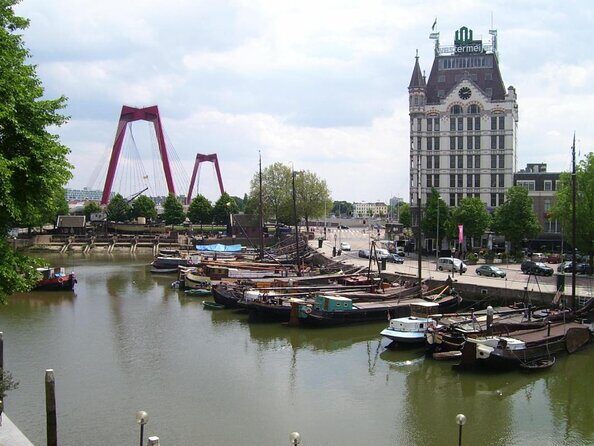
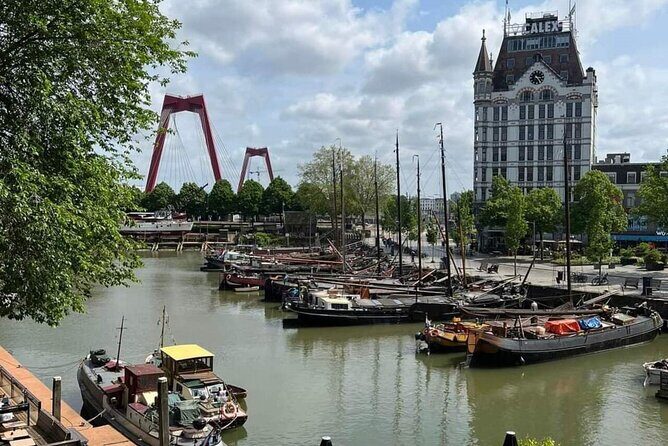
Next comes the Witte Huis, often described as the most prominent building in the Old Harbour area. It’s the White House, and it’s tied to a big claim: it’s the oldest skyscraper of Europe, dating from 1898. Rotterdam didn’t wait until the 21st century to reach upward.
But the real reason this stop sticks is what your guide points out visually. If you look carefully, you can see remnants of German bullet holes. That means the building carries physical evidence of the city’s wartime experience, not just a plaque or a generic museum description.
This is one of those moments where a guide earns their fee. Without context, you might miss what you’re looking at. With context, you start noticing small marks that become huge in meaning. It’s history you can face directly.
A practical consideration: the Witte Huis area is an urban streetscape, so you’ll want to keep your phone camera handy but not in a way that blocks foot traffic. Stand where your guide suggests, then zoom in after you understand where the bullet-hole remnants are said to be.
You can also read our reviews of more private tours in Rotterdam



Oude Haven: old port atmosphere, restoration energy, and Piet Blom echoes
From the skyscraper you shift into the Oude Haven, Rotterdam’s Old Harbour area. Today it’s more of a leisure zone than a working port, with terraces where people sit, eat, and hang around. That’s a different vibe than you might expect when you hear the word harbour.
What’s special here is the way the atmosphere still feels nautical. You’ll see ships anchored in the area for restoration work, which gives the space an “in-between” feeling: not active shipping, but not dead history either. It’s a place where the city keeps things moving forward by keeping old objects in the conversation.
You’ll also catch more of Piet Blom’s influence in the architecture around the area. That matters because it helps you connect the Cubic Houses later to the broader urban approach rather than seeing them as a novelty photo spot.
One thing to keep in mind: Rotterdam’s real shipping heart sits farther west than the Oude Haven. So if you’re picturing a giant industrial port view from this stop, you’ll likely be surprised. But that’s also why it’s enjoyable. You’re getting the human-scale waterfront version of Rotterdam, not a distant industrial panorama.
Cube House Museum-house: the inside view that makes it all click
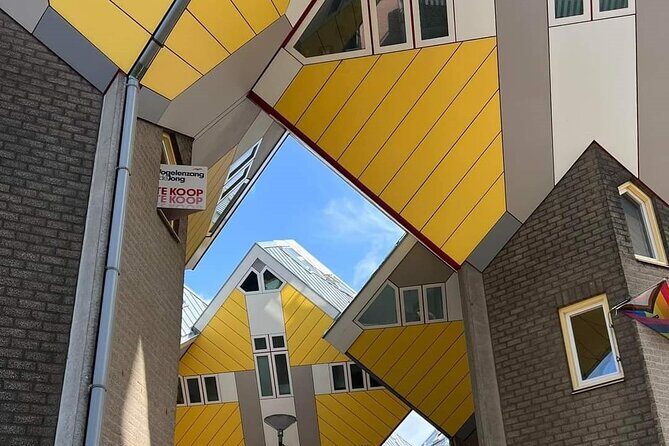
Now for the moment you came for: the Cubic Houses, designed by Piet Blom. They’re closely associated with the 1970s concept era and the 1980s construction, and they’re built around a simple, clever idea: a kind of village inside a city where people live in a dense, geometric layout.
You’ll probably spot the cubes from outside before you reach this stop. The guide’s job is to help you see beyond the cartoonish shapes. The Cube Houses are funny-looking only if you don’t understand the point. Inside, the design shows how geometry can create different ways of organizing space, light, and movement.
Here, the tour includes entry to the Cube House Museum-house, and the big value is that you see one of the apartments from the inside. That changes everything. From the street, cubic architecture reads as sculpture. Inside, it becomes a living environment, and you can finally imagine how residents experience the angles and layout day to day.
The stop is also where your guide’s storytelling usually shines. Expect your explanation of why this style felt right for Rotterdam and how it fits into the broader city mindset. The best part is that the guide can answer your questions in the moment, because you’re physically inside the environment you’re learning about.
If you’re planning your photos: take exterior shots quickly, then focus your time inside on understanding the spaces. The inside view is the real ticket value, and you’ll remember it long after the cube shape fades from your camera roll.
Price and value: what $294.55 buys you in real terms
The price is listed as about $294.55 per group, up to 15 people, for roughly 2 hours in English with a private local guide. That pricing structure is important to how you should think about value.
For this kind of tour, the value comes from two places:
First, you’re paying for guided interpretation, not just access. Markthal, the Witte Huis bullet-hole details, and the Erasmus connection don’t become obvious on their own. Your guide is what turns those stops from scenery into a coherent story.
Second, you get an included admission ticket for the Cube House Museum-house. That alone reduces the hassle of figuring out separate entry and helps you build an efficient route. You’re also not spending your time hunting for the right entrance while others in your group wait.
Is it expensive? It can feel that way if you’re used to self-guided walking. But if you care about architecture, want context in plain language, and like the idea of a curated route that returns you to Blaak, it’s usually a sensible spend.
It’s also a strong option when you’re traveling with a mix of ages. The guide’s relaxed pace and humor style were highlighted by a family group with teenagers, which suggests the tour can handle different energy levels without turning rigid.
Tips to get the most from a 2-hour Rotterdam walk
This is a walking-and-looking kind of tour, so a few small choices make a big difference.
- Wear comfortable shoes. The route moves you through a city core with repeated short stops.
- Bring water. You’ll cover several key areas in a compact time window.
- Take photos, but pause first. The best learning moments often happen right before or right after a guide points something out.
- If you want extra time at Markthal or the waterfront after the tour, plan to do it on your own. This format is built for orientation and context.
- Pay attention at the start around Blaak. The guide’s framing will make later stops easier to read.
Also, keep an eye on the weather. Like many Dutch city walks, Rotterdam can shift between pleasant and chilly. If you’re unsure, dress in layers so you can focus on the buildings instead of your own comfort.
Who should book this private Rotterdam highlights tour
This tour fits best if you want a smart first pass at Rotterdam’s center and you like architecture stories that connect to real human events.
Book it if:
- You’re interested in the mix of old and rebuilt Rotterdam
- You want to see why the Markthal and the Cubic Houses became city symbols
- You like guides who explain the politics and social context behind design choices
- You’re traveling as a group and want a shared route without planning every stop
Skip it if:
- You want a long, slow museum day where every stop gets an extended stay
- You’re only interested in one attraction and don’t care about the rest of the route
If you’re a first-timer, it’s especially handy. It helps you build a framework for what to explore later, from the waterfront areas to other architectural neighborhoods.
Should you book it?
Yes, if your priority is a focused introduction to Rotterdam’s architecture and symbolism, with a guide who tells the story in a way you’ll actually remember. The included Cube House entry is a big practical win, and the route hits major landmarks that are easy to enjoy but hard to fully understand without context.
If you hate walking and you want lots of free time inside buildings, you might feel rushed. But for most visitors, this is a well-sized plan: enough time to learn the city’s logic, and not so long that you lose the thread.
FAQ
How long is the Rotterdam private tour?
It lasts about 2 hours.
Is this tour private?
Yes. Only your group participates.
What group size is this tour designed for?
It’s up to 15 people per group.
What language is the tour offered in?
The tour is offered in English.
Where does the tour start?
It starts at Blaak, 3011 Rotterdam, Netherlands.
What’s included with the tour?
A private guide is included, along with entry ticket to the Cube House. All fees and taxes are included too.
Do we need to buy a ticket for the Cube House Museum-house?
No. The entry ticket is included in the tour price.
Is there a mobile ticket?
Yes, the tour includes a mobile ticket.
Are service animals allowed?
Yes, service animals are allowed.
Can I get a full refund if I cancel?
Yes. Free cancellation is available, and you can cancel up to 24 hours in advance for a full refund.