REVIEW · AMSTERDAM
Anne Frank and the Jewish History of Amsterdam Private Tour
Book on Viator →Operated by Bespoke Amsterdam Experiences · Bookable on Viator
A quiet street in Amsterdam can still feel loud with history.
This private tour strings together the Jewish story of the city—past and wartime—using real landmarks you can actually see, not just dates in a book.
Two things I like right away: the focus on Amsterdam itself (not only the Anne Frank storyline), and the fact that you’re not left to figure out logistics for the most in-demand stop. A possible drawback: some key sites along the way have entrances that are not included, so you may pay extra if you want to go inside everything.
In This Review
- Key highlights you’ll feel right away
- Why this Jewish history route works in one afternoon
- Portuguese Synagogue: where Amsterdam’s Jewish story is still living
- Jewish Historical Museum and its synagogues: seeing layers, not just one room
- Dokwerker and the anti-Nazi strike story: history with an edge
- Wertheimpark memorials: reading grief where the city lives
- Hortus Botanicus and Plantage East: walking through Amsterdam’s “in-between” spaces
- ARTIS Amsterdam Royal Zoo: hiding in plain sight
- Names, monuments, and the moment your feet want to stop
- Dam Square and Westerkerk: bells, views, and where Anne’s sightline fits
- Anne Frank House: tickets when you can get them, VR when you can’t
- The included apple pie and optional tram ride: small comfort, real value
- Price and value: what $95.58 is really paying for
- Who this tour suits best (and who might want a tweak)
- Should you book this Anne Frank and Jewish history private tour?
- FAQ
- How long is the Anne Frank and Jewish history private tour?
- What’s the price per person?
- Is this tour private?
- What language is the tour offered in?
- How much walking is involved?
- What’s included in the price?
- Are entrances to all stops included?
- Where does the tour start and end?
- Can children join the tour?
- What is the cancellation policy?
Key highlights you’ll feel right away
- Portuguese Synagogue to set the stage with a building the Jewish community still uses
- WWII stops in public spaces, including the Dokwerker story and Holocaust memorial sites
- Anne Frank House access planning, with tickets assisted when available and a VR alternative if not
- Meaningful pauses for context, so the route adds up instead of feeling like random monuments
- An included apple pie break with coffee or tea (and it helps on a cold or rainy day)
- A walk that stays human-sized, about 2 kilometers total for a roughly 3-hour experience
Why this Jewish history route works in one afternoon
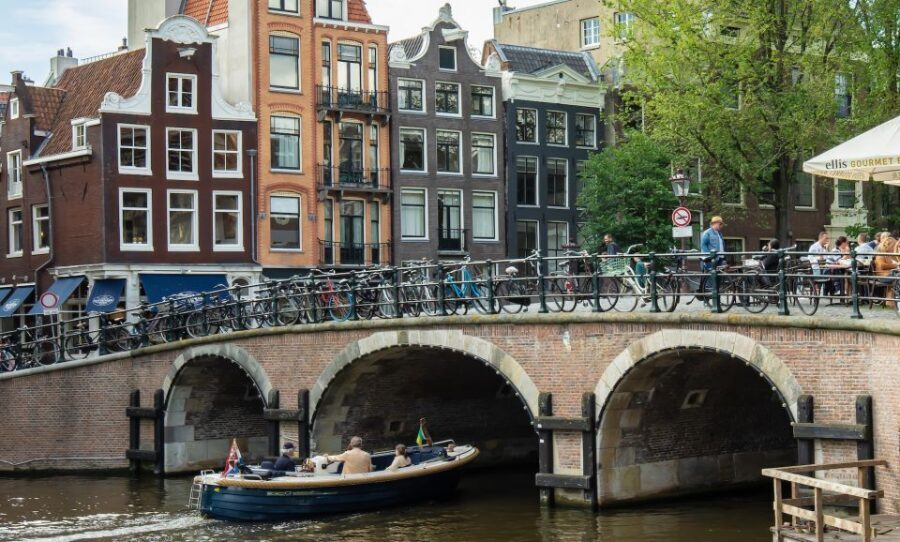
Amsterdam doesn’t just have museums. It has history in the streets, the canals nearby, and the buildings you pass every day. This tour takes advantage of that. You walk a compact route—about 2 kilometers—and the guide stitches the story together step by step, so the names and events actually make sense in place.
It’s also built for pacing. You do a lot of outside viewing and short stop moments, then the day tightens at the Anne Frank House. You end with time to see the museum on your own, which is exactly what you want for a site like this—quiet time beats constant talking.
The private format helps too. You’ll only be with your group, and the guide can slow down when questions come up or move faster if your group is ready.
You can also read our reviews of more private tours in Amsterdam


Portuguese Synagogue: where Amsterdam’s Jewish story is still living
You start next to the Portuguese Synagogue on Mr. Visserplein. It’s one of Amsterdam’s most striking buildings, and the key detail here is that it isn’t only a photo spot. It’s still tied to the Jewish community, and the guide explains how the synagogue became both a landmark and a living place of worship and memory.
This opening matters because it gives you something many people miss: Amsterdam’s Jewish history wasn’t invented in World War II. It has deeper roots—community life, religious practice, and a place in the city long before the occupation.
One practical note: entry to the synagogue museum area is not included. That said, even without stepping inside, the guide’s framing helps you look at the building with the right questions in mind.
Jewish Historical Museum and its synagogues: seeing layers, not just one room
From the synagogue area, you head toward the Jewish Historical Museum complex. The route focuses on what the museum represents: a set of synagogues housed within the museum grounds. You’ll get the context for why there are multiple synagogues connected to community life—and why that matters in a city with a complicated Jewish past.
The time you spend is short, so think of this as orientation. You’re being set up for the heavier wartime parts of the walk. If you want more than a quick look, you may need to plan for extra admission, since entry is not included.
This is where a strong guide makes the difference. Guides on these tours—people like Chris, Kayleigh, Inbal, Guido, Martina, and Ester—tend to answer questions on the fly and connect what you’re seeing to what happens later. It helps you stop treating the history as separate events and start hearing the “chain.”
Dokwerker and the anti-Nazi strike story: history with an edge
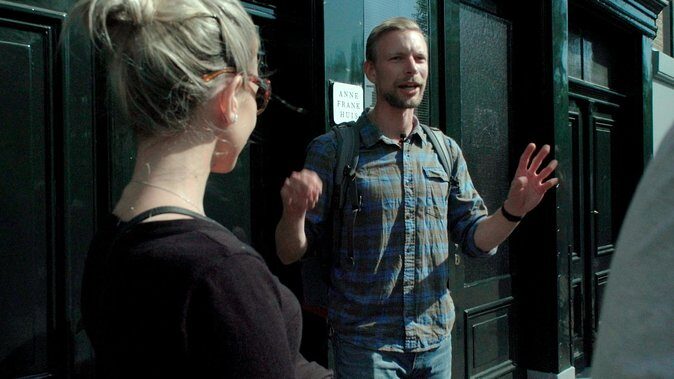
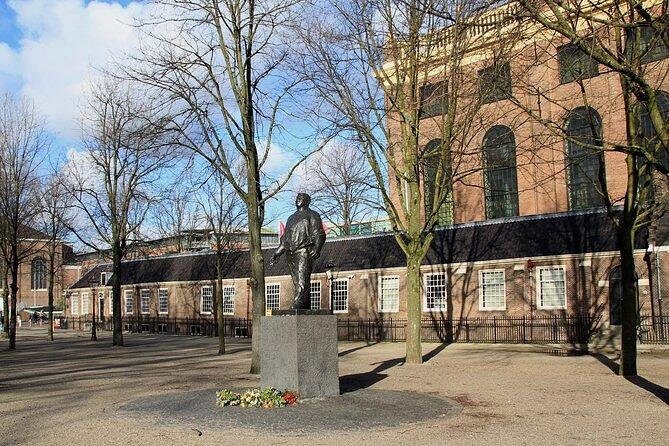
Then the tour shifts into wartime Amsterdam with a stop at Dokwerker. This is where you hear about the February strike against the Nazi occupation in 1941. The guide’s job here is not just to list facts; it’s to explain why the city’s Jewish population and the wider Amsterdam community couldn’t be separated from the occupation’s pressure.
This is also the moment where the tone changes. You’re no longer walking through “history buildings.” You’re walking through a city where decisions—by occupiers and by locals—had immediate consequences.
Admission isn’t needed for this stop, which is a good thing. It keeps the route flowing and keeps you focused on the story rather than schedules and lines.
Wertheimpark memorials: reading grief where the city lives
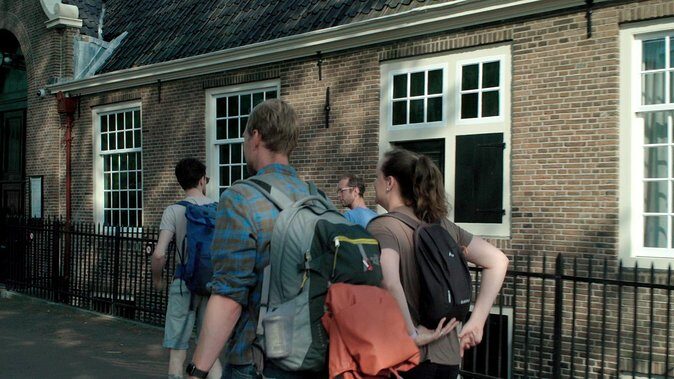
Next comes a Holocaust memorial walk at Wertheimpark, followed by the Holocaust Namenmonument. If you’re the type who likes to understand before you feel, this is the sequence. First you’re shown the space and the setting, then you’re led into the names.
The Auschwitz memorial walk gives you a structured, respectful introduction to what the Nazis did and how remembrance is shaped in Amsterdam’s public landscape. After that, the Holocaust Namenmonument is about scale in a painfully direct way: over 100,000 names of Jews who did not survive the Holocaust are written on the walls.
You don’t need to be a history expert to feel what this stop does. It’s hard to treat it like sightseeing, and that’s kind of the point. This is also a great place to slow your pace. Even if your group is moving, you’ll want a minute to stand there and actually read.
You can also read our reviews of more historical tours in Amsterdam






Hortus Botanicus and Plantage East: walking through Amsterdam’s “in-between” spaces
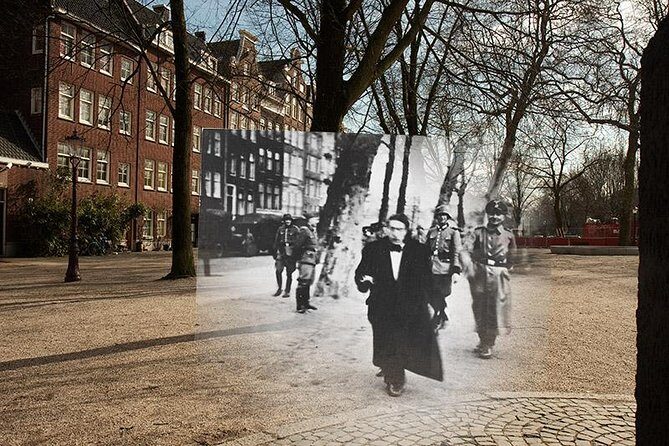
Between the heavier stops, the tour passes through Hortus Botanicus and then moves into the Plantage neighborhood and canal area. This part is free-flowing and scenic, and it has an important purpose.
These gardens and streets show how the Jewish history of Amsterdam is woven into normal city life. You’re reminded that people didn’t live in museums. They lived in neighborhoods, walked to familiar places, and had routines that were violently interrupted.
Hortus Botanicus is passed by rather than visited, so you’re not paying for admission here. That keeps the pacing steady, and it gives you a chance to regroup before the next memorial and the Anne Frank segment.
ARTIS Amsterdam Royal Zoo: hiding in plain sight
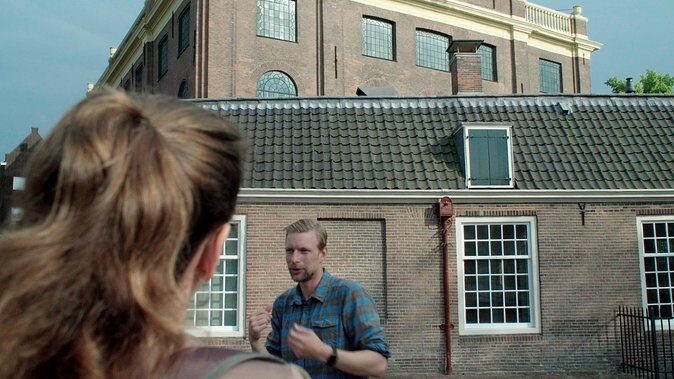
One of the most striking elements of this tour is the stop connected to ARTIS Amsterdam Royal Zoo. You learn about people who were hiding in the Amsterdam Zoo. The idea is unsettling in a very specific way: survival didn’t only happen in secret attics. It happened in places the city would recognize—spaces that were being watched, worked, and visited.
You’ll only have a short moment here, and entry is not included, so you’re getting the story more than the full museum experience. Still, it changes how you see the city. After hearing about hiding in everyday public locations, you’ll probably notice how many places in Amsterdam feel “too ordinary” to hold such stories.
This is another point where your guide’s storytelling skills matter. On these tours, guides like Chris and Guido are often praised for pacing and for answering questions without rushing. When the story clicks, the city starts to feel like a connected whole instead of a checklist.
Names, monuments, and the moment your feet want to stop
By the time you reach the Holocaust Namenmonument, you’ll likely feel it in your body before you process it in your brain. That stop is built for stillness.
The practical advantage is that admission is free, so you’re not juggling tickets. You just arrive, listen, and walk in. The instruction here is simple: take it slowly. This isn’t a “read it in 30 seconds” site. It’s a “stand there and let your eyes do work” site.
Then you move back into lighter city walking with Dam Square and the canal-adjacent streets. The contrast can feel jarring—again, that’s real Amsterdam. The city keeps going. Your job as a visitor is to respect the stop moments and then return your attention to the route with care.
Dam Square and Westerkerk: bells, views, and where Anne’s sightline fits
From Holocaust memorial time, you shift toward Dam Square. You’ll walk across the heart of the city center and see major landmarks like the Royal Palace and the Nieuwe Kerk. This is a reset, but it’s not random.
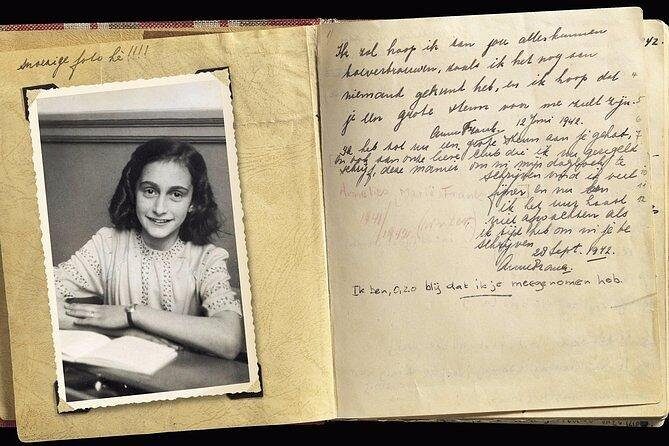
After that, you walk around Westerkerk, the church and tower that Anne saw from her hiding place. One smart detail you’ll appreciate: the carillon plays every 15 minutes. If timing lines up, you’ll hear it as you’re looking at the church, which makes the connection to Anne feel less like trivia and more like atmosphere.
Entry is not included for Westerkerk, but you don’t need it. The focus is on the exterior, the tower view, and the story of what the sound and sightline meant from inside hiding.
Anne Frank House: tickets when you can get them, VR when you can’t
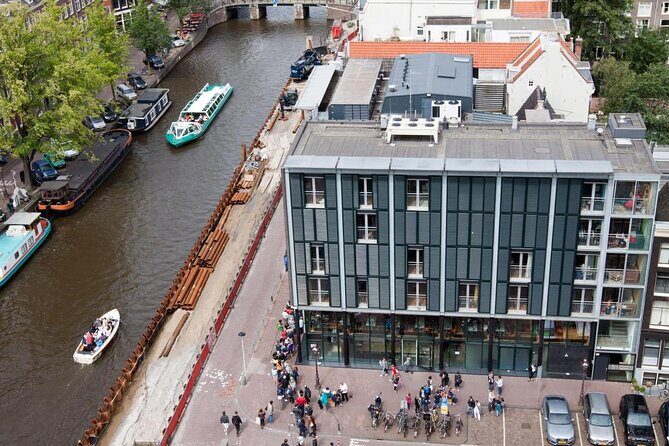
This is the reason most people book. The tour brings you to the Anne Frank House area and sets you up for what to notice before you enter.
Here’s the key deal: the tour includes admission to the Anne Frank House, but tickets are subject to availability. If you book far enough ahead—your odds are better when you’re earlier—the provider assists with ticket purchase for inside access. If tickets are sold out, the tour includes a virtual reality alternative as part of your price.
That backup matters more than people expect. The Anne Frank House can be difficult to secure last minute, and this tour is designed to keep your day from falling apart.
One more thing that’s worth planning for: the Anne Frank House visit is “heavy.” You should set your expectations accordingly. Some tours end with you touring on your own after the guide’s setup, which gives you room to process without being rushed by the group.
Also, because your route ends here (Westermarkt 20 area), build in a little time margin so you’re not sprinting at the end of the walk.
The included apple pie and optional tram ride: small comfort, real value
You get one of Amsterdam’s best apple pies with coffee or tea as part of the experience. On a cold day, that stop is not just a treat—it’s practical. It keeps energy up so you can handle the solemn parts without your brain checking out.
Some guides also take guests to Café Smit & Voogt for the pie, and the fact that it’s repeatedly mentioned tells you this is one of the stops the company actually thinks about, not an afterthought.
You may also have an optional tram ride included. That’s a smart flexibility tool when the weather turns or when you’re tired. It helps keep the walk from turning into a slog, especially because the overall route is compact but still involves movement between key locations.
Price and value: what $95.58 is really paying for
At $95.58 per person, this isn’t a budget “walk and read facts” outing. It’s priced like a tour that does two high-cost things for you.
First, it includes a guide for the full route in a private format. You’re not competing with a large group for attention, and guides are the difference between a set of stops and a story that actually lands. The reviews associated with this tour are consistently strong about guide quality and pacing, and those are the exact skills you want for WWII and memorial sites.
Second, the price is tied to the Anne Frank House ticket situation. Tickets are included when available, and when they’re not, you still get an included VR alternative. That reduces the risk you might feel if you’re traveling on a tight schedule.
What you should expect to pay extra for: several stops have admission not included. That includes the Portuguese Synagogue museum area, the Jewish Historical Museum areas, and ARTIS zoo entry (if you want deeper access). The tour also doesn’t include entry for Joods Historisch Museum. In other words, the $95.58 buys you the guided route and the Anne Frank House experience option—not a free ticket to every single building you pass.
If you can’t or won’t pay extra entries at side stops, that’s still okay. The core value is the guided context and the Anne Frank House access plan.
Who this tour suits best (and who might want a tweak)
This fits best if you want a structured, respectful route through major Jewish and Holocaust sites without turning Amsterdam into a self-guided maze.
It’s a good match for history-minded visitors and for people who want more context than the usual Anne Frank headline. The guides are praised for connecting Anne Frank to the wider neighborhood and city setting, which helps you understand how the secret annex related to what was around it.
It’s also family-friendly in a specific way: kids can join from age 10 and up. Since the tour covers Holocaust memorials and Jewish WWII history, I’d treat this as appropriate for older teens and adults—or thoughtful 10+ kids who can handle serious topics.
One consideration: the tour is mostly walking, about 2 kilometers. If you have mobility limits, you’ll want to confirm the route style in advance, even though the tour notes most travelers can participate and service animals are allowed.
Should you book this Anne Frank and Jewish history private tour?
If your goal is to see the Anne Frank House with the least stress possible, while also understanding the Jewish history of Amsterdam in the real places where it happened, I’d book it. The combination of memorial sites, community landmarks, and city context makes the day feel coherent instead of scattered.
If you hate walking, or you’re only interested in a single museum stop, you might feel the route is more than you need. But if you want your time to mean something, and you want a guide to connect the dots, this is a strong choice.
FAQ
How long is the Anne Frank and Jewish history private tour?
It’s about 3 hours.
What’s the price per person?
The price is $95.58 per person.
Is this tour private?
Yes. It’s a private walking tour for your group only.
What language is the tour offered in?
It’s offered in English.
How much walking is involved?
You’ll walk about 2 kilometers (about 1.5 miles).
What’s included in the price?
The guide, a private walking tour format, an apple pie with coffee or tea, and an optional tram ride. Anne Frank House tickets are included when available, and a virtual reality alternative is included when tickets are sold out.
Are entrances to all stops included?
No. Several stops note admission not included, including the Portuguese Synagogue, the Jewish Historical Museum areas, and ARTIS Amsterdam Royal Zoo. The Anne Frank House is included, and the Holocaust memorial sites listed as free are not an extra ticket.
Where does the tour start and end?
It starts at the Portuguese Synagogue of Amsterdam (Mr. Visserplein 3, 1011 RD Amsterdam) and ends at the Anne Frank House area (Westermarkt 20, 1016 GV Amsterdam).
Can children join the tour?
Kids can join from 10 years and older.
What is the cancellation policy?
This experience is non-refundable and cannot be changed for any reason. If canceled, the amount paid is not refunded.