REVIEW · AMSTERDAM
Amsterdam 2 Hour History Walking Tour
Book on Viator →Operated by Hit the Bricks · Bookable on Viator
Amsterdam’s history fits in two hours.
This walking tour is built for fast orientation: you move through iconic neighborhoods at a relaxed pace, with a guide using history and humor to make the city feel understandable instead of overwhelming. You’ll also grab photo-worthy moments, including the famous Monet bridge, while picking up practical tips for what to do next in town.
I love how this tour gives you a clear “why” behind Amsterdam. You learn how water shaped decisions, how religion shifted, and how major turning points affected real people, all in short stops that keep energy high and attention on track.
One drawback to plan for: the stops are brief (often around 5–10 minutes each), and some areas deal with heavy topics and adult subject matter. If you prefer long visits inside specific buildings, note that Royal Palace admission isn’t included, so you may need to decide on your own whether to go in.
In This Review
- Key Points Worth Your Time
- Two Hours That Actually Help You Get Oriented Fast
- Price and Value: What $30.04 Buys You
- Start at Hit the Bricks: Easy Meeting, Smooth Flow
- Canal Ring (Grachtengordel): How Water Made Amsterdam
- De Wallen (Red Light District): History, Function, and Perspective
- Dam Square: The Center of the Fight Against the Water
- South Church (Inner Courtyard): When Catholic Became Protestant
- Jodenbreestraat: Jewish Quarter and WWII Losses
- Bushuis – Oost-Indisch Huis: The Tiny HQ Behind Big Power
- Stopera Pier: City Hall That Locals Call Stopera
- Begijnhof: A Secret Courtyard in the Middle of Everything
- Royal Palace Amsterdam: Royal Origins and the Orange Detail
- Monet Bridge Photo Stop (Groenburgwal): Make the Moment Easy
- What You’ll Notice When the Tour Ends at Dam Square
- Practical Tips: Water, Weather, and Comfort
- Should You Book This Walk?
- FAQ
- How long is the Amsterdam 2 Hour History Walking Tour?
- Where do I meet the tour, and where does it end?
- Is the tour offered in English, and what group size should I expect?
- What is included, and what isn’t included?
- Do I need tickets for all stops?
- What if the weather is bad, or I need to cancel?
Key Points Worth Your Time
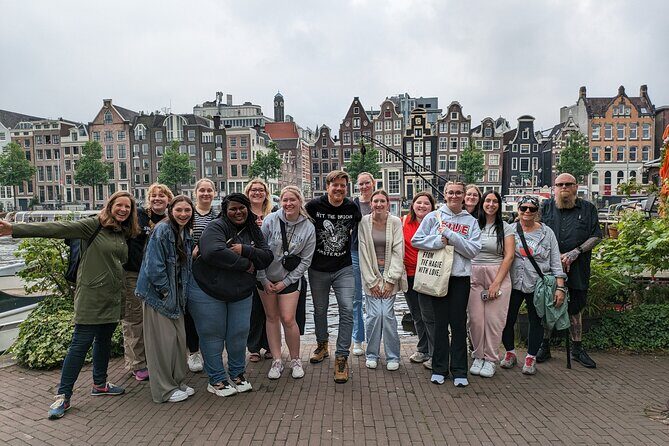
- Small-group pacing (max 10) keeps it relaxed and easy to ask questions
- A smart mix of canals, politics, religion, Jewish history, and daily-life Amsterdam
- Photo-stop built in for the Monet bridge moment
- Most entries are free, with only the Royal Palace not included
- Good-for-newcomers tour tips help you plan the rest of your stay fast
- Guides like Axel or Mark are specifically praised for being funny and personable
Two Hours That Actually Help You Get Oriented Fast
Amsterdam can feel like a maze the first day. This tour works because it threads the city into a story you can remember, not a checklist of landmarks. In about two hours, you’ll see the canal belt area, the center, and the Jewish Quarter—then end right at Dam Square, where transit is easy.
The group stays small (up to 10), which matters more than you might think. You’ll get a guide who can manage the pace, explain context without rushing, and keep the vibe comfortable.
You’ll also be walking through neighborhoods where people actually live, not just museum zones. That’s the value: you learn the city’s logic while standing right where history played out.
You can also read our reviews of more walking tours in Amsterdam



Price and Value: What $30.04 Buys You
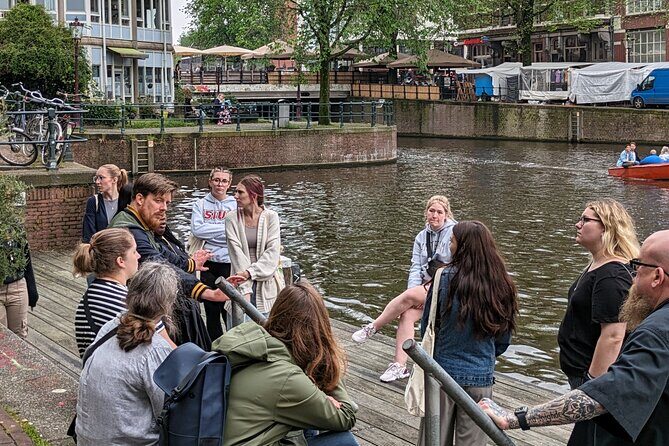
At about $30.04 per person for roughly two hours, you’re paying for expert guidance, a curated route, and a ton of interpretation that would be hard to recreate on your own. Most stops are free to enter, so you’re not paying repeatedly just to see the view.
It’s also good value if you’re short on time. Two hours is long enough to understand big themes—like water management, religious change, and the impact of WWII—but short enough that you can still explore independently afterward.
Where you should adjust your expectations: Royal Palace admission is not included. The tour can explain how the royal family formed and why the flag colors matter, but if you want to go inside, you’ll likely need to plan that separately.
Start at Hit the Bricks: Easy Meeting, Smooth Flow
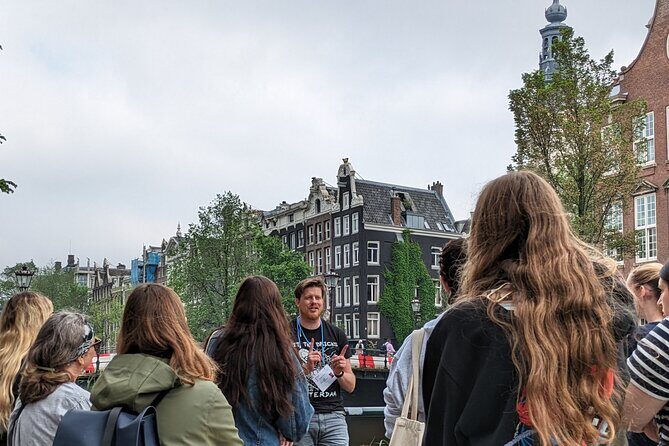
Meet at Hit the Bricks Walking Tours on Prinsenstraat 13 (near 1015 DA). You start at 11:00 am, and you end at Dam Square (Dam, 1012 Amsterdam), just a couple minutes from the starting area and close to major transport.
If you like to settle in before a tour begins, arrive a few minutes early. One guide-service detail that shows up in feedback: there’s often a friendly cat named Koko around the office area, and it can make the wait feel less like standing around.
This tour also uses a mobile ticket, so you don’t have to hunt for paper. If you’re traveling light, that’s a small but real convenience.
Canal Ring (Grachtengordel): How Water Made Amsterdam
You begin right in the canal belt (Grachtengordel), which is where Amsterdam’s reputation starts to make sense. The guide focuses on how the Dutch had to live with water, not fight it in a simple way. You’ll hear how water shaped building choices, civic thinking, and the Dutch habit of planning around reality.
Why that matters for you: once you understand the water logic, everything else feels more connected. Streets, canals, and even attitudes toward risk start to click into place.
This stop is brief (about 5 minutes), but it sets the theme for the rest of the walk. Think of it as the tour’s “key” turning in your mind.
De Wallen (Red Light District): History, Function, and Perspective
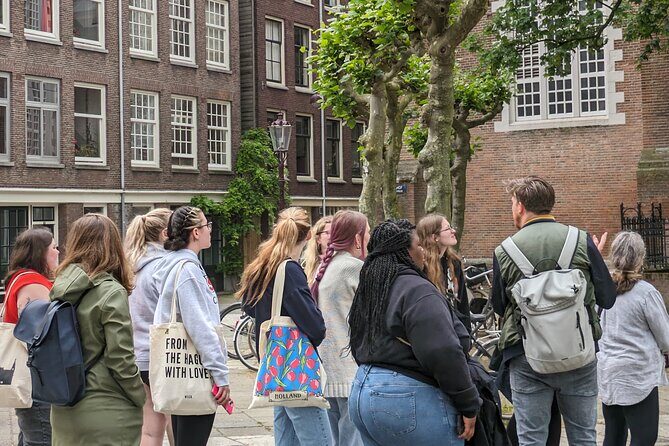
Next comes De Wallen, one of Amsterdam’s most famous neighborhoods. The tour doesn’t treat it like gossip. You get the history, why the area exists, how it works, and how Dutch society has approached it over time.
This is the kind of stop where your comfort level matters. If you’re sensitive to adult subject matter or you’d rather avoid it, you should consider that this tour includes it as a major waypoint.
The upside: you’ll leave with a more grounded understanding of how Amsterdam organizes controversial spaces, instead of only hearing stereotypes. That’s a big part of what makes a guided history walk worth it.
You can also read our reviews of more historical tours in Amsterdam






Dam Square: The Center of the Fight Against the Water
From the canal belt and De Wallen, you head to Dam Square. Here the focus shifts to the Dutch fight against water and how that shaped culture and thinking. Dam Square is “the center” for a reason: decisions made in the civic core ripple outward for centuries.
This stop is short (about 5 minutes), but it helps you connect the earlier canal-theme to something civic and everyday. You’re not only learning what canals look like—you’re learning why the city built itself the way it did.
South Church (Inner Courtyard): When Catholic Became Protestant
Then it’s time for South Church, with a look at the serene courtyard area next to the church. The guide explains how and why the Dutch moved from Catholic to Protestant, using the space around you as part of the lesson.
This is a quiet stop compared to the street scenes around it. If you enjoy a breather during walking tours, this one tends to work well because the setting feels calmer even while the story is big.
The watch-out: the stop is around 5 minutes, so don’t expect a long sit-down. If you want more time in religious spaces, plan a return later on your own.
Jodenbreestraat: Jewish Quarter and WWII Losses
At Jodenbreestraat, you’re at the start of Amsterdam’s Jewish Quarter. This is where the tour becomes serious. You learn about the tragic fate of Jewish people who lived in Amsterdam before and during the war, and the devastating effects of the hunger winter.
This is a short stop (about 5 minutes), which means you’ll get the key context rather than a full education. But it’s also exactly why it works on this format: you leave with the outline and a clearer direction for what to read or see next if you want more.
If this topic is hard for you, it’s worth knowing ahead of time that it’s part of the walk—not a quick aside.
Bushuis – Oost-Indisch Huis: The Tiny HQ Behind Big Power
One of the most interesting moments on the route is Bushuis / Oost-Indisch Huis, the former headquarters of the Dutch East India company. The guide explains how a small country grew into a major empire and how it cornered world trade in spices, all while facing threats to its independence.
This stop is around 10 minutes, long enough to absorb the “how did it happen” story. It also gives you a reason to connect canals and trade: Amsterdam’s success wasn’t only about water management. It was also about money, shipping, and global reach.
Stopera Pier: City Hall That Locals Call Stopera
Along the Amstel you’ll reach Stopera Pier, where you see Amsterdam’s modern city hall. The guide shares why locals call it Stopera and why, despite people calling the building ugly, Amsterdammers still feel proud of it.
This stop is quick (about 5 minutes), but it adds a modern layer to the day. It’s a reminder that history isn’t just old stones. Cities keep making choices, and people keep arguing about the results.
Begijnhof: A Secret Courtyard in the Middle of Everything
Then you’re off to Begijnhof, where you learn about the beguine sisters and see a quiet courtyard that feels tucked away from the noise outside. The stop runs about 10 minutes, so you get time to look, not just listen.
This is one of those Amsterdam contrasts that you’ll remember later: a city of crowded streets also contains places designed for slow life. Even if the “secret garden” marketing is common, the feeling is still real when you’re standing there.
Royal Palace Amsterdam: Royal Origins and the Orange Detail
You’ll also see Royal Palace Amsterdam from the route and learn how the Dutch royal family formed, including the role of France in the broader story. You’ll also hear the explanation for why orange is linked to national identity while the flag is red, white, and blue.
Important practical note: the tour’s information for this stop says admission isn’t included. So if you want palace interiors, you’ll need to handle that separately.
This is a short stop (about 5 minutes), but it gives you a handful of cultural details that help when you’re walking around later and notice symbols everywhere.
Monet Bridge Photo Stop (Groenburgwal): Make the Moment Easy
Finally, you reach Groenburgwal and the famous Monet bridge. The tour gives you a quick, focused photo window (about 3 minutes), which is enough time to grab a clean shot without dragging everyone to a standstill.
I like this kind of stop because it prevents the usual “where is it again?” confusion. You’ll know exactly where to stand and when to move on.
What You’ll Notice When the Tour Ends at Dam Square
Ending at Dam Square is a smart move. It puts you near major transport options and in the center of the action. If you want to keep exploring immediately, you’re already positioned for it.
Also, since the route is designed for first-timers, it pairs well with a plan after the tour: pick one nearby area you want to linger in and one museum or activity you can reach easily.
Practical Tips: Water, Weather, and Comfort
A couple practical things will help your experience go smoothly.
Bring a refillable water bottle. Bottled water isn’t included, but the tour includes stops where you can refill along the way. If you’re out in summer heat, this matters.
This experience requires good weather. If it’s canceled due to poor conditions, you’ll be offered a different date or a full refund. On days when Amsterdam is wet, plan to keep your footwear sensible and your rain layer handy.
Good to know: service animals are allowed, and the walk is described as suitable for most travelers. The walking is also close to public transportation since you meet and end in central areas.
And one more note from real-world operations: on at least one occasion, the tour operator handled a mix-up where a guide wasn’t ready, and the company offered a substitute 90-minute canal tour instead. It’s not something you should expect every time, but it’s reassuring to know alternatives can happen if something goes wrong.
Should You Book This Walk?
If you’re new to Amsterdam, I think this is an easy yes. You get a structured route through the places you’ll actually want to revisit, plus context that makes the city feel less random. The 97% recommendation rate and 4.9 rating reflect that people generally leave feeling informed and comfortable—often crediting guides for being funny and personable, with names like Axel and Mark showing up in positive descriptions.
Book it if:
- you want a quick orientation without doing homework first
- you like history that explains cause and effect, not just dates
- you want a manageable tour length that won’t wreck your day
Consider skipping or supplementing if:
- you want lots of time inside buildings (Royal Palace admission isn’t included)
- you’d rather avoid the Red Light District area entirely
- you prefer deeper museum-style coverage rather than short, high-level stops
FAQ
How long is the Amsterdam 2 Hour History Walking Tour?
It lasts about 2 hours.
Where do I meet the tour, and where does it end?
You start at Hit the Bricks Walking Tours, Prinsenstraat 13, 1015 DA Amsterdam. You end at Dam Square (Dam, 1012 Amsterdam).
Is the tour offered in English, and what group size should I expect?
Yes, it’s offered in English. The maximum group size is 10 travelers.
What is included, and what isn’t included?
Included are an expert local guide and tips and tricks to get the most out of your Amsterdam trip. Bottled water isn’t included, and admission for the Royal Palace isn’t included.
Do I need tickets for all stops?
Most stops on the route are listed as free. The Royal Palace stop specifically notes that admission is not included.
What if the weather is bad, or I need to cancel?
This experience requires good weather. If it’s canceled due to poor weather, you’ll be offered a different date or a full refund. It also offers free cancellation up to 24 hours in advance for a full refund.