REVIEW · ROTTERDAM
8 hour Walking and Boat Tour to Rotterdam and Kinderdijk
Book on Viator →Bookable on Viator
Rotterdam is best understood on foot. This day threads old port streets and new architecture into one smooth route, then takes you out to Kinderdijk to see how Dutch water control shaped daily life for centuries. The mix feels practical: you get orientation in Rotterdam’s core, then a clear payoff with the windmills.
Two things I really like about this tour are the focus on readable highlights and the small group size. The route hits major landmarks like Rotterdam Centraal, Markthal, and the Erasmus Bridge, with a guide who can translate what you’re looking at into plain context. You also get included comfort breaks like patatje oorlog fries and coffee/tea so the pace stays fun, not punishing.
One drawback to consider: it’s a walking-heavy day. If you have mobility limits, you may want to skip it or check with the operator first, because several stops are short but frequent city blocks.
In This Review
- Key highlights
- Rotterdam Centraal to Rotterdam Partners: start with the city’s spine
- Sint-Laurenskerk, Erasmus sculpture, and the reason Rotterdam survived
- Markthal and Kijk-Kubus: the modern Rotterdam stops that make sense
- Oude Haven to De Boeg: ports, war memory, and the New Meuse views
- Maritiem Museum Rotterdam and Erasmus Bridge: shipping industry meets city icon
- Kinderdijk: the polder windmills payoff 25 km away
- Food, pace, and why the small group matters
- Price and value: what you’re really paying for
- About the walking-and-boat wording
- Should you book this Rotterdam and Kinderdijk tour?
- FAQ
- How long is the tour?
- What is the group size limit?
- Where do we meet?
- Is the Kinderdijk entrance fee included?
- What’s included in the price?
- Is the ticket mobile, and when will I get confirmation?
Key highlights
- Small group size (up to 4) makes it easier to ask questions and stay on schedule.
- A Rotterdam architecture sampler: Markthal, Kijk-Kubus, Witte Huis, and bridge views in one line.
- Oude Haven at human speed, with time to soak in the port vibe and coffee-bar scene.
- New Meuse river landmarks: De Hef, De Boeg memorial, and the Erasmus Bridge.
- Kinderdijk windmills by bus so you can focus on the sights, not logistics.
Rotterdam Centraal to Rotterdam Partners: start with the city’s spine
The day begins at Stationsplein 48, at Rotterdam Centraal, the city’s main railway station. It serves an average of 170,000 passengers daily, so it’s a good place to begin because you instantly see Rotterdam as a working, moving city—not just a postcard. The station is also described as one of the biggest architectural highlights, and your guide uses that setting to give you quick orientation before the walk gets specific.
Next comes Rotterdam Partners, a stop built around the 17th-century building that used to be the headquarters of Waterschap Schieland, the institution responsible for water policy and management in this region of South Holland. This matters because Rotterdam’s identity is tied to water control, and the day keeps circling back to that theme. You’ll also hear that the building was temporary accommodation for Napoleon Bonaparte at one point, which adds a surprising historical twist without slowing the pace.
Practical tip: Rotterdam’s center can feel like sections stacked on top of each other. Starting with a major hub and then moving into a water-management story helps you connect the dots fast.
You can also read our reviews of more walking tours in Rotterdam
Sint-Laurenskerk, Erasmus sculpture, and the reason Rotterdam survived
You’ll stop at Grote of Sint-Laurenskerk, a late Gothic church from 1525. It’s presented as Rotterdam’s oldest building, which already makes it a must-see. The more compelling detail is that it survived Nazi bombing on May 15, 1940, while many other buildings didn’t. That gives the church a gravity that’s hard to fake in photos. Even if you don’t go inside for long, it gives the tour a grounded, human scale.
After that, you’ll see the Erasmus sculpture, a monument honoring Desiderius Erasmus Roterodamus (Erasmus of Rotterdam), one of the big names in the 16th century in philosophy, theology, and scholarship. Rotterdam practically wears his name in public institutions, and the sculpture helps you understand why. It’s a short stop, but it sets up the idea that Rotterdam doesn’t just build new things—it also claims intellectual identity.
What I like here is the emotional pacing. You move from resilience (the church) to ideas (Erasmus), then you’re ready for the more modern city scenes that follow.
Markthal and Kijk-Kubus: the modern Rotterdam stops that make sense
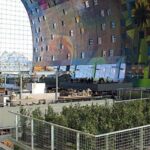
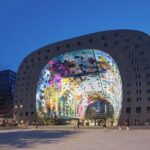
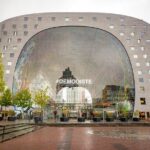
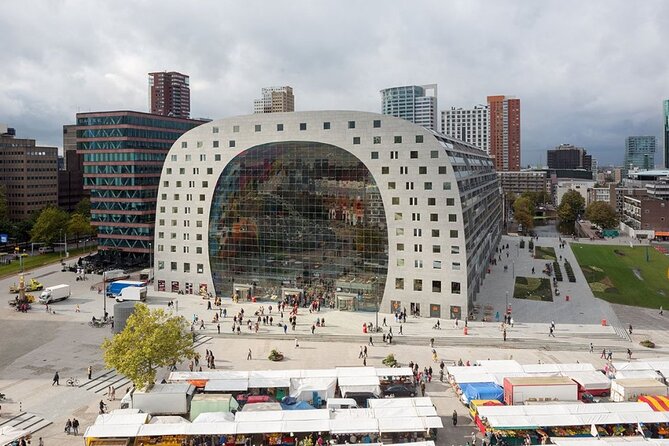
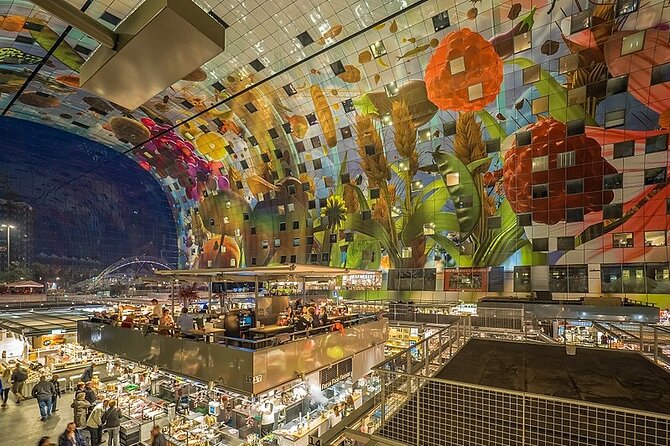
Markthal is one of the easiest places to fall for. It’s a modern building on a major square, shaped like a horseshoe, combining a market space with living space and facilities. It even has a nickname, The Sistine Chapel of Rotterdam, which signals its reputation for dramatic interior architecture. Your guide keeps this stop practical: you’re not stuck in a long lecture, but you get the why behind the design and layout.
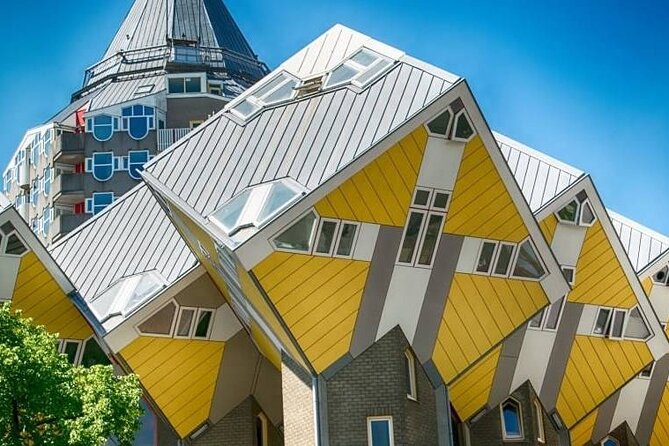
Then comes Kijk-Kubus, the cube-on-columns housing concept that looks like a small forest of stylized trees. The key detail you should pay attention to is how the cubes work: because of the form, only about 3/4 of the inner space is suitable and usable for everyday living. That’s a useful lens. It’s not “just weird architecture.” It’s architecture that traded conventional floor planning for a striking visual idea, and the result impacts daily life inside.
One caution: these stops are included for Kijk-Kubus entrance, but time is still limited. If you’re sensitive to crowds or want longer interior viewing, keep your expectations aligned with a tight, guided schedule.
Oude Haven to De Boeg: ports, war memory, and the New Meuse views
Oude Haven is a highlight if you like atmosphere. It’s described as one of Rotterdam’s oldest ports (but not the very oldest) and it used to be the river mouth of the Rotte flowing to the New Meuse. Today it’s a favorite gathering place with coffee bars, restaurants, taverns, and even disco clubs. Translation: it’s not a museum port. It’s a living neighborhood, and that makes it one of the best stops for slowing down and simply watching.
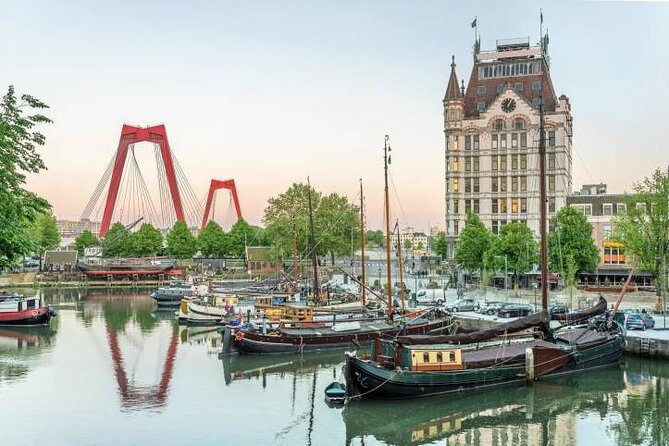
You’ll also visit Witte Huis, once one of Europe’s early skyscrapers after it was erected in 1898. It’s noted for being set up on 1,000 wooden pillars—an important technical detail that explains how Dutch building tackles tricky ground. This stop is short, but if you look closely at the base concept, it makes the whole city feel engineered rather than accidental.
Then the tour turns into a bridge-and-river streak:
- Willemsbrug, also called the Red Bridge, dedicated to Willem III. It connects central and Northern parts of Rotterdam with southern districts.
- De Hef, a huge steel structure meaning The Lift. It used to serve like a train bridge that could rotate/lift across the New Meuse before the rail tunnel was used. This is one of those industrial landmarks you can’t fully appreciate from afar.
- De Boeg, a war memorial on the right embankment of the New Meuse commemorating 3,500 people on Dutch merchant ships who died in World War II.
I like this sequence because it turns travel photos into meaning. The bridges aren’t just views; they’re a timeline of how Rotterdam kept moving through modern transport changes and war.
Maritiem Museum Rotterdam and Erasmus Bridge: shipping industry meets city icon
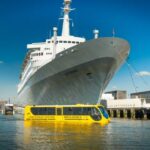
Next is Maritiem Museum Rotterdam at Leuvehaven, described as an open-air maritime museum. The focus is on steamships, docking cargo machines, ship engines, and equipment linked to shipping and naval life from the mid-19th century into the 1970s. Even if you only have a short guided window, this stop gives context for why ports like Oude Haven matter. It shows the tech behind the romance.
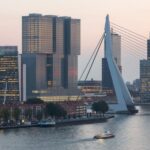
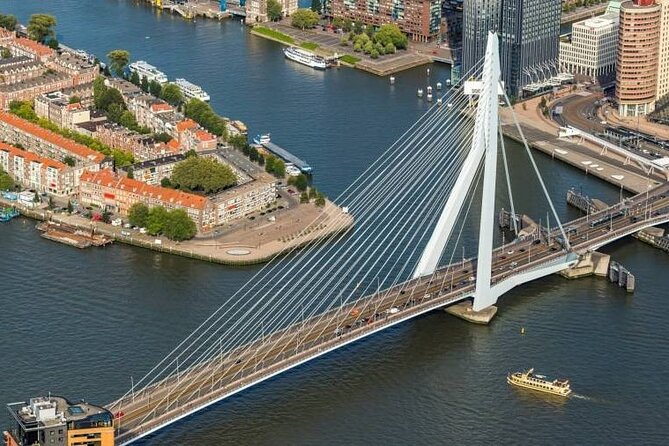
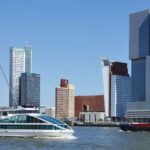
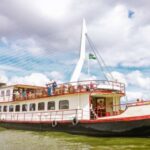
Finally, you’ll cross over (or at least reach the viewpoint route around) Erasmus Bridge. This hanging bridge is highlighted as Rotterdam’s youngest bridge and its most popular image-symbol. It has nicknames: The Swan or The Harp. The numbers are impressive enough to ground it—139 meters high, with the biggest and heaviest opening part in Europe at 80 meters long. That combination of shape plus engineering is a strong reason to end the river section here.
If you’re the kind of person who likes architecture, you’ll enjoy how the tour builds from industrial function (shipping and war memory) to a city-wide icon.
You can also read our reviews of more boat tours in Rotterdam

Kinderdijk: the polder windmills payoff 25 km away
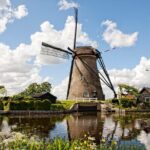
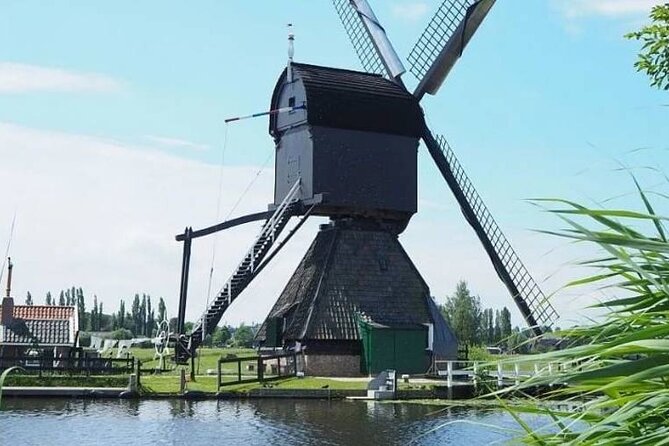
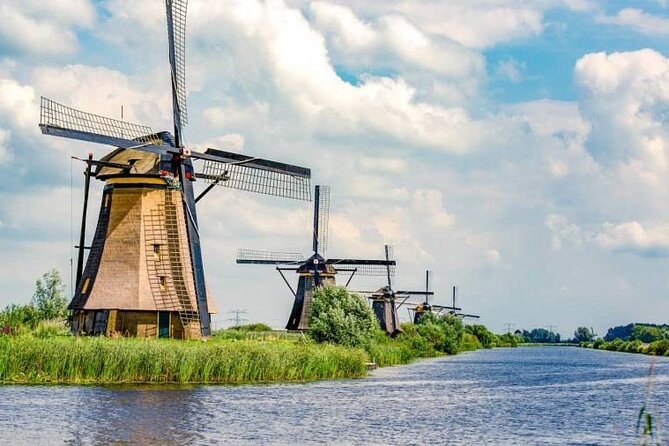
The tour takes you from Rotterdam to Kinderdijk, a scenic area known for 19 authentic polder windmills from the first half of the 18th century. The big idea you’ll leave with is water management: Kinderdijk is presented as a best example of efficient, organized Dutch water control across centuries.
The route timing gives you about three hours at Kinderdijk, which is a solid amount for walking between windmills and taking in views without feeling rushed.
A key cost detail: the day’s tour notes say the Kinderdijk admission fee is €19 per person, even though the stop itself is listed as free in the schedule. When you’re planning your budget, treat Kinderdijk entry as a separate add-on.
Practical tip: if you want great photos, don’t only shoot from one spot. Windmill areas reward short walks, and you’ll have time to adjust your position.
Food, pace, and why the small group matters

This is built as a guided walking tour with included food and breaks. You’ll get patatje oorlog (Rotterdam’s famous fries snack) plus coffee and/or tea. It’s not an afterthought. A snack matters on a long day because it keeps you moving instead of hunting for a meal later.
Time-wise, the Rotterdam portion is a chain of shorter stops (many around 10–30 minutes), with one longer chunk at Oude Haven (about 1 hour) and another major chunk at Kinderdijk (about 3 hours). That means the schedule has a rhythm: quick education in the center, then a deeper decompression at the port area and again at the windmills.
Group size is capped at up to 4 travelers, which changes the feel. You get a tour that can slow down if questions come up, and you’re not stuck waiting behind a large crowd. In places like Kijk-Kubus or Markthal, where sightlines matter, a smaller group helps you move efficiently.
Price and value: what you’re really paying for
The price is $591.46 per group for up to 4 travelers, and the total duration is about 7 hours 40 minutes. That’s the headline. Here’s the value math that matters to you:
- You’re paying for a single guided day that covers a long chain of major sights in Rotterdam plus transportation to Kinderdijk and back by bus.
- You also get included items: tour guide services, coffee/tea, patatje oorlog, Kijk-Kubus entrance, and bus tickets to Kinderdijk.
- The only obvious extra cost called out is Kinderdijk admission (€19 per person).
So, if you travel as a duo or small family, the cost tends to feel more reasonable than buying separate tickets and arranging transport on your own. If you’re traveling alone, the group pricing may feel steep, but the tight schedule and guide navigation can still be worth it if you want a low-effort day.
About the walking-and-boat wording
The tour title mentions walking and boat, but the detailed stop plan you’ll follow is built around a guided walk through Rotterdam’s sights and then a bus transfer to Kinderdijk. Since the exact boat segment details aren’t laid out in the stop-by-stop schedule here, the safest move is to confirm what the boat portion includes when you book. That way you’ll know what part of the day is genuinely afloat versus land-based.
Should you book this Rotterdam and Kinderdijk tour?
Book it if you want a day that connects Rotterdam’s identity—ports, water control, industrial engineering, and modern architecture—without you having to plan ten separate mini-plans. The small group format and the included food break keep it from feeling like a checklist.
Skip or reconsider if you have mobility concerns, because the experience is structured around repeated walking between major points. It also helps to be comfortable paying the extra €19 per person at Kinderdijk.
Overall, this is a strong choice when you want Rotterdam to make sense fast, then end with one of the Netherlands’ most iconic water-management landscapes at a comfortable pace.
FAQ
How long is the tour?
The duration is about 7 hours 40 minutes.
What is the group size limit?
The tour has a maximum of 4 travelers.
Where do we meet?
The meeting point is Stationsplein 48, 3013 AJ Rotterdam, Netherlands.
Is the Kinderdijk entrance fee included?
No. The tour notes that the Kinderdijk admission fee is €19 per person.
What’s included in the price?
Included items are patatje oorlog snacks, coffee and/or tea, bus transportation between Rotterdam and Kinderdijk and back, entrance fees to Kijk-Kubus buildings, and tour guide services.
Is the ticket mobile, and when will I get confirmation?
You receive a mobile ticket, and confirmation is received within 48 hours of booking, subject to availability.