REVIEW · AMSTERDAM
Walking Tour about Golden Age Architecture, private local guide
Book on Viator →Operated by Artsy Tours · Bookable on Viator
Amsterdam’s Golden Age hits different on foot.
This private walk through Dutch Golden Age architecture is built around what you can actually see up close, not just big-picture storytelling. I like that the route ties design to how the city worked: from Dam Square’s rise as a trade power, to the way engineering made grand buildings possible on difficult ground.
What I love most is the close-up attention you get in a small, personal setting. Anna (the guide many groups rave about) points out details you’d miss wandering alone, like canal-belt ornament and the meaning behind small building clues in the Jordaan. One drawback: you should be comfortable walking and standing for about 1.5 hours, since this route is not set up for mobility aids and it is not recommended if you use a walker.
In This Review
- Golden Age Architecture walk at a glance
- From Dam Square to the Royal Palace: where Amsterdam flexed its power
- The Royal Palace engineering lesson on clay and marshy ground
- Huis Bartolotti and De Dolphijn: reading canal-belt wealth in red brick
- Torensluis and the four mercantile façades (plus crooked houses)
- Ronde Lutherse Kerk: why domes mattered in the Renaissance era
- Prinsengracht warehouses and Jordaan gevelstenen: how to read a canal street
- Westerkerk spire finale: Calvinist simplicity, Rembrandt’s connection, and the clock chimes
- Price and value: what $73.59 gets you for 90 minutes
- Who this private Golden Age walk is best for
- Should you book this Golden Age architecture tour?
- FAQ
- How long is the Golden Age architecture walking tour?
- Is this tour private or part of a group?
- What language is the tour offered in?
- Where does the tour start and end?
- Is bottled water included?
- Is the tour suitable if I use a walker or need mobility aids?
Golden Age Architecture walk at a glance
- Private guide for your group: you get one-on-one attention and lots of time for questions in English.
- Design + engineering stories: you’ll hear why buildings look the way they do, and what it took to build them on clay and marshy ground.
- Canal-belt details that change how you see Amsterdam: from baroque façades to “crooked houses” shaped by soft soil.
- Jordaan gevelstenen moment: you learn how tiny façade stones work like old building IDs and personal branding.
- Westerkerk finale: a Calvinist church with an 85-meter spire, Rembrandt’s connection, and a clock that’s been heard for centuries.
From Dam Square to the Royal Palace: where Amsterdam flexed its power
The tour starts at the Royal Palace Amsterdam area (Nieuwezijds Voorburgwal 147), then you work your way through central sights toward the Westerkerk. Expect about 1 hour 30 minutes of walking, with short, focused stops built for looking—not rushing.
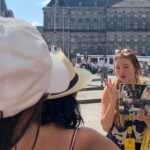
Dam Square is your “big picture” reset. You’ll get context on why Amsterdam surged in the 17th century as a global trade hub, and how that prosperity shaped what went up in the city. This matters because Golden Age architecture isn’t just about pretty fronts. It’s about wealth, trade, and status—visible in symmetry, material choices, and the way buildings interact with the street.
Right after, you’ll pivot into the story of the Royal Palace Amsterdam. You’ll learn it began life as the city’s town hall during the Dutch Golden Age, before later becoming a royal residence. That change is a neat reminder that buildings often outlive the roles people assign them. And the guide doesn’t treat it like a museum object; you’ll hear how it functioned as a symbol of civic power and prosperity.
If you’re the type who likes to understand the “why” behind what you’re seeing, this opening portion is a strong start. You’ll get quick historical anchors, then you’ll move on to the architecture details that make it click.
You can also read our reviews of more walking tours in Amsterdam


The Royal Palace engineering lesson on clay and marshy ground
One of the best ways to understand Amsterdam is to treat the city as a construction problem. Here, the guide makes that idea real at Royal Palace Amsterdam.
You’ll talk about the Dutch Neoclassical style that defines the palace and what goes into creating a grand, formal structure. Then comes the practical part: the building had to work on challenging clay and marshy ground. That’s not just trivia. It’s the reason the city’s architecture and canal-belt engineering feel so distinct once you know what had to be solved.
Neoclassical design often signals control—clean lines, a sense of order, and the impression of permanence. When you connect that style to the real ground conditions, the palace stops feeling like a postcard and starts feeling like a feat of planning and technique.
Also, this is a good moment to ask questions. A private format helps because you’re not waiting for the group to catch up, and you’re more likely to get direct answers about materials, construction, and the city’s layout.
Huis Bartolotti and De Dolphijn: reading canal-belt wealth in red brick
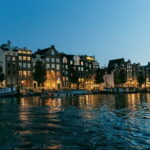
Next you move along the canal side into two standout canal houses: Huis Bartolotti and De Dolphijn. If you want more than “pretty historic building” commentary, this is where the tour starts rewarding your attention.
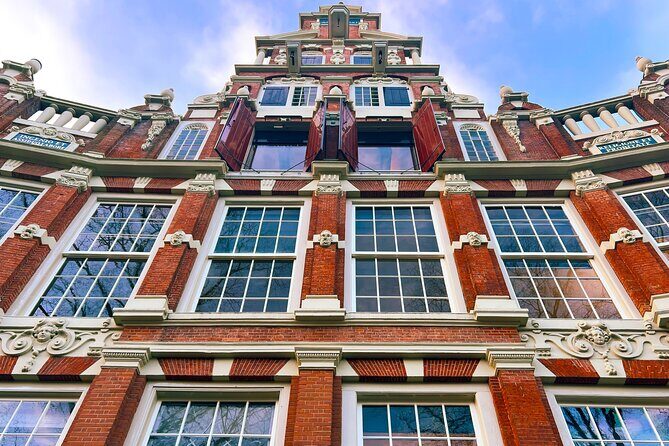
At Huis Bartolotti, you’ll notice the striking red brick and the elegant façade with large windows. The details matter: sculptural elements are made of sandstone, and you’ll connect the ornate look to the wealth and status of the original owner. The story includes trading ties with Italy, which helps explain why the style feels so expressive rather than purely utilitarian.
Then you’ll get to De Dolphijn, where the name itself points to prosperity. The dolphin symbol is tied to wealth from Amsterdam’s maritime trade during the Dutch Golden Age. You’ll also hear about the house’s original owner, Frans Banning Cocq, the captain portrayed in Rembrandt’s The Night Watch.
Why these two stops are valuable: they give you two different ways to show status. One leans into baroque drama and rich materials. The other ties symbolism directly to trade identity. After these, you’ll start noticing how Amsterdam’s canal belt functions like a visual archive.
Torensluis and the four mercantile façades (plus crooked houses)
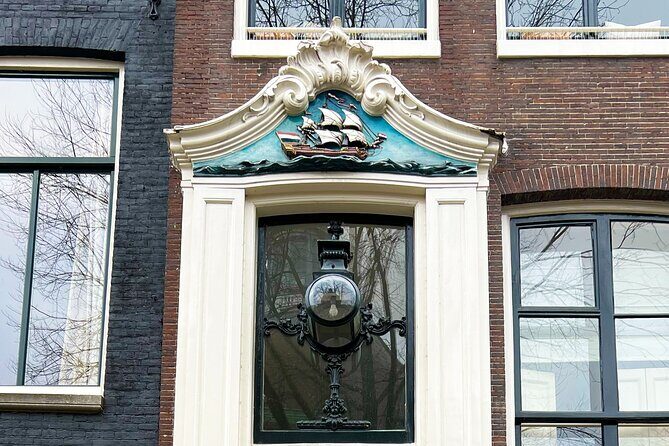
Torensluis is a short stop, but it’s packed. You’ll get a view of four unique façade designs that were popular among the mercantile class during the Golden Age. The point isn’t just that the façades look good. The point is that baroque style got adapted for Dutch tastes and building realities—details, contrasts, and a kind of controlled theatricality.
This is also where you’ll learn about crooked houses. Amsterdam’s soft, marshy ground can cause buildings to lean in unusual ways, and you’ll see examples that make that phenomenon feel less mysterious. Once you understand the soil issue, “crooked” stops being a quirk and becomes part of the city’s logic.
Practical tip: take a minute here to look from different angles. The façades were meant to be read by people moving along the canal and street lines, so walking just a few steps can change what you notice.
Ronde Lutherse Kerk: why domes mattered in the Renaissance era
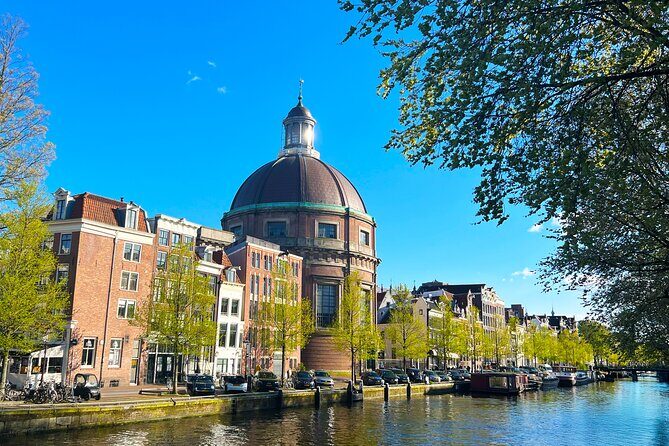
The tour then shifts to Ronde Lutherse Kerk. Even without spending a long time inside, you’ll get a clear idea of why domes were treated as major architectural achievements during the Renaissance period. The guide’s focus is on the meaning behind the form—how domes signaled ambition, engineering confidence, and a connection to broader European design trends.
This stop is brief, but it helps you place Amsterdam’s Golden Age architecture in a wider timeline. The city didn’t develop in isolation. Styles traveled, were adapted, and then got reshaped by local conditions and local wealth.
If you love architecture that has “structure as message,” this is the kind of stop that gives you a mental framework you’ll keep using later—especially once the route moves toward the warehouse buildings and the canal neighborhood details.
You can also read our reviews of more guided tours in Amsterdam




Prinsengracht warehouses and Jordaan gevelstenen: how to read a canal street
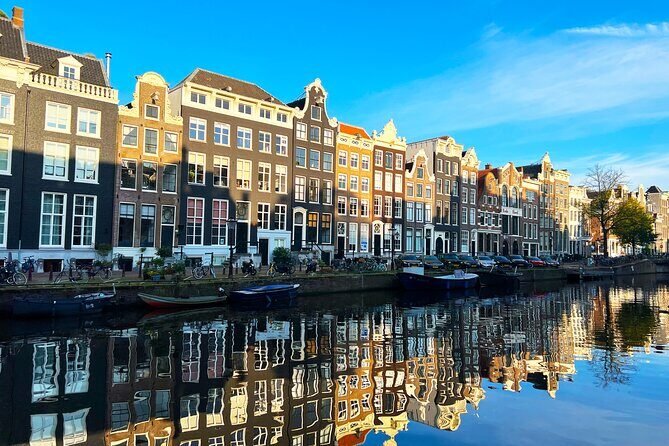
Now you get into the part that makes Amsterdam feel like a story you can decode: Prinsengracht warehouses and the Jordaan.
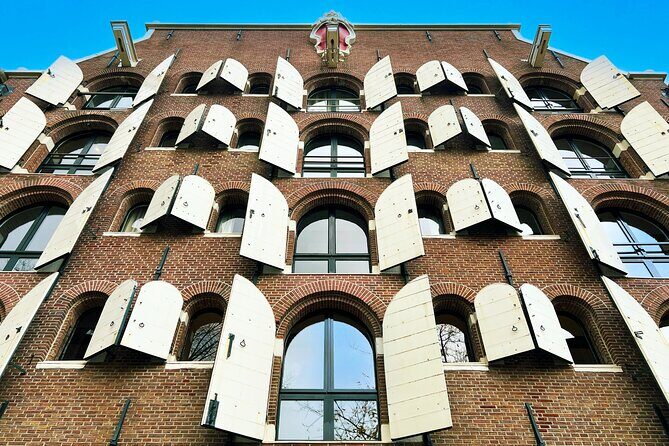
Along Prinsengracht, you’ll look at warehouses built for trade. These buildings are iconic because they were designed for function—tall forms, steeply pitched gables, and large windows. The guide also points out roof features used for hoisting heavy cargo from ships docking at the canal. That’s the big lesson: Amsterdam’s trade wealth didn’t just buy decoration. It shaped practical building design too.
The exteriors often feel simpler than you might expect given the wealth, with clean lines and minimal ornamentation. That utilitarian look is exactly what you’re supposed to notice here. It reflects the buildings’ purpose, while the scale signals the power of the merchants who used them.
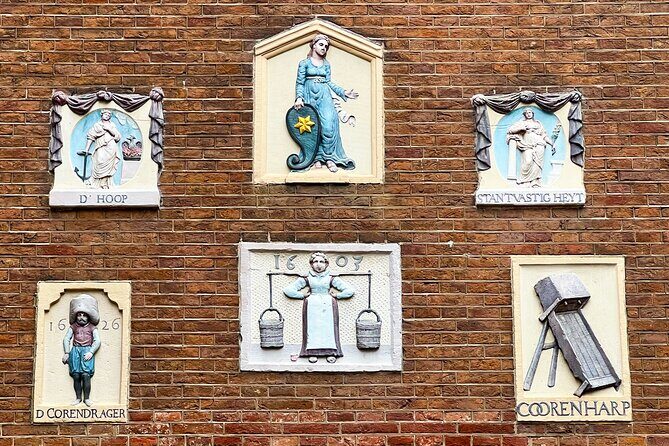
Then you head into the Jordaan, a neighborhood that started as a mix of housing and work spaces—think craftsmen and laborers—then turned into a lively area tied to the city’s economy. The guide focuses on gevelstenen, small decorative façade plaques embedded in buildings.
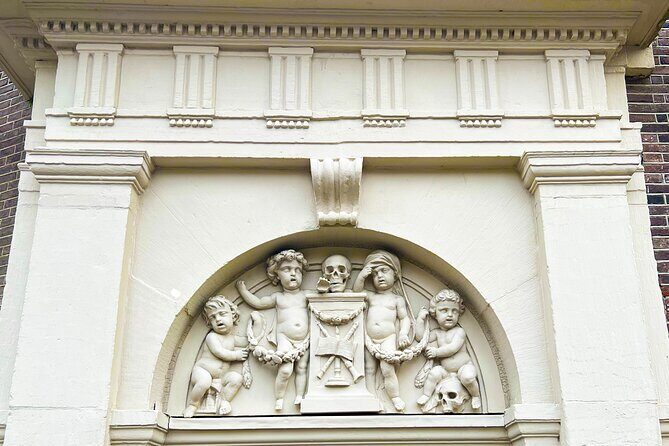
This is one of the tour’s best “wait, I get it now” moments. Those stones act like old identifiers. They can communicate how the building was used, the profession of the owner, or other facts about the people who lived and worked there. Even when the plaque is tiny, the carving is a kind of personal and professional storytelling. After this stop, you’ll start spotting these details without needing someone to point them out.
If you’re the kind of traveler who loves street-level observation—doors, windows, stone carvings—this portion is where the tour earns its keep. You leave with a new habit: look closely at façades, not just the big structures.
Westerkerk spire finale: Calvinist simplicity, Rembrandt’s connection, and the clock chimes
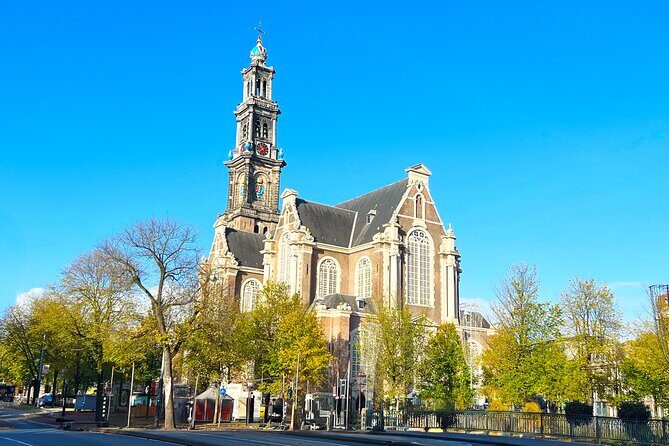
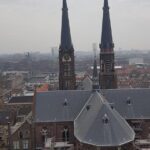
The tour finishes near Westerkerk on the Prinsengracht side (Prinsengracht 279). This is a strong ending because it combines architectural form, religious context, and famous cultural links in one place.
You’ll learn that Westerkerk was constructed as a Calvinist church for a growing population. The focus here is simple and elegant design, plus the feel of a large, airy interior. That combination is a reminder that Calvinist worship spaces were meant to support clarity and community, not spectacle.
Then you’ll hear about its historical connection to Rembrandt van Rijn, and you’ll look up at the towering spire. The tower is 85 meters (280 feet) and was completed in 1638. It’s crowned with an imperial crown—another signal of Amsterdam’s status since the 15th century.
One of the most memorable details is the clock’s chimes. The guide connects that sound to Anne Frank’s diary, where she described the chimes. Even if you’re not a theater person, that link makes the church feel alive and time-bound, not just old.
This finale also lines up nicely with your sightseeing options afterward. Since the tour ends near the Anne Frank House area, it’s a logical next step if you want to keep exploring that corner of the canal belt.
Price and value: what $73.59 gets you for 90 minutes
At $73.59 per person for about 1.5 hours, you’re paying for two things: focused route design and a private local guide. This is not one of those tours where you’re herded through landmarks with generic facts. The format is built for conversation and close looking, which you feel at the stops where architecture details matter most.
You also get mobile ticket access and group discounts (useful if you’re traveling with friends or family). And since the tour is often booked around 43 days in advance, planning ahead can help you lock in a time that works with your Amsterdam schedule.
One practical note: bottled water isn’t included. Amsterdam walks can add up quickly, so I’d budget for water on your own, especially if you’re traveling in warmer months.
Who this private Golden Age walk is best for
This is a great fit if you want Amsterdam to make sense visually. You’ll enjoy it most if you care about:
- Architecture you can read (façades, materials, small details)
- How trade shaped the city’s building choices
- Asking questions and getting direct answers in English
- Seeing how design changes from civic buildings to canal houses to working warehouses
It’s also ideal for couples, small groups, and solo travelers who prefer a personalized pace. The private setup means you’re not waiting for other people to move on.
Two caution flags from the provided guidance: it’s not recommended for participants who use a walker, and it’s not recommended if you have trouble walking and standing for 1.5 hours. Also, mobility aids are not available, so plan accordingly.
Should you book this Golden Age architecture tour?
If your goal is to understand Amsterdam’s Golden Age architecture through what you see at street level, this one is worth your time. You get an efficient route, a guide who can connect style to history to engineering, and stops that focus on the details most tours skip—like gevelstenen and the reasons buildings lean.
I’d book it if you’re excited by canals, façades, and the logic behind building choices. I’d skip it only if long standing/walking is tough for you, since the route isn’t designed around mobility needs.
FAQ
How long is the Golden Age architecture walking tour?
It’s about 1 hour 30 minutes.
Is this tour private or part of a group?
It’s private. Only your group participates.
What language is the tour offered in?
It’s offered in English.
Where does the tour start and end?
It starts at Royal Palace Amsterdam, Nieuwezijds Voorburgwal 147, 1012 RJ Amsterdam. It ends near Westerkerk at Prinsengracht 279, 1016 DL Amsterdam, close to the Anne Frank House.
Is bottled water included?
No. Bottled water is not included.
Is the tour suitable if I use a walker or need mobility aids?
It’s not recommended for participants who use a walker, and it isn’t recommended for people who have trouble walking and standing for 1.5 hours. Mobility aids are not available.