REVIEW · AMSTERDAM
Amsterdam Walking Tour with Dutch Pancake Lunch
Book on Viator →Operated by EuroQuest Travel · Bookable on Viator
Amsterdam can feel like a puzzle. A good guide turns it into a story. This 2.5-hour small-group walking tour gets you oriented fast while you learn how Amsterdam’s key neighborhoods, churches, and trading power shaped daily life.
I especially like the balance: you get major landmarks like Dam Square and the Royal Palace area, plus quieter stops such as Begijnhof. And the payoff is real at lunch, where the Dutch pancake meal becomes the relaxed highlight after all that walking.
One possible drawback: parts of the route involve walking at an urban pace, and some sights are marked as admission ticket not included, so you are mainly there for viewpoints and guided context rather than lots of paid entry.
In This Review
- Key things that make this tour worth your time
- A 2.5-hour small-group plan that fits real Amsterdam time
- Dam Square to Begijnhof: power, faith, and city mood
- Stop 1: Dam Square (Royal Palace views and key turning points)
- Stop 2: Begijnhof (a quiet courtyard inside the city)
- Royal Palace and Nieuwe Kerk: what you learn from looking up
- Stop 3: Royal Palace Amsterdam (former city hall, royal residence today)
- Stop 4: Nieuwe Kerk (15th-century church used for ceremonies and exhibitions)
- Oude Kerk, leaning buildings, and gable stones in the Red Light District edge
- Stop 5: Oude Kerk (the city’s oldest anchor)
- Stop 6: Leaning buildings and gable stones (architecture as storytelling)
- Spui and the Floating Flower Market: a quick hit of color with purpose
- Spui and the Flower Market (the only floating flower market in the world)
- Dutch East India Company stories: trade power in plain language
- Stop 7: The Dutch East India Company (VOC impact you can actually picture)
- Jewish Quarter and Chinese Quarter: history, resilience, and community side by side
- Stop 8: Jewish Quarter (World War II impact)
- Chinese Quarter (multicultural community today)
- World’s First Stock Exchange: why “finance” is part of your sightseeing
- Price and lunch value check: what $84.65 buys you
- Meeting point, timing, and how to set yourself up for success
- Should you book this Amsterdam pancake walking tour?
- FAQ
- How long is the Amsterdam walking tour with pancake lunch?
- What is the price per person?
- Where do we meet, and does the tour end nearby?
- What language is the tour offered in?
- Is the lunch included?
- Do we need tickets for the sights?
- Is there a maximum group size?
- Can I cancel and get a refund?
- Are tips included in the price?
Key things that make this tour worth your time
- Max 15 people: small enough that you can ask questions and actually hear the answers.
- A full 2.5-hour orientation loop: you leave with names, locations, and context you can use later.
- Bite-sized stop format: about 15 minutes at each highlight keeps energy up without rushing you.
- Outside-the-building viewing: you see major sights like the Royal Palace and Nieuwe Kerk area without buying extra time.
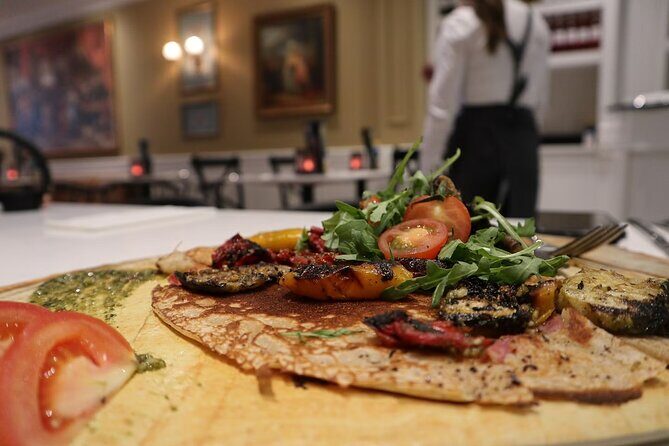
- Dutch pancake lunch included: starter, main, dessert (or coffee) makes the value easy to judge.
- Two big history tracks: Amsterdam’s trading story and the Jewish Quarter’s World War II impact both get time.
A 2.5-hour small-group plan that fits real Amsterdam time
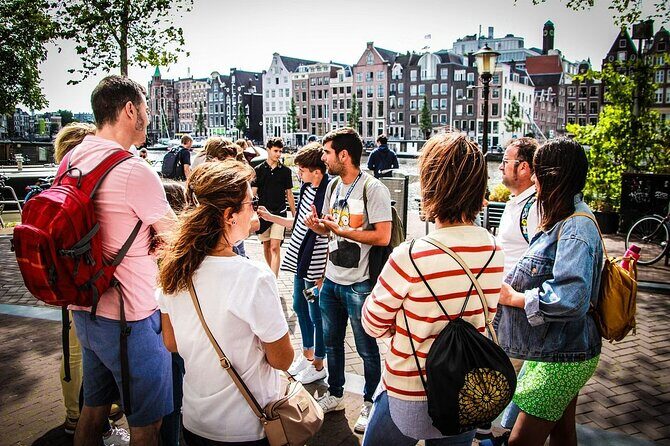
If your Amsterdam schedule is tight, this kind of walking tour earns its keep. It is long enough to cover multiple neighborhoods, but short enough that you do not burn your whole day. In about 2 hours 30 minutes, you get a guided route that helps you connect street names to what they represent.
What also matters is the group size. With a maximum of 15 people, the guide can keep things moving and still respond to your questions. You do not have to shout over a crowd, and you tend to hear the reasoning behind the facts, not just the facts themselves.
You should also know the pace is city-walk pace: you will be on your feet for most of the tour. That is the trade for seeing a lot quickly. If you prefer a slower sightseeing day with long sit-down breaks, plan extra downtime after lunch.
You can also read our reviews of more walking tours in Amsterdam


Dam Square to Begijnhof: power, faith, and city mood
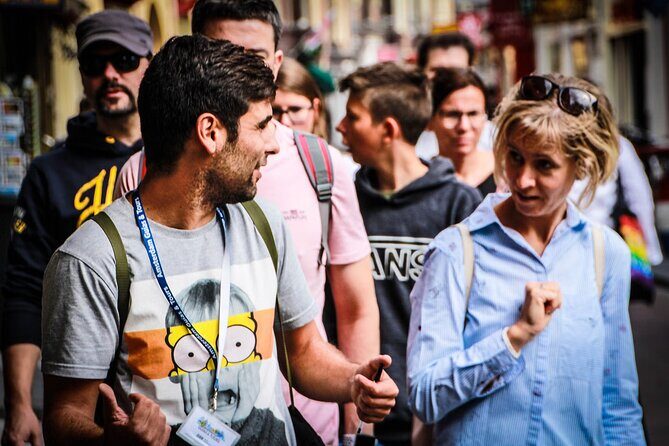
You start at Beursplein (Beursplein 1-3). This is a smart starting point because it places you near central Amsterdam, so you can build a mental map quickly. From there, you head to Dam Square, the classic heart of the city.
Stop 1: Dam Square (Royal Palace views and key turning points)
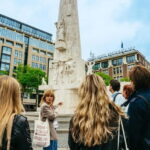
Dam Square is where Amsterdam feels most official: you are surrounded by big civic energy and major addresses. Your guide explains why this central spot mattered historically and shares stories about events that shaped the city. You also get a look at the Royal Palace area from the outside, which is useful even if you do not plan to do a deeper palace visit.
A practical note: Dam Square draws crowds. Your guide’s job here is to help you look past the photo lines and understand what you are seeing—who held power there and what the square meant in different eras.
Stop 2: Begijnhof (a quiet courtyard inside the city)
Then you switch gears to Begijnhof, a hidden courtyard that feels like a pause button. The Beguines— a Catholic sisterhood—are part of the story, and you learn why this tranquil interior space mattered in a city that otherwise moves fast.
This stop is one of the best examples of why a guide helps. From the street, Begijnhof does not look like much, but the guided context makes it feel like a deliberate design choice: a protected community space tucked into the urban core.
Royal Palace and Nieuwe Kerk: what you learn from looking up
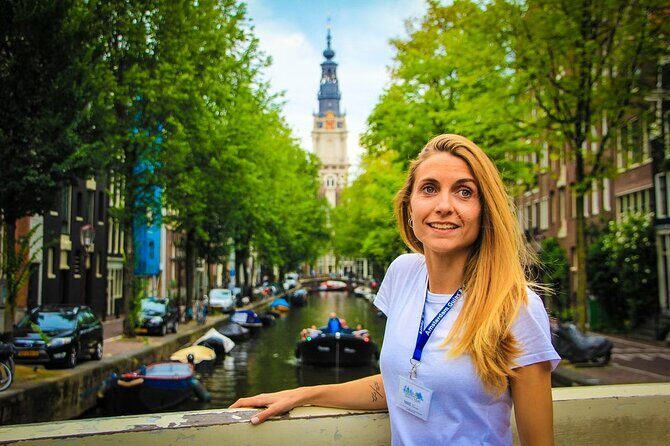
You spend time around the Royal Palace Amsterdam and the nearby Nieuwe Kerk. Both areas are tied to Dutch public life, ceremony, and how power shows itself in architecture.
You can also read our reviews of more tours and experiences in Amsterdam



Stop 3: Royal Palace Amsterdam (former city hall, royal residence today)
You admire the exterior of the Royal Palace. The big takeaway is the building’s role: it was once the city hall, and now it serves as a residence for the Dutch royal family. That shift from civic governance to royal residence is exactly the kind of history that changes how you interpret a façade.
You are not inside for this tour, and that is okay. If you want the outside perspective plus the story behind it, this is a strong match. It also sets up later trading and governance themes, because Amsterdam’s identity always ties back to how institutions evolved.
Stop 4: Nieuwe Kerk (15th-century church used for ceremonies and exhibitions)
Nieuwe Kerk is next door and brings you to a 15th-century church that is used for royal ceremonies and exhibitions. This stop is more than a quick photo stop. You learn what the building’s setting next to the palace tells you about how religious and state life overlapped.
Because both stops are about placement—palace here, church there—you start noticing how Amsterdam’s center was designed for public meaning, not just decoration.
Oude Kerk, leaning buildings, and gable stones in the Red Light District edge

After the grand square areas, the tour works its way toward older Amsterdam fabric. You pass the Oude Kerk, which is described as the oldest building in Amsterdam, located in the Red Light District.
Stop 5: Oude Kerk (the city’s oldest anchor)
You walk past Oude Kerk and hear tales about its long, layered life. Even without entering, this stop gives you a real time anchor. It helps you understand that Amsterdam did not just become what it is in modern times—the city’s foundations go back much further than most first-timers expect.
And yes, the area around it is known for adult entertainment. The guide’s context matters here. Instead of just seeing a reputation, you get a sense of how older structures coexist with modern street identity.
Stop 6: Leaning buildings and gable stones (architecture as storytelling)
Next you focus on Amsterdam’s famous leaning buildings and gable stones. The idea is simple but smart: these architectural quirks are not random. They’re clues. Gable stones carry meaning, and the leaning structures point to the physical reality of building on challenging ground and evolving streets over time.
This is the kind of stop that makes you look differently after the tour. Even if you do not remember every detail, you start noticing signs of old trade, building families, and how the city adapted.
Spui and the Floating Flower Market: a quick hit of color with purpose
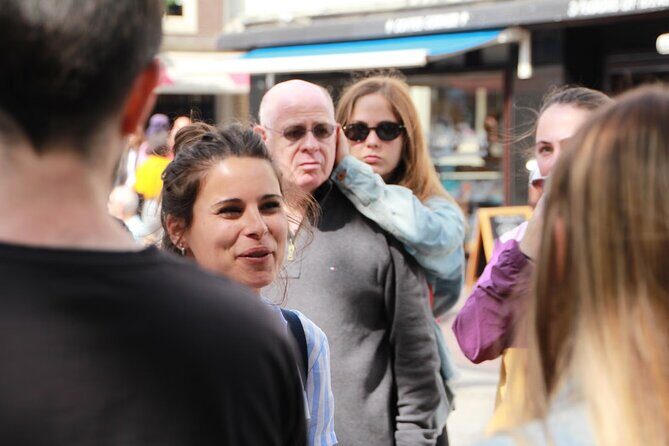
Now you shift from architecture to street life and local rhythms. Spui is a square filled with local charm, and it helps to break up the heavier historical stops.
Spui and the Flower Market (the only floating flower market in the world)
You walk through Spui and then head to the Flower Market, described as the world’s only floating flower market. It is colorful and fun, but the guide also frames it as part of how Amsterdam trades in culture and everyday goods, not just in big companies.
If you are the type who worries that markets are just tourist shopping, this stop is still worth it. The value is in seeing how the market sits in the city’s water-and-trade logic, then deciding whether you want to buy anything.
Pro tip: if you want to bring flowers home, ask what is feasible before you purchase. Amsterdam is good at making it look easy, but travel rules can be the bigger factor.
Dutch East India Company stories: trade power in plain language
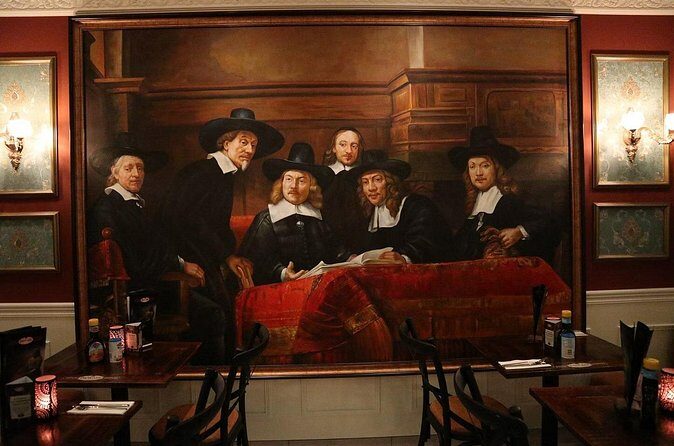
This is the section that most helps you understand why Amsterdam became Amsterdam. You learn about the rise of the Dutch East India Company and how it made the city one of the world’s most powerful trading hubs.
Stop 7: The Dutch East India Company (VOC impact you can actually picture)
This segment is valuable because it connects business to city layout and civic identity. When you hear the story of the Dutch East India Company, you start understanding why this city took on global importance earlier than many others. Trade money, international connections, and institutional power all tie back to that rise.
What you get from a guide here is pacing. The story can sound abstract on its own, but on a walk through central Amsterdam, it becomes easier to map to real places and real eras.
Jewish Quarter and Chinese Quarter: history, resilience, and community side by side
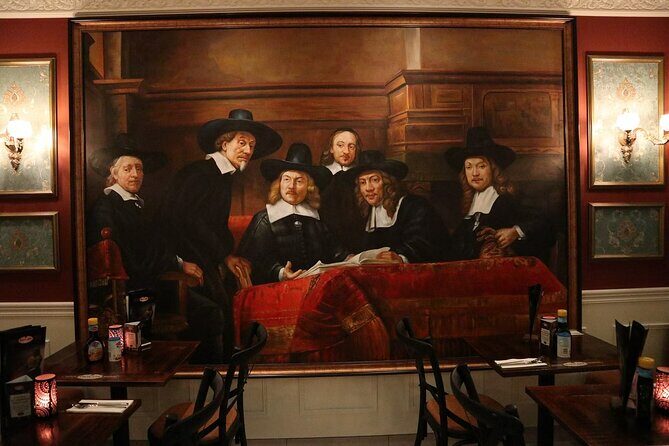
The tour ends by exploring the historic Jewish Quarter and the Chinese Quarter. This is where the walk feels more reflective, and the guide keeps it grounded.
Stop 8: Jewish Quarter (World War II impact)
In the Jewish Quarter, you learn about the impact of World War II. This stop is not just trivia. It gives you a sense of how Amsterdam’s communities were affected and why remembrance is part of how you understand neighborhoods today.
Because this part of the route is emotionally heavier, I like that the tour places it near the end. You have already built context about Amsterdam as a trading city and a changing society. That foundation makes the later message land more clearly.
Chinese Quarter (multicultural community today)
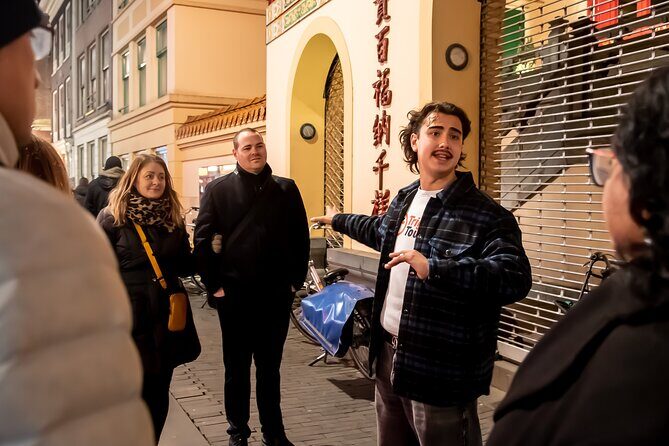
Then you move into the Chinese Quarter, which is described as a symbol of Amsterdam’s multicultural community. It is a useful contrast: history and hardship on one side, living community on the other.
If you have only seen Amsterdam through canals and museums, this ending helps balance the picture. It reminds you the city is not frozen in time.
World’s First Stock Exchange: why “finance” is part of your sightseeing
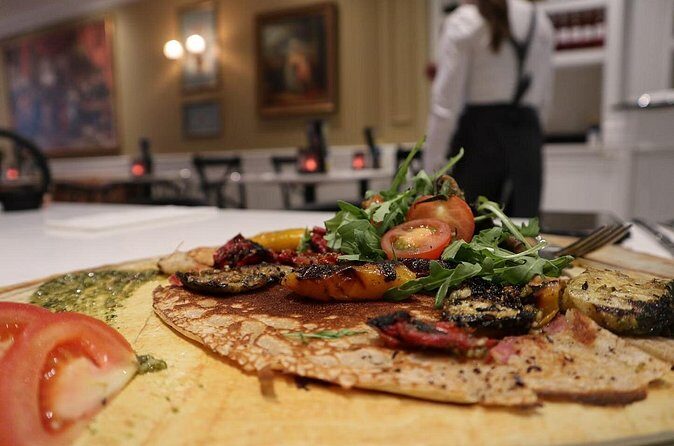
You also hear the story behind the world’s first stock exchange. It’s tied to the Dutch East India Company and how it influenced global trade.
This stop matters because it explains something people often miss: Amsterdam’s story is not only about art and boats. It is also about how risk, investment, and information moved across borders. Once you understand that, the city feels more connected. You start seeing why the economy and the built environment shaped each other.
If you like history that connects to modern life, this segment is a big win.
Price and lunch value check: what $84.65 buys you
The price is $84.65 per person, and the included elements are doing most of the heavy lifting. You get an expert local guide (English or Spanish-speaking), plus lunch: a Dutch pancake meal with a starter, main dish, and dessert or coffee. Tap water is also included.
Here is how I think about the value. Amsterdam eats are rarely cheap, and guided time is rarely free. This tour packages both in one block, which matters when you are trying to budget your day. If you tried to replicate it on your own, you would likely pay for guide time separately and still need to figure out where to eat and what to order.
The pancake lunch also hits a practical need. After walking through Dam Square, courtyards, churches, architecture stops, markets, and then ending with major neighborhood history, you want a real sit-down meal. A Dutch pancake meal is simple and satisfying, and the structure (starter + main + dessert or coffee) keeps you from leaving hungry or needing a second meal right after.
One more value point from the vibe: the tour is described as relaxed but still packed with stories. That is exactly what you want from a first-timer orientation. You should feel like the guide helped you see, not like you got dragged from one stop to the next without breathing room.
Meeting point, timing, and how to set yourself up for success
You meet at Beursplein 1-3, 1012 JW Amsterdam, and the tour ends back at the meeting point. That round-trip setup makes it easier to return to your hotel or continue independently.
The tour uses a mobile ticket, and it runs in English (and Spanish-speaking options). It is near public transportation, which helps if you are starting your day from another part of town.
Also, confirmation is received at booking time, and the tour allows service animals. Most people can participate, which is typical for a city walking route like this, but you should still treat it as regular walking on city streets.
If you want the best experience, wear shoes you trust. Amsterdam sidewalks and street surfaces vary, and the tour format means you will not be waiting around for long breaks.
Should you book this Amsterdam pancake walking tour?
Book it if you want a smart first pass at Amsterdam that mixes big landmarks with neighborhood texture, and you like the idea of learning while walking. The small group size, the clear stop-by-stop structure, and the included Dutch pancake lunch are a strong combination, especially for a short visit.
Skip it (or think twice) if you want lots of paid indoor time or a slow, leisurely museum-style day. Because many stops are oriented around viewing and guided explanation rather than heavy admissions, you will get the story, but not necessarily long “in building” exploration.
If you are the type who likes asking questions while you stroll, this format is made for you. It also works well for younger groups and first-timers who want Amsterdam context without turning your day into a checklist.
FAQ
How long is the Amsterdam walking tour with pancake lunch?
The duration is about 2 hours 30 minutes.
What is the price per person?
The price is $84.65 per person.
Where do we meet, and does the tour end nearby?
You meet at Beursplein 1-3, 1012 JW Amsterdam, and the tour ends back at the meeting point.
What language is the tour offered in?
It is offered in English. A Spanish-speaking option is also available.
Is the lunch included?
Yes. Lunch is included and features a Dutch pancake meal with a starter, main dish, and dessert or coffee, plus tap water.
Do we need tickets for the sights?
Some stops are marked as admission ticket not included, while others are marked free. The tour description also notes this stop-by-stop for places like Dam Square and Begijnhof, and free for items like the Oude Kerk area and certain architecture/streets.
Is there a maximum group size?
Yes. The tour has a maximum of 15 travelers.
Can I cancel and get a refund?
No. This experience is non-refundable and cannot be changed for any reason.
Are tips included in the price?
No. Tips and gratuities are not included.