REVIEW · AMSTERDAM
Amsterdam Old City Private Walking Tour
Book on GetYourGuide →Operated by Stadswandelkantoor · Bookable on GetYourGuide
Amsterdam clicks when you walk it.
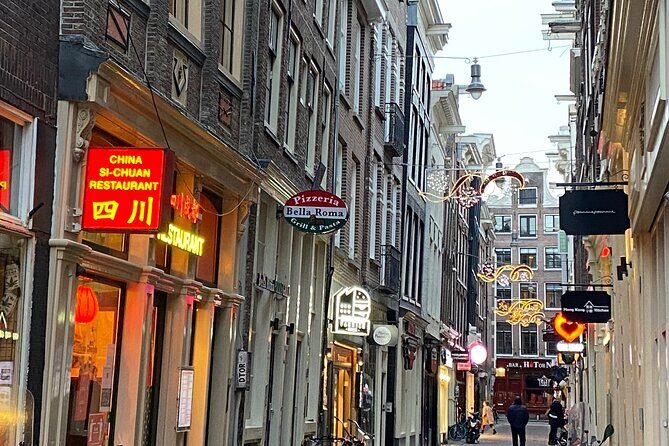
This private 2-hour route is built around how the city grew from marshy swamp land into a 17th-century powerhouse, with medieval streets and canal scenery mixed with real neighborhoods. You’ll see well-preserved merchant-house lines, stop at major historic landmarks, and pass through areas like the Old Jewish District, Chinatown near Nieuwmarkt, and the Red Light District.
I love the way the guide connects Amsterdam’s engineering story to the city’s money and culture, and I love the off-the-usual-path details that help the place feel lived-in, not just postcard-perfect. One possible drawback: two hours goes fast, so if you want slow wandering and long museum-style stops, you’ll likely need extra time on your own.
In This Review
- Key highlights to look for
- Starting at Amsterdam Central Station and getting your bearings fast
- Medieval center and old city wall traces: the city before the boom
- The Old Church and Oude Manshuispoort: small stops with big atmosphere
- The 17th-century East India Company story at Oostindisch Huis
- Jordaan walking: pawn-shop streets and merchant-house elegance
- Herengracht canal banks: one of the city’s first major canals
- Begijnhof women’s homes: a calm break from the street noise
- Chinatown near Nieuwmarkt and the old Jewish District
- Passing the Red Light District with context, not chaos
- How the guide tailors a private 2-hour walk in practice
- Price and value: $265 per group up to 10
- Logistics that matter on a city-walk
- Who this private Amsterdam Old City walk suits best
- Should you book this tour?
- FAQ
- Where do we meet for the Amsterdam Old City Private Walking Tour?
- How long is the tour?
- How much does it cost, and how large is the group?
- What’s included in the price?
- Are food and drinks included?
- What languages is the guide available in?
- Is the tour wheelchair accessible?
- Is free cancellation available?
Key highlights to look for
- Local-history focus, including how Amsterdam became a major science and cultural center
- Canal power storytelling, from swamp land and near-impossible harbor access to the 17th-century boom
- Begijnhof women’s homes, a calmer pause in the middle of busy streets
- Jordaan merchant houses and old pawn shops, where daily life and trade show up in architecture
- Pass-through of the Red Light District, handled with context rather than just spectacle
Starting at Amsterdam Central Station and getting your bearings fast
Meeting at Amsterdam Central Station in front of the main entrance is practical. From there, you step into the old city in a way that helps you understand where everything is in relation to the canals.
The big win with a private walking tour is that the guide can steer the pace. If you’re the type who likes to stop for one extra photo or ask one more question about a building, you can do it without holding up a big group.
You can also read our reviews of more walking tours in Amsterdam



Medieval center and old city wall traces: the city before the boom
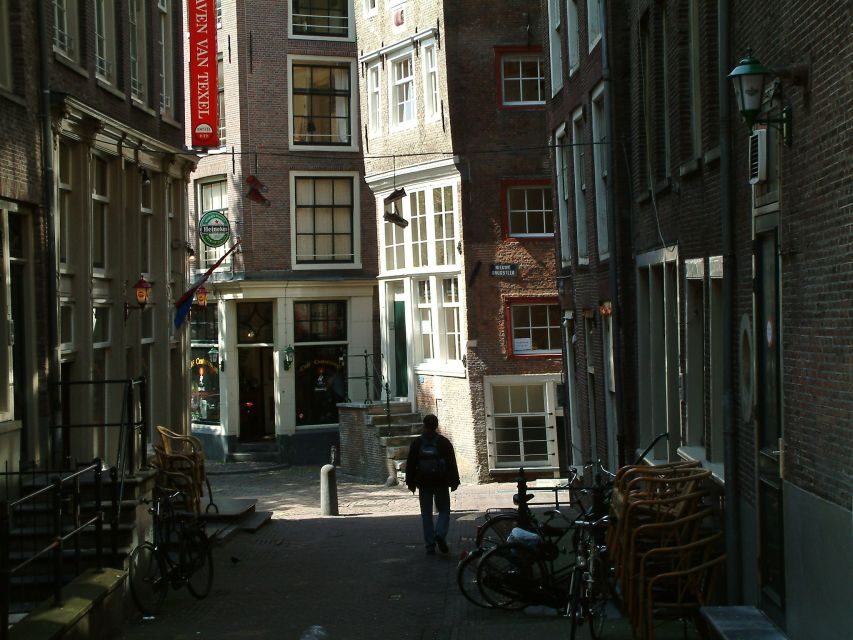
This is the part where Amsterdam stops feeling like one long canal picture. You’ll walk through the medieval center and see parts of the old city wall—small remnants, but they give you a sense of how enclosed and strategic the city once was.
Along the way, the guide frames Amsterdam’s early conditions: the city was built on reclaimed swamp, with land buried in mud, and the harbor was almost inaccessible. Even when the connection with the North Sea wasn’t realized until the 19th century, Amsterdam still became one of the most important cities in the world. That tension—struggling conditions, huge ambitions—makes the whole walking route click.
The Old Church and Oude Manshuispoort: small stops with big atmosphere
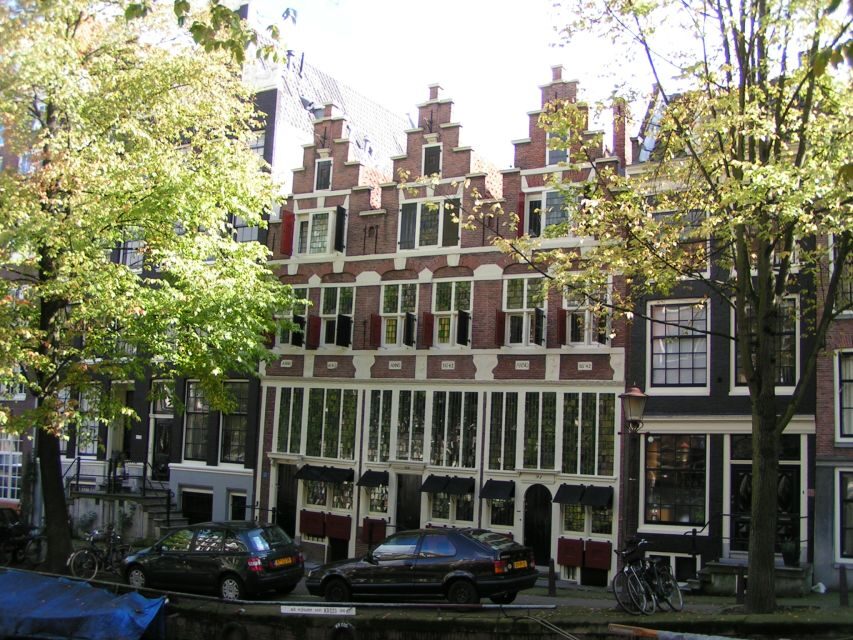
Two names to watch for: the Old Church and Oude Manshuispoort. Even if you’ve walked around Amsterdam before, these places tend to be exactly the kind of spot you miss when you’re moving on your own.
The Old Church brings you into the medieval-to-early-modern feeling of the city. Oude Manshuispoort is the kind of architectural detail that looks like it belongs in a history book, but it’s right there on the street—quiet, specific, and easy to appreciate once someone points out what you’re actually looking at.
The 17th-century East India Company story at Oostindisch Huis
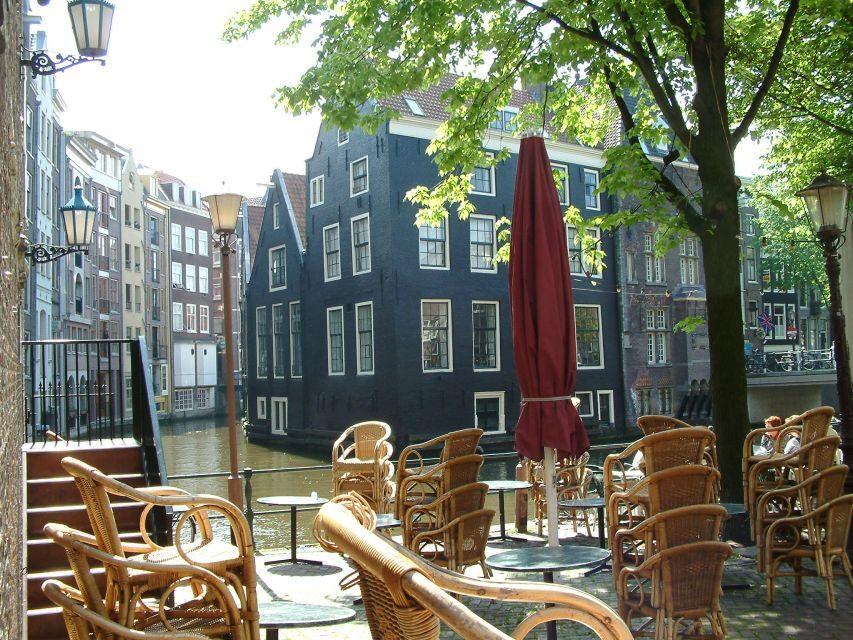
The tour’s history part really sharpens when you reach the Oostindisch Huis, the 17th-century East India Company headquarters. This is where Amsterdam’s world-power era becomes concrete. You’re not just hearing dates; you’re seeing the kind of building that helped finance trade and influence far beyond the Netherlands.
The guide also gives scale: in 1650 Amsterdam had about 220,000 inhabitants and ranked as the 3rd largest city in Europe. That kind of population jump explains the density you feel today—more people, more commerce, more pressure on land and waterways.
If you like your history tied to real street scenes, this stop is one of the reasons the tour gets high marks. It’s the difference between memorizing facts and understanding why the city looks the way it does.
Jordaan walking: pawn-shop streets and merchant-house elegance
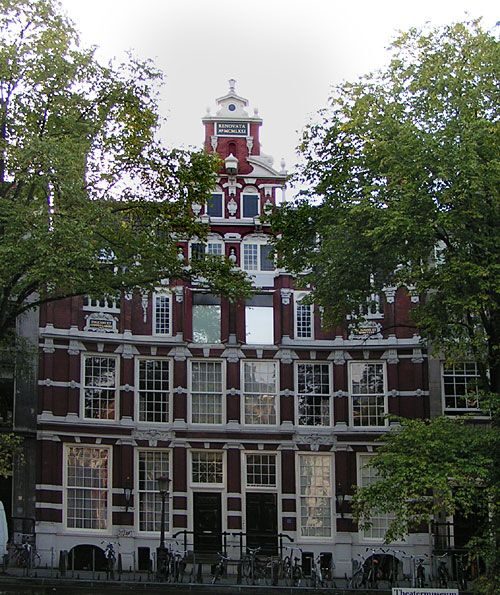
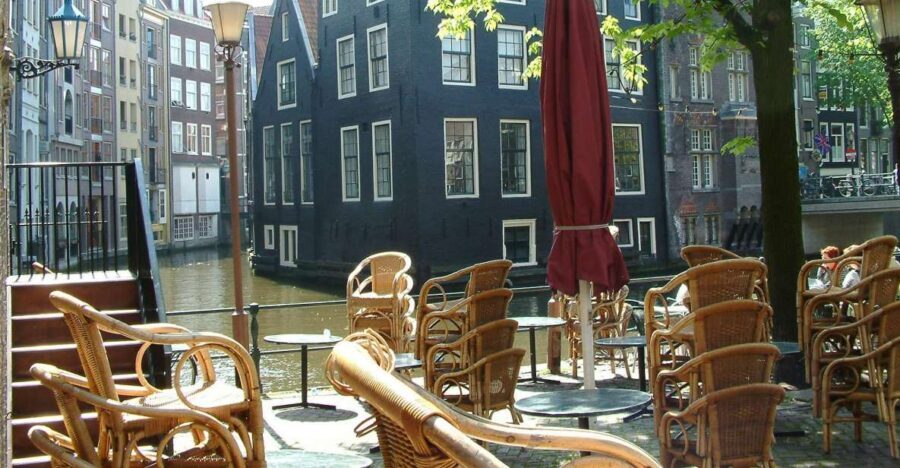
A key section of the walk is through the Jordaan area. You’ll pass old pawn shops and handsome merchant houses, which is a fun combo because it shows two sides of trade: wealth on the façade and hustle in the details.
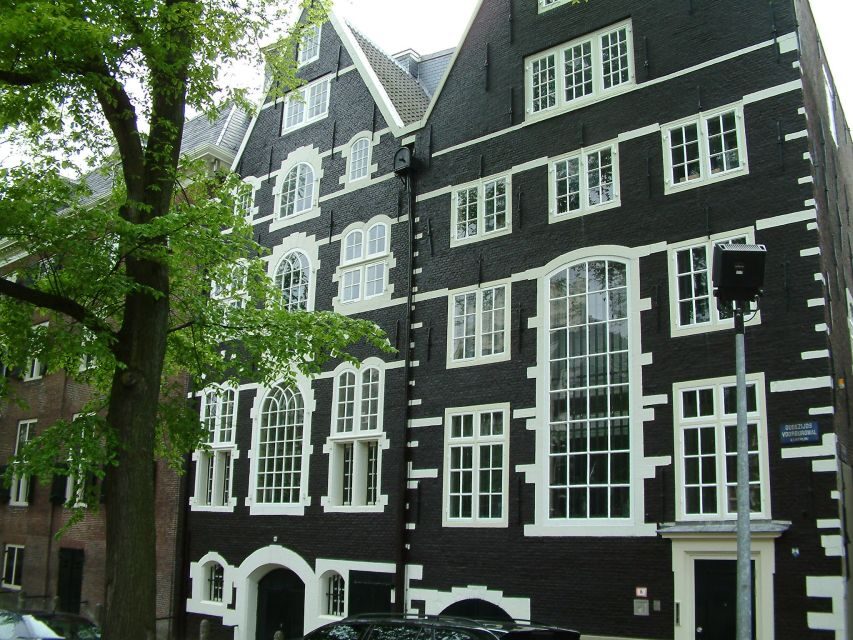
Merchant houses along the canals aren’t just pretty. They’re a record of who benefited from Amsterdam’s growth and how long prosperity stayed visible in the architecture. And the pawn shops hint at how everyday life mixed with the economy—because trade isn’t only about big ships and official power, it’s also about what ordinary people needed, sold, and replaced.
You can also read our reviews of more city tours in Amsterdam






Herengracht canal banks: one of the city’s first major canals
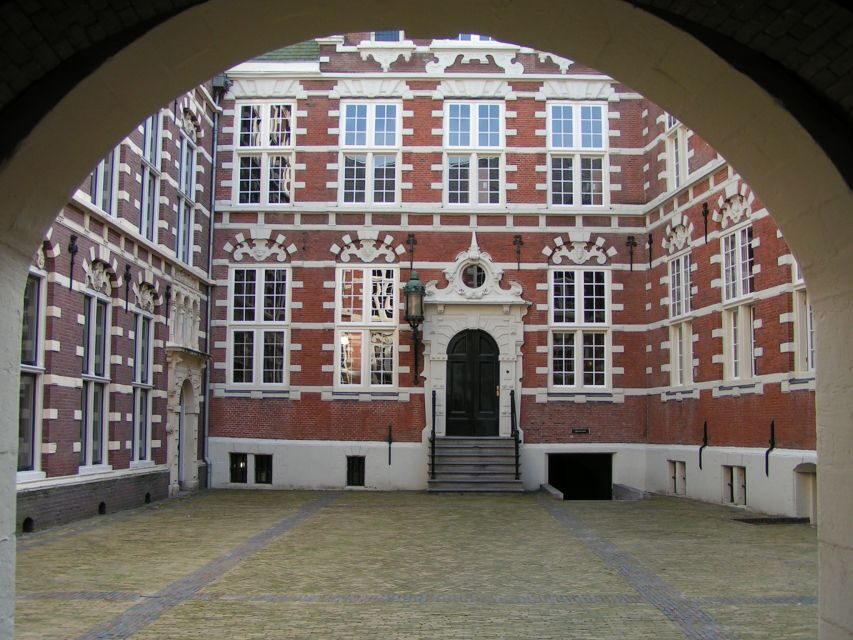
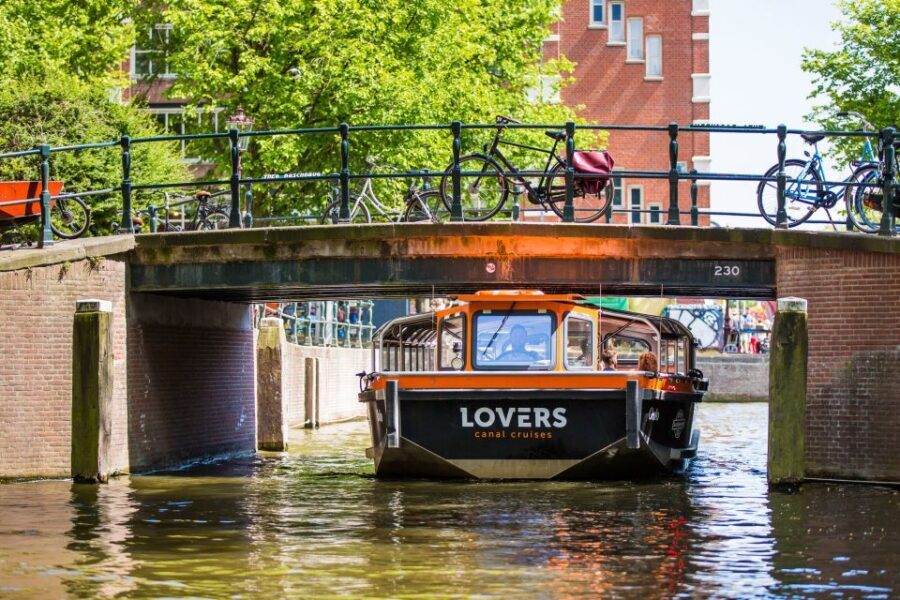
Next, you’ll walk along the Herengracht, one of Amsterdam’s first three major canals. This is where you start seeing the canal system as more than scenery. Canals were transportation, storage, and status all at once.
If you’re the kind of person who likes to connect a view to a purpose, you’ll probably enjoy this stretch. The guide ties what you see to why Amsterdam worked: water routes plus engineering plus mercantile ambition created a city that could expand even when the ground and harbor conditions weren’t friendly.
Begijnhof women’s homes: a calm break from the street noise
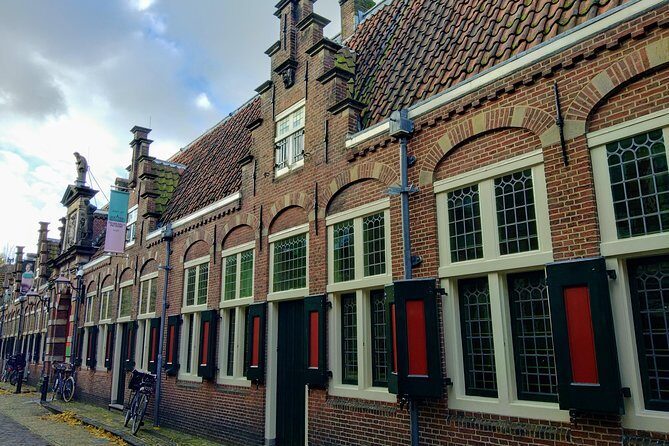
Then comes a breather: the Begijnhof women’s homes. Even though you’re still in central Amsterdam, this is the kind of pocket where the mood changes. It’s quieter, more human-sized, and less about movement.
This stop matters because it balances the tour’s economic and political story. Amsterdam didn’t only rise through commerce. It also shaped social life, institutions, and community spaces—and Begijnhof is one of the strongest ways to feel that on foot.
Chinatown near Nieuwmarkt and the old Jewish District
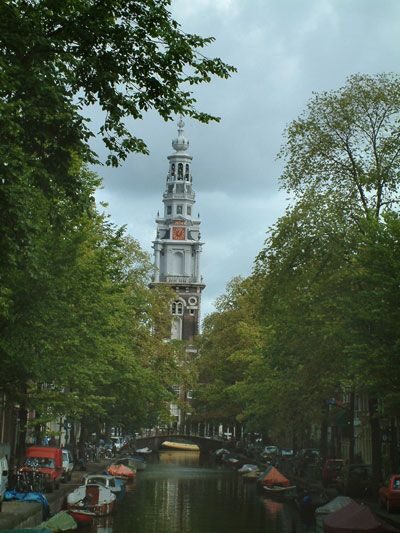
You’ll move into the areas around Chinatown and the Nieuwmarkt, plus the former Jewish District. The tour uses these neighborhoods to keep the city’s story from becoming a single-era lecture.
Chinatown and Nieuwmarkt give you an everyday view of Amsterdam’s layering: newer cultural identity sitting alongside older urban structure. The old Jewish District stops you from treating history as only what’s ancient or only what’s royal. Amsterdam’s story is also migration, community, and change over time.
Passing the Red Light District with context, not chaos
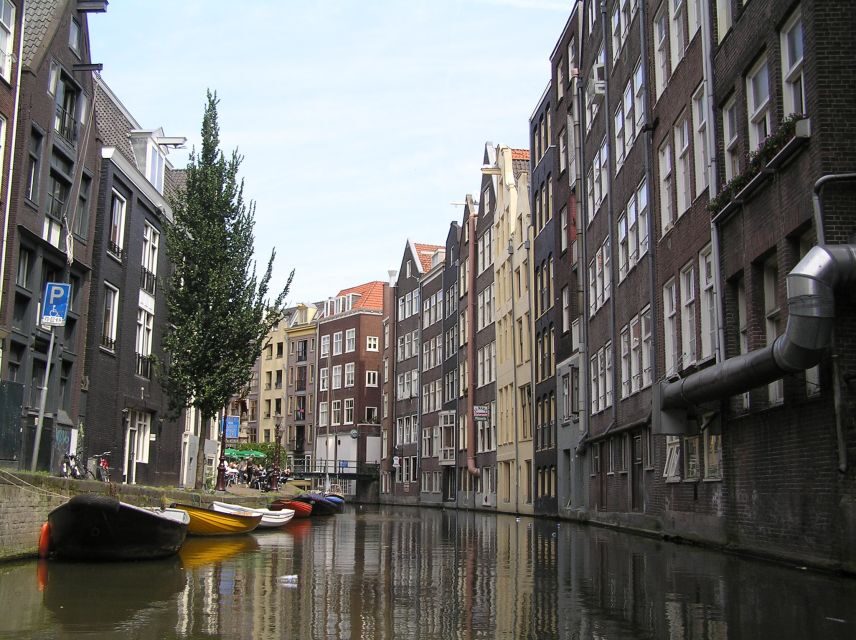
You’ll stroll through the infamous Red Light District. The route is designed so you’re not thrown into confusion; instead, the guide gives the surrounding context so it lands as part of the city’s modern story.
You don’t need to be interested in nightlife to get value here. What you’re really learning is how Amsterdam absorbed controversial realities while still keeping its identity as a trading, cultural, and scientific hub. The guide’s job is to help you read what you’re seeing without getting distracted by the obvious.
If you’re sensitive about this area, tell your guide early. A good private guide can adjust your route through the neighborhood to keep it comfortable.
How the guide tailors a private 2-hour walk in practice
This is where you get the most out of a private format. The tour is adapted to your wishes, which means you can steer toward architecture and history without being stuck in a fixed script.
One thing I really appreciate from the feedback is how much the guide’s personal perspective adds. A standout theme is that the guide comes across as a true longtime Amsterdam local, with stories about changes that happened in the later decades too. That kind of firsthand detail helps you understand what changed and what stayed.
In a short, two-hour format, you end up with a feeling for the city rather than just a checklist. You’ll also cover multiple key themes: medieval beginnings, the canal-and-trade engine, the 17th-century boom, and Amsterdam’s later cultural layering.
Price and value: $265 per group up to 10
At $265 per group for up to 10 people, this tour can be a good deal if you’re traveling in a small group of friends or family. The price isn’t priced per person, so your per-head cost drops fast as group size grows.
Here’s the simple math:
- For 2 people, it’s about $132.50 per person.
- For 4 people, it’s about $66.25 per person.
- For 10 people, it’s about $26.50 per person.
Compared to paying for multiple individual tickets, this format can be especially sensible if you want a guide’s attention and flexibility. You also get VAT included, and the tour is private, so the guide can slow down for questions or speed up based on your energy.
The one thing to remember: food and drinks aren’t included. You’ll finish with plenty of appetite, so plan a casual meal right after.
Logistics that matter on a city-walk
You’ll cover a lot in two hours, so wear shoes that can handle uneven pavement and canal-side streets. This isn’t a sit-and-stare experience. It’s more like guided street reading.
Also note the luggage rule: luggage or large bags aren’t allowed. If you have a big suitcase, plan to stash it before meeting.
Good to know for planning: the guide speaks English, Dutch, and German. Wheelchair accessibility is listed, so it’s worth asking about your route needs if mobility is limited—though the tour is designed for walking.
Who this private Amsterdam Old City walk suits best
This tour fits well if you like architecture and history more than museums. You’ll get enough context to connect streets and buildings to real events without spending all day indoors.
It’s also a strong choice if you want to see more than the standard highlights. The route includes places that help you feel the city’s texture—like the Begijnhof and Oude Manshuispoort—plus the cultural neighborhoods around Nieuwmarkt and Chinatown.
If you’re traveling with kids, it can work, but only if they’re the type who enjoy stories about buildings and city change. Otherwise, you might want a shorter, more flexible family-focused option.
Should you book this tour?
I think you should book this private walking tour if you want Amsterdam in a tight time window and you care about how the city grew—especially the swamp-to-world-power engineering story and the 17th-century trade era. The pricing makes more sense the bigger your group is, and the private format lets you follow your interests.
Skip it if you’re chasing long stops and museum-level time, or if you want zero walking and no cultural neighborhoods. This is a walking-first experience, and it rewards curiosity.
FAQ
Where do we meet for the Amsterdam Old City Private Walking Tour?
You meet at Amsterdam Central Station, in front of the main entrance.
How long is the tour?
The tour lasts 2 hours.
How much does it cost, and how large is the group?
It costs $265 per group, up to 10 people.
What’s included in the price?
A 2-hour walking tour adapted to your wishes, with a guide, and VAT included.
Are food and drinks included?
No. Food and drinks are not included.
What languages is the guide available in?
The live guide is available in English, Dutch, and German.
Is the tour wheelchair accessible?
Yes, the tour is listed as wheelchair accessible.
Is free cancellation available?
Free cancellation is available up to 24 hours in advance for a full refund.