On a tight route, Amsterdam gets huge. This small-group history walk strings together 800 years of the city in just two hours, with a guide who keeps the tone light and the details clear. I love how the tour uses wit, not lectures, to explain how Dutch life formed around trade, politics, and everyday living. Axel is especially good at making you feel like you can ask anything, and that you’ll walk away with places to eat and drink, not just facts. One thing to consider: it’s a focused walking route in central streets, so you’ll want comfortable shoes.
The biggest plus is the small-group format. With a cap of 10 participants, you can shape the stops toward what you care about, whether that’s canals, the Dutch East India Company era, or why certain neighborhoods look the way they do. One possible drawback is that this route isn’t set up for mobility needs and isn’t ideal for very young kids, since it’s mostly on foot.
In This Review
- Key Things You’ll Notice on This Amsterdam 800-Year Walk
- Why This 2-Hour Tour Works for First-Time Amsterdam
- Starting Point: Those Dam Boat Guys and the Easy Setup
- Red Light District: The City’s Edge, Explained Without the Shock
- Burgwallen Oude Zijde: Old Canal-Belt Streets and the Sense of Age
- The VOC Moment: Dutch East India Company Origins in Plain English
- Zuiderkerk: A Church Stop With City-Wide Context
- Waterlooplein Market: A Pass-By for Atmosphere
- Stopera and Groenburgwal: Modern Landmarks, Old Waterways
- Binnenstad and Spui Square: Getting Oriented for the Rest of Your Day
- Begijnhof: The Quiet Courtyard Contrast You’ll Remember
- Amsterdam Museum Stop: A Landmark Hint for What to Do Next
- Finish at Dam Square: Easy Transit, Easy Continuation
- Guide Style: Why Axel’s Approach Makes History Fun
- Who This Tour Suits Best
- Price and Value: Why $32 Feels Fair Here
- Practical Tips to Get the Most From the Walk
- Should You Book This Amsterdam History, Humor & Hidden Courtyards Tour?
- FAQ
- FAQ
- Where does the walking tour start?
- Where does the tour end?
- How long is the tour?
- How big is the group?
- Is the tour offered in English?
- What is included in the price?
- What is not included?
- Do I need to bring anything?
- Are there restrictions on alcohol?
- Who is the tour not suitable for?
- Can I cancel and get a refund?
Key Things You’ll Notice on This Amsterdam 800-Year Walk
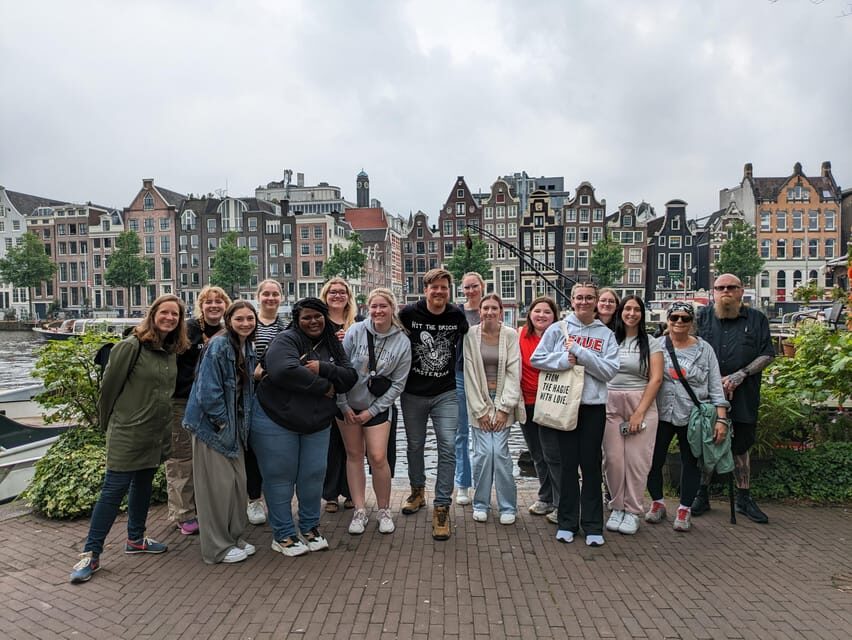
- Axel’s humor and pacing: jokes and even a couple of puns, mixed with clear context.
- Small group size (up to 10): more room to ask questions and steer recommendations.
- A tight central-city loop: you get a strong overview without feeling like you’re hiking for hours.
- Begijnhof + canal-side moments: quieter, tucked-away contrast points along the walk.
- Practical ending at Dam Square: you finish right where trams, metro, and taxis make it easy to keep going.
Why This 2-Hour Tour Works for First-Time Amsterdam
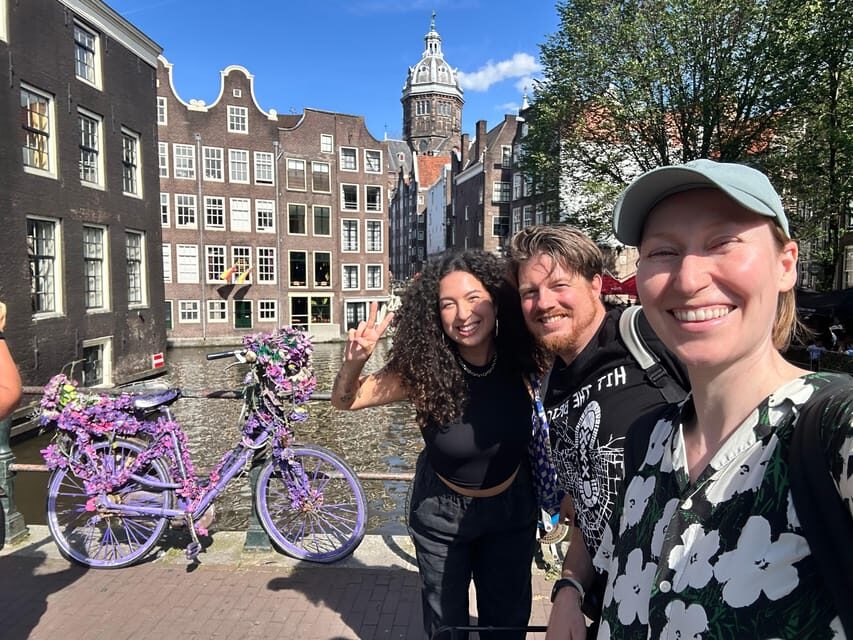
Amsterdam can feel overwhelming fast. The streets look photogenic, but history is what explains the why behind the canals, the old churches, and the way neighborhoods grew. This tour helps you get your bearings fast by focusing on a compact slice of the city center and telling the long story behind it.
You’ll get a guide-led walk through major landmarks and also smaller moments you might miss on your own, like courtyards and side streets where the city’s mood changes in a few steps. The format is also built for interaction. With a small group, you’re not stuck passively listening while the crowd shuffles along.
At $32 per person for 2 hours, the value comes from three things. First, you’re paying for a local perspective (in English) that connects places to time periods. Second, you get local recommendations for food and drink, which can save you a lot of trial-and-error. Third, the whole thing is designed to end at Dam Square, so you’re positioned to continue exploring immediately.
You can also read our reviews of more historical tours in Amsterdam



Starting Point: Those Dam Boat Guys and the Easy Setup
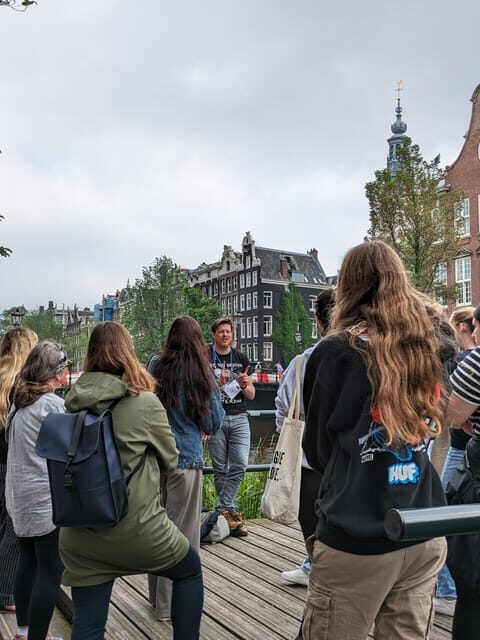
You’ll meet at the office of Those Dam Boat Guys. It’s convenient because the boat tours depart from the same area, so it helps to let the staff know you’re there for the walking tour. That small detail matters. It prevents confusion when people are coming and going.
Plan to arrive about 10 minutes early. The walk is only two hours, so you don’t want to be the one slowing the group at the start. You’ll also want to dress for the weather. In Amsterdam, conditions can shift quickly, and you’ll be outdoors the whole time.
Red Light District: The City’s Edge, Explained Without the Shock
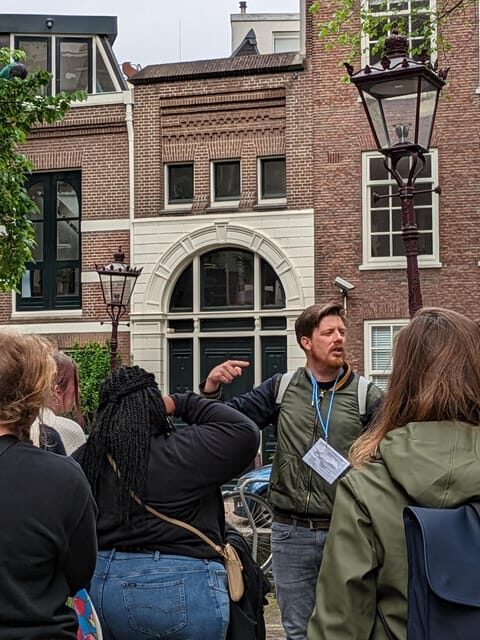
The tour quickly brings you to the Amsterdam Red Light District area. This stop is short, but it sets an important theme: Amsterdam has always been a trading port with a reputation that drew people in and shaped policy and public life. Instead of turning it into a spectacle, the guide uses it as a springboard to talk about how the city managed morality, commerce, and human behavior over time.
The best part here is tone. The guide’s humor keeps things from getting awkward, and you’ll likely hear an angle that connects the neighborhood to broader Amsterdam history rather than just focusing on the street-level scene.
A drawback: if you strongly prefer to avoid this part of town, you’ll still see it from the walk-through perspective. You won’t be sitting inside any themed attraction, but the area is right in the route.
Burgwallen Oude Zijde: Old Canal-Belt Streets and the Sense of Age
Next you move along Burgwallen Oude Zijde, part of the historic canal belt area. This is where Amsterdam starts to feel like a model of how the city planned itself. You’ll notice the street layout and canal edges that show how neighborhoods organized around water transport and commerce.
This stop works well if you like reading a city like a map. The guide helps connect what you see—street shapes, building patterns, and canal-side design—with what was happening historically. It’s not just visual. It’s cause-and-effect.
The VOC Moment: Dutch East India Company Origins in Plain English
A key highlight on the route is the VOC / Dutch East India Company stop. You don’t need a business degree to follow it. The guide frames VOC as part of how Amsterdam became a hub—how trade networks, wealth, and global connections fed back into local life.
Why this stop matters for you: it helps explain the city’s “big reach” during an era when the rest of Europe was trying to figure out power and profit overseas. If you’ve ever wondered why Amsterdam looks so wealthy in some of its old architecture, this is the thread to follow.
The time here is brief, around 10 minutes, so don’t expect a full course. Do expect a clear story you can build on later as you visit museums or historic buildings.





Zuiderkerk: A Church Stop With City-Wide Context
Then you’re at Zuiderkerk, where the conversation ties religion and civic life together. In Amsterdam, churches weren’t just spiritual places; they also connected communities and reflected how the city organized itself.
This is another “short but useful” stop. It gives you a landmark anchor and a reason to look closely when you pass similar buildings later in your trip. It also helps explain why certain architectural styles and public spaces became part of Amsterdam’s identity.
If you’re the type who likes turning architecture into meaning, this will click.
Waterlooplein Market: A Pass-By for Atmosphere
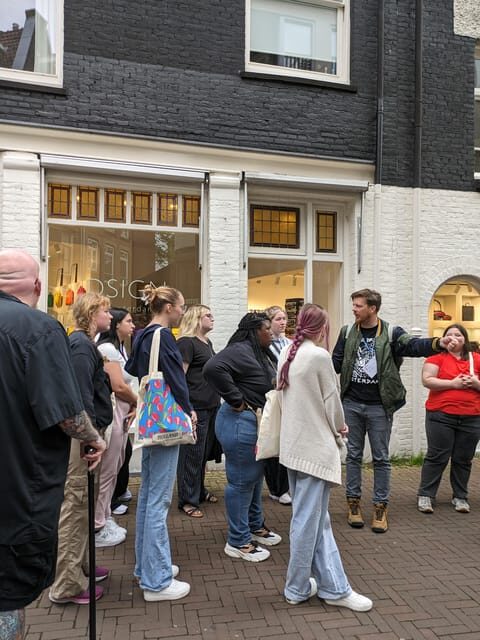
The tour includes Waterlooplein Market as a pass-by stop. That means you don’t linger long, but you get a glimpse of a place that still feels like a local gathering point. It’s a good palette cleanser between deeper history segments.
If you’re hoping for a detailed market visit, this isn’t that tour. But as a quick scene-setter, it does the job.
Stopera and Groenburgwal: Modern Landmarks, Old Waterways
You’ll pass Stopera for a short guided moment. It’s a reminder that Amsterdam didn’t freeze in time after the canal-belt era. Cities evolve, and new buildings show how older urban needs shift over time.
Then you get a photo stop at Groenburgwal. This is the kind of canal moment where the guide’s stories make the view better. Instead of just pointing at buildings, the tour gives you historical context while you take pictures.
If you like photos, plan on spending a little extra time yourself after the tour in this general canal-area zone. The walk ends later, but your memory of the views will last.
Binnenstad and Spui Square: Getting Oriented for the Rest of Your Day
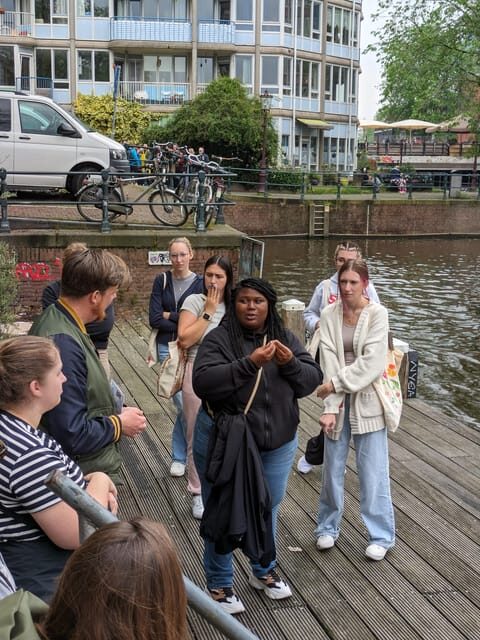
As you continue through Binnenstad, Amsterdam, and Spui Square, the tour shifts from landmark history to city orientation. These are useful wayfinding checkpoints. They also help you understand how Amsterdam’s pedestrian-friendly center links neighborhoods, not just how it looked centuries ago.
This is where the small group format helps again. If you ask what to do next, the guide can steer you toward areas worth lingering in and ones to skip based on your interests.
Begijnhof: The Quiet Courtyard Contrast You’ll Remember
The best change of pace on the walk comes at Begijnhof, where you’ll have a visit and a guided look. Begijnhof is one of those places that feels like a secret calm inside the busy city. You’re physically still in central Amsterdam, but the atmosphere changes fast.
Why it’s valuable for your trip: it gives you a break from the big street views and shows a different side of how people lived. The guide connects the setting to history, so you understand what you’re looking at instead of just appreciating it aesthetically.
This is also one of the places where you’re likely to feel the tour’s “hidden courtyards” promise in a practical way.
Amsterdam Museum Stop: A Landmark Hint for What to Do Next
You’ll stop near Amsterdam Museum. The time is short, but it’s a nudge: if you want to go deeper than a walking tour, this is one of the logical next steps.
Even if you don’t plan to enter a museum that day, the stop helps you decide how to spend your remaining hours. It’s part of the tour’s biggest benefit: planning assistance. The guide aims to send you onward with direction.
Finish at Dam Square: Easy Transit, Easy Continuation
The tour ends back at Dam Square. That’s practical. From there, you can hop on tram, metro, taxi, or keep exploring on foot if you’ve still got energy and good shoes.
Finishing at Dam Square also makes the tour ideal for a first-day itinerary. It gives you a strong mental map of where you are in relation to historic landmarks, and then you can choose where to go next with more confidence.
Guide Style: Why Axel’s Approach Makes History Fun
The reviews point to the same thing: the guide’s sense of humor is not random. It’s tied to pacing and clarity. Axel’s English skills are consistently praised, and the tour’s tone stays friendly and engaged rather than stiff.
I like how the humor works as a memory tool. When something is explained with a joke or a quick pun, you’re more likely to remember the underlying idea. And because the group is small, you don’t feel like you’re stuck in a lecture line.
This is also why the tour feels approachable even when the timeline is long. You’re not expected to absorb 800 years at once. You get key points, connected into a story you can carry with you.
Who This Tour Suits Best
This walk is a strong fit if you:
- want a first-time Amsterdam overview that doesn’t ignore the darker or complicated parts of the city
- like history but prefer it delivered with humor and a conversational pace
- want immediate, practical help for what to eat and drink after the tour
- appreciate canal scenery but also want the “why” behind it
It may not be ideal if:
- you can’t comfortably do a walking tour in the city center (it’s not designed for mobility impairments)
- you’re traveling with very young kids (it’s not suitable for children under 9)
- you prefer a wide, spread-out route with long photo breaks (this is more compact and time-efficient)
Price and Value: Why $32 Feels Fair Here
$32 for a 2-hour small-group guide can be a bargain in cities like Amsterdam, especially when the guide gives you more than just a route. Here, the value comes from recommendations and context.
You’re not just paying for movement and a few landmarks. You’re paying for someone to connect those landmarks to how Amsterdam developed. And you’re paying for local guidance on food, drink, and things to do based on what you want.
If you’re the type who often asks where to go next, this tour earns its money quickly.
Practical Tips to Get the Most From the Walk
Bring comfortable walking shoes. The route stays in central areas, and one review notes it is not physically demanding, but it is still city walking. Bring a camera if you like canal and courtyard shots.
Weather matters. Dress appropriately and bring a water bottle. The tour is two hours, but Amsterdam weather can still catch you off guard.
Also, take the guide up on questions. The small group setup is meant for interaction. If you ask about your interests early, you’ll likely get better recommendations later in the walk.
Should You Book This Amsterdam History, Humor & Hidden Courtyards Tour?
Book it if you want a tight, fun introduction to Amsterdam’s past with a guide who can explain the big themes without turning the day into homework. Axel’s humor, his clear English, and the small group size make it easy to stay engaged. Ending at Dam Square is also a smart move for continuing your trip.
Skip it if you need a long museum-style experience, want heavy accessibility support, or you dislike walking through the general area of the Red Light District at all. This tour is short, focused, and designed to give you direction fast.
If that sounds like your style, this is a very solid use of two hours in Amsterdam.
FAQ
FAQ
Where does the walking tour start?
It starts at the office of Those Dam Boat Guys.
Where does the tour end?
The tour finishes at Dam Square.
How long is the tour?
The tour is 2 hours.
How big is the group?
The group is limited to 10 participants.
Is the tour offered in English?
Yes, the live tour guide speaks English.
What is included in the price?
You get an experienced local guide, a 2-hour walking tour, and local recommendations and tips.
What is not included?
Entrance fees to attractions, food and drinks, and transportation to or from the starting point are not included.
Do I need to bring anything?
Wear comfortable walking shoes and bring a camera. It’s also smart to bring weather-appropriate clothing and a water bottle.
Are there restrictions on alcohol?
Yes. Alcohol and drugs are not allowed.
Who is the tour not suitable for?
It is not suitable for children under 9 years, people with mobility impairments, wheelchair users, people over 95 years, people over 309 lbs (140 kg), and hearing-impaired people. Alcohol/bachelor or bachelorette groups are also not allowed.
Can I cancel and get a refund?
Yes, you can cancel up to 24 hours in advance for a full refund.