A neighborhood walk with real weight.
This private, max-4 tour is built for a focused look at Amsterdam’s Jewish community, from everyday life and culture to World War II—without the crush of big groups. I like that you get the guide’s full attention for the whole 3.5 hours and you can ask questions as you go.
I especially like the mix of memorials and living sites. You stop at major Holocaust memorials like the Holocaust Namenmonument and you also see places tied to Sephardic and Ashkenazi Jewish life, including the Portuguese Synagogue (Snoge/Esnoga). That balance keeps it from feeling like only one kind of story.
One drawback to plan for: parts of the route are “outside stops.” Hollandsche Schouwburg (and related Holocaust memorial buildings) are under construction until 2024, and the tour notes that you won’t be able to visit the interiors there.
In This Review
- Key things you’ll get from this tour
- A private Jewish Quarter walk that fits 3.5 hours
- Holocaust Namenmonument and the Auschwitz glass marker
- Hollandsche Schouwburg outside stops until 2024
- Synagogues and Jewish Amsterdam: Sephardic Snoge, Ashkenazi Uilenburgersjoel
- Dockworkers, deportations, and monuments to resistance
- Spinoza sites and the Jewish roots you can still spot
- Rembrandt House and Waterlooplein: culture beyond memorials
- GASSAN diamonds: a free workshop-and-store stop
- Anne Frank House at the end: not included, but built into the plan
- Price and value: $540.69 per group for a lot of major stops
- Should you book this Jewish Amsterdam tour?
- FAQ
- How long is the Jewish Amsterdam Private Walking Tour?
- How many people are in the group?
- Where do we meet and where does the tour end?
- Does the tour include admission to Anne Frank House?
- Are museum or synagogue tickets included for the stops?
- Are any stops free?
- Is pickup available and are service animals allowed?
Key things you’ll get from this tour
- Private and crowd-free route through Amsterdam’s former Jewish Quarter with a small group
- Holocaust memorial stops that are free to enter, including Namenmonument and the Auschwitz marker
- Synagogue circuit featuring Sephardic Snoge/Esnoga (1675) and Ashkenazi sites like Uilenburgersjoel (1766)
- Real WW2 context through buildings connected to deportations, resistance, and survival
- Optional Anne Frank House at the end, with help from your guide but tickets not included
- Plenty of free stops so you’re not paying entry fees all day
A private Jewish Quarter walk that fits 3.5 hours
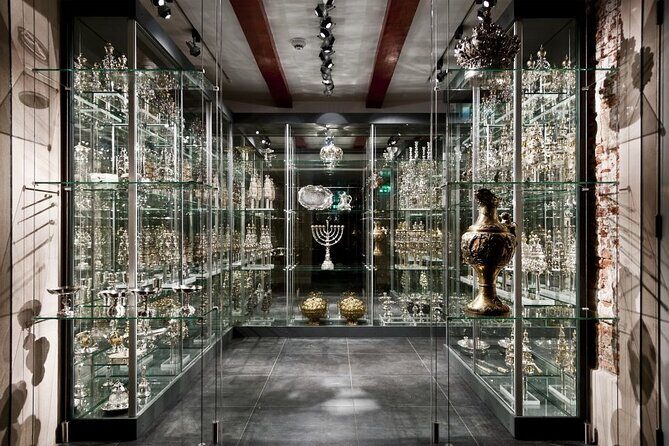
This is a small-group outing that moves at walking pace, not bus pace. With up to four people, you’re not squeezed shoulder-to-shoulder, and your guide can slow down for questions, photos, and the kind of pause you actually need at these sites.
Timing matters here. The tour runs about 3 hours 30 minutes, and the route includes a lot of emotionally heavy topics plus a fair number of short stops. If you have limited mobility, the tour info is honest: the guide can adjust speed and take more breaks if you agree—but you should still think carefully about doing a full 3.5 hours on your feet.
You’ll meet at Passenger Terminal Amsterdam, Piet Heinkade 27 and finish near Westermarkt 20 by the Western Church on Prinsengracht. Pickup is offered, which helps if you don’t want to fight transit or drag bags across the city.
You can also read our reviews of more walking tours in Amsterdam



Holocaust Namenmonument and the Auschwitz glass marker
The tour starts with the kind of place that makes you walk slower without being told. The first stop is the Holocaust Namenmonument, a memorial bearing the names of 102,000 people who died in Nazi camps of death and were not given proper burials. The “names” focus is important: it turns mass tragedy into individuals you can’t reduce to numbers.
Next comes the Auschwitz Monument, known for its broken glass design. The intent is clear and visual—brokenness, loss, and the long aftertaste of genocide. Both of these stops are short (about 10–15 minutes each) and both have free admission, which makes it easier to keep your attention and not feel rushed into the next location.
What I like about starting here is the frame it gives you for everything that follows. Before you see synagogues, streets, and neighborhoods, you’re reminded what the Nazi system did—then you can understand why Jewish community life in Amsterdam carried both strength and vulnerability.
Hollandsche Schouwburg outside stops until 2024
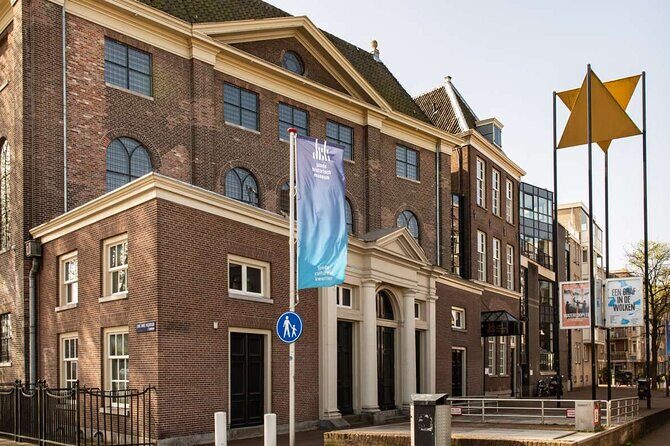
One of the most challenging parts of the day is also the most complicated logistically. The tour includes Hollandsche Schouwburg, also referred to as the Dutch Theater and Holocaust memorial building area. But the info is specific: the buildings are under construction until 2024, and you cannot visit the interior.
So what do you do there? You stand outside and listen closely. The tour description notes that the guide may use personal photos to explain the meaning of the space and the historical background. That matters because without interior access, the story has to travel through interpretation—how the site connects to suffering, disaster, and genocide, and how human courage and selflessness showed up anyway.
This is also where you should expect a heavier lecture style. The stop is listed at about 15 minutes with no admission included, so the value here is what your guide communicates while you’re looking at the building. If you’re the type who wants to see rooms and exhibits, this portion may feel limited. If you’re the type who wants context before you go searching later, it can land really well.
Synagogues and Jewish Amsterdam: Sephardic Snoge, Ashkenazi Uilenburgersjoel
After the Holocaust-focused stops, the tour shifts to community life. You’ll visit the Jewish Historical Museum and the JHM Children’s Museum (both in a group of four historical Ashkenazi synagogues). The time is short—about 10 minutes—and admission is not included, so this is mainly an orientation stop and a chance to connect the building forms with the stories behind them.
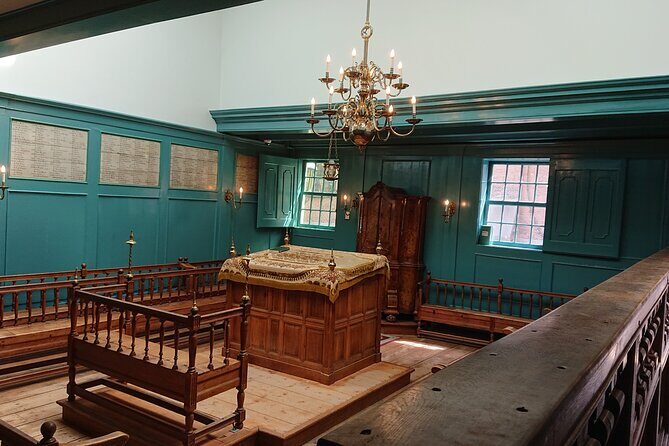
The star synagogue stop is Portugese Synagoge (Snoge/Esnoga), a Sephardic synagogue from 1675 that’s still in use. The tour also flags that it’s among the oldest Sephardic synagogues in Europe, alongside the Great Synagogue in Prague. You’ll get a quick, guided look at why the “still in use” part matters: it’s not only a historical monument. It’s a living thread of religious and cultural continuity.
You also make time at Uilenburgersjoel, an Ashkenazi synagogue built in 1766 in a Rococo style. This helps you see that Amsterdam’s Jewish world wasn’t one single story. It was different communities, languages, worship traditions, and neighborhoods—layered in the same city.
One practical note: interior access can depend on timing. A past guest described arriving too late to see interiors and said the guide used photos to help them picture what’s inside. So if a building looks closed, don’t assume you’re out of luck. You can still ask what’s typically inside and what you should look for next time.
Dockworkers, deportations, and monuments to resistance
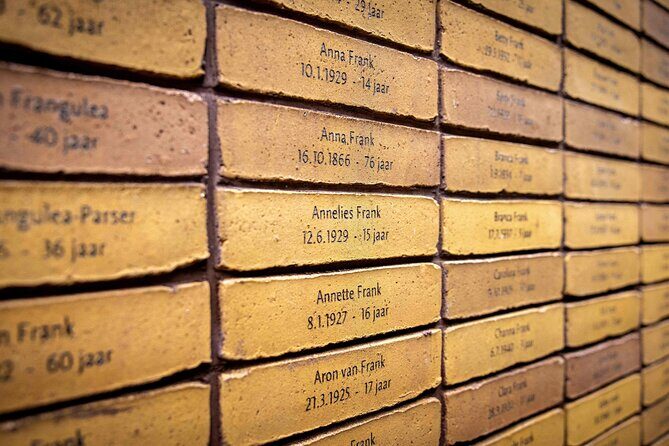
The day keeps grounding its history in people acting under pressure. The Dokwerker (Dockworker Statue) is a good example. It honors dock workers who protested anti-Semitic Nazi policies and the first deportations of Jews to Mauthausen on February 24, 1941.
That stop is only about 10 minutes, and it’s free, but it changes the tone. It shows resistance didn’t always look like armed rebellion. Sometimes it was a refusal to cooperate, an act of defiance in a system designed to stop defiance.
You’ll also see memorials that honor victim groups and fighters. The Deaf Memorial remembers Jewish deaf victims of the Nazi regime from 1940 to 1945. And the Monument vor Joods verzet is dedicated to Jewish resistance fighters who died during World War II.
If you’re trying to process the day, this is where those short stops can do real work. You’re reminded that history has multiple layers: victims, witnesses, resisters, and also survivors who lived with trauma long after the war.
You can also read our reviews of more private tours in Amsterdam



Spinoza sites and the Jewish roots you can still spot
One part of the tour that surprised me—in a good way—is how it braids Jewish history with other Amsterdam landmarks. You’ll pass by a 19th-century Catholic church that was once the residence of philosopher Baruch Spinoza and his family. Even though it’s not a Jewish building, the connection is direct and specific, and it helps you understand why Jewish intellectual life mattered in the broader city story.
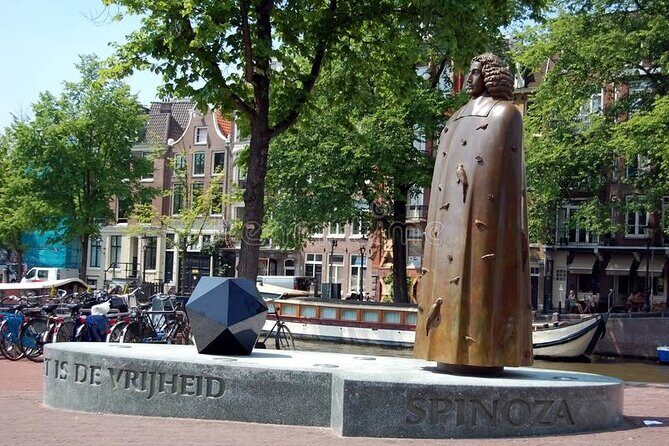
Then you’ll stop at the Spinoza Monument. The tour information frames Spinoza as an Amsterdammer descendant of a prominent Portuguese Jewish family and one of Europe’s major philosophers, including as a forerunner of pantheism. The note about his relative lack of recognition in his own era also makes sense historically: many big ideas take time to land.
You’ll also see the Huis De Pinto, a house built in 1603 that belonged to wealthy Jewish merchant Isaac de Pinto. That’s a great “quiet pause” stop because it shifts you back to daily life and social status, not only persecution. And it keeps your mental map from becoming only memorials and museums.
Rembrandt House and Waterlooplein: culture beyond memorials
Yes, there’s still museum territory in the middle of all this. The tour includes a stop at Rembrandt House Museum. Rembrandt van Rijn lived there from 1639 until 1658, and the tour notes his life and work were connected to Amsterdam’s Jewish community in the 17th century. Admission isn’t included here, so think of this as an exterior orientation and a reminder that art and commerce moved through the same city at the same time as Jewish community life.
Then comes a very Amsterdam moment: Waterlooplein Market, described as the oldest flea market of Amsterdam and of the Netherlands until World War II. The tour frames it as more than shopping. It was a social center for more than 150 years. This stop can feel like a “breather,” and that’s not trivial. After you’ve heard about deportations and genocide, you need a chance to see the city as a city.
If your goal is purely education, that market stop might feel like less “serious history” than other stops. But if your goal is to understand what was erased and what endured, it helps to remember that Jewish life wasn’t only catastrophe. It was also neighbors, markets, and everyday routines.
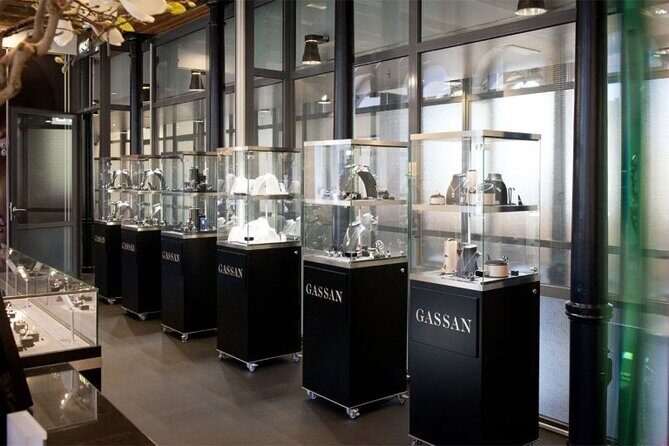
GASSAN diamonds: a free workshop-and-store stop
At about the midpoint of the day, you’ll hit GASSAN, a well-known diamond company with a museum/workshop/store component. The tour provides generous time: 20 minutes and admission is free. It also notes you can get tours from a local company guide.
This is another of those “balance points” that can make the day feel less like only one subject. Diamonds might seem random beside Holocaust memorials, but it fits the broader theme: Jewish life in Amsterdam included crafts, business, and industry, and it contributed to the city’s global links.
Keep expectations realistic. This isn’t a deep diamond-lesson. It’s a quick, free stop that gives you a taste of how one famous family business connects to Amsterdam’s economy and trade culture.
Anne Frank House at the end: not included, but built into the plan
The tour ends near the Anne Frank House area at Westermarkt 20 by the Western Church. Here’s the key detail: the tour does not include the visit to the Anne Frank House Museum. Admission is not included, and your guide can help with availability and ticket information, but they can’t obtain the ticket personally.
That said, the tour still sets you up to finish with Anne Frank if you want to. The meeting point and the tour end timing are designed around that last-step plan. The info provided lists Anne Frank House opening hours as 11:00 AM to 7:00 PM, Monday–Friday (with specific date range included in the tour details).
What I recommend: treat the Anne Frank House as a separate commitment you line up in advance. The tour can help you figure out what’s possible, but it can’t guarantee you entry. One practical win from the tour’s style: some guides help guests get organized and know how to proceed right after the walking portion ends.
You’ll also get a short context stop for Anne Frank anyway. The tour describes her family’s hiding, Anne’s diary writing from the annex, and that the diary has been translated into 57 languages. Even if you don’t go inside, those minutes give meaning to why the museum is so widely visited—and why it can’t be reduced to a trend.
Price and value: $540.69 per group for a lot of major stops
Let’s talk money like adults. The price is $540.69 per group up to 4 for about 3.5 hours. If you bring the full four people, that’s roughly $135 per person. If you’re just two, it’s about $270 per person. If you’re one person, you’re paying the full group rate.
Is that high? It’s not low. But the value can be real because you’re paying for a private guide covering a dense set of important sites. Many of the stops are free (Namenmonument, Auschwitz Monument, Dokwerker, several memorials), and the biggest paid entries—Jewish museum synagogues and Anne Frank House—are explicitly not included.
So what you’re really buying is time with a guide and a coherent route. You’re not bouncing between unrelated locations on your own. You’re also benefiting from a guide who can adapt the pace and add context on the fly—especially when a building like Hollandsche Schouwburg can’t be entered due to construction.
Also worth noting: this tour is typically booked about 89 days in advance. That’s a signal that popular timing slots go quickly, especially around the Anne Frank House area.
Should you book this Jewish Amsterdam tour?
Book it if you want a small, private walk that connects Holocaust memorials with synagogue sites and a few real Amsterdam landmarks tied to Jewish life. I’d pick it when you care about context more than checklist sightseeing—because the guide’s explanations are the main product, especially at construction-limited stops.
Skip it or adjust expectations if you’re expecting every stop to include interior museum time. Hollandsche Schouwburg is under construction until 2024 and interiors aren’t part of the plan there. Anne Frank House also isn’t included, so you’ll need to manage ticket timing separately.
One more smart tip: go in with questions you actually want answered. The guide experience described in past visits—advance communication, schedule adjustments, and using photos when interiors aren’t reachable—works best when you’re actively engaged.
If you want, tell me your travel dates and how many people are in your group, and I’ll help you sanity-check whether the Anne Frank House timing is realistic alongside this 3.5-hour route.
FAQ
How long is the Jewish Amsterdam Private Walking Tour?
The tour lasts about 3 hours 30 minutes.
How many people are in the group?
The tour has a maximum of 4 travelers.
Where do we meet and where does the tour end?
You meet at Passenger Terminal Amsterdam (Piet Heinkade 27, 1019 BR Amsterdam). The tour ends near Anne Frank House (Westermarkt 20, 1016 GV), at the building beside the Western Church on Prinsengracht.
Does the tour include admission to Anne Frank House?
No. The tour does not include a visit to the Anne Frank House Museum, and admission tickets are not included. Your guide can assist with availability and ticket information, but they cannot obtain the tickets personally.
Are museum or synagogue tickets included for the stops?
No. The Jewish Historical Museum/Children’s Museum and the Portuguese Synagogue combo ticket is not included. Rembrandt House Museum admission is also not included. Hollandsche Schouwburg stop points are listed with admission not included as well.
Are any stops free?
Yes. Several stops are free, including the Holocaust Namenmonument, the Auschwitz Monument, Dokwerker, GASSAN, Uilenburgersjoel, Huis De Pinto, Waterlooplein Market, the Deaf Memorial, Spinoza Monument, and the Jewish resistance monument.
Is pickup available and are service animals allowed?
Pickup is offered, and service animals are allowed. The tour is near public transportation, but it involves walking for at least 3.5 hours, so plan for comfort and pace.