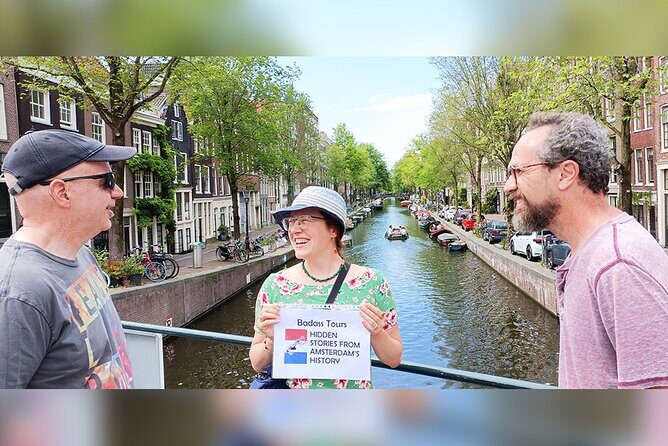
Amsterdam has footnotes you won’t find alone. This 2-hour small-group walk with BadAss Tours links nine sites along the Amstel, turning ordinary facades into stories about queerness, thinkers, religious communities, and people who fought back. You get to keep your bearings fast while still learning something real.
I love the way the guide turns locations into named human stories, not vague themes. I also love the up-to-12 group size, which keeps questions in the mix and the pace from turning into a conveyor belt.
One drawback to plan for: the stops are short, so you’re getting the highlights view. If you want to linger inside buildings or read every plaque, you’ll probably want extra time later. Also, this tour needs good weather, since it’s mostly outdoors.
In This Review
- Key highlights to know before you go
- A Short, Guided Walk That Changes How You Read Amsterdam
- Meeting at Amstel: How the Route Works in 2 Hours
- Stop 1: Dutch National Opera & Ballet and the Story Behind the First Gay Marriage
- Stop 2: Finding Spinoza at the Monument
- Stop 3: Mozes en Aaronkerk and Amsterdam’s 17th-Century Free Black Community
- Stop 4: Portuguese Synagogue and a Hidden Underground Network
- Stop 5: Hortus Botanicus and Two Indonesian Revolutionary Lives
- Stop 6: De Burcht, Diamonds, and the Union Side of Civil Rights
- Stop 7: ARTIS Amsterdam Royal Zoo Flamingos and the People of Amsterdam
- Stop 8: University of Amsterdam’s Campus Stories for Suffrage and Diplomacy
- Stop 9: H’ART Museum and Why One Art Name Nearly Disappeared
- Who This Tour Fits Best (and Who Might Want Something Different)
- Should You Book This Amsterdam Small-Group History Walk?
- FAQ
- How long is the tour?
- What language is the tour offered in?
- What is the maximum group size?
- Where does the tour start and end?
- Are there admission tickets needed for the stops?
- Can I cancel for a full refund?
Key highlights to know before you go
- Nine focused stops in about two hours, with no paid add-on admissions required at the listed sights
- Storytelling led by guides praised for emotional clarity, including Elizabeth, Tanja, and Astrid
- A strong inclusion lens, including BIPOC and Jewish history, with space for questions
- Accessible support when needed, with a guide described as accommodating wheelchair and hearing limitations
- Stops that connect the city to bigger world events, from WWII memory to suffrage and diplomacy
A Short, Guided Walk That Changes How You Read Amsterdam
This is the kind of tour that makes you look up at the building you were already standing in front of. You’re not doing museums all day. You’re doing streets, corners, and monuments, with a guide who treats each stop like a clue.
What makes it work is the tight structure: short introductions, a clear story, then you’re moving. That’s helpful if it’s your first visit, or if you only have a small slice of time. And it’s also useful if you’ve seen the usual canals and want a different angle on the city’s identity.
The best value is not just the facts. It’s the way the tour connects people and power: who had rights, who didn’t, who got pushed out, and who still built institutions anyway. Amsterdam is often sold as picturesque. This adds the less-comfortable parts that explain why the city looks the way it does today.
You can also read our reviews of more tours and experiences in Amsterdam.



Meeting at Amstel: How the Route Works in 2 Hours
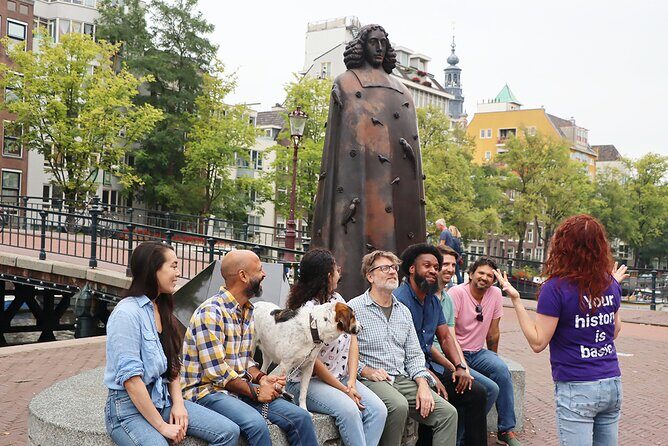
You meet at Monument Megadlé Jethomiem, Amstel 23, 1011 PT Amsterdam and the walk ends in front of H’ART Museum (formerly the Hermitage Museum), Amstel 51, 1018 EJ. That matters because it keeps the route logical: you’re not hopping across the whole city.
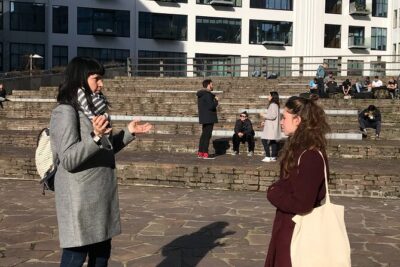
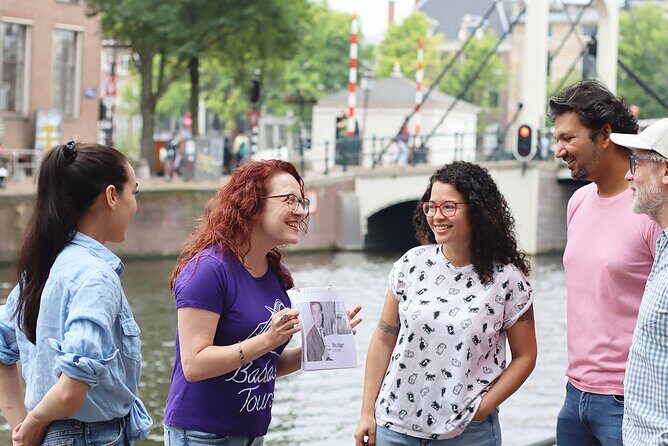
Expect about 2 hours total and a maximum group size of 12. In practice, that usually means the guide can slow down for questions without falling behind. It’s also a nice size if you’re solo and don’t want to feel surrounded by a big crowd.
The tour runs in English, and the ticket is mobile, so you’re not hunting for paper. It also operates near public transportation, which is a relief in a city where you’ll walk either way.
Price check: $48.16 per person for a two-hour, guided, story-heavy route is strong value when you factor in the small group limit and the sheer number of stops packed into that time. It’s not a budget tour, but it doesn’t pretend to be a full-day museum pass either. You’re paying for interpretation and access to stories you’d miss on your own.
One practical note: the route is outdoors and it requires good weather, so keep an eye on forecasts. If rain is threatening, build in a little flexibility around your day.
Stop 1: Dutch National Opera & Ballet and the Story Behind the First Gay Marriage
You start at the Dutch National Opera & Ballet area, where the guide sets the scene and then lands a detail that snaps the whole tour into focus: the world’s first gay marriage, tied to an unassuming building.
Even if you think you know Amsterdam as a progressive city, this stop reframes the idea. It shows progress is not just a modern vibe. It was argued over, formalized, and recorded in specific places by specific people. That makes the equality part feel grounded, not slogan-level.
You’ll be there for about 10 minutes, so don’t expect a long lecture. Do expect a short, clear narrative you can carry to the next stops. If you like tours that start with a big headline and then explain the context, this opening does that well.
Potential consideration: because it’s an early stop and it’s fast, it helps to arrive on time and ready to listen. If you’re distracted by phones or late arrivals, you’ll lose the thread.
Stop 2: Finding Spinoza at the Monument
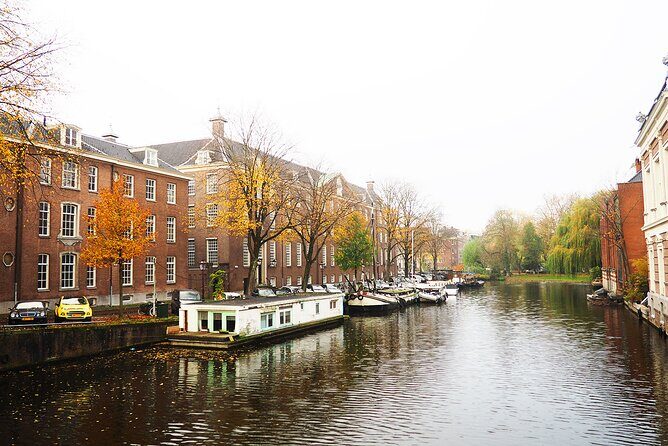
Next you’re at the Spinoza Monument for about 5 minutes, but this is one of those moments that feels bigger than the time slot. You’ll hear how this philosopher became an outcast in his own community.
This stop is valuable because it connects ideas to real social consequences. It’s easy to treat philosophy as abstract. Here, you see how belief, identity, and community pressure can collide. That theme keeps showing up throughout the walk.
Since it’s short, the guide’s job is precision. You get the backstory, the key turning points, and a sense of why Amsterdam could produce someone like Spinoza and also push him away.
If you like deep thought, you may wish the stop lasted longer. But the tradeoff is momentum: you’ll get more stops today, instead of one site taking over the whole schedule.
Stop 3: Mozes en Aaronkerk and Amsterdam’s 17th-Century Free Black Community
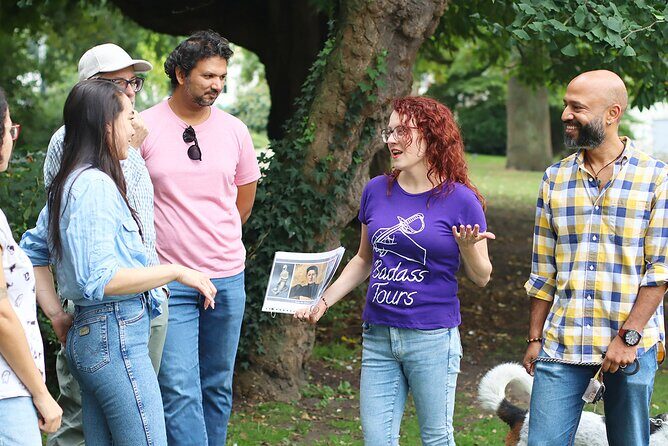
At Mozes en Aaronkerk, you get a story about a couple in Amsterdam’s free Black community in the 17th century. The stop is about 5 minutes, which means you’re hearing the core narrative, not a slow build.
This is an important kind of stop because it gives you something many city walks skip: the visibility of Black lives outside the usual prison-and-slavery framing. The guide places that community in the Amsterdam of daily life—neighbors, relationships, and survival—so the city starts to feel more complete.
The practical value is that you’ll remember it later when you notice names, buildings, and neighborhoods associated with Jewish and minority history. This stop helps stitch together those threads.
Potential consideration: because it’s brief, come prepared to listen closely. If you prefer long, museum-style explanation, you might want a follow-up reading afterward.



Stop 4: Portuguese Synagogue and a Hidden Underground Network
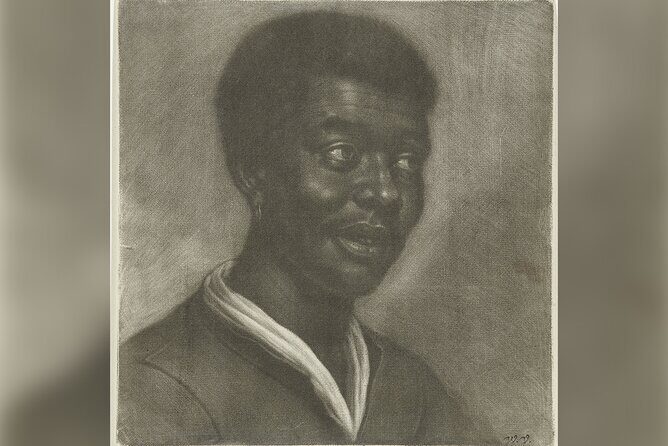
Then it’s the Portuguese Synagogue of Amsterdam, where you’ll stand among historic synagogues and hear about a heiress who created an underground network during the Spanish and Portuguese Inquisitions.
This stop works on two levels. First, you learn a specific story tied to a real institution and a real person. Second, you learn how survival can look like planning—routes, secrecy, and help organized by civilians.
It’s about 10 minutes, which is a good length for this kind of narrative. You’ll get enough to understand why the guide is pointing out what they’re pointing out, instead of treating the synagogue area like a photo stop only.
A consideration: because the subject involves persecution and fear, the tone can feel heavy. That’s not a bad thing. It’s part of why the tour earns its strong emotional reaction in the feedback.
Stop 5: Hortus Botanicus and Two Indonesian Revolutionary Lives
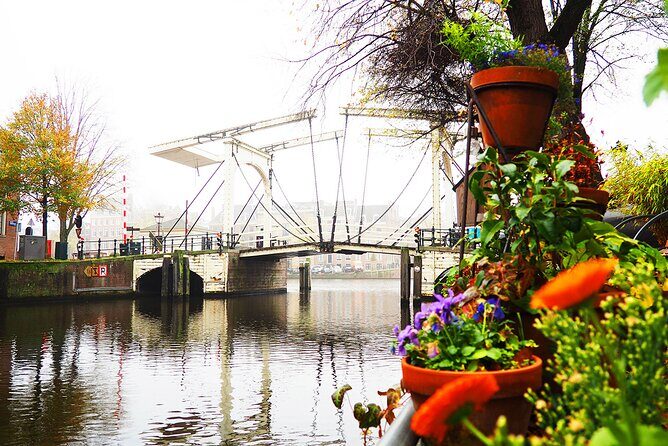
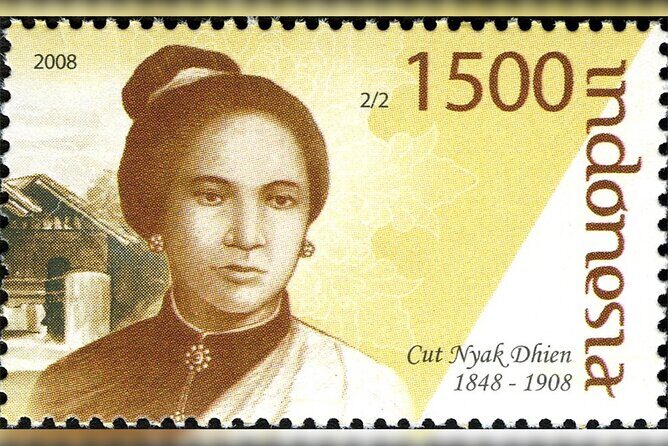
At Hortus Botanicus, you’ll hear harrowing stories of two Indonesian rebels and revolutionaries with very different lives. The stop is about 10 minutes.
This one adds the international layer that a lot of canal-only tours miss. Amsterdam wasn’t just a local city; it was connected to colonial trade, migration, and global conflict. Hearing about Indonesian resistance in a botanical garden setting can feel surprising at first—then it clicks.
The guide’s framing helps you notice the mismatch between how a calm place looks and the intense stories attached to it. That contrast is exactly why the stop is memorable.
Practical note: you may want comfortable shoes here. Even with short stops, your feet do a bit of work across the route.
Stop 6: De Burcht, Diamonds, and the Union Side of Civil Rights
At De Burcht, the tour focuses on diamonds and the workers’ union that built the iconic building—and how that labor movement relates to rights citizens rely on today.
This stop is clever because it grounds rights in ordinary work. You’re not only learning about kings, rulers, or high-level politics. You’re learning about people organizing for better conditions, and how those changes echo forward.
It’s about 10 minutes, so the guide keeps it tight: what the building symbolizes, why the union mattered, and what that means for everyday rights. If you like tours that connect history to modern life, this is one you’ll appreciate.
A consideration: if you mainly came for WWII stories, this stop may feel different in tone. But if you want a full picture of how rights develop over time, it’s a strong bridge stop.
Stop 7: ARTIS Amsterdam Royal Zoo Flamingos and the People of Amsterdam
Next is ARTIS Amsterdam Royal Zoo, where you’ll pass by flamingos and hear about influential Amsterdammers, including artists and WWII resistance heroes. This stop runs about 30 minutes, which makes it the longest one.
That longer time makes sense. A zoo setting gives the guide room to blend people-and-places storytelling with small pauses. Flamingos help too. They’re a built-in attention anchor, especially if the earlier stops were emotionally intense.
This is where the tour also widens into creative and civic influence. You’re not only tracking who fought oppression. You’re also hearing about cultural makers and people who moved society forward through art and resistance.
Practical consideration: because it’s a longer stop, it’s a good moment to refocus your energy. Wear sunglasses if you need them. If it’s sunny, the open areas can be bright.
Stop 8: University of Amsterdam’s Campus Stories for Suffrage and Diplomacy
Then you cross through the University of Amsterdam campus for about 15 minutes. The guide highlights an influential suffragist and a world-changing diplomat.
This stop adds the “how change spreads” angle. Universities aren’t just buildings for lectures. They’re networks—people who shape conversations, policies, and the next generation.
If you’re the type who likes a tour to connect with modern values like gender equality and international cooperation, you’ll probably find this stop satisfying. The names help the theme feel concrete instead of generic.
Potential drawback: since it’s campus walking, you might want to keep an eye on where you’re stepping. The pace is guided, but your feet still matter on a campus route.
Stop 9: H’ART Museum and Why One Art Name Nearly Disappeared
The tour ends at H’ART Museum, formerly the Hermitage Museum area at Amstel 51. This stop is about 15 minutes, and the story centers on why a major art figure wouldn’t be known today if not for a relative who barely knew him.
That idea is quietly powerful. It turns “famous art history” into a story about memory, family, and decision-making. People shape legacies just as much as artists do.
It’s also a nice ending because it’s reflective. You’ve covered equality, philosophy, persecution, resistance, and rights. Ending with the question of how memory survives gives the walk a satisfying emotional landing.
Practical tip: if you have time after the tour, consider lingering near the museum area. The tour ends at the front, so you’re in position to decide how much more you want to explore.
Who This Tour Fits Best (and Who Might Want Something Different)
This tour is a good match if you want a small-group experience with story-driven city walking, and if you like history that talks about real people and real consequences.
It’s especially fitting for you if:
- you want a more inclusive lens on Amsterdam’s past, including Jewish history and BIPOC-focused perspectives
- you value guides who answer questions and keep the pace human
- you like short stops that help you keep moving and seeing
Based on guide feedback, accessibility support has been part of the tour experience too. One guide, Elizabeth, was described as making efforts to accommodate a mother in a wheelchair and hearing limitations. So if you need that kind of responsiveness, it’s encouraging to know the guides are used to adjusting.
Who might want to pair it with something else: if you’re craving deep time inside museums or churches, this walk will feel like a fast sampler. Think of it as a great opener, then choose one site to return to on your own with more time.
Should You Book This Amsterdam Small-Group History Walk?
If you only have a couple of hours and you want your Amsterdam to feel like more than canals and selfies, I’d book it. The value is in the combination: nine stops, a tight narrative thread, and a guide approach that can be thoughtful and inclusive without turning into a lecture.
I’d especially recommend it if you like your history grounded in names and places. You’ll finish with a city that makes more sense. You’ll also have a shortlist of topics to chase later, like the synagogue story, the Spinoza outcast angle, and the WWII resistance connections.
The main reason to hesitate is the stop length. If you want slow, in-depth time at one location, plan extra hours afterward. And if weather looks bad, keep your schedule flexible because the tour depends on it.
If that sounds like your style, this is an easy yes for your Amsterdam day.
FAQ
How long is the tour?
It runs for about 2 hours.
What language is the tour offered in?
The tour is offered in English.
What is the maximum group size?
The tour has a maximum of 12 travelers.
Where does the tour start and end?
It starts at Monument Megadlé Jethomiem, Amstel 23, 1011 PT Amsterdam, and ends in front of H’ART Museum (formerly the Hermitage Amsterdam), Amstel 51, 1018 EJ Amsterdam.
Are there admission tickets needed for the stops?
The listed stops are marked as admission ticket free, so you do not need separate paid admission for those segments.
Can I cancel for a full refund?
Yes. You can cancel up to 24 hours in advance for a full refund.