REVIEW · AMSTERDAM
Van Gogh Museum Amsterdam Small Group Guided Tour
Book on Viator →Operated by 360 Amsterdam Tours · Bookable on Viator
Van Gogh makes more sense this way. This small-group Van Gogh Museum route is built around his artistic timeline, so you see big shifts in subject and style without getting lost in the building.
I especially love the wireless whisper headsets, because museum halls can be loud and it still stays easy to follow your guide. The second win is the format: a maximum of 14 travelers keeps the pace human and makes it easier to ask questions. The one drawback is simple: it’s a tight, two-hour tour, so if you want to linger for a long time on only one painting, you’ll need to plan extra time after.
In This Review
- Key highlights you’ll feel right away
- Why this Van Gogh Museum tour works (even if you only have 2 hours)
- Meeting point and a two-hour rhythm you can plan around
- Wireless whisper headsets: how they change the experience
- Stop-by-stop: following Van Gogh’s story across rooms
- Stop 1: Self-portraits and the artist’s inner view
- Stop 2: Influences and peasant life in the first-floor foyer
- Stop 3: Paris (1886–1888) and new energy in subject and setting
- Stop 4: Arles and the South of France (1888) and big, bold motifs
- Stop 5: Saint-Rémy-de-Provence on Level 3
- Stop 6: The Auvers Room and the final push
- Price and value: is $77.43 worth it?
- What to expect from the guides (and why it matters)
- Who this small-group Van Gogh tour fits best
- Before you go: simple tips to get the most from each stop
- Should you book this Van Gogh Museum Small Group Guided Tour?
- FAQ
- How long is the Van Gogh Museum small-group tour?
- Is the tour offered in English?
- What’s the group size limit?
- Where does the tour start, and where does it end?
- Is admission included?
- Are special exhibitions included?
- What does the price include?
- Can I cancel for free?
- Is this tour only for adults?
Key highlights you’ll feel right away
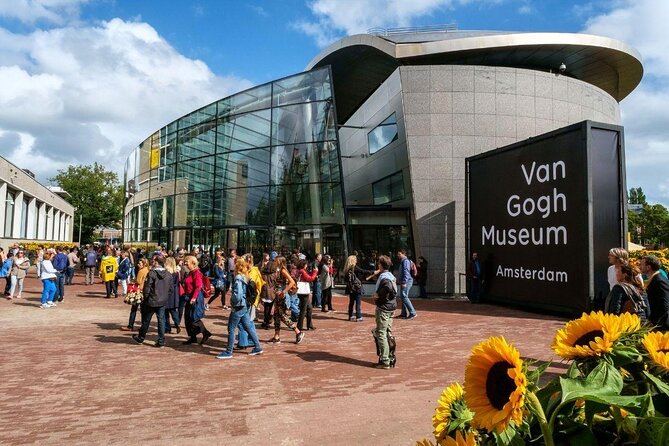
- Wireless whisper system makes every explanation easy to hear
- Max 14 people means you’re not stuck behind a crowd wall
- A timeline route from self-portraits through Paris, Arles, Saint-Rémy, and Auvers rooms
- Admission tickets included so you focus on the art route, not the logistics
- Two departure options (morning and afternoon) so you can fit it into your day
Why this Van Gogh Museum tour works (even if you only have 2 hours)
The Van Gogh Museum is packed, so the best tours do one thing well: they prevent you from wasting your time. This one gives you a focused walkthrough of the permanent collection, with a plan that follows Van Gogh’s development across different periods and places. Instead of wandering room to room hoping it all clicks, you get a guided path that connects what you’re seeing to the next stop.
I also like that the tour stays practical. You’re not expected to be an art historian. The guide’s job is to point out what matters in the paintings you’ll actually see on the route. From the way different guides have been described, you can expect stories that connect the artwork to Van Gogh’s life and the way his thinking and techniques changed over time. Some guides have even used an iPad to show extra facts or images, which can help you spot details you might otherwise miss.
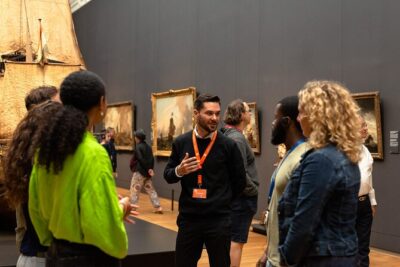
The headsets matter more than you might think. In a museum, you’re often balancing distance, crowd noise, and your own pace. With the whisper system, you can keep moving with the group and still catch the explanation without doing that annoying leaning-in scramble.
You can also read our reviews of more tours and experiences in Amsterdam.



Meeting point and a two-hour rhythm you can plan around
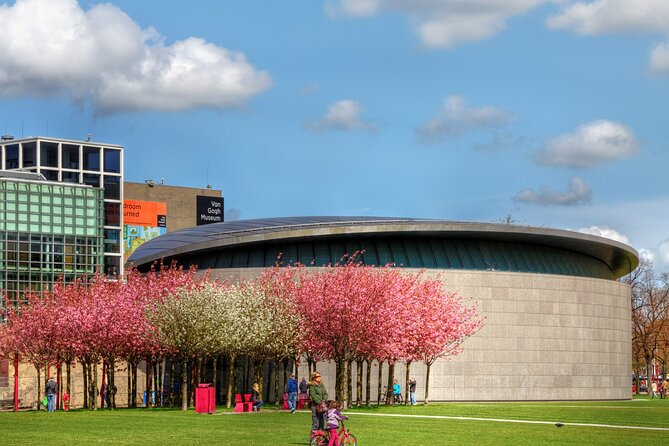
The tour starts at Cobra Café, Hobbemastraat 18 (1071 ZB Amsterdam). It ends inside the Van Gogh Museum, at Museumplein 6 (1071 DJ Amsterdam). That ending detail is a quiet win: you’re not marched back out right away. You can stay in the museum after the tour to see more at your own pace until closing time.
The total time is about 2 hours, and the route is paced in short segments. Most stops are around 15–20 minutes, so the experience feels more like a guided visit than a long lecture. This is useful if you want your museum time to feel productive but not exhausting.
Because it’s a small group (maximum 14), you can usually keep a steady position and actually look at what’s in front of you. Still, plan for the fact that the museum is popular. Wear comfortable shoes, and give yourself a few minutes of breathing room before your start time.
Also note the basics: this tour is for adults 18+ only, it’s offered in English, and it’s described as near public transportation.
Wireless whisper headsets: how they change the experience
A whisper system might sound like a gadget thing, but it directly affects how well you can enjoy museum storytelling. You’re not forced to guess what the guide is saying from 10 feet away. You don’t have to constantly turn your head to catch every word. And you can stay focused on the paintings instead of playing sound-check games.
You’ll notice the benefit most at the crowded moments: foyers, portrait areas, and any spot where people bunch up. One practical detail: guides have been praised for encouraging people to move closer to view the works. With a headset, you can hear the point clearly even if you’re adjusting your stance to get a better look.
If you wear hearing aids, it may also help you feel less stressed about audio. One guide experience specifically mentioned that the system worked well even with hearing aids, which is reassuring if you usually struggle in noisy spaces.
Stop-by-stop: following Van Gogh’s story across rooms
This tour is structured like a visual timeline. You’ll see a set of works that anchor each period, with time built in so you can actually look, not just pass through.
Stop 1: Self-portraits and the artist’s inner view
You begin with self-portraits. The goal here is not just to admire a face on canvas. It’s to set a baseline: you’re meeting Van Gogh through his own image, before the tour starts shifting into other subjects and settings.
You’ll likely get guidance on what to notice visually, and why self-portraits matter for understanding how his perspective evolves. With about 20 minutes, there’s enough time to compare more than one work without rushing.

Stop 2: Influences and peasant life in the first-floor foyer
Next you move to the first-floor foyer area, which ties Van Gogh’s work to influences and subject matter from earlier rural and realist traditions. You’ll encounter works related to Millet and Jules Breton, plus Van Gogh paintings including:
- Woman Lifting Potatoes
- A portrait wall featuring Head of a Peasant Woman
- The Potato Eaters
This section is a helpful reality check. It shows you a side of Van Gogh that’s more grounded in everyday scenes, before the tour transitions into the bolder palette and settings that come later. The foyer format also tends to be lively, so the headset is especially useful here.
If you’re the type who loves portraits and figure work, this is one of the most satisfying stops. If you’re craving the most famous color-filled scenes, you’ll probably enjoy this first period as the setup that makes later paintings feel more dramatic.
Stop 3: Paris (1886–1888) and new energy in subject and setting
Then the tour moves into the Paris period (1886–1888). You’ll see:
- Self Portrait with Felt Hat
- Still Life with Absinthe
- In the Café: Agostina Segatori in Le Tambourin
- Garden with Courting Couples
This is where the tour starts to feel like it’s changing gears. The paintings you’ll see here cover a mix of self-image, everyday nightlife, still life, and social scenes. That mix helps you understand that the “story” isn’t only about geography. It’s also about what kinds of moments he chose to paint.
Guides have been praised for tying life context to the artwork, including how the artistic approach shifts from period to period. You’ll feel that in this stop: it’s less about rural heaviness and more about contemporary city life and atmosphere.
Stop 4: Arles and the South of France (1888) and big, bold motifs
Now comes Arles (1888) and the South of France, with a strong set of famous works:
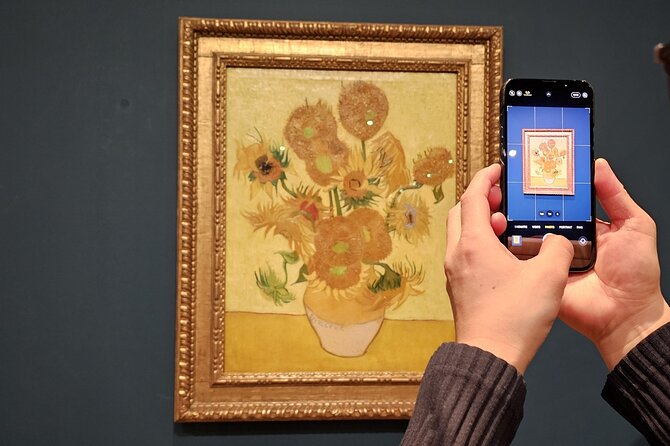
- Sunflowers
- Almond Blossoms
- The Bedroom
- Japanese Paintings (copies from prints)
- The Yellow House
This stop is often the emotional favorite, mainly because these works are so recognizable. But you’ll get more out of it if you use the tour structure the way it’s intended: compare and connect. The guide’s job is to show you how motifs and settings repeat while meaning shifts.
One extra detail that can be fun: the Japanese paintings are listed as copies from prints, which makes this moment worth slowing down. It’s a reminder that influences travel, and Van Gogh wasn’t painting in a vacuum.
Also, don’t rush through The Bedroom or The Yellow House. With about 20 minutes, you can focus on composition and atmosphere rather than only the headline image.
Stop 5: Saint-Rémy-de-Provence on Level 3
On Level 3, the tour enters the Saint-Rémy-de-Provence period, with:
- Almond Blossoms
- Wheatfield with a Reaper
- Iris
- Pieta (After Delacroix)
This is a more reflective set. The paintings include both landscape and floral subjects, plus an artwork labeled as after Delacroix. That last detail is especially useful because it frames the painting not just as an original moment, but as part of a wider artistic conversation.
The guide’s explanations here can change how you read the scenes. Instead of treating each painting like a standalone “masterpiece,” you start seeing patterns: repeated titles, repeated subject choices, and how mood or focus can shift even when the theme feels similar.
You get about 20 minutes in this stretch. If you’re someone who gets emotional with art, this is a good place to stop trying to multitask. Just look first, then listen.
Stop 6: The Auvers Room and the final push
The last stop is on Level 3, in the Auvers Room, with:
- Tree Roots
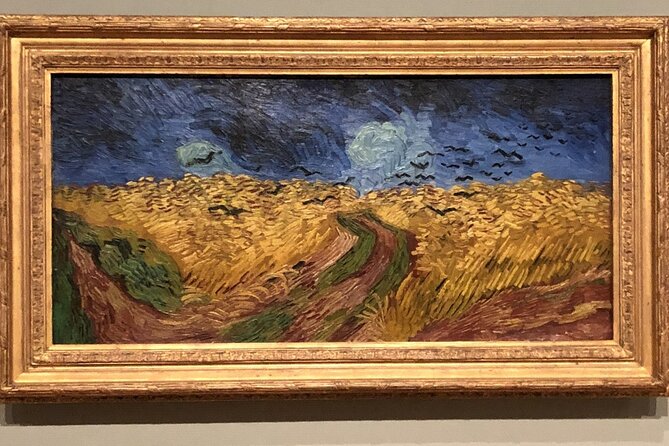
- Wheatfield with Crows
This part is shorter, around 15 minutes, and it works well because you’re already trained by the previous stops on what to notice. The subject matter here feels intense and focused. The tour ends with a set of works that leave you with strong visual impressions and a sense of finality.
Even if you feel like you want more time, the tour-ending setup solves it. You can stay in the museum after the guided portion and keep exploring on your own.
Price and value: is $77.43 worth it?
At $77.43 per person, you’re paying for more than access. You’re paying for interpretation and time-saving structure, plus included admission tied to the guided route. The value is strongest if you care about understanding the paintings as part of a changing story rather than just seeing famous names.
Here’s the practical way to judge it:
- If you usually enjoy museums more with a guide who points out what matters, this price makes sense because the tour is only 2 hours and designed to hit key works fast.
- If you’re purely a wanderer and want to spend an entire afternoon in the galleries, the fee might feel steep because the route won’t give you long, slow hours per painting.
I’d also frame it as value-for-concentration. The whisper headsets and small group size help you actually hear and connect the explanations to what you’re seeing right then. That can turn “I saw it” into “I understood what I saw,” which is the point of paying for a guided tour.
What to expect from the guides (and why it matters)
The tour is run by 360 Amsterdam Tours, and the guide quality seems to be a major factor in why people rate it so highly. Names that have shown up in guide experiences include Martina, Clare, Kawika, Holly, Roland, Marlene, Sylvia, and Caroline.
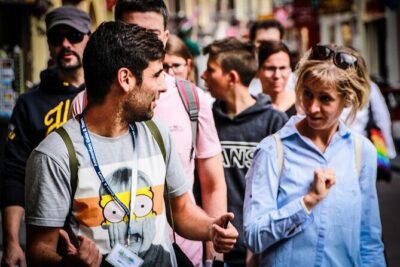
What I’d take from that pattern is not the name. It’s the consistent style: guides have been described as patient, willing to answer questions, and good at connecting life context to painting choices. Some have used extra visuals, and many keep the pacing friendly enough that you can still look closely at details like brushwork and painting techniques.
One fun note from guide approaches: more than one guide has encouraged people to get closer for a better view. That’s great for seeing texture and technique, but it also means you should be comfortable standing a bit differently than you might normally do in a museum crowd.
Who this small-group Van Gogh tour fits best
This tour is a great fit if:
- You’re a serious art fan who wants a clearer sense of how the work changes across time periods.
- You want a short, focused experience rather than a full-day self-guided grind.
- You like museums more when someone helps you notice details and connect them to a bigger story.
It’s also a smart choice if you’re visiting the Van Gogh Museum but you don’t want to spend time figuring out what to prioritize. The tour route is doing that work for you.
If you don’t care much about interpretation and you mostly want quiet time, you may enjoy staying longer on your own instead. The guided portion is just two hours, so you’ll need to extend the visit after if you want that slow, unstructured feel.
Before you go: simple tips to get the most from each stop
A few practical things make this kind of tour go smoother:
- Plan to stand close at the works the guide is discussing. Several guides have been praised for getting people closer to see details.
- Bring your “curious” mindset. The best moments tend to happen when you ask a simple question, like what to look for in the composition or how the period differs from the last room.
- If you’re sensitive to audio, know that the whisper system is part of the tour. It’s there for a reason, not as a gimmick.
- If you hate being rushed, remind yourself the tradeoff is time. You’ll get the main route now, then you can return to favorites after the tour ends inside the museum.
Also, because the tour is adult-only and in English, it’s designed to keep the experience focused. That can be a plus if you’re trying to get the most from your museum time.
Should you book this Van Gogh Museum Small Group Guided Tour?
I think this is an excellent buy if you want a guided path through the Van Gogh Museum that actually helps you understand what you’re seeing. The combination of small group size, wireless whisper headsets, and a timed route through key works means you get both structure and attention.
Book it if you fall into one of these groups:
- You want the story of Van Gogh’s development across periods like Paris, Arles, Saint-Rémy, and Auvers
- You’d rather spend 2 hours guided and then roam afterward than guess your own route
- You like questions and close looking, not just a checklist of famous art
Skip it only if you know you’ll be happiest wandering slowly with no guidance. In that case, you might prefer a self-guided museum visit and spend longer with fewer paintings.
FAQ
How long is the Van Gogh Museum small-group tour?
It’s about 2 hours long.
Is the tour offered in English?
Yes. This tour is offered in English.
What’s the group size limit?
The maximum group size is 14 travelers.
Where does the tour start, and where does it end?
It starts at Cobra Café, Hobbemastraat 18, 1071 ZB Amsterdam, and it ends inside the Van Gogh Museum near Museumplein 6, 1071 DJ Amsterdam.
Is admission included?
Admission tickets are included for the museum stops on the guided route through the permanent collection.
Are special exhibitions included?
No. Special exhibitions aren’t included and can be visited on your own after the tour.
What does the price include?
You get a 2-hour guided tour, a live English tour guide, and a whisper (wireless) system.
Can I cancel for free?
Yes, free cancellation is available up to 24 hours in advance for a full refund.
Is this tour only for adults?
Yes. It’s only available for adults age 18 and older.