REVIEW · UTRECHT
Utrecht: City Canal Cruise
Book on GetYourGuide →Operated by Rederij Schuttevaer · Bookable on GetYourGuide
Utrecht looks different from the water, and this short canal cruise is an easy way to get your bearings fast. You’ll glide along the Oudegracht with an 8-language audio guide, learning why the city’s medieval core still feels so tight and walkable. I love the big-ticket sight in a relaxed setting, especially the famous Dom Tower framed from the canal. I also like how you’re shown everyday canal life—wharves, canal houses, and the little clues like wharf cellars—without having to plan a route. One drawback to plan around: the audio is mostly pre-recorded, so it’s not the same as a highly interactive live guide.
A second plus is that the ride is built for comfort. The boat is electric and generally quiet, and you sit in padded seating for an hour or so while Utrecht slides by at a human pace. Just be ready for logistics: you descend 21 steps to reach the boat, and the meeting point can be easy to miss if you’re not watching for it.
In This Review
- Key things to know before you go
- Boarding and getting oriented on the Oudegracht
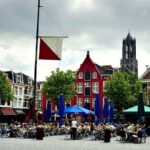
- The Dom Tower is the star, and the water makes it make sense
- Canal houses, wharves, and the details you’d otherwise miss
- After 30 minutes: the outer moat and Utrecht’s defensive ring
- Spotting the Railway Museum and Hoog Catharijne from the water
- The audio guide: useful, but mostly recorded
- Comfort and what the boat feels like in real life
- Price: what $22 buys you in an hour
- Who this cruise is best for (and who should skip it)
- Should you book the Utrecht City Canal Cruise?
- FAQ
- How long is the Utrecht canal cruise?
- What canal does the boat travel on?
- What are the main sights you’ll see?
- How much does it cost?
- Is food or drinks included?
- What’s included in the ticket?
- What languages is the audioguide available in?
- Where do you meet the tour?
- Is it wheelchair accessible?
- Is there a requirement before you can board?
- Can I cancel if my plans change?
Key things to know before you go
- Dom Tower from the canal: you get a dramatic view without climbing anywhere.
- Oudegracht canal focus: the route centers on Utrecht’s medieval inner city.
- Roman-times clue: you pass the oldest city area that dates back to Roman times.
- Outer moat stop: after about half an hour you reach the defensive ring area.
- Zocherpark photos: you’ll get a good stretch of park views from the water.
- Audio you might finetune: you can hear commentary best when you’re seated where sound carries.
Boarding and getting oriented on the Oudegracht
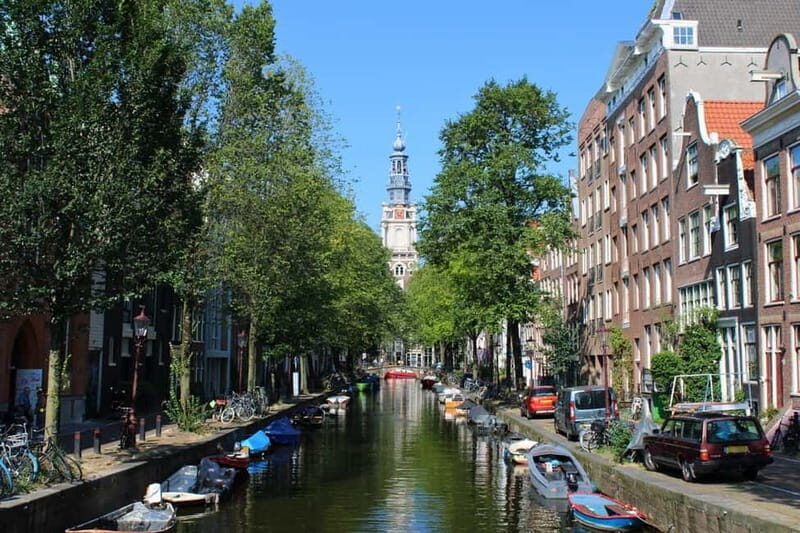
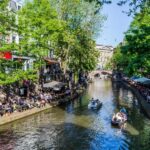
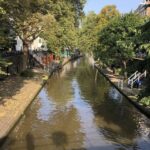
This cruise is built around one simple idea: let the canal do the sightseeing. You start in Utrecht’s medieval inner city and move along the Oudegracht, the main waterway where the old city’s layout makes more sense once you’ve seen it from both sides—street and water.
Getting to the boat is the first real moment to plan. You have to descend 21 steps to board. If you’re traveling with kids, have luggage, or you just don’t love stairs, give yourself a few extra minutes so you’re not rushing. Once you’re down there, things are straightforward: you get settled, and then the boat sets off along the canals.
One thing I appreciate about the timing is that it doesn’t ask you to commit to half a day. With a duration around 1 to 1.5 hours, you can fit it early to learn the city shape, or later as a decompress break after walking. A review-style pattern you’ll likely recognize is people treating this as a first look, especially on busy days when the streets can feel crowded.
You can also read our reviews of more tours and experiences in Utrecht.

The Dom Tower is the star, and the water makes it make sense
If you only come to Utrecht for one big landmark, this cruise helps you understand why the Dom Tower matters. You pass it during the ride, and seeing it from the canal changes the perspective. On land, you mostly experience it as something towering over you. From the water, it becomes part of the canal geometry—brick and stone matched to the old waterfront line.
The route also gives you a quick “where am I?” education. You’ll learn about the city’s historical layers as the boat moves. The oldest part of Utrecht dates back to Roman times, and you’re guided through that idea while you’re still close to the medieval core. That’s a useful mental bridge. You don’t need a museum visit to feel the timeline; you just need a calm ride where you can look and listen.
And because the boat is electric, it tends to be quiet. That quiet helps the scenery do its job, and it makes the experience feel more like floating than touring.
Canal houses, wharves, and the details you’d otherwise miss
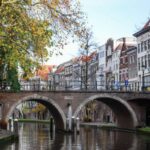
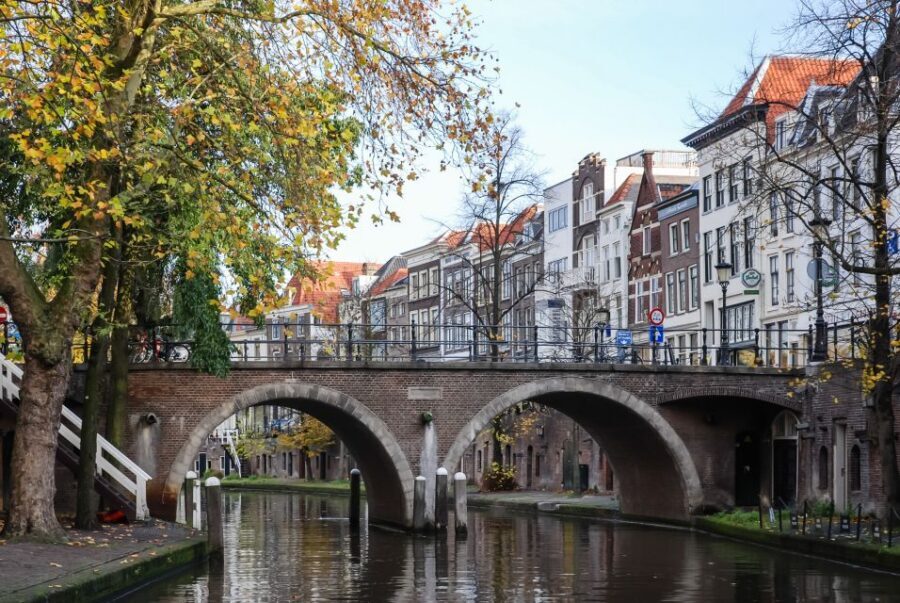
The Oudegracht is not just a view corridor—it’s a working neighborhood in historical form. As you go, you’ll see canal houses and ancient wharfs along the waterline. This is where the cruise earns its value for people who like texture, not just icons.
Two specific details I think you’ll enjoy:
- Canal houses and wharf structures: from the water, you can spot how buildings relate to the canal edges.
- Wharf cellars: these small, practical features are part of how commerce and storage used to work. On land they’re easy to miss; from the canal they become visible clues.
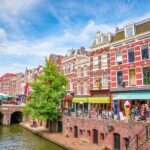
You also get to watch daily life around the waterfront. When you return to the Oudegracht canal, you’ll see people using the wharves and enjoying the area. That matters because Utrecht isn’t only a postcard city—it’s a living one. Even on a short cruise, the water shows you how the city stays social right at the edges.
If you’re the type who likes “how did they build this?” questions, this part is satisfying. You get to connect what you see—stone, steps, water frontage—with what the guide explains about the city’s older functions.
After 30 minutes: the outer moat and Utrecht’s defensive ring
About half an hour into the cruise, you reach the city’s outer moat, described as a former defensive structure. This is a smart shift in scenery: you start with the tight medieval core, then you move toward the ring of defense that shaped how the city developed.
As you pass that area, you’ll learn about older strongholds and casemates. Even if you’re not a fortress person, it helps to see the city in layers. The moat concept is one of those “it clicks now” ideas—especially in a place like Utrecht where canals and historic boundaries still influence where you’ll want to walk next.
A photo-friendly moment follows in the form of Zocherpark. From the water, parks can look surprisingly different. You get framing and spacing that streets don’t offer, and it’s a nice pause for photos before you head back.
Spotting the Railway Museum and Hoog Catharijne from the water
Utrecht isn’t frozen in the past, and this cruise reflects that. You’ll pass views toward the Railway Museum and also see Hoog Catharijne, the largest mall in the Netherlands, from the water.
This is handy even if you’re not planning to visit the mall. From the canal, you understand how modern Utrecht sits next to older waterways and how the city keeps using its central geography. It’s a quick lesson in continuity: old canals still matter, even when the city’s needs changed.
And because the whole cruise is short, it works well for travelers who want to pick their next stop right away. Once you’ve seen where the canal threads through the city, you can decide what fits your walking energy and your interests.
You can also read our reviews of more city tours in Utrecht


The audio guide: useful, but mostly recorded
The cruise includes a canal ride and an audioguide in 8 languages. In practice, the narration you hear is pre-recorded, not live commentary the whole time. This is a double-edged sword.
Why it works:
- You still get steady explanations as you pass major sights like the Dom Tower and the defensive moat area.
- It’s consistent, so you’re not at the mercy of a guide’s pace.
Why it can annoy you:
- Some boats run overhead playback that rotates languages. In that situation, you might notice English and other languages switching in sequence.
- If you’re not positioned well, the audio can be harder to hear over ambient noise.
My practical advice is simple: choose a seat where you can clearly hear speakers, and don’t expect constant back-and-forth conversation. If your travel style is more question-and-answer, consider this a scenic tour with interpretation, not a chatty guided walk.
Comfort and what the boat feels like in real life
The ride is generally comfortable. Reviews point out padded seating and a smooth glide. The boat is covered, which can be a real win in changing Dutch weather. If it rains, you’re not suddenly scrambling for umbrellas.
There are also a few comfort tradeoffs to know:
- The covered structure and window frames can limit the cleanest “camera angle” views for some people.
- The boat may feel crowded depending on the time of day. Even when there’s space, some folks spread out outside areas, which can affect how you sit and look.
If the weather forecast looks dry and you really want the sharpest photos, you might be frustrated by how much the covered setup blocks the view. But if your goal is just to relax and learn, the closed-top comfort is a plus.
Price: what $22 buys you in an hour
At $22 per person for roughly 1 to 1.5 hours, this is priced like an easy add-on that pays back fast. You’re not just buying a ride—you’re buying:
- a route-focused look at the Oudegracht and its highlights,
- audio context in multiple languages,
- and a chance to see both icon sights and small waterfront details without planning.
Compared with spending an entire morning walking between major landmarks, this can be more efficient. You’ll still likely do some walking afterward, but the cruise helps you choose what to prioritize. For many first-timers in Utrecht, that’s the real value: getting the city layout into your head before you go wandering.
Two practical notes on onboard rules: food and drinks aren’t allowed, so plan to eat on land. Also, the tour is not suited for wheelchair users, mainly because of the steps to reach the boat.
Who this cruise is best for (and who should skip it)
This is a strong match if you:
- want the Dom Tower and main canal sights without climbing stairs or setting up a long route,
- like history told in motion, with explanations tied to what you’re passing,
- want a relaxing break from walking, especially if you’re squeezing Utrecht into a busy day.
You might want to think twice if you:
- need step-free access to board (the 21 steps are a key issue),
- strongly prefer a live, interactive guide rather than mostly recorded audio,
- hate “covered-top” photo barriers and want the clearest possible waterfront shots.
Should you book the Utrecht City Canal Cruise?
I think you should book it if you want an efficient, low-stress way to understand Utrecht. For the money, the Oudegracht route plus the Dom Tower perspective plus the defensive moat context is a lot to pack into an hour.
I’d pass only if accessibility is a concern, you’re hoping for a highly interactive guide-style tour, or you’re extremely sensitive to audio clarity. Otherwise, this is exactly the kind of practical sightseeing that makes a compact city feel bigger—in the best way.
FAQ
How long is the Utrecht canal cruise?
The duration is listed as 1 to 1.5 hours.
What canal does the boat travel on?
The boat cruises along the Oudegracht (Old Canal).
What are the main sights you’ll see?
You’ll pass highlights including the Dom Tower, canal houses, ancient wharfs, and the outer moat area, plus Zocherpark and views near the Railway Museum and Hoog Catharijne.
How much does it cost?
The price is $22 per person.
Is food or drinks included?
No. Food and drinks are not included, and food and drinks are not allowed.
What’s included in the ticket?
Included items are the canal cruise and an audioguide in 8 languages.
What languages is the audioguide available in?
The audioguide is available in 8 languages. The driver’s listed languages are Dutch and English, and the optional audio guide is also listed as Dutch and English.
Where do you meet the tour?
The meeting point may vary depending on the option booked.
Is it wheelchair accessible?
No, it is not suitable for wheelchair users.
Is there a requirement before you can board?
Yes. You must descend 21 steps to reach the boat.
Can I cancel if my plans change?
Free cancellation is available up to 24 hours in advance for a full refund.