REVIEW · UTRECHT
Utrecht: Lofen Palace with Entry Ticket & Guide (Dutch)
Book on GetYourGuide →Operated by Stichting Ondergronds Domplein · Bookable on GetYourGuide
Something ancient is under your feet. Lofen Palace is the kind of Utrecht story that feels impossible until you’re down there: the remains of a medieval imperial palace tucked beneath today’s streets, between Vismarkt and Domplein. You’ll follow a guide and an included audioguide to piece together what Utrecht was like when it sat inside the Holy Roman Empire.
I really liked the way this experience explains the big moments clearly. You get the human side of history, from the emperor traveling palace to palace, to Utrecht earning city rights in 1122. I also love having an audioguide in Dutch and English alongside the live Dutch guide, so you can keep up even if your Dutch isn’t perfect.
One thing to consider: Lofen Palace isn’t a full, restored palace you roam for hours. Access is focused on the underground remains, and if you’re expecting a large, room-filled attraction, you may leave wishing there was more visible.
In This Review
- Key things to know before you go
- Finding the Lofen Palace start point on Domplein
- What Lofen Palace means for Utrecht’s story
- Your underground walk: arches, cellars, and the “where did it go” feeling
- The 1122 city rights moment (and why you should care)
- The 1253 fire: how a palace disappears (and memory goes with it)
- Rediscovery in the 19th and 20th centuries: what’s real today
- Price and time: is $14 good value?
- Meeting, scanning, and getting the most out of your visit
- Who this suits best in Utrecht
- Should you book Lofen Palace with Entry Ticket & Guide?
- FAQ
- FAQ
- Where is the Lofen Palace tour meeting point?
- What do I get with the ticket?
- What languages are available?
- How long is the tour valid?
- How long is the tour?
- Is it accessible for wheelchair users?
- Does the tour end at the same place it starts?
- What’s the main idea behind Lofen Palace?
- Is there cancellation flexibility?
- Can I reserve without paying immediately?
Key things to know before you go
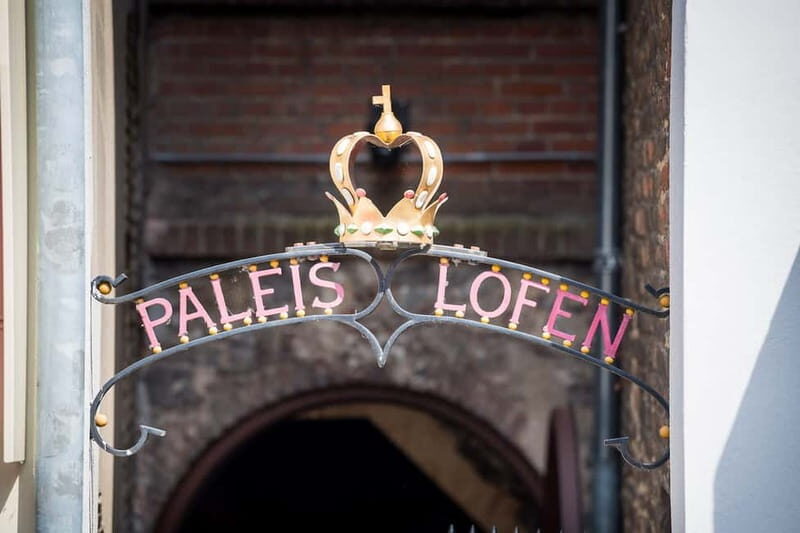
- Underground remains in central Utrecht: the palace sits beneath modern streets near Domplein
- Live Dutch guide plus audioguide: follow the story in your comfort lane
- Imperial Utrecht context: you’ll connect Lofen to the Holy Roman Empire and emperor Henry V
- Two major turning points: 1122 city rights and the 1253 nine-day fire
- A rediscovery story: centuries of forgetting, then uncovering in the 19th and 20th centuries
- Limited access for mobility needs: wheelchair access exists, but it’s not guaranteed for everyone
Finding the Lofen Palace start point on Domplein
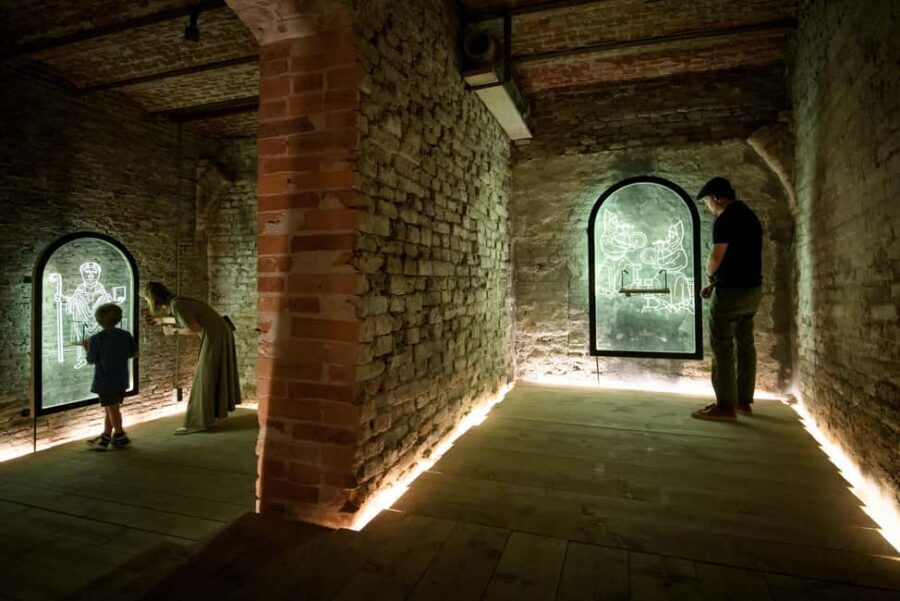
You meet at the Tourist Information Centre at Domplein 9. Plan to arrive a little early so you can scan your ticket at the desk and get oriented before you head underground.
Domplein itself is an easy area to understand once you’re there. It’s the kind of central Utrecht square where everything is close: church landmarks above, and the story of older Utrecht pressing downward into the city. The location makes sense because Lofen Palace was tied to the heart of medieval Utrecht.
After the visit, the tour ends back at the meeting point. That’s handy: you don’t need to figure out your way home from a random corner, and you can pair the tour with a walk around Domplein and the nearby lanes above ground while the story is still fresh.
If you’re the type who likes to get your bearings fast, this setup helps. You start at a clear hub and finish there too, so you can keep your day simple.
You can also read our reviews of more tours and experiences in Utrecht



What Lofen Palace means for Utrecht’s story
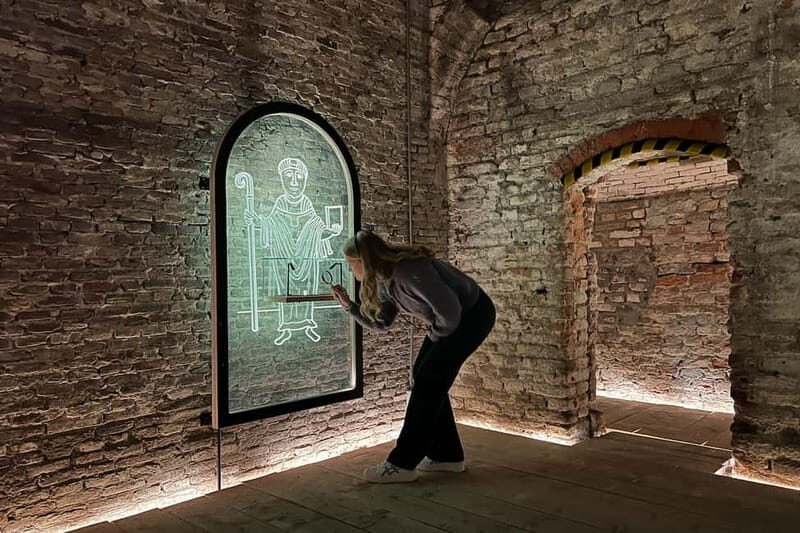
Lofen Palace isn’t just a curiosity. It’s a clue to why Utrecht mattered inside the Holy Roman Empire.
In the Middle Ages, Utrecht wasn’t a small off-the-map town. It was tied to imperial power, because the Holy Roman Empire ruled a huge area across Europe. The emperor didn’t stay put in one place; he traveled from palace to palace, and Utrecht had a stop called Lofen.
The tour’s central anchor is Emperor Henry V. In 1122, he granted Utrecht city rights. One of the charter lines points to the place where it happened, saying it was issued in the imperial palace in Utrecht, popularly called Lofen. That’s the kind of detail that turns an idea into something real. You’re not just hearing about a palace; you’re hearing about a moment when Utrecht’s status changed.
So when you go underground, you’re effectively walking through the physical footprint of that shift. It helps you connect Utrecht’s modern layout to the older, high-stakes world beneath it.
Your underground walk: arches, cellars, and the “where did it go” feeling
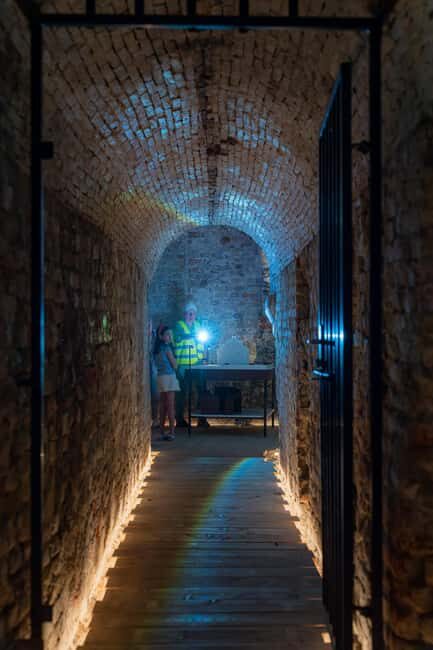
What makes Lofen Palace special is that you’re not touring a fully intact building. You’re exploring remnants—parts concealed for centuries in cellars under the modern city.
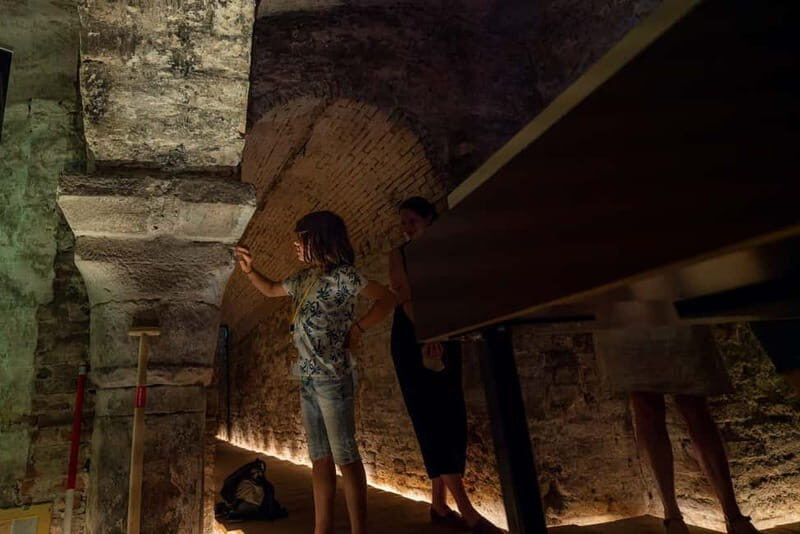
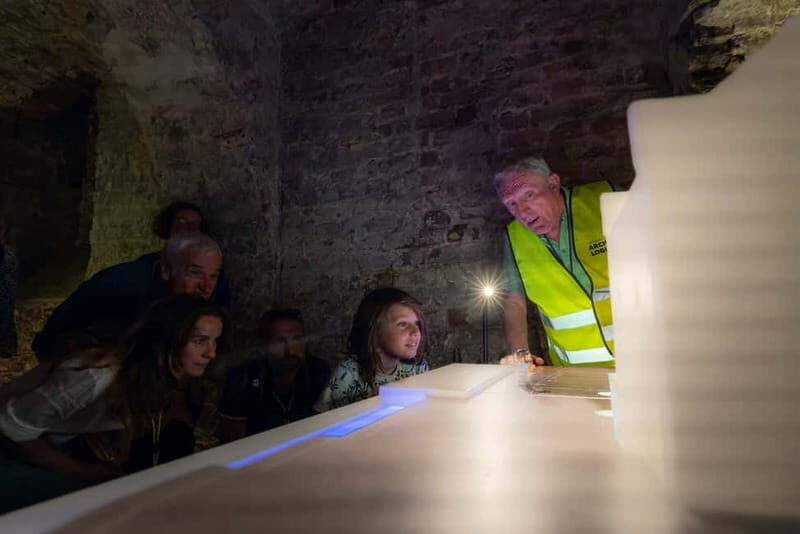
The experience is built around the idea that you can still find what’s left of a palace that vanished long ago. You’ll wander beneath the arches of Lofen Palace and hear how the remains fit into medieval Utrecht. That physical closeness matters. Even without a grand hall in front of you, the underground setting creates a strong sense of time pressure: this is medieval power under today’s streets.
This is also where the guide’s storytelling really matters. A palace “site” can turn into a collection of facts if there’s no narrative thread. Here, the tour uses the underground space to explain the bigger picture—where imperial life would have sat, why the palace mattered, and what happened after disasters changed everything.
If you’re curious about how cities evolve, you’ll likely enjoy the contrast: you’re in Utrecht, then the tour brings you into Utrecht from 900 years ago. It’s a practical way to see how the past can survive without being obvious.
The 1122 city rights moment (and why you should care)
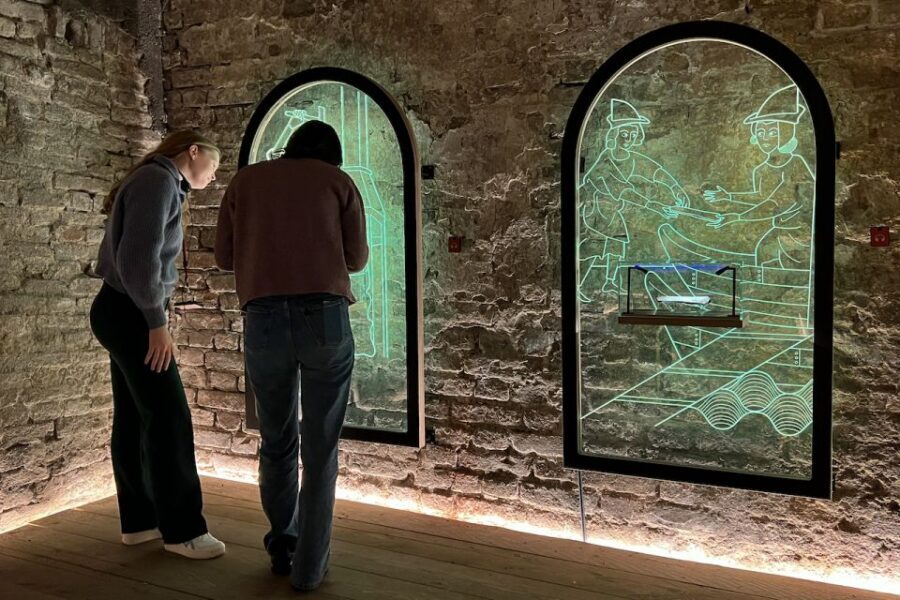
One of the most interesting parts of the story is 2 June 1122, when Emperor Henry V granted Utrecht city rights.
On paper, city rights sound like paperwork. In real life, it meant Utrecht had more leverage—more structure, more authority, and a clearer place in the wider political world. This wasn’t a random local upgrade. It was tied directly to the emperor being physically present and issuing those rights in the imperial palace at Utrecht, known locally as Lofen.
What I like about this focus is that it gives you a reason to pay attention during the tour. You’re not just watching history happen somewhere else. You’re in the city where that history played out—down to the naming of the palace in the charter.
As the story unfolds, you start noticing how the tour connects political events to place names. Utrecht’s identity becomes tied to a specific location, not just a vague “old town” idea.
If you enjoy medieval European history, this section alone can justify the visit. It turns the underground space into something that has consequences, not just atmosphere.
The 1253 fire: how a palace disappears (and memory goes with it)
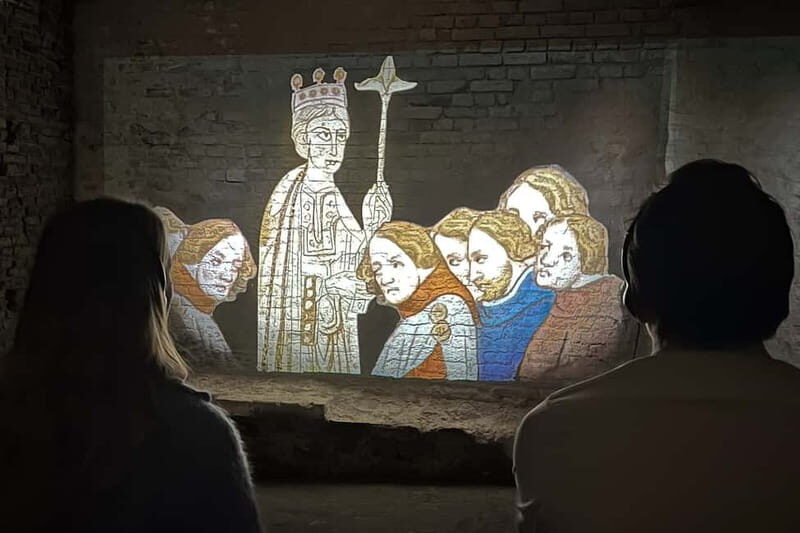
If you want the clearest explanation of why Lofen Palace is a “remains” site, it’s tied to a major fire.
The palace was probably destroyed during a big nine-day city fire in 1253. After that, it wasn’t used as a palace in the same way. The location shifted: it became the property of the chapter of the Dom Church.
That detail changes how you picture the centuries that follow. A palace doesn’t just vanish because of magic. It can be burned, repurposed, and slowly overwritten by what comes next. In Lofen’s case, the story says the remains were hidden and forgotten for centuries, which is why the palace didn’t stay in the public imagination.
When the tour gets to this point, you’ll probably feel the theme: places can survive while their meanings get lost. The underground remains are like a physical footnote that only returns when someone finds the page again.
Understanding the 1253 fire also helps you interpret what you see. You’re not looking at a preserved palace. You’re looking at the aftermath.
You can also read our reviews of more guided tours in Utrecht





Rediscovery in the 19th and 20th centuries: what’s real today
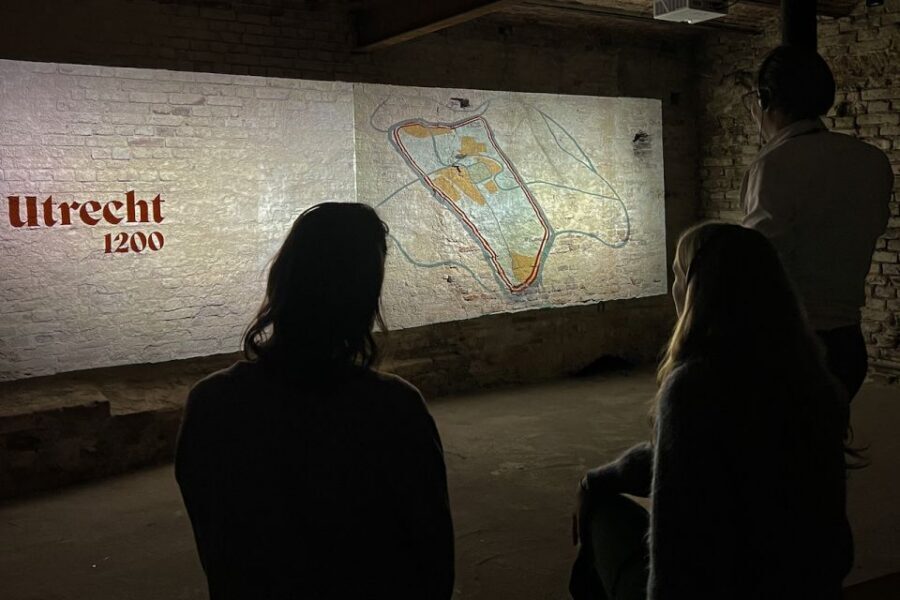
Centuries passed with the palace remains concealed and mostly off the radar. The tour explains that Lofen was rediscovered later, in the 1800s and 1900s.
This is one of those slow-history stories that I find oddly satisfying. It’s not the quick thrill of a brand-new discovery. It’s people in later centuries recognizing there’s something down there worth investigating and documenting.
Today, you’re part of that rediscovery. You’ll explore the underground remains under Utrecht’s central area, guided through the setting so it doesn’t feel like random access to a cellar. The tour ties the remains back to the imperial context above ground.
One practical takeaway: don’t treat this like a huge museum. You’re visiting a site where the meaning is partly in what’s missing. If you come ready for fragments and context, you’ll likely enjoy the experience more.
And if you’re someone who loves “how we know what we know,” this rediscovery timeline is a nice reminder that history is often reconstructed from partial evidence.
Price and time: is $14 good value?
At about $14 per person, this sits in the affordable category for a guided historic experience—especially one with both a live guide and an audioguide.
You’re paying for three things:
- access to the underground remains in the city center,
- a guide who ties the facts together into a coherent story,
- the convenience of audio support in Dutch and English.
Is it a full-day activity? The validity is listed as 1 day, and you’ll need to check available starting times. That suggests you should treat it as a slot-based visit rather than an all-day wander. For many people, it works best as part of a morning or early afternoon plan in Utrecht.
Where it really shines is for travelers who want one meaningful, well-explained historical stop without spending big money or burning an entire day on logistics. If you like history but don’t want a “sit in a classroom” experience, this can be a solid use of time.
Meeting, scanning, and getting the most out of your visit
Here’s how to make this tour work smoothly in your day.
- Arrive at Domplein 9 with a few minutes buffer.
- Scan your ticket at the Tourist Information Centre desk.
- Expect the experience to be focused underground and centered on the palace remains rather than a broad walking route.
- Plan to head back to the same meeting point afterward, then continue your Utrecht day nearby.
Language is also a key part of your planning. The live guide is Dutch, and the included audioguide covers Dutch and English. If you’re comfortable listening, the audioguide helps you follow along without getting stuck on the spoken language.
And because the accessibility note says access is limited for people with disabilities, it’s worth contacting the operator to understand what’s possible for your specific mobility needs. Don’t wait until the day of the tour.
Who this suits best in Utrecht
This experience fits best if you like history with a sense of place.
You’ll likely enjoy it if:
- you’re curious about medieval Utrecht and the Holy Roman Empire connection,
- you enjoy stories built around specific events (1122 city rights, the 1253 fire),
- you like guided interpretation, especially in spaces that aren’t designed to be “obviously museum-like.”
It may be less satisfying if you want a large, restored palace complex with lots of rooms and long viewing times. Lofen is about what remains—and why those remains matter.
Also, it’s a great choice for travelers who appreciate guide-led storytelling. The site itself can feel small if you only look at it as walls and cellars. With the guide’s narrative, it becomes a coherent medieval puzzle.
Should you book Lofen Palace with Entry Ticket & Guide?
I’d book it if you want an affordable, guided window into Utrecht’s medieval importance—especially if you enjoy the idea that power once lived here and the city still carries the footprint.
Skip it (or set expectations carefully) if you’re expecting a grand, fully restored palace tour. This is about underground remains and explanation, not a big showpiece building.
If your goal is to add one memorable, authentic-feeling history stop to a Utrecht day, this is a strong bet. The combination of live Dutch guidance plus an audioguide in English makes it easier to follow, and the Henry V and 1122 story gives the site a clear reason to exist in your itinerary.
FAQ
FAQ
Where is the Lofen Palace tour meeting point?
You start at the Tourist Information Centre at Domplein 9 in Utrecht. You also scan your ticket at the desk there.
What do I get with the ticket?
The package includes an entry ticket to Lofen Palace plus a guide and an audioguide.
What languages are available?
The live guide is in Dutch. The audioguide is included in Dutch and English.
How long is the tour valid?
The activity is valid for 1 day. You’ll need to check availability to see starting times.
How long is the tour?
The exact duration isn’t listed in the provided details. You can check available starting times for more precise scheduling.
Is it accessible for wheelchair users?
It is listed as wheelchair accessible, but access is noted as limited for people with disabilities. Contact the operator for details on what’s possible.
Does the tour end at the same place it starts?
Yes, the activity ends back at the meeting point at Domplein 9.
What’s the main idea behind Lofen Palace?
You’ll explore the remains of a former imperial palace beneath Utrecht, including the story of how it was linked to medieval imperial power.
Is there cancellation flexibility?
Yes. Free cancellation is available up to 24 hours in advance for a full refund.
Can I reserve without paying immediately?
Yes. There is a reserve now & pay later option mentioned, so you can book your spot and pay nothing today.