REVIEW · UTRECHT
Utrecht Small Public Walking Tour
Book on Viator →Operated by Tulip Day Tours · Bookable on Viator
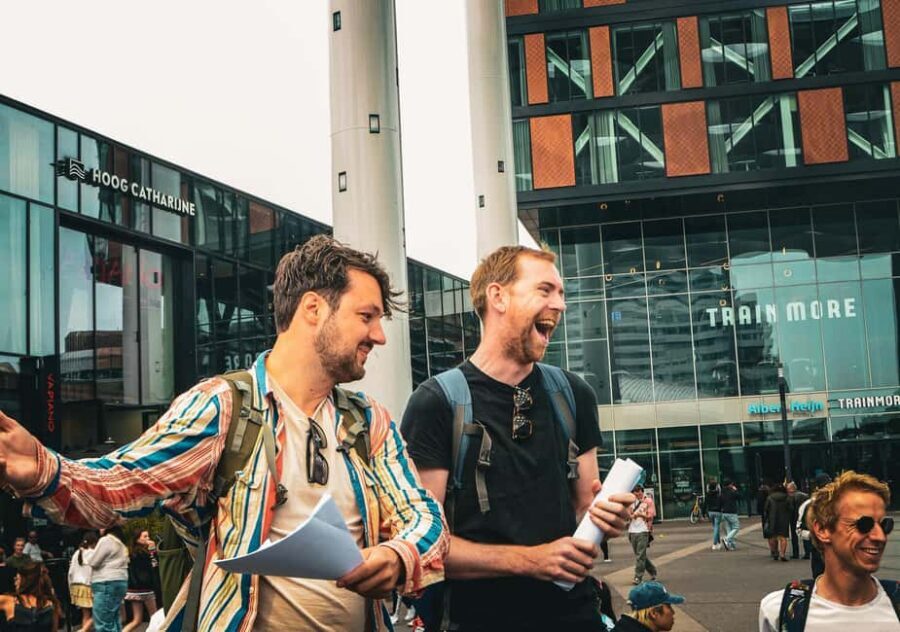
Utrecht has a canal-time machine. This 1.5-hour small-group walk stitches together 2,000 years of Utrecht with street-level details you miss on your own, from the Dom Tower area to the Oudegracht canal world. You’ll move past cobbled lanes, churchyard corners, and the kinds of canal structures that explain how this city grew.
I like two things a lot: headsets so you can clearly catch every detail, and the tiny group size (up to six) so your guide can actually answer questions. Guides like Lucy are known for being passionate about Utrecht and keeping the pace friendly, even when the weather turns.
One thing to plan for: the Dom Tower stop notes that admission ticket is not included, so if you want to go in, you may need to pay separately.
In This Review
- Quick hits
- Why this small public walk is such a smart Utrecht start
- Where you start: Vredenburgplein and the 90-minute rhythm
- Oudegracht wharf cellars: the canal-side storage that became nightlife
- Maartensbrug and the Roman-era clue you can actually picture
- The former moat, the swampy square, and why Utrecht looks the way it does
- Dom Tower: Utrecht’s tallest church tower and the unfinished cathedral story
- Headsets and a six-person group: how the format improves the whole experience
- Price, value, and what you should consider about the $0 listing
- Practical tips so you enjoy Utrecht, rain or shine
- Who this tour is best for
- Should you book this Utrecht Small Public Walking Tour?
- FAQ
- How long is the Utrecht Small Public Walking Tour?
- How many people are in the group?
- Are headsets provided?
- Where do we meet the guide?
- Is admission to Dom Tower included?
- What’s the minimum age to join?
Quick hits
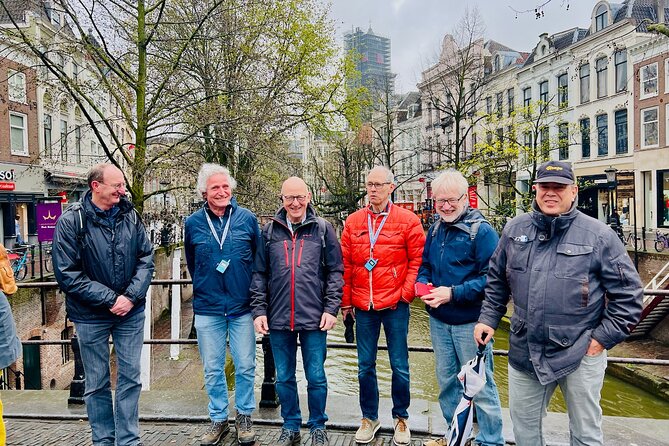
- Up to six people means a more personal, question-friendly tour
- Headsets included, so the story stays clear on busy streets
- Oudegracht wharf cellars: historic storage turned into shops, galleries, and restaurants
- Maartensbrug: the oldest still-standing bridge in Utrecht, tied to Roman-era canal history
- Festival-square setting that was once a swamp and even a place for executions
- Dom Tower: Utrecht’s tallest church tower, rooted in nearly 2,000-year-old origins
Why this small public walk is such a smart Utrecht start
If Utrecht is new to you, this tour is a fast way to get your bearings without feeling rushed. You cover the main idea of the city: canals as infrastructure, churches as landmarks, and the Dom Tower area as the old heart of Utrecht.
Because it’s small-group and the guide uses headsets, you’re not straining to hear over foot traffic. This matters in Utrecht, where you can easily end up standing too far from the guide while everyone else forms a crowd.
The route also helps you connect the dots. You’ll see places that look like “just scenery” until someone explains what they were for, which is a big part of why history sticks in your mind.
You can also read our reviews of more walking tours in Utrecht


Where you start: Vredenburgplein and the 90-minute rhythm
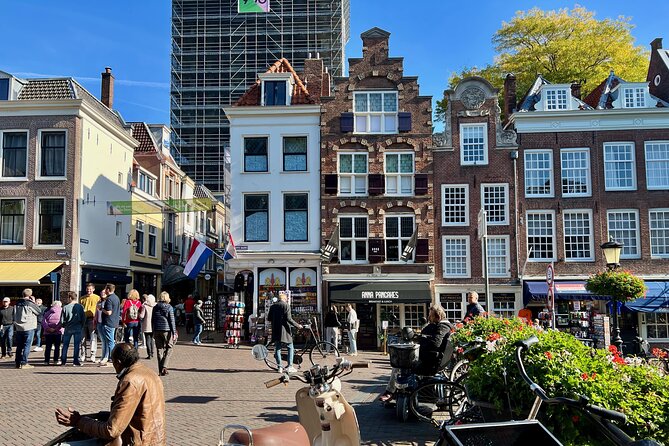
You’ll meet at Vredenburgplein 154, 3511 BG Utrecht, and the walk ends back at the same spot. The total time on the ground is about 1.5 hours, including expected and unexpected pauses.
This timing is ideal if you have limited hours in town. It also keeps the walking realistic: you’re not committing to a whole day just to understand where things are.
One practical detail: the tour uses a mobile ticket, and confirmation is handled through your TripAdvisor/Viator booking, so you just show up a few minutes early. Since the walk starts exactly at the scheduled time, arriving late is a surefire way to miss the opening context.
Oudegracht wharf cellars: the canal-side storage that became nightlife
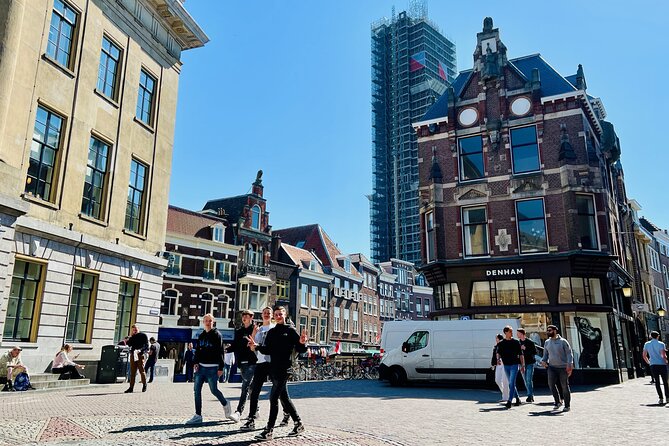
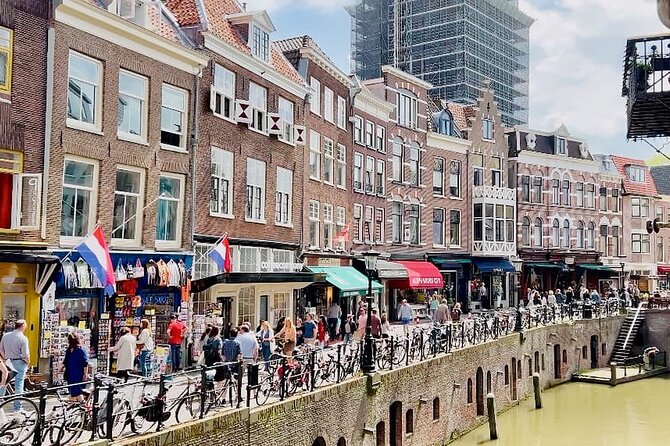
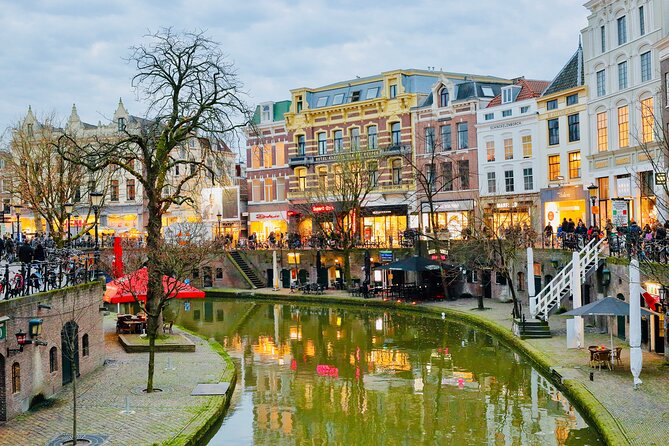
The first stop focuses on a canal structure you can spot in Utrecht but might not understand at first glance: the wharf cellars along the canal. There are said to be over 730 of them.
Here’s the key story: these were storage spaces at the water’s edge, built so goods could be unloaded from ships and stored immediately. That is how canal cities worked, and Utrecht is a textbook example at street level.
The tour also points to a particularly early example: the oldest wharf dates back as far as 1150, when a merchant dug a tunnel from the basement of his house to the canal bank. Whether you picture that literally or as a symbol of how tightly Utrecht lived with its waterways, it gives you a feel for the city’s long trade memory.
What I like most is that this doesn’t stay in the past. Many former cellars are now restaurants, galleries, and shops. So by the time you finish this stop, you’re already thinking: I can come back here later and actually use these spaces, not just look at them.
Maartensbrug and the Roman-era clue you can actually picture
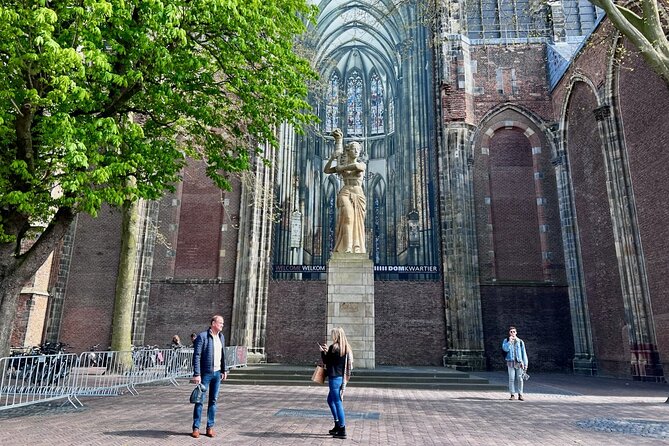
Next you’ll walk past the canal network that cuts the city north to south: the Oudegracht, described as a 2-km long canal. Many bridges cross it, but Maartensbrug is the one tied to deeper time.
The bridge is cited as the oldest still existing bridge in Utrecht, dating from 1404. Even more interesting, it crosses the part of the canal that already existed in Roman times.
That’s the kind of detail that’s easy to overlook on your own. With a guide, it becomes a visual anchor: you’re standing at a medieval bridge, but the waterway beneath it has a much older footprint. You start noticing how Utrecht’s geography keeps reappearing, just with new layers on top.
If you like “how old is that, really” questions, this stop will feel like it turns the volume up on the city.
The former moat, the swampy square, and why Utrecht looks the way it does
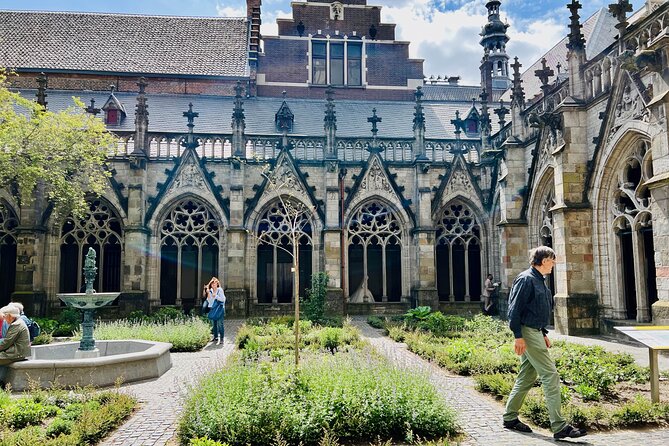
A later stop shifts to a square with a past you don’t guess from today’s cafés. The tour explains that until the end of the 15th century, the area was swampy. People needed usable land, so the ground was strengthened and raised using sand, stones, and debris.
Then the square became a market square from the 15th to the 19th centuries, and it also served as a place where executions took place. That mix of everyday commerce and grim public life is a reminder that city centers were multifunctional long before modern zoning separated everything.
By the 1990s, the square had become a parking lot. Now it’s a festival square, with lots of cafés around it, and the name ties back to the swampy-ground origin.
I find stops like this surprisingly useful because they explain why Utrecht’s streets and open areas feel “made,” not just happened. You start understanding the city as engineering and human choices over time, not just postcard scenery.


Dom Tower: Utrecht’s tallest church tower and the unfinished cathedral story
You’ll then get to the Dom Tower area, one of Utrecht’s most famous skyline markers. The tour describes it as the tallest church tower in the Netherlands.
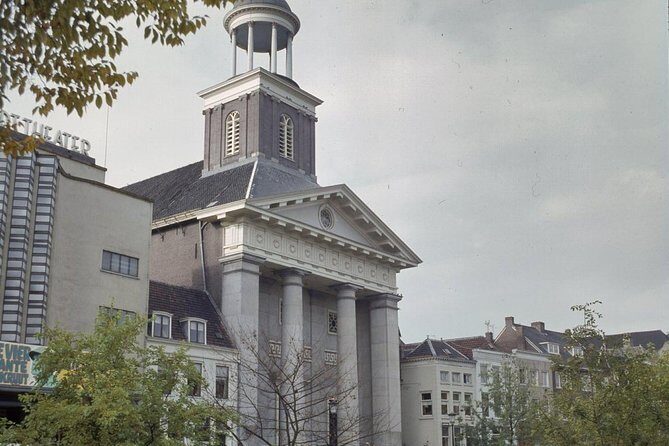
The tower was part of the Cathedral of Saint Martin (called Dom Church), and the important detail here is that the cathedral was never fully completed due to lack of money. That unfinished ambition is part of what gives the tower its strong presence—it’s the bold leftover of a bigger plan that never got completed.
Another context point lands hard: the tower is located where Utrecht’s city origin goes back nearly 2,000 years. Standing near it, you’re basically at a time anchor. The guide’s framing helps you connect the tower to the city’s earliest roots, instead of treating it as just a tall landmark.
One thing to keep in mind: the Dom Tower stop specifically notes that admission is not included. So if your interest is mainly in the view and the exterior presence, you can still get a lot. If you want access inside, budget time and money for the ticket separately.
Headsets and a six-person group: how the format improves the whole experience
This tour is built for clarity. You get headsets, which means you’re not constantly craning your neck or guessing what you missed when the group shifts direction.
The size cap is six travelers, which changes the feel. You’ll hear more because you can stay close without getting swept behind. It also means the guide can keep track of questions without the usual chaos.
If you care about the small stuff—names of bridges, why a square exists where it does, how canal buildings were used—this format helps a lot. The guide isn’t just reciting facts at speed. You can ask follow-ups and get straight answers.
Also, the guide can adjust pacing when streets get crowded. In a city like Utrecht, that matters more than you’d expect.
Price, value, and what you should consider about the $0 listing
The price shown is $0.00, which is rare for a guided walk with headsets and a small group. That said, you’ll still get the core components: a private guide for the small tour group, the 1.5-hour guided walk, and the included taxes and fees.
So the value is in the structure. You’re not just buying narration; you’re buying a guided path through the city’s key historical anchors, plus the audio support that makes it usable even in busy areas.
One note that’s practical rather than emotional: guide gratuity is up to you. If you choose to tip, it’s a simple way to support the person doing the work behind the scenes.
Practical tips so you enjoy Utrecht, rain or shine
This walk is designed for most travelers and fits into a short schedule, but you’ll still want to think like a walker.
Wear comfortable shoes with grip. Utrecht’s center areas can mean cobbles and uneven pavement, especially around canal-adjacent streets.
Bring a light layer even in mild weather. The tour can run in rain, and the guide’s job is to keep you oriented and comfortable while you’re hearing the story through headsets.
And don’t plan your next activity too tightly. Even though the tour is about 1.5 hours, there are expected and unexpected stops. If you like a buffer, schedule something later in the day, not right at the end time.
Who this tour is best for
This is best if you want a first-time orientation that doesn’t feel like a checklist. It’s also a great match if you like history that explains daily life, like how trade storage became today’s shops and restaurants.
It suits older teens and adults too, since the minimum age is 12. If you’re traveling with younger kids, you’ll want a private option instead of bringing them on a public minimum-age walk.
If you’re the type who enjoys asking questions and getting direct answers, the small group size is a big part of the appeal.
Should you book this Utrecht Small Public Walking Tour?
Book it if you want the easiest way to understand Utrecht in a short time. The combination of Dom Tower context, the canal stories, and the focus on practical city structures (like wharf cellars) makes this walk feel more useful than a basic highlights tour.
I’d skip or rethink it only if you mainly want museum-style interiors and paid attractions, since the Dom Tower admission is explicitly not included. Otherwise, for newcomers, this is the kind of guided hour-and-a-half that saves you time later as you wander on your own.
FAQ
How long is the Utrecht Small Public Walking Tour?
The tour lasts about 1.5 hours, including expected and unexpected stops.
How many people are in the group?
The maximum group size for this public walking tour is six travelers.
Are headsets provided?
Yes. Headsets are provided so you can hear the guide clearly.
Where do we meet the guide?
The meeting point is Vredenburgplein 154, 3511 BG Utrecht, Netherlands.
Is admission to Dom Tower included?
No. The Dom Tower stop notes that an admission ticket is not included.
What’s the minimum age to join?
The minimum age for participation is 12 years.