REVIEW · MAASTRICHT
Maastricht: Museum of Illusions Entry Ticket
Book on GetYourGuide →Operated by Museum of Illusions Maastricht · Bookable on GetYourGuide
A room full of optical tricks sounds simple. Then you step in and your brain starts arguing with your eyes. At Museum of Illusions Maastricht, you’ll wander through 50 interactive installations—rooms, games, and photo moments—built to show how vision and perspective can fool you in real time.
Two things I really like are the mix of hands-on challenges (you’re not just watching) and the photo-ready set pieces, like the infinity room and the reversed room, which make it easy to get cool shots even if your group isn’t into “museum mode.” One consideration: the museum is shorter than many people expect, so if you’re the type who wants to linger for hours, a 1-hour visit may feel a bit tight.
The whole setup is designed for broad enjoyment. This is a family-friendly stop in Limburg Province that works just as well for friends who like playful competition as it does for parents looking for something fun that isn’t a typical playground.
In This Review
- Key highlights at a glance
- First impressions: what the Museum of Illusions is really like
- Your 60-minute game plan inside the museum
- The star installations: infinity, reversed, chair tricks, and holograms
- The infinity room (where photos become the experiment)
- The reversed room (where your orientation suddenly matters)
- The chair illusion (when your eyes argue back)
- Holograms (a visual curveball)
- The games and puzzles that teach without feeling like school
- Photo strategy: how to get the best images in an hour
- Price and value: is about $19 worth it?
- Who this is best for in Maastricht (and who may want to skip)
- Practical details that affect your visit
- Should you book the Maastricht Museum of Illusions ticket?
- FAQ
- Where do I exchange my voucher for the Museum of Illusions Maastricht ticket?
- How long is the experience valid for?
- What is included in the ticket?
- Is the museum wheelchair accessible?
- Are children allowed, and do they need a ticket?
- What languages are available?
- Do I need to bring anything?
- Is free cancellation available?
Key highlights at a glance

- 50 interactive illusions that focus on perception, perspective, and visual “how did that happen?”
- Photo moments on purpose, including signature rooms like the infinity and reversed experiences
- Games and puzzles that turn learning into a quick challenge, not a lecture
- Small group feel (limited to 4 participants), so you can move without feeling herded
- Wheelchair accessible so more people can join the fun
- Bring a camera—this place is built for pictures
First impressions: what the Museum of Illusions is really like
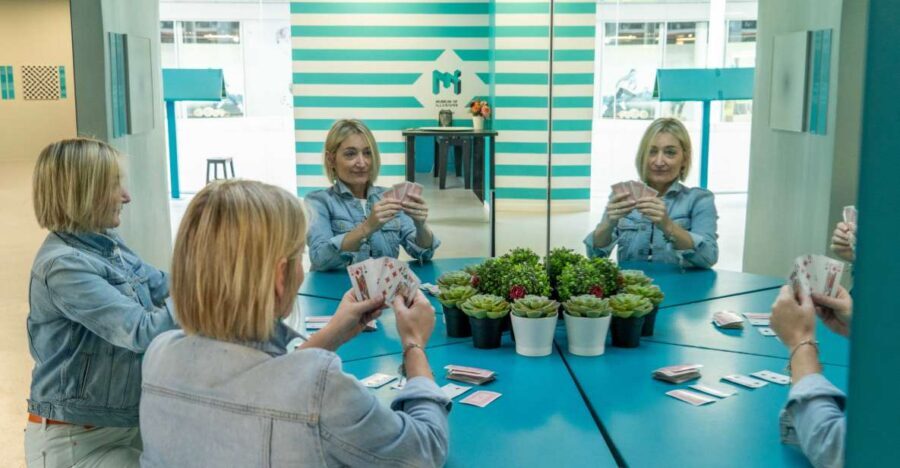
This museum is less about standing still and more about testing your instincts. You’ll move from one optical trick to the next, and each installation nudges you to ask the same question: Is it really what I’m seeing, or how my brain is interpreting it? That’s the whole point, and it makes the experience feel more like a game than a gallery.
The best part is that the illusions are interactive. Instead of reading labels for ten minutes, you’ll usually get pulled in by what you can do—pose, look from different angles, or try a quick puzzle. That also explains why it works across ages. Even if someone doesn’t care about science, they’ll care about beating the illusion in a photo or figuring out why the chair illusion looks impossible.
You can also read our reviews of more tours and experiences in Maastricht.


Your 60-minute game plan inside the museum

The ticket is valid for about 1 hour, so you’ll want to spend your time efficiently. There’s no point trying to do everything at a leisurely pace—this is the kind of place where speed actually helps. The illusions hit harder when you’re moving, comparing what you saw two minutes ago, and trying a new angle.
Here’s a practical way to think about the flow once you’re inside:
1) Start with the headline photo rooms
Go early for the big ones you’ll recognize right away, including the infinity room and the reversed room. These are the installations where your camera work matters most, because lighting and position change the effect. If you wait too long, you may spend time waiting your turn.
2) Use the “chair illusion” style moments to test your eye
The museum includes installations like the chair illusion, which are less about posing and more about noticing what’s “wrong” with the perception. I like this part because it gives your brain a challenge—look, react, try again, and see if you can predict the trick next time.
3) Add the holograms for variety
There are also hologram-type experiences. These help break up the typical “room illusion” rhythm. Even if you don’t fully understand the mechanism, the effect is what counts: they create that head-tilt moment where you try to figure out where the illusion is coming from.
4) Finish with the games and puzzles
The museum has educative games and puzzles. This is a smart close because it turns your curiosity into a little win. You’ll walk out feeling like you did something, not just looked at things.
One drawback to plan for: a few people expect a larger museum based on the concept, and then realize it’s more compact. If you’re the type who hates feeling rushed, you might need to prioritize your must-do rooms first. You can always slow down after you’ve captured the highlights.
The star installations: infinity, reversed, chair tricks, and holograms

Let’s talk specifics, because these are the moments people remember. The museum lists 50 optical illusions and interactive installations, and it highlights several signature experiences—here’s what those typically mean for how you’ll enjoy them.
The infinity room (where photos become the experiment)
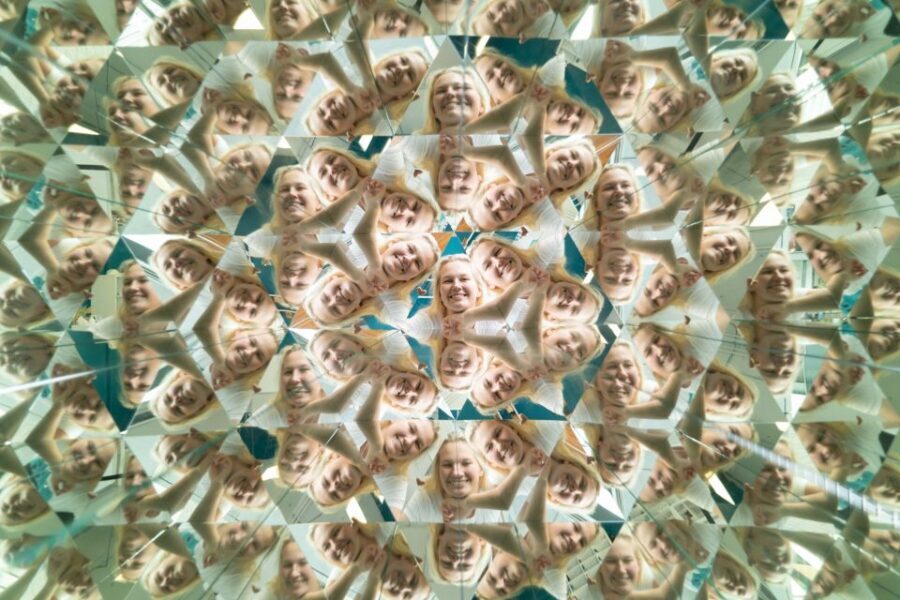
An infinity room is the classic “how is this possible?” set-up. You’re standing in a space that visually stretches and repeats, so your photo becomes part illusion, part composition. I like that it’s instinctively engaging: you don’t need to be a photography expert. You just need to follow the space.
Tip: bring your camera ready, and take more than one angle. Small changes can make the effect look dramatically better.
The reversed room (where your orientation suddenly matters)
In a reversed room, you’re essentially tricked by how space and orientation are presented. The result is that your body and the camera “agree” on one version of reality, while your brain expects another. This is why it’s so fun with friends or family—you’ll laugh at each other’s poses, then try again until it clicks.
Tip: don’t overthink it. Try the first shot, then reposition. The best image usually comes from doing it twice.




The chair illusion (when your eyes argue back)
A chair illusion is a great example of why this museum works even for adults. You’re forced to question what you think is real—shape, depth, and alignment stop behaving the way your brain expects. It’s not just for kids. If you like puzzles that mess with perception, you’ll have a good time here.
Tip: pause for one extra look before you move. These illusions often reward patience by making the trick clearer.
Holograms (a visual curveball)
Holograms add variety and a different kind of trick. Even when you can’t explain the mechanics, the visual payoff is immediate. These moments help keep the experience from feeling repetitive, which matters when you have a one-hour window.
The games and puzzles that teach without feeling like school
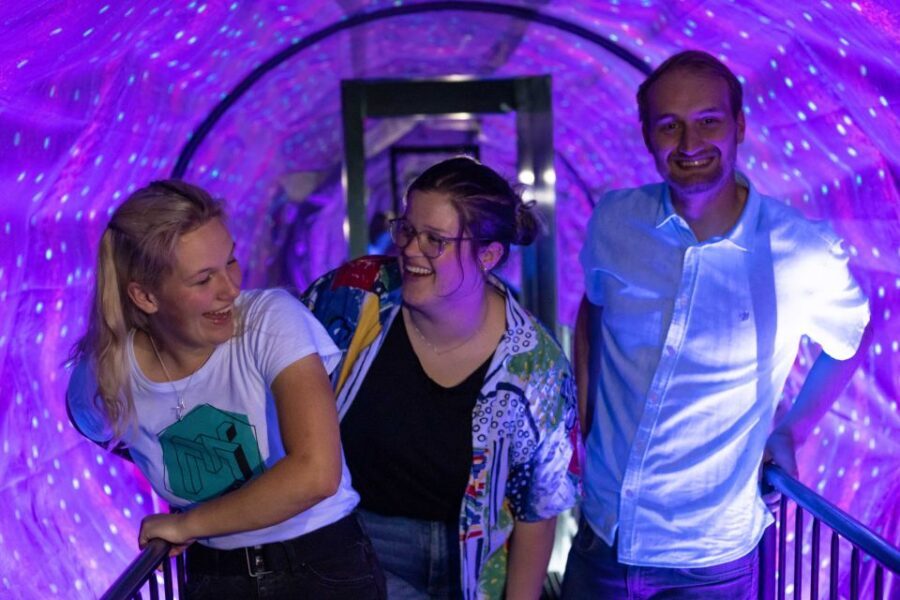
What makes this museum more than a photo stop is the inclusion of educative games and puzzles. These installations teach how perception can be influenced by science, vision, perspective, and other stimuli—but they do it through play.
I like this approach because it respects your time. You don’t need to sit through long explanations to get value. Instead, the museum tests you: you try, you notice patterns, you adjust, and you learn by doing.
And if you’re visiting with kids, this is where the attention holds. It’s one thing to watch an illusion; it’s another thing to test it, solve a challenge, and feel the little spark of achievement that comes from cracking the trick.
Photo strategy: how to get the best images in an hour
If you’re coming mainly for pictures, you’ll get your money’s worth—if you plan just a bit. The museum is designed for “pose, shoot, react, repeat,” especially in the signature rooms.
Here’s what you should do:
- Bring a camera (the museum explicitly suggests it). Your phone is fine, but you’ll want to keep it charged.
- Take short bursts, not single shots. Optical illusions can look different depending on your angle and timing.
- Try different positions before you assume the effect isn’t working. Often, it’s a positioning issue, not a broken installation.
A small note: a few people find the museum smaller than expected. That can actually be good for photos. Less wandering means less time away from the most visually striking spots—so you can concentrate your camera effort where it matters.
Price and value: is about $19 worth it?
The ticket price is $19 per person, and you’re typically there for about 1 hour. That sounds straightforward, but value depends on what you want out of the visit.
Here’s my balanced take on value:
- If you want interactive fun + photos + a quick science theme, the price makes sense. You’re paying for the installations themselves—50 interactive illusions is the headline, and the museum is built around doing, not just looking.
- If you expected a long, big-day museum experience with tons of wandering time, it can feel pricey. The experience is compact, and some people feel the offering doesn’t stretch into a full afternoon.
In other words: this is a good buy when you treat it like an hour-long experience. It’s less ideal when you’re shopping for a slow, many-hour attraction.
Who this is best for in Maastricht (and who may want to skip)
This museum is a strong fit for:
- Families looking for something active and age-appropriate
- Friends who want a light, playful activity with lots of laughs
- Adults who enjoy puzzles and visual challenges
- People traveling in bad weather, since it’s an indoor, no-weather-needed kind of stop
It may not be the best match if:
- You need long museum time to feel like you got your money’s worth
- You dislike photo-based attractions or want quiet, contemplative spaces
Also, the museum runs as a small group experience with a limit of 4 participants, which keeps things more flexible and less chaotic. If you hate crowds, that’s a plus.
Practical details that affect your visit
A few small logistics can make your visit smoother:
- You’ll need to exchange your voucher at the ticket counter before you start.
- The visit is valid for 1 hour, so pick a start time that matches your day.
- The instructor staff are Dutch and English.
- The museum is wheelchair accessible.
- Children up to 4 years old are free and don’t need a ticket.
One more thing: since food and drinks aren’t included, plan to grab a bite outside the museum if you’re making a half-day of it.
Should you book the Maastricht Museum of Illusions ticket?
I’d book this if you want a fun, hands-on, photo-friendly activity that’s easy to fit into a day in Maastricht. The 50 interactive illusions, plus signature rooms like the infinity room and reversed room, make it a strong choice for groups who enjoy a little challenge and a lot of laughs.
Skip it (or reconsider) if you expect a big, long museum outing. At around 1 hour, it’s more like a concentrated experience than a full-day wandering plan. Also, if you’re very price-sensitive and hate paying for short attractions, you may feel the cost more than you’d like.
Bottom line: for the right mood—playful, curious, camera-ready—this is a smart booking.
FAQ
Where do I exchange my voucher for the Museum of Illusions Maastricht ticket?
You must exchange your voucher at the ticket counter before the visit begins.
How long is the experience valid for?
The ticket is valid for 1 hour. Check available starting times.
What is included in the ticket?
The ticket includes entry to the Museum of Illusions Maastricht and local taxes and fees.
Is the museum wheelchair accessible?
Yes, the museum is wheelchair accessible.
Are children allowed, and do they need a ticket?
Children up to 4 years old are free and do not need a ticket.
What languages are available?
The instructor/support is available in Dutch and English.
Do I need to bring anything?
It’s recommended to bring a camera.
Is free cancellation available?
Yes, you can cancel up to 24 hours in advance for a full refund.
If you want, tell me what day you’re going and what other stops you’ve planned in Maastricht, and I’ll help you shape a tight one-day route around this 1-hour visit.