REVIEW · GUIDED
Maastricht Private Walking Tour With A Professional Guide
Book on Viator →Operated by Global Guide Services · Bookable on Viator
Maastricht feels big on history, and this private walk helps you read it fast. I like that the tour stays focused on Maastricht’s turning points—from Roman origins to the Maastricht Treaty—and you can keep asking questions as you go. I also like that it’s fully private, so you and your group set the pace, instead of watching the same views through a bus window.
One thing to consider: this is a walking tour, so if your mobility is limited, you’ll want to plan for steady, on-foot time (the route is designed to be manageable, but it’s still walking).
In This Review
- Quick Highlights You Can Expect
- Two Hours to Get Your Bearings in Maastricht
- Price and Value When It’s Private (Up to 15)
- Where the Tour Starts (and Why It Matters)
- Private Guide, Customized Stories: What You’ll Actually Get
- Romans to Carolingians: Turning Early Maastricht Into a Story
- Saint Servatius Legend: Why Faith Shapes the Streets
- Religious Wars (16th and 17th Centuries): A City Under Pressure
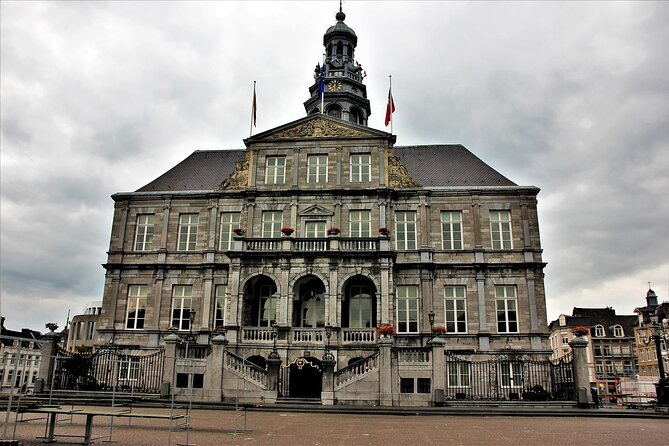
- City Hall (Stadhuis) and the Street Market: Real Life Meets Power
- Dominicanerkerk and Church Stops: A Walk Through Belief
- Museum Aan Het Vrijthof: The Cultural Bridge
- Hendrik van Veldeke: History You Can Feel
- Onze-Lieve-Vrouwekerk and the Sense of Continuity
- Helpoort: Medieval Defense Made Visible
- Pieke oet de Stokstraot: A Street-Level Maastricht Moment
- Sint Servaasbrug: Where History Crosses the Water
- World Wars to the Maastricht Treaty: The Modern Payoff
- What I’d Ask Your Guide (So You Get More Than Photos)
- Walking Comfort and Pace: How to Plan
- The One Real Downside: When Things Go Wrong
- Should You Book This Maastricht Private Walking Tour?
- FAQ
- What is the duration of the Maastricht private walking tour?
- How much does the tour cost?
- Is this tour private?
- What’s included in the price?
- Are entrance fees included?
- Where does the tour start?
- Where does the tour end?
- Is there a mobile ticket?
- How does cancellation work?
- Is the tour suitable for most people and are service animals allowed?
Quick Highlights You Can Expect
A personalized timeline of Maastricht across Roman, medieval, Napoleonic, and modern European history
Top sights on foot including St. Servatius, the Helpoort, and Sint Servaasbrug
Church-and-city storytelling that connects legends and wars to real streets
Easy-to-follow pace that’s a good first visit plan when you want orientation
A licensed guide with 20+ years experience who can explain clearly and patiently
Two Hours to Get Your Bearings in Maastricht
If you only have a short window in Maastricht, this private walk is a smart way to get your bearings fast. You’ll cover the big historical layers in a way that’s actually usable later—so when you wander on your own, the buildings don’t feel random.
The tour runs about 2 hours, which is long enough to build context but short enough that you’re not stuck with history fatigue. And because it’s private, you can steer toward what interests you most—medieval power, religious conflict, or the modern EU story.
Price and Value When It’s Private (Up to 15)
The price is $275.65 per group (up to 15). That number sounds big until you do the math for groups:
- 2 people: about $138 per person
- 6 people: about $46 per person
- 10 people: about $27 per person
- 15 people: about $18 per person
So the value depends on your group size. If you’re traveling as a couple, you’re paying for the private attention. If you’re traveling with friends or family, it quickly becomes one of the better ways to turn a short visit into a guided “greatest hits with meaning.”
Where the Tour Starts (and Why It Matters)
You meet at Markt 52 (6211 CK Maastricht) and the experience ends back at the meeting point. That matters more than people think. You’re not dropped in some far corner where you have to reverse-engineer your day.
Being near public transportation also helps if you’re syncing this with other plans. A walking tour works best when it’s easy to arrive, easy to leave, and doesn’t derail your schedule.
Private Guide, Customized Stories: What You’ll Actually Get
This isn’t a scripted walk where you quietly follow and hope the audio tracks keep up. Your guide is with your group only, and you can customize on the spot to fit your interests.
That flexibility is what turns “seeing landmarks” into real understanding. If you care more about faith and conflict, you can ask about how religious wars shaped the city’s identity. If you’re more into modern history, the guide can focus on Maastricht’s role in European integration and the Euro.
One more practical note: the guide is described as licensed with 20+ years of guiding experience, which usually translates to clearer explanations and better pacing.
Romans to Carolingians: Turning Early Maastricht Into a Story
The tour begins by setting the earliest foundation: the origins of the city by the Romans. Even if you’ve seen Roman ruins in other countries, Maastricht’s Roman story lands differently because you’re walking through a living city. The guide’s job is to connect what you see with why it mattered back then.
From there, you move into the Middle Ages and the Carolingian Empire. This is where the tour starts doing something valuable: it treats time periods as connected causes, not separate chapters. You’ll get a sense of how power shifted and how that shift shaped what grew where.
Saint Servatius Legend: Why Faith Shapes the Streets
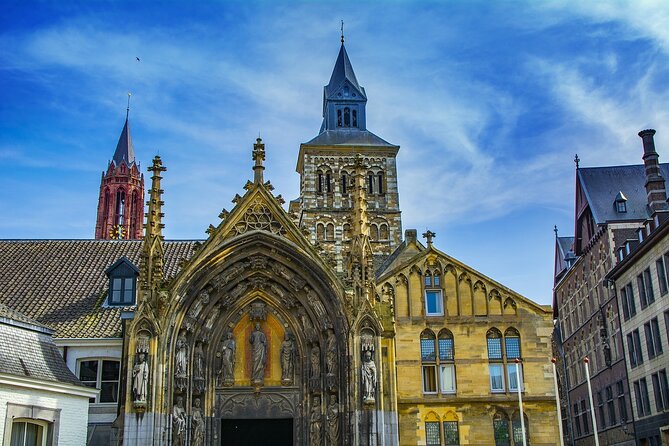
Next up is the legend of Saint Servatius. Maastricht doesn’t just have famous churches; it has belief systems that helped define civic life. You’ll likely feel that most when you reach the sacred sites tied to this tradition.
If you like history that’s part fact and part local meaning, this section is one of the best. Legends can sound vague until your guide anchors them to specific places and explains why people repeated these stories for generations.
Religious Wars (16th and 17th Centuries): A City Under Pressure
Maastricht’s story includes the religious wars of the 16th and 17th centuries. This is not just dates and names—it’s the pressure that comes from living in a borderland area where belief and politics often collided.
A guide helps you translate big historical events into something you can picture while walking: who had influence, what changed, and how those pressures can still echo in architecture and local identity.
City Hall (Stadhuis) and the Street Market: Real Life Meets Power
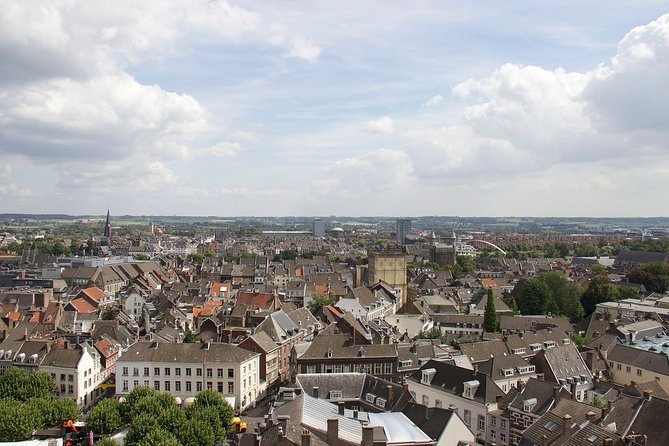
When you reach City Hall (Stadhuis), you get the civic side of the story. This is where Maastricht shows its “self-government” energy—how the city presented itself and organized public life.
From there, you’ll visit the Street Market. Even if you’re there outside market hours, the spot helps ground your understanding. You’ll stop seeing the center as just scenery and start reading it as a place people used—trading, meeting, and staying connected.
Dominicanerkerk and Church Stops: A Walk Through Belief
You’ll see Dominicans Church (Dominikanerkerk) and later St. Servatius Church and St. John Church (Sint-Janskerk). The goal isn’t to turn you into a church scholar. It’s to help you notice patterns: how religious architecture expresses influence, and how different eras left their fingerprints.
One of the tour’s strengths is that it doesn’t treat churches as standalone buildings. Instead, it connects them to the wider history the guide is telling—Rome, medieval rule, religious conflict, and modern transformation.
Museum Aan Het Vrijthof: The Cultural Bridge
You’ll also stop at Museum Aan Het Vrijthof. Even if you don’t go inside, the location is a useful anchor. Vrijthof is where culture and city life overlap, and it helps you understand why Maastricht has always been more than a defensive town—it’s a place that builds identity through art, community, and public memory.
Since entrance fees aren’t included, treat this stop as orientation plus context. If you want to go in afterward, you’ll be doing it with purpose instead of wandering in blind.
Hendrik van Veldeke: History You Can Feel
One of the more interesting named stops is Hendrik van Veldeke. This is where the tour brings in the human side—people and ideas that helped shape Maastricht’s intellectual and cultural identity.
If you’re the type who likes history beyond kings and wars, you’ll probably appreciate this. It breaks the “politics only” pattern and reminds you that cities are built by writers, thinkers, and everyday creators, too.
Onze-Lieve-Vrouwekerk and the Sense of Continuity
Next comes Church of Our Lady (Onze-Lieve-Vrouwekerk). This stop reinforces a theme you’ll see again and again on this walk: despite wars and political shifts, certain religious and cultural structures persisted long enough to become part of the city’s ongoing character.
When you stand in these places, it helps to ask one simple question: what survived, and what changed? Your guide can help you see that difference without overwhelming you.
Helpoort: Medieval Defense Made Visible
The Helpoort is one of those places where you can practically feel the defensive mindset. You’re looking at a structure that existed to keep threats out, not to impress tourists. That’s exactly why it’s so valuable on a short tour—you get visual proof of how Maastricht defended itself.
This is also where the earlier chapters (Romans, medieval power, conflict) start snapping into focus. It’s easier to understand why certain architecture mattered once you’ve been guided through the historical pressures that demanded it.
Pieke oet de Stokstraot: A Street-Level Maastricht Moment
You’ll also encounter Pieke oet de Stokstraot. This is a reminder that Maastricht’s character isn’t only monumental. It lives in smaller traditions and street-level details that make the city feel like a place with rhythm, not just a museum.
If your goal is to leave with memories you can actually talk about—rather than a checklist of landmarks—this kind of stop helps.
Sint Servaasbrug: Where History Crosses the Water
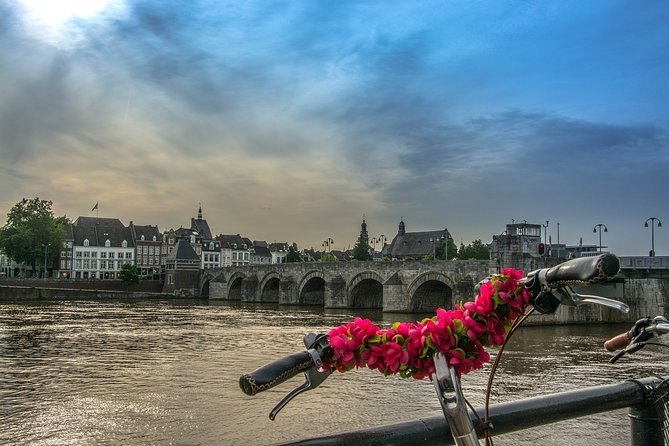
Finally, the tour includes Sint Servaasbrug, a bridge stop that’s perfect for tying things together. Bridges symbolize connection, and your guide will have spent the walk building a story of shifting borders, changing powers, and evolving Europe.
After you’ve learned about Maastricht’s later role in European affairs, the bridge feels like more than scenery. It becomes a literal link in a longer story—how communities stayed connected even when politics didn’t.
World Wars to the Maastricht Treaty: The Modern Payoff
One of the most important sections covers World War I and how Maastricht served as a haven for refugees, followed by World War II German occupation and then the post-war recovery. These topics are heavy, but a good guide keeps them human-scaled—focused on what the city meant to people living through those years.
Then comes the modern climax: the Maastricht Treaty, tied to the foundation of the European Union and the creation of the Euro. This is where the tour turns from city history into world history. You’ll see why Maastricht isn’t just a pretty place with old buildings—it’s a city that helped shape how Europe functions today.
If you’re traveling with anyone who only cares about the present, this is the segment that often wins them over. Suddenly the city’s relevance isn’t abstract.
What I’d Ask Your Guide (So You Get More Than Photos)
Because you can customize on the spot, go in with a couple of questions ready. Here are good ones that match what you’ll cover:
- How did religious conflict change the city, not just the rulers?
- Where do you see continuity from earlier centuries in the streets today?
- Why was Maastricht able to become so important for European integration?
This tour is at its best when you treat it like an interactive explanation while walking, not like a passive lecture.
Walking Comfort and Pace: How to Plan
The duration is about 2 hours, and the walk is described as easy walking, with most people able to participate. Still, it’s a walking tour, so wear comfortable shoes and plan for a steady rhythm.
If you’re also trying to hit museums afterward, schedule buffer time. You’ll likely want a little downtime after the history-heavy segments, especially the war chapters and the EU Treaty storyline.
The One Real Downside: When Things Go Wrong
The main risk with any tour is operational mess-ups. There was at least one case where the tour didn’t happen because the guide wasn’t there, linked to a same-day cancellation mix-up. That’s rare, but it’s the kind of issue you should take seriously.
If you book, keep an eye on your confirmation message and be ready to contact support if something seems off. The good news: the provider did process refunds in that situation and handled it as an inconvenience, not a small technicality.
Should You Book This Maastricht Private Walking Tour?
Book it if you want a first-time orientation that connects buildings to real history, and you like asking questions while you walk. It’s especially strong for couples, families, and small groups who want private pacing and don’t want to wrestle with group-bus logistics.
Skip it only if your main goal is very specific museum time. Entrance fees aren’t included, and the value here is the guided storytelling around key landmarks. If you’re hoping for a deep museum crawl, you’ll want to pair this with separate ticketed visits.
Bottom line: for $275.65 per group, this is a solid way to turn a short Maastricht stay into a clear, memorable timeline—with the modern EU story as a satisfying payoff.
FAQ
What is the duration of the Maastricht private walking tour?
The tour lasts about 2 hours.
How much does the tour cost?
It costs $275.65 per group, up to 15 people.
Is this tour private?
Yes. It’s a private tour, and only your group participates.
What’s included in the price?
A local professional guide and private guided tour are included. The guide can also customize the tour on the spot.
Are entrance fees included?
No. Entrance fees are not included.
Where does the tour start?
The meeting point is Markt 52, 6211 CK Maastricht, Netherlands.
Where does the tour end?
The tour ends back at the meeting point.
Is there a mobile ticket?
Yes, you’ll receive a mobile ticket.
How does cancellation work?
You can cancel for a full refund up to 24 hours in advance. Changes within 24 hours are not accepted.
Is the tour suitable for most people and are service animals allowed?
Most travelers can participate, and service animals are allowed.