REVIEW · UTRECHT
Utrecht Historic City: a Self-Guided Augmented Reality Tour
Book on Viator →Operated by BUZZIN the city · Bookable on Viator
Utrecht changes when you hold up your phone. This self-guided augmented reality experience turns familiar streets into time-travel stops, with audio plus video storytelling that lines up with where you’re standing. I like that it’s private to your group and runs at your pace, so you can linger when a scene feels worth a second look.
Two things I really like: you get AR and virtual moments right on location (not just facts in a brochure), and the app supports Google Maps navigation so you’re not constantly guessing. One drawback to plan for: you need your own phone and headphones, and you’ll want battery power, because the tour relies on your device.
In This Review
- Key highlights worth your time
- How the Utrecht Historic City AR Tour Actually Feels
- Price and value: what $12 buys you
- Setting off from Domplein: orientation and that renovation story
- De Werfkelder: seeing Utrecht from beneath the street
- De Zeven Steegjes: the small lanes that change your mood
- Geertebolwerk and Karel V: refuge, past and present
- Pandhof Sinte Marie: monastic life in your line of sight
- Zadelstraat mystery: a stop built for curiosity
- Janskerk and Janskerkhof: a flower market story over time
- Neude: from marsh to modern city square
- Sint Willibrordkerk: the kind of church stop you notice later
- Paushuize and Pope Adrian: a chronicle told where it matters
- How to make the most of your 2 hours (without turning it into a sprint)
- Navigation, route feel, and why the app support matters
- Where this tour is a perfect fit
- A possible drawback to keep in mind
- Should you book this Utrecht Historic City AR Tour?
- FAQ
- How long is the Utrecht Historic City self-guided AR tour?
- Where does the tour start and where do I finish?
- Is the tour available in English?
- What does the tour cost?
- What’s included with my booking?
- What do I need to bring?
- Do I need internet during the tour?
- Are entrance fees included?
- Is this tour private for my group?
- Is free cancellation available?
Key highlights worth your time

- AR + VR storytelling at street-level stops so you can match scenes to real locations
- English audio and video to keep the route easy to follow
- Domplein to Paushuize in about 2 hours with lots of small breaks built in
- Walking or cycling routes so you can choose what feels best that day
- Private group experience (only your group participates) for a calmer outing
How the Utrecht Historic City AR Tour Actually Feels
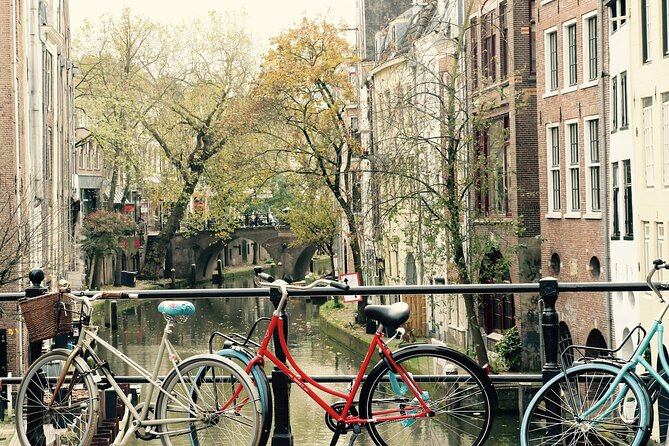
This kind of tour works best when it does one thing well: it removes the friction. Here, the friction is handled with an app-based experience that gives you audio and video as you move from stop to stop. You’re not looking up answers after the fact. You’re standing where the story happened, then listening while the app adds a layer on top of the street.
The headline draw is the augmented and virtual reality component. Instead of relying only on text, you can see historical footage aligned to the spot you’re in, and you may also encounter AR scenes with life-sized figures. That turns Utrecht from a place you walk through into a place you notice. And because it’s self-guided, you decide when to speed up, when to pause, and when to grab a drink.
This is also a nice middle ground if you like history but hate being tied to a group schedule. With a mobile ticket and a private setup for your group, you’re not waiting around for anyone else to finish reading the same plaque.
You can also read our reviews of more tours and experiences in Utrecht.


Price and value: what $12 buys you
At $12 per person for about 2 hours, this is priced like an activity, not a full-blown guided tour. The value comes from how much you get layered onto the walking route: audio and video storytelling, AR/VR experiences, and map navigation support.
A couple details push this toward good value:
- You’re paying once for a structured walk that still lets you explore freely.
- The stops are designed to be close together, so you’re not spending most of your time in transit.
- It’s offered in English, which matters when you’re trying to keep the experience effortless.
Also, if you’re coming with friends, there are group discounts available, which can make it even easier to justify compared to hiring a guide.
Setting off from Domplein: orientation and that renovation story
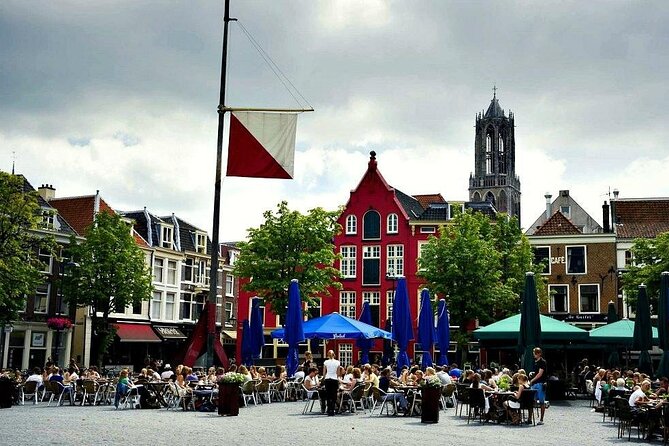
You start at Domplein (3512 JE Utrecht). This area is the natural launch point for a historic walk, because it’s central and easy to find. The tour begins with the Dom and Domsquare, framed as a way to discover the past of an iconic setting.
Then, near the end, the tour returns to Domplein for another scene: a look at ongoing renovation in the area over a five-year period. That’s a smart touch. Too many city tours freeze history in the past. Here, you also get a prompt to notice what changes in a living city.
What to do while you’re here:
- Take a minute to position yourself so the AR scene lines up cleanly.
- If the streets are busy, step slightly aside so your phone screen and audio stay steady.
- Since this is your start point, give yourself time to get comfortable with the app before you move on.
De Werfkelder: seeing Utrecht from beneath the street
Next comes De Werfkelder, described as a medieval wonder beneath Utrecht’s streets. This stop is the kind of contrast that makes AR tours fun: you’re physically above ground, but the story turns your attention to what’s below.
Because the experience is built around your phone and timing, your best move is to slow down for the full 10-minute window. Stand where the app tells you to stand, then let the audio do the work. If you rush, you’ll miss the point of an underground-feeling stop.
Practical note: if you’re photos-only during a moment like this, you’ll underuse the experience. This one is meant for looking and listening at the same time.
De Zeven Steegjes: the small lanes that change your mood
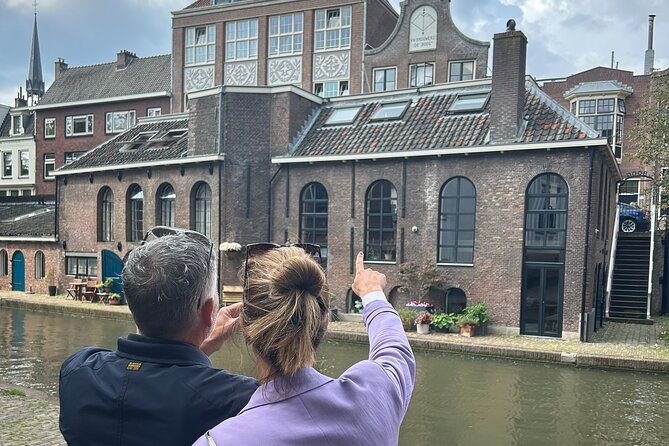
The tour heads to De Zeven Steegjes van Utrecht, focusing on life in the folksy neighborhood of Utrecht. Even if you know Utrecht well, this stop has the power to reset how you see the city. Narrow lanes and local texture are exactly where AR storytelling can make a walk feel different from simply passing by.
At stops like this, I like using a simple pace rule:
- Watch the first moment.
- Then look around without the app for a beat.
- Back to the app for the second moment.
That helps you connect the story to the real streetscape, instead of keeping your eyes locked on your screen.



Geertebolwerk and Karel V: refuge, past and present
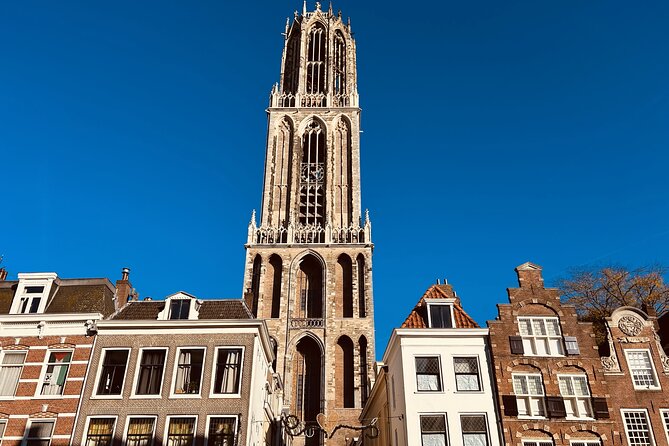
At Geertebolwerk, the focus is on Karel V and the idea of refuge, with a link between past and present. This is one of those stops where the text-and-visual combo tends to work well. Your phone’s audio can give you a framework, and then the nearby surroundings help you understand why that framework matters.
For me, these “anchor” stories are where self-guided AR tours shine. A good guide can explain this, sure. But an app can also prompt you to look at specific details in the moment, which you might otherwise ignore.
Pandhof Sinte Marie: monastic life in your line of sight
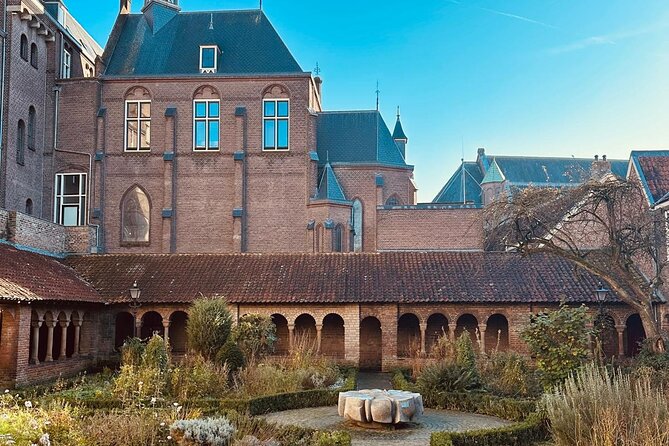
The route then reaches Pandhof Sinte Marie, where the focus is Sinte Marie and monastic life. The name alone hints at a quieter, more contained setting than the busier squares and main streets.
This stop is also ideal for travelers who like atmosphere. Even if the AR layer is doing the heavy lifting, you’ll probably feel that the location is asking you to slow down. Let the audio finish its arc before you move.
If you’re taking photos, do it lightly. Keep one hand ready in case you need to reposition for the AR scene. Trying to juggle camera setup and audio playback can make you miss the timing.
Zadelstraat mystery: a stop built for curiosity
At Zadelstraat, you’re nudged toward the mystery of the street itself. This is the kind of stop that benefits from staying mentally switched on. If you treat every location like a checklist item, you’ll get less from a story-leaning experience.
I’d approach this moment like a casual puzzle:
- Listen first.
- Then look for what might connect to the story.
- Let the AR layer confirm your guess, instead of letting it do all the thinking for you.
That turns the tour into something more satisfying than background information.
Janskerk and Janskerkhof: a flower market story over time
Next is Janskerk and the Janskerkhof area, described as having two centuries of flower market history. Even though you’re only at the stop briefly, the theme is clear: this place has been used and reused by real daily life.
This is a good stop for slower viewing. Markets and squares are the types of spaces where you can look up from your phone and see the city’s rhythm immediately. Use the app to give you context, then let the setting do the rest.
Neude: from marsh to modern city square
Then you reach Neude, described as going from marsh to modern city square. This kind of transformation story is exactly why AR tours can work well: you get a “before and after” feeling without needing to read a book first.
When you’re standing here, try looking at how the square is used now. Then let the audio connect that usage to the transformation theme. You’ll get more out of the experience if you let your eyes help your memory.
Sint Willibrordkerk: the kind of church stop you notice later
The tour includes Sint Willibrordkerk, described as a church that people might overlook. The benefit of an AR setup here is that it gives you a reason to pay attention to a smaller stop that you might otherwise walk right past.
In practical terms:
- Keep your voice/audio clear by standing where the sound doesn’t get swallowed by street noise.
- Give the story a full minute before you start moving.
- Don’t treat churches like only photo stops. Let the audio guide your attention.
This is also a good place to take a breath if you’ve been walking steadily since Domplein.
Paushuize and Pope Adrian: a chronicle told where it matters
Finally, you arrive at Paushuize, with a story tied to the chronicle of Pope Adrian and Paushuize. This is the closing stretch where the tour can feel most rewarding, because you’ve already built a connection to how the city’s past is being interpreted in real space.
If you still have energy, do one extra thing here: look around as if you’re reading a map made of buildings. The AR scenes and audio are meant to create that “I get it now” feeling, but it only happens if you let yourself actually look.
How to make the most of your 2 hours (without turning it into a sprint)
This tour is designed for a pleasant walking distance between stops, and it’s meant to work for young and old. But the experience itself runs on your phone, so you need to set yourself up.
Here’s my practical checklist:
- Bring wireless earphones (the experience uses audio, and this cuts down on street noise).
- Charge your phone before you start. A dead battery turns an AR tour into a regular walk fast.
- If you can, download the app and tour using an internet connection before you begin. The only internet requirement listed is for download.
- Plan for breaks. The route is flexible enough to pause for coffee or lunch, and it’s designed so you can move at your own time rather than being rushed.
Also, you can do it as a walking or cycling route, so if you prefer a bike, you can choose that. Just remember that AR experiences often work best when you can stop and stand still for moments, so cycling is better if you’re willing to slow down.
Navigation, route feel, and why the app support matters
You get Google Maps navigation support, which matters more than you’d think. In cities with lots of small lanes, it’s easy to take a wrong turn and lose momentum. The map support helps you keep the day calm and keeps you from spending too much time looking at your phone instead of enjoying the place.
Since the tour is private for your group only, you also avoid the awkward timing pressure of a shared guided schedule. You can line up your own pace with the story beats.
One more detail: the tour is offered in English, and the storytelling is delivered through audio and video. That combination is helpful if you’re moving between stops quickly. Your ears can stay on track even when you’re walking.
Where this tour is a perfect fit
This experience is a great choice if you want:
- a structured walk with clear stops
- history told in a modern way through AR/VR
- flexibility to stop, pause, and keep going
- an easy “do it on your own” format with navigation help
It also suits groups who don’t want to agree on the same pace. In a self-guided setup, you can regroup at the stop areas and then each take the story at your own speed.
A possible drawback to keep in mind
The main consideration is not the route or the content. It’s your setup:
- you need a mobile device and headphones
- you need enough phone battery for audio/video and AR scenes
- you need an internet connection at least for downloading the tour
If you show up with a low battery and no headphones, you’ll still walk the route, but the experience itself won’t run as intended.
Should you book this Utrecht Historic City AR Tour?
Book it if you like the idea of history that shows up where you stand—especially if you’ve visited Utrecht before and want a fresh way to look at familiar places. At $12 for about 2 hours, with English audio/video, AR/VR scenes, and map support, it’s a good value way to turn a free afternoon into a focused exploration.
Skip it (or at least think twice) if you don’t want phone-based experiences. If your day is allergic to apps, the tour won’t be fun because the stories and AR layer depend on your device.
If you do book, give yourself time at the start point, bring wireless earphones, and keep your phone charged. That’s how you get the best of Utrecht without turning it into tech support.
FAQ
How long is the Utrecht Historic City self-guided AR tour?
The tour is listed at about 2 hours.
Where does the tour start and where do I finish?
It starts at Domplein, 3512 JE Utrecht and ends back at the same meeting point.
Is the tour available in English?
Yes, it is offered in English.
What does the tour cost?
The price is $12.00 per person.
What’s included with my booking?
You get private access to the self-guided AR tour via an app, AR and virtual reality experiences, audio and video storytelling, and Google maps navigation support. The route can be done walking or cycling.
What do I need to bring?
You need your own mobile device and headphones.
Do I need internet during the tour?
The info given says you need an internet connection to download the app and the tour.
Are entrance fees included?
Entrance fees are not included in the package. The stop descriptions list free admissions, but if any entrance fees apply, they would be separate.
Is this tour private for my group?
Yes. It’s a private tour/activity, and only your group participates.
Is free cancellation available?
Yes. You can cancel for a full refund up to 24 hours before the experience’s start time.