REVIEW · UTRECHT
Utrecht: Rietveld Schröderhuis UNESCO Entry Ticket
Book on GetYourGuide →Operated by Centraal Museum Utrecht · Bookable on GetYourGuide
De Stijl lives in a real house.
This UNESCO World Heritage site in Utrecht spotlights the 1924 Rietveld Schröder House—an icon of modern design by Gerrit Rietveld, created for Truus Schröder. I love the idea that you don’t just read about the new way of living—you walk through it, room by room, using a self-guided audio tour. It’s UNESCO World Heritage since 2000, and there’s also a 100-year celebration theme showing up in 2024. **
I love how the visit is built around a personal media player at your pace, so you can linger where your brain wants to linger. I also like that the experience has practical design moments—especially upstairs—where you can see how spaces shift with sliding walls and movable furniture, instead of treating architecture like a museum-only idea.
One drawback: this isn’t a wheelchair-friendly stop. Also, it’s not a long visit—expect about 30 to a maximum of 40 minutes—so it works best when you’re ready to focus and move through.
In This Review
- Key highlights to plan around
- Why the Rietveld Schröder House matters for modern design
- Getting to the ticket office left of the house
- Your self-guided audio tour: media player and languages
- On the main floor: walking through De Stijl living space
- Upstairs: sliding walls and movable furniture in action
- What to do with 30 to 40 minutes (without feeling rushed)
- Price and value: what you get for about $22
- Booking flexibility and the real-world basics
- Who should book this UNESCO house ticket?
- The 2024 100-year anniversary angle: what to notice
- Museum shop: souvenirs with an actual story
- Should you book this UNESCO ticket?
- FAQ
- How long does the Rietveld Schröder House visit take?
- Where do I check in?
- Is the audio tour included in the ticket price?
- Do I need headphones for the media player?
- What languages are available for the audio tour?
- Can I use my own device with the tour?
- Is there a museum shop on site?
- Is this experience suitable for wheelchair users?
- Is food included with the ticket?
Key highlights to plan around

- UNESCO World Heritage site since 2000 featuring De Stijl architecture in Utrecht Province
- Gerrit Rietveld’s first residence design and the start of his career as an architect
- Self-guided audio tour delivered through a media player with built-in speakers
- Upstairs “moveable living”: sliding walls and furniture that change the layout
- Multilingual audio options (including Dutch, English, German, French, Spanish, Italian, Japanese, Chinese)
- Museum shop with unique products and souvenirs
Why the Rietveld Schröder House matters for modern design

If you like architecture that feels like it’s actively solving problems—not just looking pretty—this is one of the Netherlands’ best stops. The Rietveld Schröder House is strongly tied to De Stijl, the Dutch modern movement that pushed bold ideas about form, function, and how space should work.
What makes it especially interesting is that it’s not a theoretical concept in a book. It’s a home designed in 1924 for Truus Schröder by Gerrit Rietveld. The tour framing helps you connect the dots: this wasn’t Rietveld’s later “big masterpiece” after fame. The house is also described as his first residence design and the beginning of his professional career as an architect. That context changes how you look at details. You’re not just admiring a style—you’re watching a career take off.
UNESCO recognition since 2000 is your signal that this place is important beyond Utrecht. It’s modern design history you can stand inside, where the design choices are visible in everyday-looking rooms.
You can also read our reviews of more tours and experiences in Utrecht


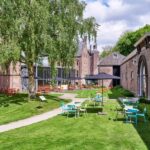
Getting to the ticket office left of the house
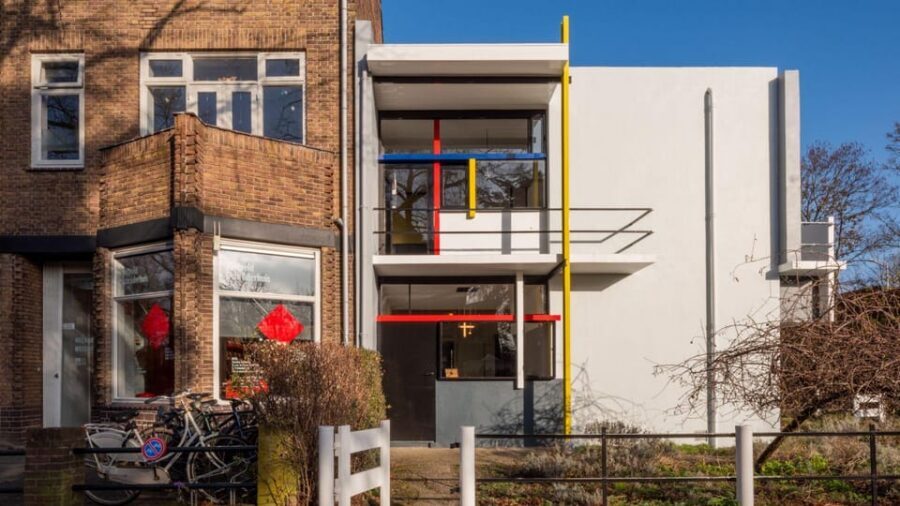
The experience is straightforward once you know where to check in. You’ll want to check in at the ticket office to the left of the Rietveld Schröder House. That matters because the entry process is tied to your media player setup.
This is also why the house visit feels “efficient.” There’s no long group assembly or waiting for a guide to gather you in a crowd. You start with your ticket and your audio device, then follow the tour at your pace.
If you’re timing your day: treat this as a focused architectural stop rather than a casual wander. It’s designed to move you through the key spaces quickly, in a way that keeps the story coherent.
Your self-guided audio tour: media player and languages

The heart of the visit is a self-guided audio tour delivered through a media player you pick up at the ticket desk. Your device works as your guide throughout the house, and the tour is built around what it was like to live there, the historical context, and Rietveld’s ideas.
A few details make this easier than it sounds:
- You get an audio player with built-in speakers, so you don’t automatically need headphones.
- If you prefer your own audio, you can connect via your headset using a mini-jack.
- If you use your own device, you can scan a QR code at the ticket desk and get going—just remember to bring your headphones.
The tour languages available are listed as Dutch, English, German, French, Spanish, Italian, Japanese, and Chinese. That’s a strong range and a real practical win for solo travelers or mixed-language groups.
Here’s the tip that helps most: don’t rush the first room just because you’re excited. Give yourself a minute to get used to the pace of the audio narration. Once you hit your rhythm, the place starts “talking back” through design choices.
On the main floor: walking through De Stijl living space
The layout matters here. The audio tour is structured so you experience the spaces as carefully designed environments rather than a simple sequence of rooms to check off.
On the main level, you’ll be guided through the house as a statement about how people should live. De Stijl principles are woven into the physical design—so your attention shifts from décor to structure: how the rooms are organized, how movement is guided, and how the house encourages a different relationship between rooms and daily tasks.
What you’ll likely notice:
- The house doesn’t feel like a maze of random partitions. You get a sense of intentional flow.
- The design choices are meant to do more than look modern; they help define function and change the feeling of space.
- The audio narration adds human context—what living in a place like this actually meant for the people using it.
One smart way to enjoy this section: pick one “question” for the main floor. For example, ask yourself how the design affects privacy, light, or everyday movement. Then let the narration point you to details that answer your question.
Because it’s self-guided, you can pause if something clicks. With the right mindset, you start reading the architecture like a story.
Upstairs: sliding walls and movable furniture in action

Upstairs is where the house becomes less like a static display and more like a working concept. This is also where the narration turns practical. You’ll get a demonstration or explanation of how the sliding walls and movable furniture can transform the living spaces based on needs.
This is huge for understanding why the Rietveld Schröder House isn’t just “a style.” It’s about adaptability—how a home can change from day to day without being permanently fixed in one rigid layout.
When the tour reaches this section, slow down. Don’t treat it like a quick stop on your way to the exit. If you watch the idea in your head—how a layout change would alter daily routines—you’ll get more out of the experience than by simply noticing that things can move.
A bonus: the upstairs design helps you connect architecture to life choices. It makes the concept of new way of living feel grounded, not abstract.



What to do with 30 to 40 minutes (without feeling rushed)

The total visit time is listed as approximately 30 minutes with a maximum of 40 minutes. That’s perfect if you like focused cultural stops, but it also means you should plan your day around finishing on time.
Because the tour is self-guided, you control how quickly you move—but the best strategy is to avoid starting late. Here’s how I’d pace it:
- Spend the first few minutes orienting yourself and learning the audio rhythm.
- Give the upstairs section enough time to actually register the moving-space concept.
- Save a little buffer near the end for revisiting the best room if you want one last look.
If you’re visiting during a busy time, treat that 30–40 minute window as your friend. It’s long enough to understand the house’s key ideas without turning the visit into a slog.
Price and value: what you get for about $22

At $22 per person, the value comes from what’s included—not just the ticket itself. Your admission includes:
- Entrance to the Rietveld Schröder House
- Audio tour on the included media player (or via QR code instructions if using your own setup)
What’s not included:
- Food and drinks
- Pickup and drop-off
So yes, it’s a paid, timed museum experience. But you’re paying for a guided architectural story that’s built into the visit. That’s the key value point: the audio tour isn’t a bonus extra you might skip. It’s the main way you make sense of what you’re seeing.
If you’re the kind of traveler who likes to read signs and also likes to move, this format fits well. You’re not dependent on a live guide schedule, and you can match the pace to your curiosity.
Also, the experience has a strong satisfaction signal: a 4.8 rating based on 119 reviews. One highlighted review (in German) specifically says there’s nothing to improve and that the visit is very interesting and very good—which lines up with the overall “this works” idea behind the audio approach.
Booking flexibility and the real-world basics

The experience offers free cancellation up to 24 hours in advance, plus a reserve-now option labeled reserve now & pay later, described as booking a spot and paying nothing today. That’s helpful if your Utrecht day might shift due to weather, trains, or whatever you end up choosing nearby.
As for what happens when you arrive: check in at the ticket office left of the house. Then you’ll receive the media player to use in the house.
It’s also worth noting the content is designed for visitors who can walk through the house comfortably. This is not listed as suitable for people with mobility impairments or wheelchair users, and it’s not designed for babies under 1 year.
Who should book this UNESCO house ticket?

This is a great fit if you:
- enjoy modern architecture and want to see De Stijl ideas in the real world
- like self-guided tours where you control your pace
- want a compact UNESCO stop that won’t eat half a day
It’s also a solid choice for first-time Utrecht visitors who want one “big thinking” experience, not just shopping and canal wandering.
On the other hand, reconsider if mobility is a challenge. The experience is specifically listed as not suitable for wheelchair users and people with mobility impairments, so you’ll want to choose a different type of attraction that matches your needs.
Finally, if you’re traveling with very small babies, this is not the right setting since it’s not suitable for babies under 1 year.
The 2024 100-year anniversary angle: what to notice
There’s a 100 year anniversary in 2024, and that detail matters because it suggests you might encounter anniversary-focused attention during your visit. You may notice extra emphasis in how the tour tells the story—how the house’s modern design connects to a longer timeline of impact.
Even without relying on any extra events, the anniversary framing is still useful. It encourages you to see the house as a lasting idea, not a short-lived trend from a single decade.
When you walk in, keep one question in mind: Why does this design still matter 100 years later? The audio tour’s explanations about Rietveld’s concepts and the house’s innovative living principles are built to answer that.
Museum shop: souvenirs with an actual story
After (or near) your visit, you can stop by the museum shop. The shop is described as having unique products and souvenirs, and in a place like this, that matters. You’re not just buying generic “I was here” items. You’re buying something tied to the design identity and the site itself.
If you like practical travel souvenirs, this is one of those stops where you can browse without feeling like you’re wasting time. It also gives you an easy way to end the experience—especially if your brain is still processing what you just saw.
Should you book this UNESCO ticket?
Yes, I think you should book it if you want a focused, design-focused UNESCO experience that fits into a busy day. For $22, you get admission plus a self-guided audio tour that’s available in many languages, and the upstairs moving-space concept is exactly the kind of detail that turns architecture from “picture” into “understanding.”
If your mobility needs are limited, or you want a long, slow museum-style wander, you may want to skip this one. But for most people—especially anyone who likes modern ideas—you’ll likely find this is time well spent.
FAQ
How long does the Rietveld Schröder House visit take?
Plan for about 30 minutes, with a maximum of 40 minutes.
Where do I check in?
Check in at the ticket office to the left of the Rietveld Schröder House.
Is the audio tour included in the ticket price?
Yes. The ticket includes entrance plus the audio tour.
Do I need headphones for the media player?
No. The media player has built-in speakers. If you prefer your own headset, a mini-jack is supported.
What languages are available for the audio tour?
The audio tour is available in Dutch, English, German, French, Spanish, Italian, Japanese, and Chinese.
Can I use my own device with the tour?
Yes. You can scan a QR code at the ticket desk and use your own device, but you’ll need to bring your headphones.
Is there a museum shop on site?
Yes. There is a museum shop with unique products and souvenirs.
Is this experience suitable for wheelchair users?
No. It is not suitable for wheelchair users.
Is food included with the ticket?
No. Food and drinks are not included.