Amsterdam rewards you for slowing down.
This private, walking-focused tour is built for your pace and interests, not a rigid checklist. You start near Dam Square, then follow the oldest parts of town with stops that mix tucked-away spaces, big landmarks, and canal-side storytelling.
I especially like the flexibility: you can choose the time window (2, 3, 4, or 6 hours) and the route adapts as you go. Another big plus is the practical local angle—recommendations for where to shop and what to eat, plus guidance on what you might want to book ahead. One consideration: it’s a walking tour, and if you drift a bit away from the guide, you might miss some of the explanation because the delivery is more conversational than theatrical.
In This Review
- Key things that make this Amsterdam private tour work
- Choosing 2, 3, 4, or 6 hours: match the tour to your Amsterdam plan
- Dam Square start: getting your bearings fast (without a tour bus maze)
- Secret church stops and the linen merchant house: old Amsterdam in human scale
- St. Nicholas Basilica optional visit, plus a wooden house and the Beguines
- Shopping streets and canal-side recommendations that feel useful
- Anne Frank House and the former Gestapo headquarters: plan ahead or you’ll feel rushed
- Jordaan in 4+ hours: from working neighborhood to trendy hangout
- The cultural center, museum mansions, and the UNESCO Golden Bend canal walk
- Private guide perks: what you can do differently than a standard group tour
- Value and price: is $148.98 per person a smart buy?
- Who this Amsterdam walk is best for (and who might skip it)
- Should you book this personalized Amsterdam private tour?
- FAQ
- How long is the Amsterdam private tour?
- Is this tour private?
- What language is the tour in?
- Where do we meet, and where does the tour end?
- Does the tour include tickets to attractions like the Anne Frank House?
- Are food and drinks included?
- Is pickup available?
- What is the cancellation policy?
Key things that make this Amsterdam private tour work

- Personalized route that can shift based on what you care about most during the walk
- Flexible length (2 to 6 hours) so you can match it to your energy and your schedule
- Old-town focus from Dam Square into quieter historical streets and canal areas
- Museum-and-history planning help, especially for the Anne Frank House timing
- Local recommendations included, including shopping ideas and places to try local food
- Longer versions add extra neighborhoods, like Jordaan and the UNESCO-protected canal bend
Choosing 2, 3, 4, or 6 hours: match the tour to your Amsterdam plan
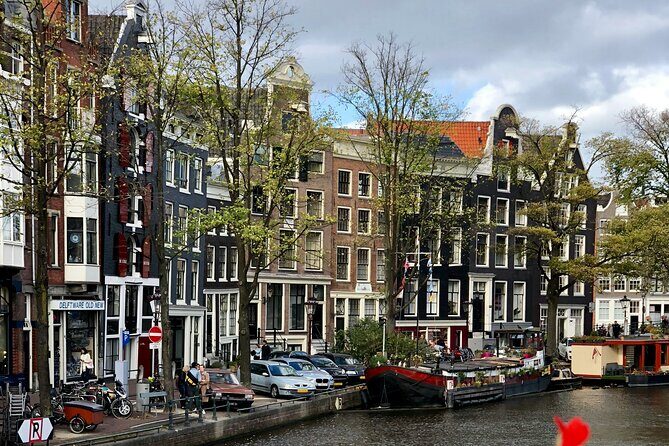
The tour is offered in four main time blocks: 2, 3, 4, or 6 hours. That’s not just convenience—it changes what you’ll get. Shorter options tend to concentrate on the oldest layers of the city and key wayfinding moments, so you leave with strong orientation.
If you book 4 or 6 hours, you also get more room for neighborhoods and the canal-side “story Amsterdam” that makes the city feel intimate. The longer routes add a stroll through Jordaan, time around cultural and museum-area streets, and a walk past the canal curve known as the Golden Bend (protected as part of UNESCO heritage).
You’ll be walking the whole time, so pick a length that matches your day. If you’re already doing a boat ride or a museum day later, the shorter duration can be the perfect warm-up. If you’re here for just a few days and want one guiding thread, go longer.
And yes, it’s private, so your group stays together. You’re not stuck waiting while someone reads every plaque at a crawl.
You can also read our reviews of more private tours in Amsterdam


Dam Square start: getting your bearings fast (without a tour bus maze)
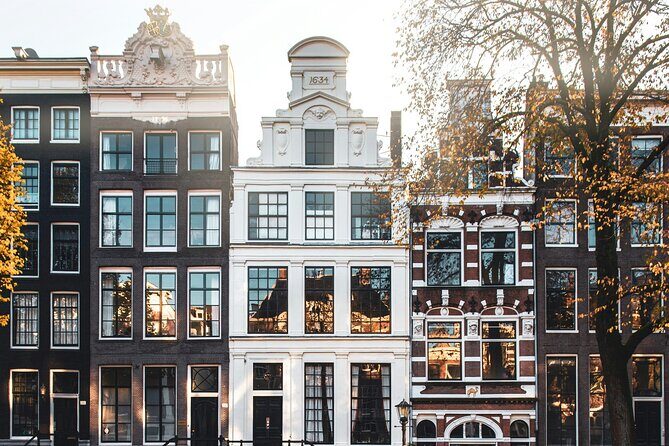
You meet at Starbucks Rokin 74, near the National Monument in Dam Square. It’s a smart starting point because Dam Square anchors a lot of central Amsterdam routes, and it’s easy to find.
From there, the walk heads into the oldest part of town. The goal is simple: you get a grounded overview early, then you move through smaller streets where the city’s character shows up in details—architecture, tucked-in religious spaces, and the feel of old merchant routes.
The tour also ends in the Herengracht area within the city center, based on how your group wants to shape the day. That means you finish somewhere that’s still central, so you’re not left crossing town afterward when you’re tired.
Secret church stops and the linen merchant house: old Amsterdam in human scale
One of the most interesting parts is the blend of “big history” with “small spaces you can actually see.” In the oldest part of town, you may pass by or visit a secret church, where you’ll learn how it fits into the area’s past.
Right near that story, you also hear about the house of a merchant trading linen, with rooms preserved from the 16th through the 19th centuries. That time span matters. It lets you connect Amsterdam’s commercial growth (trade wealth) with the day-to-day spaces people moved through and lived in.
For me, this kind of stop is the difference between seeing Amsterdam and understanding it. You’re not just collecting names—you’re getting a sense of how ordinary people and wealthy merchants shared the same city, just in different buildings and different eras.
Practical note: these indoor pauses can be short or longer depending on what your group chooses and what the guide plans. If you’re the type who likes to ask many questions, you’ll probably enjoy these parts more because there’s usually room for real conversation.
St. Nicholas Basilica optional visit, plus a wooden house and the Beguines
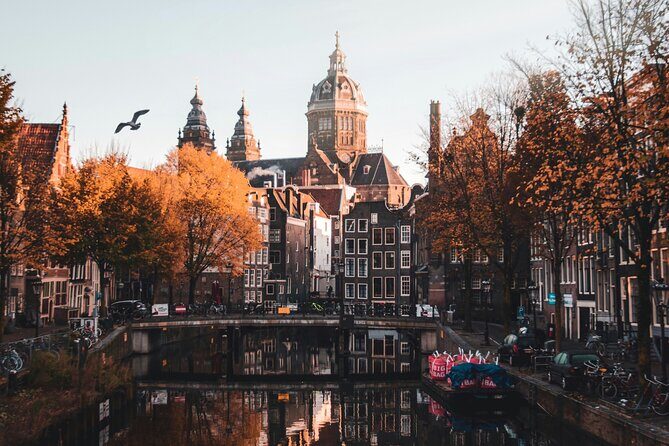
From the old streets, the route continues toward St. Nicholas Basilica. You’ll see the oldest buildings along the way, including the famous “dancing houses” style architecture that gives Amsterdam a slightly off-kilter, charming look.
There’s an optional stop to visit the basilica itself to see its famous dome. If you’re going to pick one “optional” moment, this is a good one—domes give you instant context for why Amsterdam’s skyline feels the way it does.
Then the tour shifts into one of those details you’d never notice on your own: the only remaining wooden house in the city, along with a look at how Amsterdam’s building style developed over time. It’s a quick lesson in why materials and construction methods matter in a city built where the water and the soil influence everything.
After that, you learn about the Beguines. The Beguines weren’t just a historical footnote; they connect religion, community life, and city identity. Even if you don’t go deep into theology, you’ll walk away with a clearer sense of who shaped daily life in earlier centuries.
If you’re traveling with teens or family members who get bored by lectures, these stops are usually a good bet because they’re visual and story-driven rather than museum-deep.
Shopping streets and canal-side recommendations that feel useful
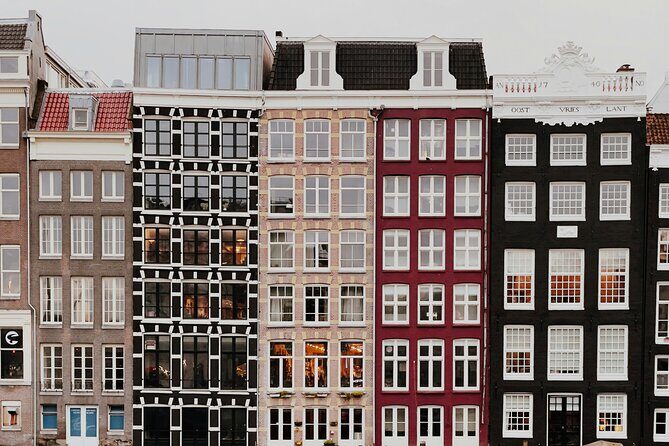
As you move through central areas, you’ll pass by the main canals and Amsterdam’s shopping heaven. This part is built for your next steps after the tour, not just sightseeing during the walk.
You’ll get recommendations on where to shop and where to try local food. That’s the real value of a private guide on a walking route: you get advice that matches your timing and your interests, rather than generic “must-see” lists.
Sometimes there’s also an optional quick stop at a local eatery for a drink or a bite. Food and drinks are not included, but the guide can point you toward places that fit a short time window without sending you into a tourist trap situation.
If you like to keep your day flexible, this is a good section to steer where you want to go next. The tour is described as personalized, so your guide can adjust the pace and the number of photo opportunities.






Anne Frank House and the former Gestapo headquarters: plan ahead or you’ll feel rushed
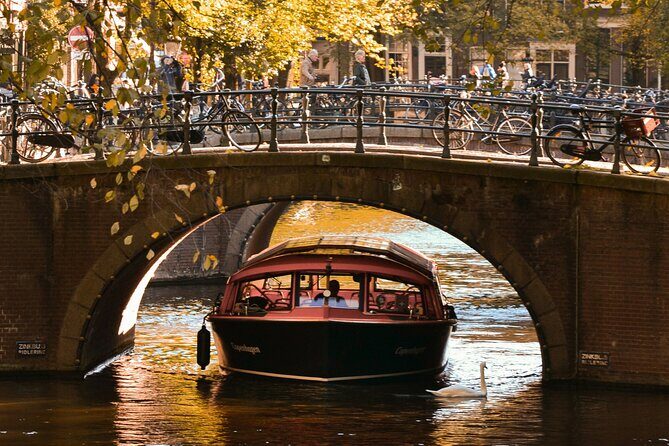
This is the section where logistics matter most.
You’ll pass by or visit the Anne Frank House area and learn about the neighborhood where Anne and her family were in hiding. If you want to enter the museum, you need tickets upfront because it’s the most popular museum and tickets sell out fast.
The guide can assist with ticket help, but only if you let them know well ahead of time if you need support. So if this museum is a priority for you, treat this tour as part of your planning, not just a spontaneous add-on.
The route also includes the former Gestapo headquarters, where you’ll learn about the building’s history. This pairing is powerful because it shifts the emotional weight from personal story to institutional power in the same broader area. You walk away with more than a timeline—you get a sense of how the city functioned during that period.
Optional stops may include the former Jewish quarter, to see more context about early immigration, wartime life, and what life looked like after. If you want the story to stay focused, you can choose what you want to spend time on and what you’d rather keep lighter.
One practical tip: wear comfortable shoes and keep your questions ready. In emotionally heavy areas, your energy matters. If you’re mentally tired, you can ask for a slower pace rather than forcing it.
Jordaan in 4+ hours: from working neighborhood to trendy hangout
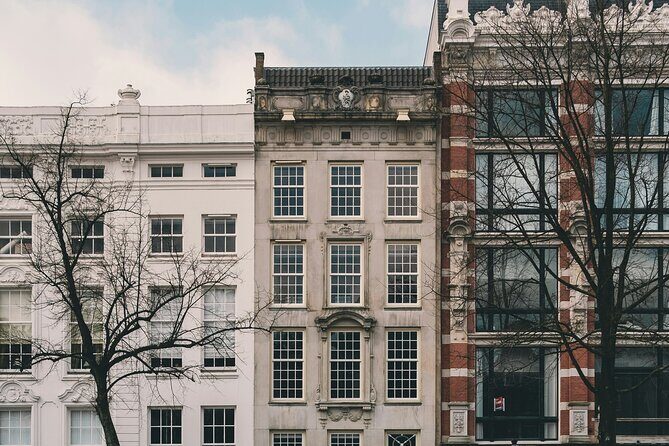
If you choose a 4 or 6-hour option, the walk adds a long stroll through Jordaan. This neighborhood has a “before and after” feel, and you’ll see the transformation as you go.
You may also stop for a drink along the way. Again, drinks are not included, but this moment gives you a chance to reset without feeling like you disappeared for hours.
What I like about Jordaan on foot is that it’s readable. You can see how streets, canals, and building styles change from block to block. The guide’s job here is to connect what you’re seeing with why it changed—so you don’t just notice the trendiness, you understand the shift.
If you’re the kind of traveler who likes to watch neighborhoods evolve while you walk them, this is where the tour feels especially worth it.
The cultural center, museum mansions, and the UNESCO Golden Bend canal walk
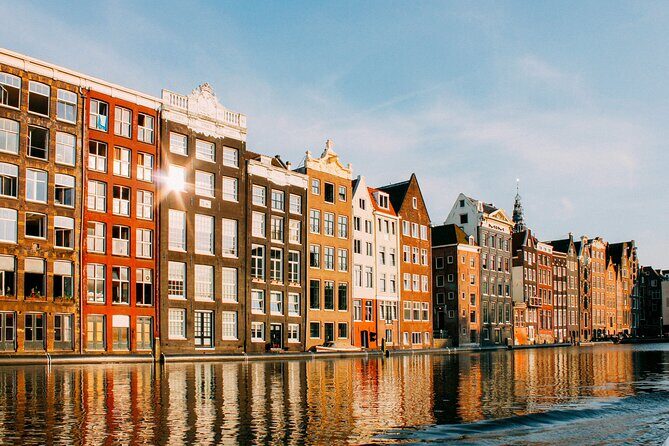
For the longer routes, you’ll move into Amsterdam’s cultural center area. You’ll enjoy strolling around residential streets near main museums and around the luxurious former merchant mansions surrounding the main park area.
This section is less about a single “stop” and more about atmosphere. You get a local pace, and you’re less rushed than on typical group tours. The guide can point out what to notice—architecture details, the way the streets are laid out, and how the neighborhoods relate to one another.
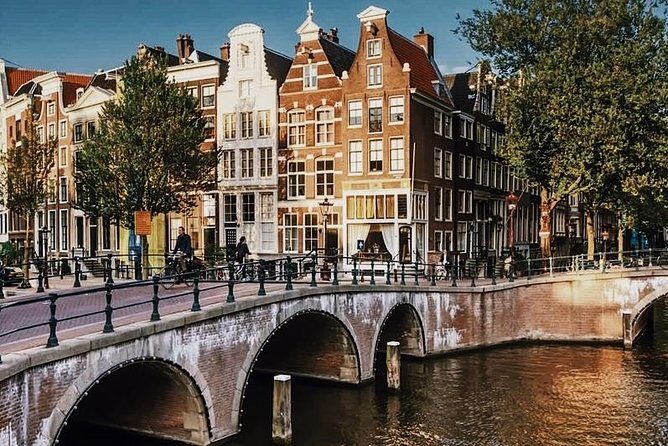
Finally, you’ll walk by the Golden Bend, a canal area protected through UNESCO heritage. This is one of the most scenic “walk-and-look” stretches because the canal curve creates a natural photo line, and there’s often a sense of stillness as you pass through.
Optionally, you can also visit one of the houses on the canal to see hidden gardens. Those “behind the door” moments are exactly why a local guide helps: access and timing can be hard to figure out when you’re planning alone.
Private guide perks: what you can do differently than a standard group tour
The big selling point is not just that it’s private. It’s that the tour is tailored to your interests, and you get to choose the start time and duration that works.
That affects how stops feel. Instead of forcing you through everything, a good guide can weight the day toward what matters most—history-heavy corners, architecture, canal beauty, or neighborhood feel. If you’re traveling with a teen, this can also be a win because the pace and the tone can be adjusted to keep attention.
One more practical quality: the guide’s tone and volume matter on a walking tour. If the guide speaks more softly, you’ll get more from the experience if you stay close enough to hear clearly and ask questions as you go. That’s an easy fix: just don’t let your group wander two steps behind.
And because it’s private, your questions don’t have to fit inside a group schedule. You can ask “why is this here?” or “how did this area change?” and get direct answers on the spot.
Value and price: is $148.98 per person a smart buy?
The price is $148.98 per person, with durations from 2 to 6 hours. Private tours are usually priced for the guide’s time, not for individual “attraction tickets,” and that’s how you should judge the value.
Here’s the simple math idea:
- In a shorter 2-hour format, the cost per hour is higher.
- In a 4- to 6-hour format, you stretch the guide time and the extra context across more walking hours.
What you’re paying for, beyond basic interpretation, is the shape of your day. You’re getting a guided overview, smart historical connections, and practical recommendations for shopping and local food. You’re also getting a way to plan museum time so you don’t arrive at Anne Frank House totally unprepared for ticket limits.
Included items are also clear: it’s a private and personalized experience, walking-based, and you get tips for the rest of your Amsterdam stay. Not included: food and drinks, tickets to attractions, and transportation costs, plus gratuities are optional.
So this is best value if you want someone to help you feel oriented quickly and guide you through the neighborhoods with less guesswork. If you only want a quick photo loop or you love to plan every minute yourself, you might prefer cheaper self-guided options.
Who this Amsterdam walk is best for (and who might skip it)
This tour is a strong fit if you want:
- A private, walkable orientation to Amsterdam’s central areas
- Personal attention for questions and pacing
- A mix of old-city history plus canal-and-neighborhood atmosphere
- Built-in help for museum planning, especially around Anne Frank House
It’s also a good choice for families, including teens, because the tour format supports conversation and pacing rather than long lectures.
You might consider skipping if:
- You prefer to keep your day fully unstructured and self-led
- You don’t want to walk much
- You’re not interested in history-heavy stops (especially around WWII context)
Should you book this personalized Amsterdam private tour?
Book it if you want Amsterdam to make sense fast. The route gives you classic central anchors and also spends time on smaller, meaningful spaces—secret churches, preserved merchant-era rooms, architectural oddities, and canal-side heritage. Add the practical shopping and food guidance, and you’ll leave with ideas you can use the same day.
If Anne Frank House is on your must-do list, book with the understanding that you’ll need tickets upfront and you should notify the host early if you want help. For everything else, the tour’s flexibility helps you avoid the two common Amsterdam travel problems: wandering without direction and rushing too hard.
If your main goal is a relaxed overview with a local voice (and a plan that adapts to your energy), this is a solid choice.
FAQ
How long is the Amsterdam private tour?
You can choose from 2, 3, 4, or 6 hours, depending on what you want to fit into your day.
Is this tour private?
Yes. It’s a private tour/activity, and only your group participates.
What language is the tour in?
The tour is offered in English.
Where do we meet, and where does the tour end?
You start at Starbucks Rokin 74, 1012 KW Amsterdam, Netherlands. The tour ends at Herengracht, Amsterdam, and it will be within the city center.
Does the tour include tickets to attractions like the Anne Frank House?
No. Tickets to attractions are not included. If you want to visit the Anne Frank House museum, you need tickets upfront, and the host can assist if you ask well ahead of time.
Are food and drinks included?
No. Food and drinks are not included, though the guide may suggest a stop for a drink or a bite if you want one.
Is pickup available?
Yes, hotel pick-up is available upon request within the city center.
What is the cancellation policy?
You can cancel for free up to 24 hours in advance for a full refund. If you cancel less than 24 hours before the start time, the amount paid is not refunded.